
Listen to this Post
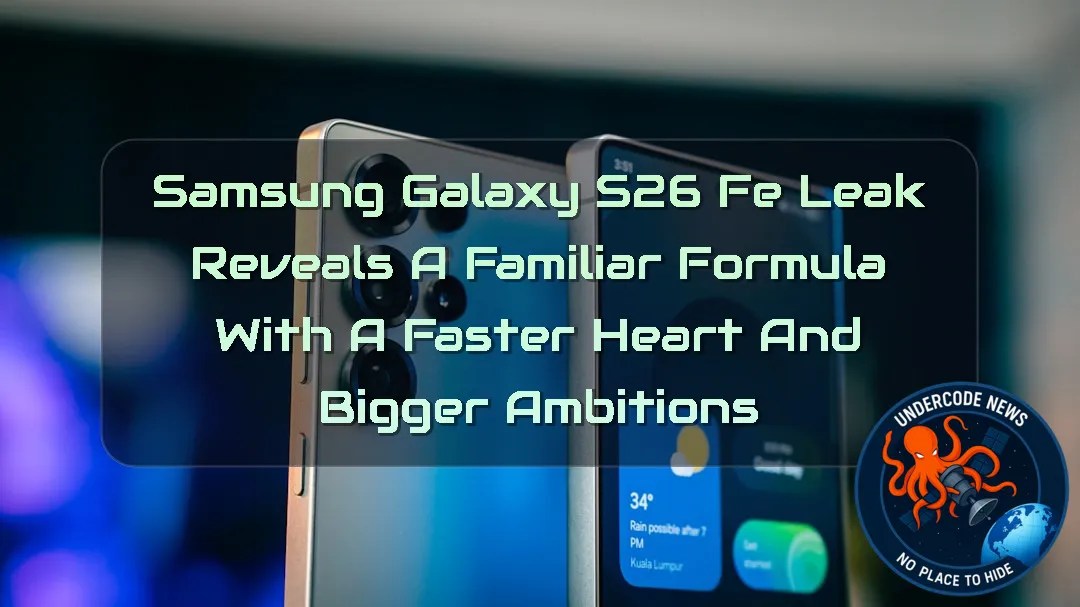
A Familiar Phone With One Important Twist
Samsung’s Galaxy FE series has always occupied an interesting position in the company’s smartphone lineup. These devices are designed to deliver much of the flagship Galaxy experience without carrying the full flagship price tag. But the latest Galaxy S26 FE leak suggests Samsung may be taking a conservative approach with its next Fan Edition model.
The Galaxy S26 FE is reportedly coming with a large 6.7-inch AMOLED display, a 120Hz refresh rate, a 50MP main camera, an Exynos 2500 processor, a 4,900mAh battery and One UI 9.0 based on Android 17. On paper, those specifications make it a capable modern smartphone. Yet when the details are compared with the Galaxy S25 FE, the upgrade story becomes considerably more complicated.
Rather than introducing a radically redesigned Fan Edition, Samsung appears to be refining an already familiar formula. The biggest improvements could come from the processor and battery technology, while many other specifications remain remarkably close to the previous generation.
Galaxy S26 FE Leak Reveals Almost the Entire Phone
According to the information reported by WinFuture and summarized by SamMobile, Samsung’s upcoming Galaxy S26 FE is expected to feature a 6.7-inch AMOLED display with a 2,340 x 1,080 resolution.
The panel is reportedly capable of a 120Hz refresh rate, which should provide smooth scrolling, responsive animations and a more fluid gaming experience. Peak brightness is said to reach approximately 1,900 nits, giving the phone a stronger chance of remaining readable outdoors under bright sunlight.
That combination is hardly revolutionary in 2026, but it remains an important strength for a phone positioned below Samsung’s top-tier Galaxy S models.
The Exynos 2500 Could Become the Biggest Upgrade
Under the hood, the Galaxy S26 FE is reportedly powered by Samsung’s Exynos 2500 chipset and paired with 8GB of RAM.
The processor could be the most meaningful performance upgrade compared with the previous Fan Edition generation. A faster and more efficient chipset affects almost everything users do, from launching applications and processing photographs to gaming, multitasking and artificial intelligence features.
The reported 8GB RAM configuration, however, suggests Samsung is not necessarily positioning the S26 FE as a maximum-performance flagship alternative. Instead, the company appears to be targeting a balance between performance, battery efficiency and price.
Two Storage Options Keep the Lineup Simple
The Galaxy S26 FE is expected to arrive in two storage configurations, 128GB and 256GB.
That is a fairly conventional approach, although 128GB may begin to feel restrictive for users who record large amounts of 4K or 8K video, install numerous applications or keep extensive offline media libraries.
The 256GB version will likely be the more attractive long-term choice, particularly for buyers planning to keep the device for several years.
A Triple-Camera System That Plays It Safe
Samsung is reportedly retaining a triple-camera configuration on the rear.
The main camera is expected to use a 50MP sensor with an f/1.8 aperture and optical image stabilization. OIS remains particularly useful for low-light photography and handheld video because it can compensate for small movements while the shutter is open.
The second camera is reportedly an ultra-wide unit with an f/2.2 aperture, while the third is an 8MP telephoto camera offering 3x optical zoom at f/2.4.
This combination gives the S26 FE a practical range of focal lengths. Users should be able to move from standard photography to ultra-wide scenes and then switch to optical zoom without relying entirely on digital cropping.
8K Video Gives the Main Camera More Headroom
Samsung is reportedly allowing the rear primary camera to record video at up to 8K resolution and 30 frames per second.
While 8K recording remains unnecessary for many everyday users, it provides additional flexibility for people who crop footage or want to preserve more detail for future editing.
The front-facing camera is reportedly a 12MP unit with an f/2.2 aperture and support for 4K video recording at up to 60fps.
For creators, vloggers and people who frequently make video calls or social media content, the front-camera video capability may be more relevant than the headline 8K specification.
The 4,900mAh Battery Could Be the Real Story
One of the most interesting details concerns the battery.
The Galaxy S26 FE is reportedly equipped with a 4,900mAh battery and support for wired charging at up to 45W. That capacity represents a meaningful reserve for a phone with a large 6.7-inch display.
More interestingly, the reported EPREL battery information indicates an endurance rating of around 1,200 charge cycles.
If the battery construction does indeed use silicon-carbon technology, that could be more significant than simply increasing battery capacity. Silicon-carbon batteries can potentially provide higher energy density while helping manufacturers maintain reasonable device thickness.
A Thinner Phone With a Large Battery
Samsung reportedly designed the Galaxy S26 FE to measure only 7.4mm thick while weighing approximately 193 grams.
That is an important balance.
Large-screen phones with relatively large batteries can easily become uncomfortable or heavy. Keeping the S26 FE around 7.4mm while reportedly fitting a 4,900mAh battery would indicate that Samsung is paying close attention to internal component efficiency and battery density.
For everyday users, this could be one of the phone’s most meaningful improvements even if it does not appear dramatic on a specification sheet.
Android 17 and One UI 9.0 From Day One
The Galaxy S26 FE is reportedly expected to launch with One UI 9.0 based on Android 17.
Launching with a new Android generation gives the device an important advantage because buyers will not immediately receive an older operating system after spending money on a new phone.
Samsung’s software strategy has also become an increasingly important part of its hardware value proposition. Features related to artificial intelligence, privacy, multitasking, customization and ecosystem integration can make a phone feel significantly newer than its hardware specifications suggest.
Is the Galaxy S26 FE Really an Upgrade?
This is where the leak becomes particularly interesting.
Based on the reported specifications, the Galaxy S26 FE looks less like a complete redesign and more like an evolution of the Galaxy S25 FE formula.
The display remains familiar. The camera strategy is familiar. The amount of RAM remains conservative. The physical dimensions remain relatively restrained.
The major areas of potential improvement appear to be the processor, battery technology, software generation and possibly overall efficiency.
That is not necessarily a bad strategy.
Samsung May Be Choosing Refinement Over Reinvention
Smartphone manufacturers increasingly understand that customers do not necessarily need radical hardware changes every year.
A reliable display, good cameras, strong battery life, long software support and a fast processor can matter more than adding another sensor or dramatically changing the design.
Samsung could therefore be betting that the Galaxy S26 FE does not need to look completely different. It simply needs to be a better-balanced phone.
The Biggest Question Will Be the Price
Specifications alone do not determine whether the Galaxy S26 FE will be successful.
Price will be critical.
If Samsung positions the device aggressively below its flagship Galaxy S range, the combination of a 120Hz AMOLED display, Exynos 2500 processor, 4,900mAh battery, optical zoom and modern Android software could make it extremely competitive.
But if the price approaches premium flagship territory, buyers may reasonably ask why they should not spend more for a higher-end Galaxy model.
The FE series succeeds when it offers obvious value. That equation becomes much harder if the discount is too small.
Galaxy S26 FE Could Be a Practical Flagship Alternative
The reported specification list makes the Galaxy S26 FE look like a phone aimed at users who want Samsung’s ecosystem without paying the highest possible price.
It should have enough performance for everyday productivity, social media, photography, gaming and multitasking.
The 6.7-inch screen also gives it a larger footprint than compact smartphones, making it potentially attractive to people who consume a lot of video or use their phones as mobile productivity devices.
Camera Hardware May Not Be the Main Selling Point
The triple-camera system is competent rather than revolutionary.
A 50MP main camera with OIS is now a familiar configuration across the smartphone industry. The 3x optical zoom is useful, but an 8MP sensor is hardly an indication that Samsung is trying to compete directly with its highest-end camera phones.
This suggests Samsung may be relying more heavily on computational photography and image processing to differentiate the camera experience.
The Exynos 2500 could therefore play a role beyond raw performance, especially if Samsung uses its processing capabilities for photography and AI workloads.
The S26 FE Could Benefit From Samsung’s AI Strategy
Artificial intelligence has become one of the major battlegrounds in smartphones.
A modern processor is increasingly expected to handle AI-assisted photography, transcription, translation, search, editing and personalization directly on the device.
If Samsung equips the Galaxy S26 FE with a broad selection of Galaxy AI features, the phone could feel more advanced than its hardware specification sheet suggests.
The real question is how many flagship AI features Samsung makes available to the FE model and whether some capabilities remain exclusive to more expensive devices.
Battery Longevity Could Matter More Than Capacity
The reported 1,200-cycle battery endurance figure deserves particular attention.
Consumers are keeping smartphones for longer periods than they once did. A battery that maintains healthier performance over a large number of charging cycles could help extend the useful life of the phone.
That makes battery chemistry a potentially bigger selling point than simply advertising a larger milliamp-hour number.
If Samsung can combine the reported silicon-carbon technology with efficient processor performance and good software power management, the S26 FE could become a particularly strong endurance-focused device.
Samsung Appears to Be Protecting Its Flagship Hierarchy
There is also a strategic reason why the S26 FE may look familiar.
Samsung has to differentiate its product tiers.
If the FE model becomes too powerful or too feature-rich, it risks stealing customers from more expensive Galaxy S models. At the same time, if Samsung cuts too many features, the FE becomes difficult to justify against cheaper competitors.
The reported S26 FE specifications appear to sit deliberately between those two extremes.
The Galaxy S26 FE May Be More About Balance Than Innovation
The phone does not appear to be chasing specification records.
Instead, Samsung seems to be building a balanced device with a large AMOLED screen, high refresh rate, capable cameras, modern connectivity, a substantial battery, fast charging and current-generation software.
That approach can work extremely well.
The best-selling smartphone is not always the one with the highest specifications. Often, it is the one that makes the fewest compromises at the right price.
What Undercode Say:
The Upgrade Story Is More Complicated Than the Spec Sheet
The Galaxy S26 FE leak tells us something important about the modern smartphone market.
Samsung does not appear to be reinventing the FE formula.
Instead, it is refining it.
That may disappoint users expecting a dramatic generational leap.
But refinement can be strategically smarter than reinvention.
The reported 6.7-inch AMOLED display remains highly competitive for media consumption.
The 120Hz refresh rate should keep everyday interactions feeling smooth.
The reported 1,900-nit peak brightness could make outdoor visibility considerably better.
The Exynos 2500 could provide the most visible performance improvement.
Eight gigabytes of RAM should remain sufficient for ordinary multitasking.
The 128GB base storage option may be less convincing for heavy users.
The 256GB configuration looks more future-proof.
The 50MP primary camera remains a sensible foundation.
Optical image stabilization gives the main sensor an advantage in difficult lighting.
The 3x optical zoom is more useful than a simple low-quality macro sensor.
The 8MP telephoto camera may nevertheless limit ultimate image quality.
The 12MP selfie camera is relatively conservative.
4K/60fps front-camera recording is a welcome capability.
8K/30fps rear recording sounds impressive but will not matter to every buyer.
The 4,900mAh battery could be one of the strongest aspects of the device.
The reported 45W charging speed is useful but not class-leading in the wider smartphone market.
The reported 1,200-cycle endurance rating could become a major selling point.
Silicon-carbon battery technology would make the battery story even more interesting.
The 7.4mm thickness suggests Samsung is prioritizing portability.
A 193-gram weight is reasonable for a 6.7-inch device.
Android 17 gives the phone a modern software foundation.
One UI 9.0 should also make the device feel integrated into Samsung’s wider ecosystem.
The biggest unanswered question is pricing.
The second major question is
The third is how aggressively Samsung will enable Galaxy AI features.
The fourth is how the Exynos 2500 performs under sustained workloads.
The fifth is whether thermal management can maintain performance during long gaming sessions.
The camera system appears designed for versatility rather than photography dominance.
That is perfectly reasonable for an FE device.
The phone also seems carefully positioned to avoid undermining Samsung’s flagship models.
This explains why the hardware changes appear incremental.
The S26 FE could ultimately succeed because it does not attempt to do everything.
Instead, it may focus on delivering the features most users actually notice.
A bright display matters every day.
Battery life matters every day.
Performance matters every day.
Software support matters every day.
Camera versatility matters every day.
Those fundamentals may ultimately matter more than a dramatic redesign.
The Galaxy S26 FE therefore looks less like Samsung playing it safe and more like Samsung optimizing a proven product formula.
The final verdict will depend heavily on price.
If Samsung gets that equation right, the S26 FE could become one of the most sensible Galaxy phones in its generation.
If Samsung gets the pricing wrong, its relatively modest hardware changes could become a major weakness.
Deep Analysis
Checking the Reported Hardware Profile
A technical evaluation starts by comparing the reported specifications with the expected software and hardware workload.
For Android devices, developers and power users can inspect basic system information through ADB:
adb shell getprop ro.product.model
adb shell getprop ro.build.version.release
adb shell getprop ro.build.version.security_patch
These commands can help verify the model identity, Android release and security patch level once the device becomes available.
Monitoring Processor Behavior
The Exynos 2500 will need to demonstrate more than benchmark performance.
Sustained workloads are particularly important because smartphones can reduce processor frequency when temperatures rise.
On an Android development environment, ADB can be used to inspect CPU information:
adb shell cat /proc/cpuinfo
adb shell cat /proc/meminfo
adb shell dumpsys cpuinfo
These commands provide useful visibility into processor and memory behavior.
Checking Battery Information
Battery health will be especially interesting if the reported endurance characteristics are accurate.
Users can inspect battery information through:
adb shell dumpsys battery
For deeper diagnostics, developers can examine system statistics and charging behavior:
adb shell dumpsys batterystats
The goal should not simply be to determine battery capacity. Long-term efficiency, charging behavior and standby consumption are equally important.
Evaluating Thermal Performance
A modern processor can deliver impressive peak performance while still struggling under sustained workloads.
Thermal information can sometimes be inspected through
adb shell dumpsys thermalservice
For serious testing, reviewers should combine thermal monitoring with prolonged CPU, GPU and gaming workloads.
Testing Display Responsiveness
The 120Hz panel should be evaluated beyond simply confirming the refresh-rate specification.
A good test should examine scrolling, animation consistency, gaming frame rates and adaptive refresh behavior.
Users can inspect display configuration through:
adb shell dumpsys display
The objective is to determine whether the display actually maintains smooth performance under different workloads.
Examining Storage Pressure
The 128GB model deserves special attention because modern applications, games and video files can consume storage quickly.
Storage utilization can be checked with:
adb shell df -h
adb shell dumpsys diskstats
A 256GB configuration should provide substantially more breathing room for users who plan to keep the phone for several years.
Testing Camera Capabilities
The reported camera specifications should also be tested independently.
Reviewers should examine:
Daylight photography
Night photography
HDR performance
3x optical zoom
Ultra-wide distortion
Skin tones
Video stabilization
4K/60fps recording
8K/30fps recording
Front-camera video quality
The numbers on a specification sheet cannot fully describe image processing.
Samsung’s software tuning will ultimately determine whether the camera system feels premium.
Evaluating Software Efficiency
One UI 9.0 based on Android 17 will be another important part of the experience.
A clean system after setup can be measured for:
adb shell dumpsys meminfo
adb shell dumpsys gfxinfo
adb shell dumpsys package
These commands can help developers examine memory consumption, graphics performance and installed package information.
Security Should Remain Part of the Evaluation
A new Samsung phone should also be evaluated for security-update behavior.
Users can check the installed security patch with:
adb shell getprop ro.build.version.security_patch
The important metric is not simply the launch patch. Long-term security maintenance is what determines whether a smartphone remains trustworthy several years after purchase.
Display and Performance
✅ The reported specifications describe a 6.7-inch AMOLED display, 120Hz refresh rate and Exynos 2500 processor. These details originate from the reported leak and should be treated as reported specifications until Samsung officially confirms them.
Camera and Battery
✅ The reported configuration includes a 50MP primary camera, 3x optical zoom, 4,900mAh battery and 45W wired charging. The exact real-world camera and battery performance cannot be established from specifications alone.
Software and Physical Design
✅ The report states One UI 9.0 based on Android 17, approximately 7.4mm thickness and 193 grams. These details remain part of the reported pre-launch specification set rather than independently verified retail hardware.
Prediction
(+1) Strong Value Potential
If Samsung keeps the Galaxy S26 FE meaningfully cheaper than its flagship models, the combination of a large 120Hz AMOLED display, modern processor, versatile cameras and a 4,900mAh battery could make it a strong value proposition.
The reported silicon-carbon battery technology could give the phone an advantage in long-term endurance and battery longevity.
Android 17 and One UI 9.0 should give buyers a modern software starting point.
(+1) Better Long-Term Experience
The combination of a relatively thin body, large battery and efficient processor could make the S26 FE particularly attractive to users who prioritize everyday reliability.
(-1) Limited Generational Innovation
Buyers expecting a dramatic redesign or major camera upgrade may find the S26 FE underwhelming.
The 128GB base storage option could become restrictive for heavy users.
The 8MP telephoto camera may prevent the device from competing directly with Samsung’s premium camera phones.
(-1) Pricing Risk
If Samsung prices the S26 FE too close to higher-end Galaxy S models, the modest hardware evolution could weaken its appeal.
Final Verdict
The Galaxy S26 FE is shaping up to be a fascinating example of Samsung’s changing smartphone strategy.
Rather than throwing everything at the next Fan Edition, Samsung appears to be refining the formula with a newer processor, a substantial battery, modern software and a familiar but capable camera system.
The most exciting feature may not be the 50MP camera or even the Exynos 2500. It could be the combination of battery capacity, reported endurance and thin design.
Ultimately, the Galaxy S26 FE does not need to be the most technologically ambitious Galaxy phone.
It needs to be the one that gives buyers the right features at the right price.
If Samsung manages that balance, the Galaxy S26 FE could become one of the company’s most compelling mainstream Galaxy models of the year.
▶️ Related Video (76% Match):
🕵️📝Let’s dive deep and fact‑check.
🎓 Live Courses & Certifications:
Join Undercode Academy for Verified Certifications
🚀 Request a Custom Project:
Secure, high-velocity infrastructure and disruptive technological engineering. Contact our engineering team for high-tier development and proprietary systems:
[email protected]
💎 Smart Architecture | 🛡️ Secure by Design | ⭐ Trusted by Thousands
References:
Reported By: www.sammobile.com
Extra Source Hub (Possible Sources for article):
https://www.digitaltrends.com
Wikipedia
OpenAi & Undercode AI
Image Source:
Unsplash
Undercode AI DI v2
🔐JOIN OUR CYBER WORLD [ CVE News • HackMonitor • UndercodeNews ]
📢 Follow UndercodeNews & Stay Tuned:
𝕏 formerly Twitter 🐦 | @ Threads | 🔗 Linkedin | 🦋BlueSky | 🐘Mastodon | 📺Youtube


