
Listen to this Post
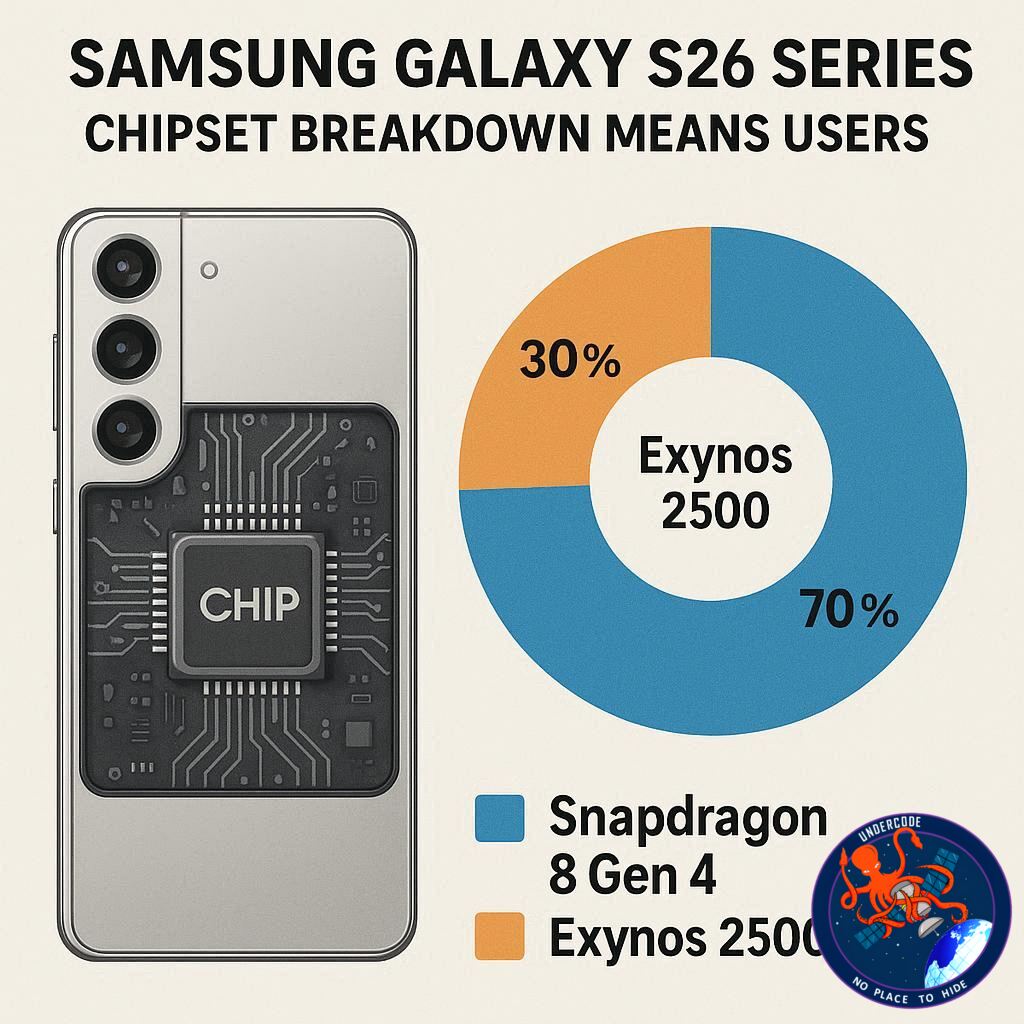
Samsung has officially unveiled the chipset lineup for its highly anticipated Galaxy S26 series, revealing which processors power the Galaxy S26, S26+, and the flagship S26 Ultra. The announcement confirms a regional split for the base and Plus models, while the Ultra model receives a consistent premium chipset worldwide. Here’s everything you need to know about the Galaxy S26 series hardware and why it matters to consumers.
Galaxy S26 and S26+: Exynos vs. Snapdragon
The Galaxy S26 and Galaxy S26+ will primarily be powered by Samsung’s in-house Exynos 2600 processor across most global markets. However, in the United States, China, and Japan, Samsung will equip these models with Qualcomm’s Snapdragon 8 Elite Gen 5. Canada is expected to follow the U.S. pattern and receive Snapdragon variants as well, based on historical trends. Both chipsets offer major performance improvements over their predecessors, including faster CPU speeds, upgraded GPU graphics, and enhanced neural processing capabilities.
Galaxy S26 Ultra: Snapdragon Everywhere
Unlike the base and Plus models, the Galaxy S26 Ultra will use the Snapdragon 8 Elite Gen 5 in all regions. Samsung confirmed there would be no regional chipset variations for the Ultra. The flagship model also features a newly redesigned vapor chamber cooling system, which the company says improves heat dissipation by 21%, promising more consistent performance during heavy tasks like gaming or 4K video recording.
Performance Improvements and Implications
The Snapdragon 8 Elite Gen 5 is widely regarded as one of the fastest mobile processors on the market, with substantial gains in power efficiency and AI processing. Meanwhile, the Exynos 2600 shows marked improvements over its predecessor, narrowing the performance gap that has historically existed between Samsung’s in-house chips and Qualcomm’s offerings. This split ensures that Samsung can manage supply chains efficiently while still offering region-specific optimizations.
What Undercode Says: Strategic Chipset Choices and Market Impact
Samsung’s Dual-Chip Strategy Remains Strong
Samsung continues its dual-chip strategy to balance performance and logistics. By assigning Snapdragon chips to key markets like the U.S., China, and Japan, the company caters to regions that prioritize raw performance benchmarks and global competitiveness. Meanwhile, the Exynos 2600 covers other regions without significant sacrifices in performance, showing that Samsung’s chip design has matured.
Cooling System Redesign Enhances User Experience
The Ultra’s upgraded vapor chamber cooling system represents a thoughtful response to increasing thermal demands of high-end smartphones. A 21% improvement in heat dissipation could translate to longer gaming sessions, fewer thermal throttling events, and enhanced longevity of internal components.
Global Consistency in Flagship Devices
By equipping the Ultra with Snapdragon globally, Samsung avoids the past criticism of unequal performance experiences between regions. This decision positions the Galaxy S26 Ultra as a truly premium, universally high-performing device, which may influence purchasing decisions for tech enthusiasts and professionals who value consistency.
Competitive Edge Over Rivals
With Qualcomm’s Snapdragon 8 Elite Gen 5 in the Ultra and select regional models, Samsung strengthens its position against Apple’s iPhone series and Google Pixel flagships. AI performance, graphics rendering, and energy efficiency are critical factors for users, and Samsung’s improvements could narrow the performance perception gap that has occasionally favored rivals.
Implications for Developers and Gamers
Developers can expect fewer performance discrepancies across regions for Ultra-targeted apps, particularly resource-heavy games or AI-driven software. This standardization simplifies optimization and testing while ensuring a consistent end-user experience.
Consumer Choice and Market Perception
The chipset split may influence purchasing behavior, especially in markets where consumers are aware of historical performance differences between Exynos and Snapdragon variants. Transparency in marketing will be key to maintaining trust and avoiding dissatisfaction.
Supply Chain and Production Insights
Samsung’s decision likely reflects supply chain realities as well as strategic marketing. Using Exynos in certain regions reduces dependency on Qualcomm, while still allowing Snapdragon-equipped devices in markets that prioritize benchmarking supremacy.
Environmental and Efficiency Considerations
Improved chip efficiency and optimized cooling systems could contribute to better energy consumption and thermal management, aligning with increasing consumer expectations for sustainable technology practices.
Long-Term Brand Implications
Consistency in the Ultra model and noticeable improvements in the Exynos line may strengthen Samsung’s brand perception, signaling that regional disparities are becoming less significant, and high-end Samsung devices now offer globally competitive performance.
🔍 Fact Checker Results
Chipset Split Confirmed: ✅ Samsung confirmed the Exynos 2600 for most regions and Snapdragon 8 Elite Gen 5 for U.S., China, and Japan.
Ultra Model Uniformity: ✅ Galaxy S26 Ultra uses Snapdragon globally; no regional variation.
Cooling System Upgrade: ✅ Samsung claims a 21% improvement in heat dissipation with redesigned vapor chamber.
📊 Prediction
The Galaxy S26 Ultra is likely to dominate premium smartphone benchmarks worldwide, thanks to uniform Snapdragon deployment and upgraded cooling. The S26 and S26+ will perform strongly in most markets, though enthusiasts in Exynos regions may still compare metrics against Snapdragon-equipped variants. Samsung’s approach may also influence future chip design strategies, gradually narrowing regional performance gaps and potentially reshaping global consumer expectations for flagship devices.
Samsung’s Galaxy S26 series demonstrates that the company is refining both hardware and strategic decisions to balance performance, efficiency, and market demands, creating a more universally competitive flagship lineup than ever before.
🕵️📝✔️Let’s dive deep and fact‑check.
References:
Reported By: www.sammobile.com
Extra Source Hub (Possible Sources for article):
https://www.facebook.com
Wikipedia
OpenAi & Undercode AI
Image Source:
Unsplash
Undercode AI DI v2
Bing
🔐JOIN OUR CYBER WORLD [ CVE News • HackMonitor • UndercodeNews ]
📢 Follow UndercodeNews & Stay Tuned:
𝕏 formerly Twitter 🐦 | @ Threads | 🔗 Linkedin | 🦋BlueSky | 🐘Mastodon


