
Listen to this Post
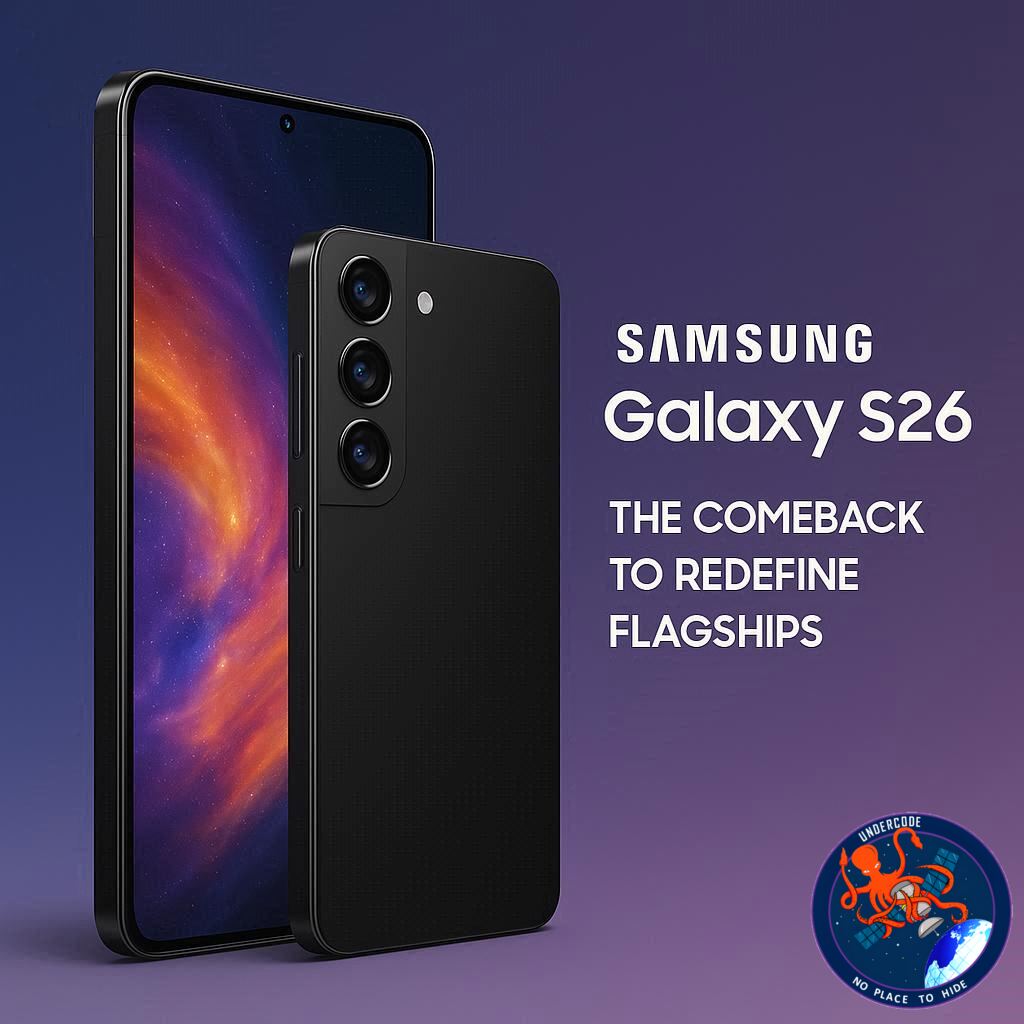
A New Dawn for Samsung’s Galaxy Line
For years, Samsung’s Galaxy S-series has stood as the pinnacle of Android innovation. But after the Galaxy S25’s lukewarm reception—criticized for underwhelming performance and minimal upgrades—the upcoming Galaxy S26 carries the weight of redemption. Whispers from insiders and leaks from Korea hint at a radical transformation. A new Exynos 2600 chipset, redesigned camera system, and potentially a bold release strategy could turn the S26 into Samsung’s strongest flagship comeback in years.
This isn’t just another upgrade. It’s a statement from Samsung—a message that they’ve listened to the criticism and are ready to reclaim the crown in a market increasingly dominated by aggressive rivals like OnePlus and Oppo. So, what exactly makes the Galaxy S26 special? Let’s break down everything we know so far.
The Exynos Resurrection
Samsung’s in-house chipset, the Exynos 2600, will reportedly return after years of absence, marking a pivotal shift for the brand. Built on a cutting-edge 2nm process, this chip promises exceptional power efficiency and AI capabilities. Sources claim the 2600’s neural processing unit (NPU) could be six times faster than Apple’s A19 Pro, while outperforming Qualcomm’s top Snapdragon chip by 30% in AI tasks.
The GPU improvements are even more dramatic—up to 75% faster graphics performance than its predecessor. But the question remains: will Samsung finally solve the heat management issues that plagued previous Exynos chips? If they do, this could be the moment when Exynos finally rivals Apple’s Silicon in real-world performance.
Half of the S26 lineup—particularly models sold in South Korea and Europe—will use the Exynos 2600, while the U.S., Japan, and China are expected to get the Qualcomm variant. The decision reflects Samsung’s confidence in its silicon, signaling a return to form rather than reliance on external chipmakers.
A New Era in Mobile Photography
Camera innovation is expected to take center stage with the Galaxy S26 series. Leaks suggest the Ultra model might feature a massive 200MP Sony sensor with a 1/1.1-inch footprint and f/1.4 aperture, capturing 47% more light than before. This means significantly better low-light photography and richer image depth.
Samsung may also introduce ALoP lens technology, which could shrink the camera bump while improving lens sharpness. The base S26 model could sport a 50MP main sensor, while telephoto and ultrawide lenses see minor yet meaningful boosts. If these rumors are true, Samsung could finally close the gap against rivals like the Oppo Find X8 Ultra and Apple’s iPhone 17 Pro Max.
Still, enthusiasts hope the new imaging system isn’t just a numbers game. For Samsung to regain its dominance, computational photography—especially night mode and HDR processing—must see major improvement.
The Confusing Lineup: What’s in a Name?
Early reports mentioned experimental names like Galaxy S26 Pro or Galaxy S26 Edge, but recent information suggests Samsung will stick to its traditional trio: S26, S26 Plus, and S26 Ultra. The rumored Edge variant might not make it to production at all.
The base S26 could see a battery bump from 4,000mAh to 4,300mAh, addressing one of the most frequent complaints about the S25 series. Though battery details for the Plus and Ultra models remain uncertain, fans are hoping Samsung catches up to the massive cells seen in competitors like the OnePlus 15, which boasts an incredible 7,300mAh battery.
Timing the Launch: A Strategic Gamble
Conflicting reports have surfaced about Samsung’s release schedule. Some claim the Galaxy S26 lineup might be delayed until March 2026 due to development setbacks. However, industry logic suggests Samsung won’t risk giving rivals months of uncontested dominance.
Other leaks hint at a staggered release strategy—launching the Galaxy S26 Ultra in January and the base S26 later in the year, possibly September. Such a split release could mimic Apple’s rumored two-wave launch plan, allowing Samsung to maintain momentum and market presence throughout 2026.
Regardless of when it arrives, the S26 represents a critical turning point. The company can no longer rely on brand loyalty alone; innovation must take the lead.
What Undercode Say:
The Galaxy S26 marks more than just another iteration—it symbolizes Samsung’s renewed technological ambition after years of uneven experimentation. The Exynos 2600 isn’t merely a processor; it’s a statement of self-sufficiency, an attempt to reclaim control over performance and identity.
From an analytical standpoint, Samsung’s dual-chip approach is a risky but strategic maneuver. By reintroducing Exynos to selective markets, the company tests user confidence while minimizing exposure if performance issues arise. Should the 2nm process deliver as promised, it could mark the rebirth of Exynos as a global competitor, effectively reducing Samsung’s dependency on Qualcomm.
Camera improvements, though still speculative, seem designed to shift Samsung’s narrative from incremental evolution to bold innovation. The rumored ALoP lens system and variable aperture return suggest a renewed focus on physics-driven image quality rather than AI gimmicks alone. If executed properly, this could make the Galaxy S26 Ultra a legitimate DSLR alternative.
However, the elephant in the room is battery life. With competitors pushing past 7,000mAh capacities, Samsung’s rumored 4,300mAh base cell feels modest. To maintain parity, Samsung must prioritize efficiency through software optimization and silicon synergy rather than brute-force capacity increases.
Another key insight lies in Samsung’s release timing. By spacing out the launches of the Ultra and base models, the company could maintain relevance throughout the year while also allowing additional time to refine firmware and camera tuning. Yet, this staggered approach might confuse consumers and fracture the brand’s marketing consistency.
Overall, if the Galaxy S26 delivers on even half its rumored advancements, it will represent a true renaissance for Samsung’s flagship identity. It’s a declaration that after years of cautious iteration, the tech giant is ready to take risks again—risks that could very well redefine the Android landscape in 2026.
🔍 Fact Checker Results
✅ Exynos 2600 chipset confirmed by Korea Economic Daily reports.
✅ Camera upgrades, including larger sensors and ALoP technology, corroborated by multiple leaks.
❌ Galaxy S26 Edge model not confirmed; likely misinformation from early rumor cycles.
📊 Prediction
🔥 Expect Samsung to use the Galaxy S26 Ultra as a direct counter to Apple’s iPhone 18 Pro Max.
💡 The Exynos 2600 could be Samsung’s strongest silicon leap since the Exynos 990 era.
📈 By 2026, the Galaxy S26 lineup could restore Samsung’s reputation for innovation and finally close the performance gap with Apple’s A-series chips.
🕵️📝✔️Let’s dive deep and fact‑check.
References:
Reported By: www.zdnet.com
Extra Source Hub (Possible Sources for article):
https://www.github.com
Wikipedia
OpenAi & Undercode AI
Image Source:
Unsplash
Undercode AI DI v2
Bing
🔐JOIN OUR CYBER WORLD [ CVE News • HackMonitor • UndercodeNews ]
📢 Follow UndercodeNews & Stay Tuned:
𝕏 formerly Twitter 🐦 | @ Threads | 🔗 Linkedin | 🦋BlueSky | 🐘Mastodon


