
Listen to this Post
Introduction: A Quiet Upgrade With Big Implications
Samsung’s Galaxy S-series has always thrived on refinement rather than radical change, and the Galaxy S26 lineup is no exception. While early discussions around the Galaxy S26 Ultra focused on the lack of a battery capacity increase, a deeper look reveals something more interesting happening behind the scenes. Samsung has quietly improved charging performance—especially wireless charging—and new supply-chain details now explain how this was achieved. What looks like a modest spec bump on paper may actually signal a broader shift in Samsung’s hardware strategy for future flagship devices.
the Original
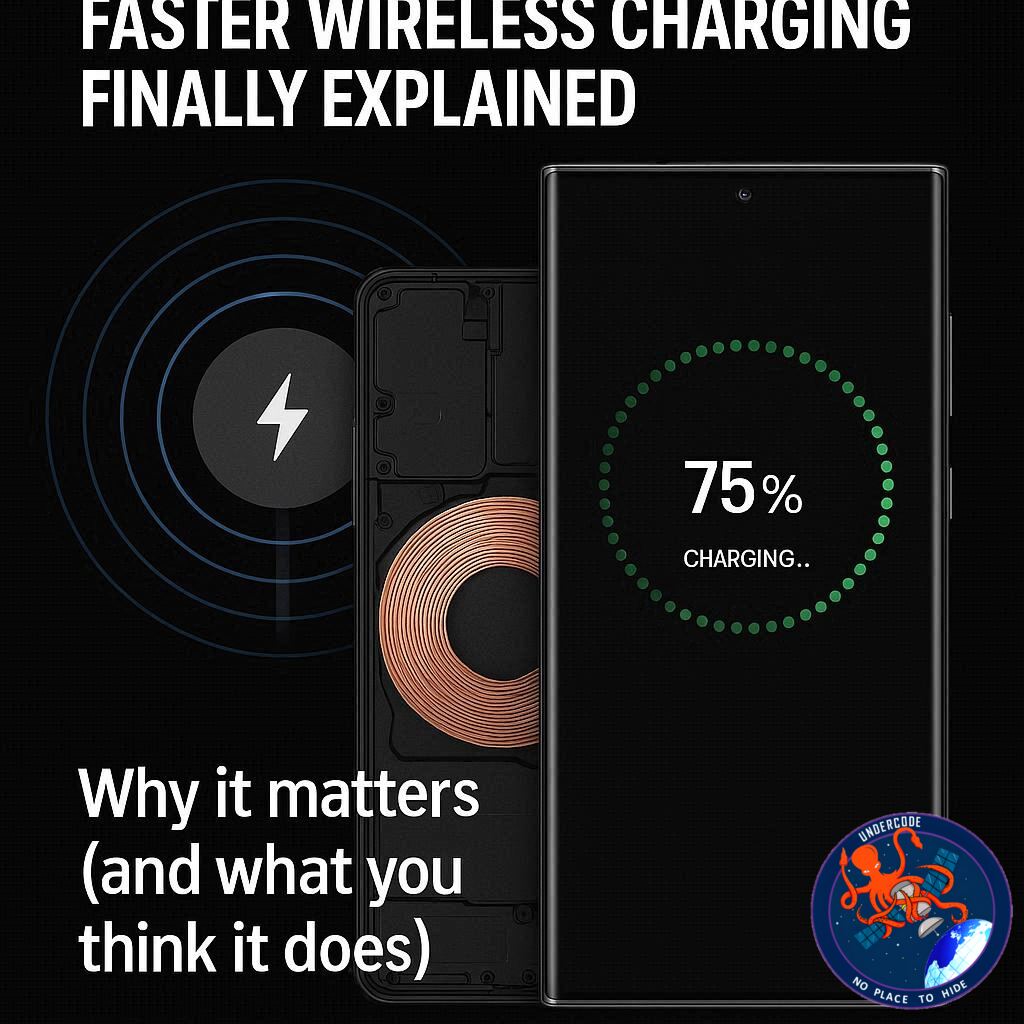
Recent disclosures confirm that the Galaxy S26 Ultra supports faster 25W wireless charging, despite keeping the same battery capacity as its predecessor. The key reason lies in a newly supplied wireless charging receiver module from WiTS, a South Korean firm specializing in wireless power transmission technologies. According to WiTS, this new module delivers higher performance through improved thermal management and more stable power delivery, allowing higher wattage without excessive heat buildup.
The module has also been redesigned to be thinner, making it suitable for modern smartphones that prioritize slim profiles without sacrificing internal efficiency. WiTS revealed that the initial production volume for the Galaxy S26 series is estimated at around 4.9 million units, with the Galaxy S26 Ultra accounting for roughly 70% of that figure—highlighting Samsung’s strong confidence in its premium model.
WiTS’ relationship with Samsung is well established. The company was formed in 2019 after acquiring Samsung Electro-Mechanics’ wireless charging business, making it a natural long-term supplier. WiTS also produced Samsung’s 3-in-1 wireless charging stand in the previous year, further cementing its role in Samsung’s ecosystem.
Across the lineup, wireless charging capabilities vary. The Galaxy S26 Ultra reaches 25W, the Galaxy S26+ supports up to 20W with compatible chargers, while the standard Galaxy S26 remains capped at 15W. None of the models feature built-in magnets, meaning Qi2 compatibility still depends on third-party cases with integrated magnetic rings.
What Undercode Say:
Samsung’s decision to focus on charging efficiency rather than raw battery size is a calculated move that aligns with broader industry trends. Larger batteries add weight, thickness, and thermal challenges, while smarter power delivery improves everyday usability without compromising design. Faster wireless charging, in particular, addresses one of the most persistent criticisms of wireless solutions: convenience at the cost of speed.
The introduction of a slimmer, more thermally efficient receiver module suggests Samsung is preparing for even tighter internal layouts in future devices. As camera systems grow more complex and chipsets demand better cooling, saving internal space becomes just as valuable as increasing capacity. This also explains why the Galaxy S26 Ultra benefits most from the upgrade—Samsung clearly views it as the platform for testing higher-end internal components at scale.
Production figures tell their own story. With roughly 70% of early units allocated to the Ultra model, Samsung appears to be doubling down on the premium segment, where margins are higher and buyers are more receptive to incremental but meaningful upgrades. Faster wireless charging may not dominate headlines, but it directly impacts daily charging habits, especially for users invested in wireless pads and stands.
There is also a strategic supply-chain angle. By continuing to rely on WiTS—a company born from Samsung’s own former division—Samsung maintains tighter control over component optimization. This vertical familiarity reduces integration risks and allows faster iteration cycles, which is critical as charging standards evolve toward higher wattages and stricter thermal requirements.
However, the lack of built-in magnets remains a missed opportunity. As Qi2 adoption grows, relying on cases for magnetic alignment feels like a transitional compromise rather than a long-term solution. Samsung appears to be waiting for broader ecosystem maturity before fully committing, but competitors that integrate magnets directly may gain an edge in user experience.
Overall, the Galaxy S26 Ultra’s wireless charging upgrade reflects Samsung’s philosophy of quiet engineering progress. It may not be flashy, but it lays groundwork for future devices where efficiency, heat control, and internal space optimization matter more than headline-grabbing battery numbers.
🔍 Fact Checker Results
✅ WiTS supplying a 25W wireless charging receiver module aligns with its role as Samsung’s long-term charging component partner.
✅ Reported production estimates and Ultra model dominance are consistent with Samsung’s recent flagship launch strategies.
❌ No official confirmation yet that this module will be reused across future Galaxy generations.
📊 Prediction
Samsung’s investment in higher-efficiency wireless charging hardware suggests that built-in magnetic alignment and even higher wireless wattages are likely within the next one to two Galaxy generations. As thermal constraints are gradually solved, wireless charging may soon rival wired speeds—turning convenience into a true replacement rather than a compromise.
🕵️📝✔️Let’s dive deep and fact‑check.
References:
Reported By: www.sammobile.com
Extra Source Hub (Possible Sources for article):
https://www.stackexchange.com
Wikipedia
OpenAi & Undercode AI
Image Source:
Unsplash
Undercode AI DI v2
Bing
🔐JOIN OUR CYBER WORLD [ CVE News • HackMonitor • UndercodeNews ]
📢 Follow UndercodeNews & Stay Tuned:
𝕏 formerly Twitter 🐦 | @ Threads | 🔗 Linkedin | 🦋BlueSky | 🐘Mastodon


