
Listen to this Post
🎯 Introduction
After years of anticipation, Samsung’s Galaxy XR headset is finally here, and it’s not just another VR gadget. It’s the device that bridges two worlds—the immersive landscape of extended reality and the sleek, everyday convenience of AI-powered smart glasses. Priced at $1,799 and powered by Google’s new Android XR operating system, the Galaxy XR is a bold statement of intent. With its Gemini AI layer, real-time spatialization, and razor-sharp 4K-per-eye display, Samsung is not merely chasing Apple’s Vision Pro—it’s redefining what’s possible in the next frontier of human-computer interaction.
The Galaxy XR Experience: A Leap Toward Everyday AI
Samsung’s latest creation is the culmination of an ambitious collaboration with Google and Qualcomm. One year after its first appearance as Project Moohan, the Galaxy XR has evolved from a polished prototype into a sophisticated, production-ready machine. The hardware design feels premium, and the display clarity is almost startling—its pass-through camera renders reality with lifelike precision, showing digital overlays that blend so seamlessly you forget they’re not real.
What’s changed the most over the year isn’t the concept—it’s the refinement. Hand-tracking, though slightly less intuitive than before, still feels fluid once you get used to keeping your hands in view. The attention to detail, the clarity of textures, and the responsiveness of spatial interactions all push this headset into new territory.
The most striking leap, however, is Gemini AI—the intelligence layer that turns the Galaxy XR into more than a headset. It’s the brain behind the beauty. You can summon Gemini by voice or button, ask it to organize your environment, launch apps, or even “circle to search” in the real world through pass-through mode. The AI integration feels intuitive, a blend of cloud-based computation and on-device power.
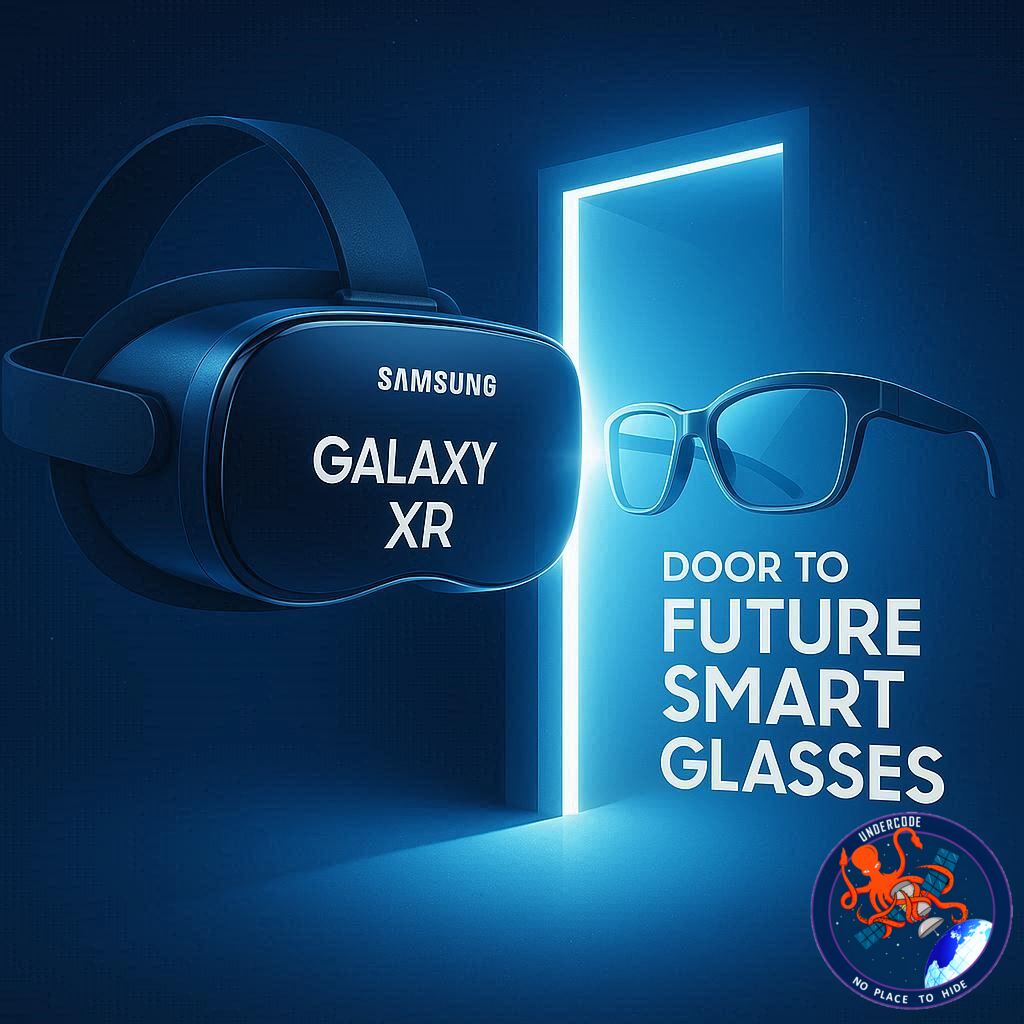
Samsung’s design philosophy hints at something bigger: this isn’t just a headset. It’s a prototype for the future of wearable computing—a testbed for the AI-powered smart glasses that will one day replace it.
The Fusion of Real and Digital Worlds
During hands-on testing, the 4K-per-eye pass-through delivered a natural, spatially accurate representation of reality. Text across the room was readable, lighting and shadows were realistic, and virtual elements anchored perfectly in space. The illusion was believable, the line between digital and physical blurred almost entirely.
That’s the true magic of the Galaxy XR—it’s not trying to transport you to another world; it’s trying to enhance the one you already live in. Unlike its early prototype, Project Moohan, which occasionally suffered from odd occlusions and visual artifacts, Galaxy XR brings coherence and depth to the mixed reality experience.
Gemini’s integration deepens this illusion by providing context and meaning to everything you see. Imagine looking at an object, and instantly knowing what it is, where it came from, or how it works—all without lifting a finger. The headset isn’t just showing information; it’s thinking alongside you.
Immersion Meets Intelligence
Samsung’s demo showcased one of the Galaxy XR’s most emotional applications—AI-driven spatialization of old photos and videos. A black-and-white image of a family moment, brought to life in color and motion, carried emotional weight beyond tech novelty. The technology transforms memories into experiences, blending nostalgia with innovation.
In another demo, real-time spatialization was tested using YouTube videos. Watching an NBA game spatially reconstructed in 3D felt futuristic, even if minor glitches persisted. The latency—just 20 milliseconds—was impressively low for real-time rendering.
The message was clear: Galaxy XR isn’t just for entertainment or productivity—it’s for reimagining reality.
The Bridge to Smart Glasses
Samsung’s ultimate ambition isn’t to sell you a headset; it’s to train you for the glasses that come next. The Galaxy XR, despite its brilliance, isn’t designed for everyday use. You won’t walk city streets wearing one, no matter how well it integrates Google Maps overlays. But that’s precisely the point—Samsung knows this is a gateway device.
Even Apple, according to reports, is shifting engineers from its shelved Vision Air project to focus on smart glasses. Both companies see the same horizon: a world where AI doesn’t live behind a screen or headset but in the lenses that rest gently on your face.
Gemini, acting as a “copilot” inside the XR headset, offers a glimpse into that world. When embedded in smart glasses, it becomes something even more profound—a digital assistant that lives with you, perceives your environment, and understands your intent in real time.
What Undercode Say:
Samsung’s Galaxy XR is not the endgame—it’s the transition phase in wearable AI evolution. What we’re witnessing is the convergence of three revolutions: artificial intelligence, spatial computing, and ambient interfaces. The headset’s existence is both symbolic and strategic.
From a technological perspective, Galaxy XR validates the Android XR ecosystem as a competitive alternative to Apple’s visionOS. Google’s Gemini integration lays the foundation for a persistent, multimodal AI system capable of blending voice, vision, and context. This symbiosis between hardware and AI defines the new frontier of personal computing.
From a business standpoint, Samsung is positioning itself as the hardware architect of the post-smartphone era. The XR headset, priced at $1,799, serves as both an aspirational device and a data generator. Every movement, voice command, and spatial interaction collected from early adopters helps train the models that will eventually power Samsung’s AI glasses.
Philosophically, Galaxy XR represents a shift from isolation to augmentation. VR once aimed to replace the real world; XR seeks to enrich it. In this paradigm, Gemini’s role isn’t just functional—it’s existential. It gives the machine perception, empathy, and relevance.
The evolution from Galaxy XR to smart glasses mirrors the journey from mainframes to laptops to smartphones—a gradual shrinking of form factor while expanding intelligence. The challenge lies in balancing power, privacy, and presence. Once AI becomes invisible and wearable, the question will no longer be what it can do, but what we allow it to know.
In essence, the Galaxy XR headset is Samsung’s bold declaration that the age of ambient AI has begun. It’s not the device you’ll wear forever—it’s the one that will make you ready for what comes next.
🔍 Fact Checker Results
✅ Galaxy XR officially launched at $1,799 with Android XR OS and Gemini AI integration.
✅ Samsung confirmed ongoing work on AI-powered smart glasses as the next step in wearable tech.
❌ No confirmation yet that Galaxy XR’s full feature set (like real-time spatialization) will be included in the initial retail version.
📊 Prediction
👓 Within the next three years, Samsung and Google will debut lightweight Gemini-powered smart glasses that merge AR and AI seamlessly.
🤖 AI copilots will become the dominant interface, replacing traditional touchscreens for contextual tasks.
🌐 The Galaxy XR will be remembered not as a headset—but as the first true gateway to wearable artificial intelligence.
🕵️📝✔️Let’s dive deep and fact‑check.
References:
Reported By: www.zdnet.com
Extra Source Hub (Possible Sources for article):
https://www.pinterest.com
Wikipedia
OpenAi & Undercode AI
Image Source:
Unsplash
Undercode AI DI v2
Bing
🔐JOIN OUR CYBER WORLD [ CVE News • HackMonitor • UndercodeNews ]
📢 Follow UndercodeNews & Stay Tuned:
𝕏 formerly Twitter 🐦 | @ Threads | 🔗 Linkedin | 🦋BlueSky | 🐘Mastodon


