
Listen to this Post
Introduction
Samsung is continuing its aggressive software support strategy in 2026 by simultaneously handling multiple major projects across its Galaxy ecosystem. While developers are reportedly busy preparing One UI 9.0 and expanding the rollout of One UI 8.5, the company is also maintaining its monthly security update schedule. The latest move targets the aging but still popular Galaxy S22 lineup, proving Samsung remains committed to long-term device support even for smartphones released several years ago.
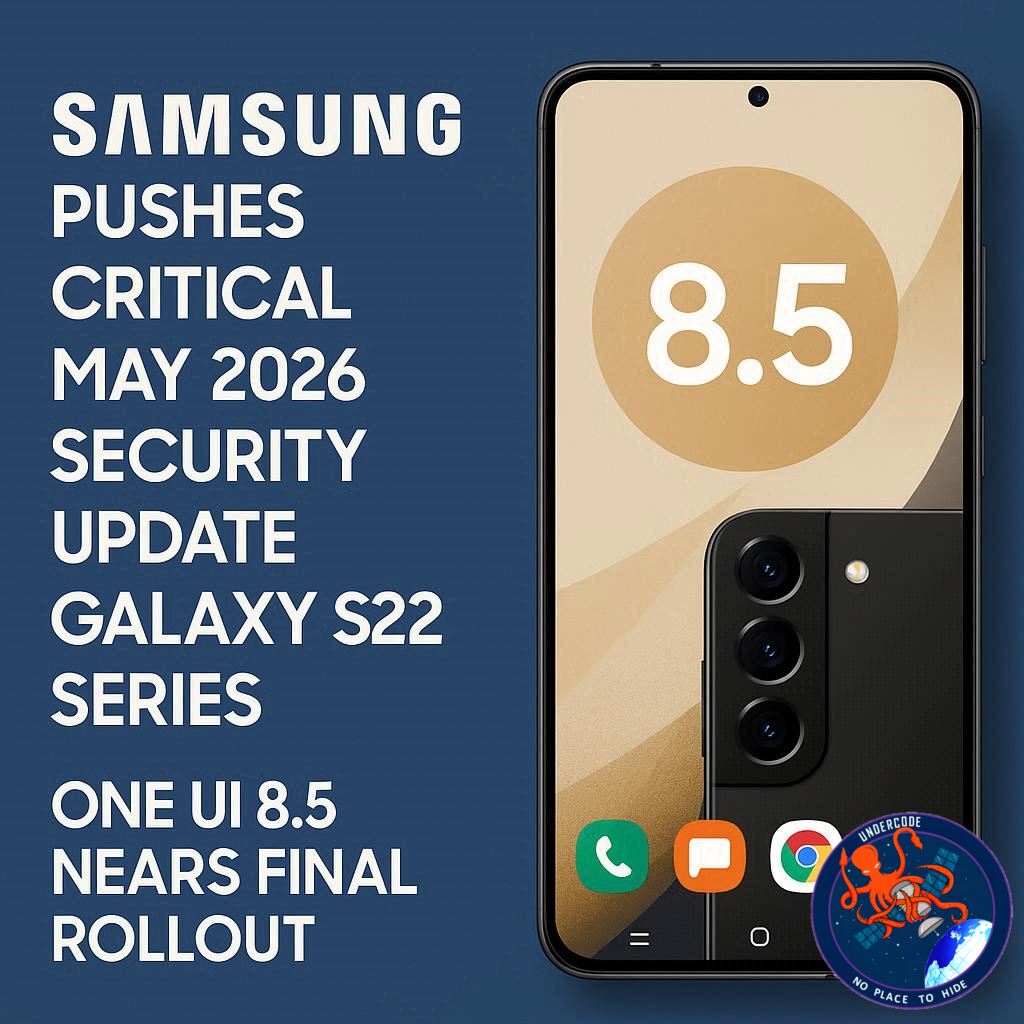
The newest May 2026 security update is now rolling out to the Galaxy S22, Galaxy S22+, and Galaxy S22 Ultra, beginning in South Korea before expanding globally. Beyond security improvements, the update also highlights an important moment for S22 owners: these devices are approaching the end of their major Android upgrade lifecycle.
Samsung Begins May 2026 Security Patch Rollout
Samsung has officially released the May 2026 security patch for the Galaxy S22 family. The update currently arrives with firmware version S90xNKSS9GZE5 and has a download size of approximately 506.30MB. Initial deployment has started in South Korea, which is typically Samsung’s first testing ground before global distribution begins over the following days or weeks.
The latest patch reportedly fixes 36 separate security vulnerabilities, addressing weaknesses discovered in Android and Samsung’s proprietary software layer. While Samsung did not publicly detail every vulnerability, these monthly patches are essential for protecting devices against malware, privilege escalation attacks, and unauthorized system access.
Users can manually check for the update by navigating to:
Settings → Software Update → Download and Install
Samsung’s rapid patch cycle continues to distinguish the company from many Android competitors that struggle to provide timely long-term software maintenance.
One UI 8.5 Gives the Galaxy S22 a Second Life
Although the security patch itself focuses primarily on protection and system stability, attention is quickly shifting toward One UI 8.5. Samsung’s upcoming software version is expected to introduce interface refinements, smoother animations, visual redesigns, and additional AI-powered productivity features.
For Galaxy S22 owners, One UI 8.5 represents something more important: likely the final major software transformation their devices will receive.
Despite being several generations old, the Galaxy S22 series still offers flagship-level hardware capable of handling modern Android features comfortably. Samsung appears determined to extend the usefulness of these phones by optimizing One UI 8.5 for older flagship hardware instead of abandoning support prematurely.
This strategy gives users additional value from expensive premium devices and helps reduce unnecessary hardware upgrades.
Galaxy S22 Will Not Receive One UI 9.0
One of the most significant details in the report is the confirmation that the Galaxy S22 lineup is unlikely to receive One UI 9.0. That means One UI 8.5 could effectively become the final major Android-based experience for the S22 family.
Samsung’s software policy has improved dramatically over recent years, but every device eventually reaches the end of its upgrade roadmap. The Galaxy S22 series is now entering that phase.
However, even after major OS support ends, Samsung will likely continue delivering security updates for some time. This approach mirrors the company’s handling of previous Galaxy flagship generations, where devices continued receiving critical patches long after feature development stopped.
For users still satisfied with S22 hardware performance, this means the phones should remain safe and reliable for everyday use well beyond 2026.
Samsung’s Multi-Tasking Software Strategy
What makes this rollout particularly impressive is Samsung’s ability to manage several large-scale software operations simultaneously. The company is reportedly balancing:
One UI 9.0 development and testing
One UI 8.5 deployment
Monthly security patch maintenance
Maintaining this pace across dozens of smartphones, tablets, and foldable devices is a major technical undertaking. Samsung has transformed itself from a company once criticized for slow Android updates into one of the fastest Android manufacturers for software support.
This shift has become one of Samsung’s strongest competitive advantages against rivals in the Android ecosystem.
The Galaxy S22 Series Still Holds Strong Value
Even years after launch, the Galaxy S22, S22+, and S22 Ultra remain highly capable smartphones. Their premium displays, strong camera systems, powerful processors, and mature software experience continue to satisfy many users.
The S22 Ultra in particular still competes closely with newer premium phones thanks to its advanced camera setup and integrated S Pen functionality. For many consumers, One UI 8.5 may provide enough modernization to delay upgrading for another year or two.
Samsung’s continued support also strengthens resale value and buyer confidence in the Galaxy ecosystem.
What Undercode Says:
Samsung’s software support evolution is becoming one of the most important developments in the Android market. Just a few years ago, Android manufacturers were heavily criticized for inconsistent update schedules and short device lifespans. Samsung has aggressively reversed that perception.
The May 2026 update for the Galaxy S22 lineup is not simply a routine security patch. It demonstrates how Samsung now treats long-term software support as a core part of its premium product strategy rather than an afterthought.
What stands out most is Samsung’s operational scale. Managing simultaneous development for One UI 9.0 while optimizing One UI 8.5 and maintaining monthly security patches requires enormous engineering coordination. Very few Android manufacturers operate at this level consistently.
Another important aspect is customer retention. By keeping older flagships updated, Samsung reduces frustration among existing users. This creates stronger ecosystem loyalty, especially among customers who invest heavily in Galaxy devices, accessories, smartwatches, and foldables.
The Galaxy S22 series itself remains technically powerful enough for modern Android experiences. Unlike older generations where hardware limitations quickly became noticeable, flagship devices today age much more slowly. This allows Samsung to extend meaningful support without compromising user experience.
There is also a broader industry implication. Longer software support cycles reduce electronic waste by encouraging consumers to keep devices longer instead of replacing them annually. Governments and regulators across Europe and other regions are increasingly pressuring manufacturers to improve device longevity, and Samsung appears ahead of many competitors in this area.
The decision to stop One UI 9.0 support for the S22 lineup is unsurprising from a business perspective. Software maintenance costs rise significantly as devices age, especially when hardware architectures begin diverging from newer models. Samsung must eventually allocate resources toward newer products.
Still, ending major upgrades does not mean the devices suddenly become obsolete. Security support remains the critical factor for most users. As long as Samsung continues patching vulnerabilities, the Galaxy S22 family should remain viable for everyday usage, productivity, photography, gaming, and media consumption.
One UI 8.5 may ultimately become one of the most refined software versions for the S22 lineup because Samsung can focus on polishing stability rather than introducing experimental platform shifts. Mature software often delivers better real-world performance than feature-heavy early releases.
There is also a strategic marketing angle. By supporting older devices longer, Samsung strengthens consumer trust before launching future flagships such as the Galaxy S26 lineup. Buyers are more willing to spend premium prices when they believe their investment will remain supported for years.
Samsung’s update leadership is also pressuring other Android brands to improve. Companies that fail to match Samsung’s update policies increasingly appear less competitive in premium markets.
The broader takeaway is clear: software longevity is now just as important as hardware innovation in the smartphone industry. Samsung understands this shift better than most Android manufacturers.
🔍 Fact Checker Results
✅ Samsung has started rolling out the May 2026 security update for the Galaxy S22 series in South Korea.
✅ The update reportedly fixes 36 security vulnerabilities and carries firmware version S90xNKSS9GZE5.
❌ There is no official public confirmation yet from Samsung that One UI 9.0 support for the Galaxy S22 lineup is permanently canceled, though industry expectations strongly suggest it.
📊 Prediction
Samsung will likely complete the global rollout of the May 2026 patch within the next two weeks, followed by wider One UI 8.5 beta or stable deployments for older flagship models during mid-to-late 2026. The Galaxy S22 Ultra is expected to maintain strong resale demand thanks to its premium hardware and extended security support, even after major Android upgrades end. Samsung’s continued emphasis on long-term updates may also push competing Android manufacturers to extend software support policies to remain competitive in flagship markets.
🕵️📝Let’s dive deep and fact‑check.
References:
Reported By: www.sammobile.com
Extra Source Hub (Possible Sources for article):
https://www.stackexchange.com
Wikipedia
OpenAi & Undercode AI
Image Source:
Unsplash
Undercode AI DI v2
Bing
🔐JOIN OUR CYBER WORLD [ CVE News • HackMonitor • UndercodeNews ]
📢 Follow UndercodeNews & Stay Tuned:
𝕏 formerly Twitter 🐦 | @ Threads | 🔗 Linkedin | 🦋BlueSky | 🐘Mastodon | 📺Youtube


