
Listen to this Post
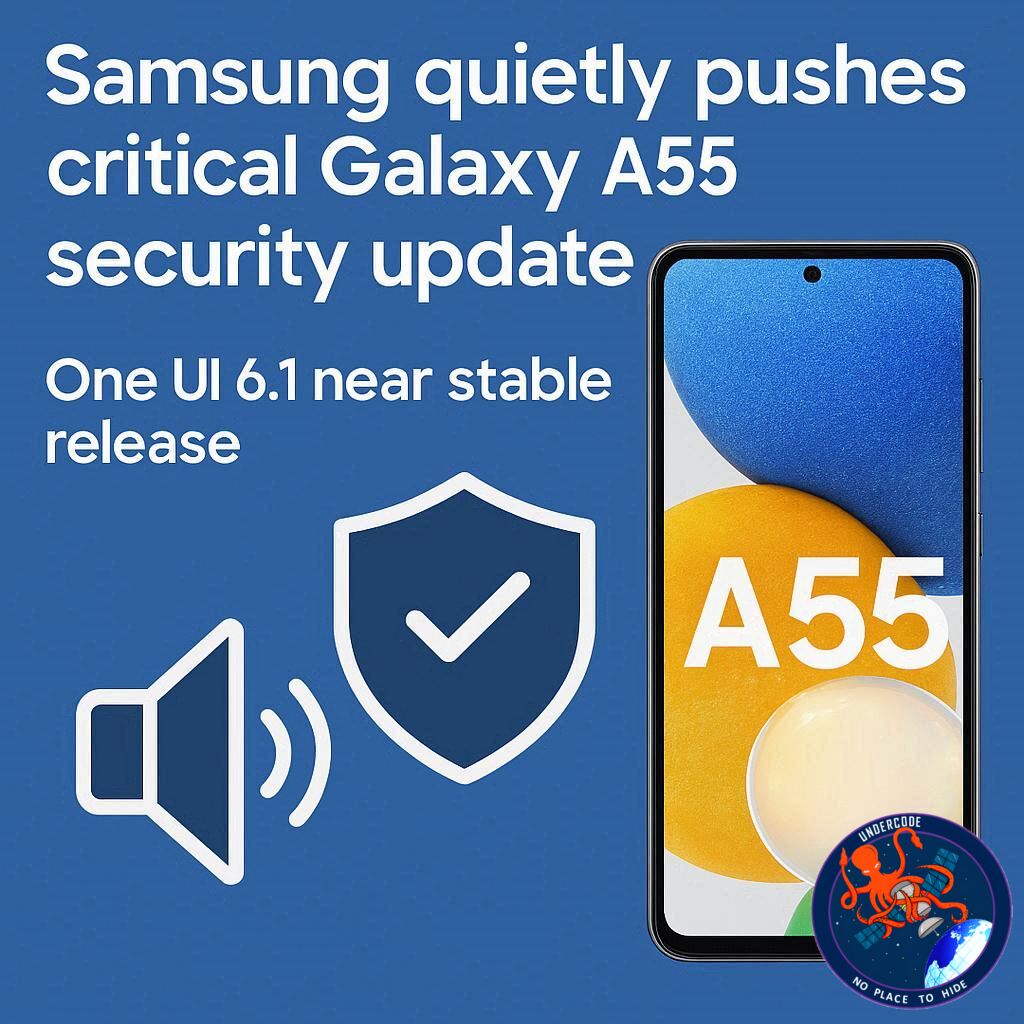 Samsung Expands May 2026 Security Rollout to the Popular Galaxy A55
Samsung has officially started rolling out its May 2026 security update to the highly popular Samsung Galaxy A55, making it one of the first devices outside the flagship lineup to receive the latest protection patch. The move comes only days after the company released the same update for the premium Samsung Galaxy S26 family, signaling that Samsung is accelerating software support even for its upper mid-range devices.
The latest firmware update carries the version number A556BXXSECZDE and is currently being distributed across several European markets. While Samsung has not officially confirmed a broader global rollout yet, users in additional regions are expected to receive the patch gradually over the coming days. Owners of the Galaxy A55 can manually check for the update by navigating to Settings, then Software Update, followed by Download and Install.
According to Samsung’s official security bulletin released earlier this month, the May 2026 patch fixes 36 separate security vulnerabilities affecting Galaxy smartphones, tablets, and smartwatches. While most of these issues were classified as moderate risks, several addressed vulnerabilities were considered serious enough to potentially expose user data or weaken device security if left unpatched.
The Galaxy A55 receiving the update so quickly is notable because Samsung traditionally prioritizes flagship devices before expanding support to more affordable models. This faster rollout reflects the company’s growing emphasis on cybersecurity and long-term software reliability, especially as Android security threats continue evolving.
At the same time, Samsung is preparing the Galaxy A55 for a much bigger software leap. The company recently launched the One UI 8.5 beta program based on Android 16 QPR2 for the device, giving users early access to a redesigned interface, performance optimizations, and new AI-driven software features before the stable version arrives.
So far, Samsung has already released two beta builds for testers. Reports from early users suggest improvements in animation smoothness, multitasking responsiveness, battery optimization, and notification handling. Visual refinements also appear to play a major role in One UI 8.5, with Samsung continuing its effort to modernize the overall Galaxy ecosystem.
Industry observers believe the beta phase may end soon, as Samsung typically limits mid-range beta cycles to only a handful of releases before launching the stable build publicly. Higher-end Galaxy devices have already started receiving stable One UI 8.5 updates, increasing expectations that the Galaxy A55 could be next in line within weeks.
The timing of this update is particularly important because the Galaxy A55 has become one of Samsung’s strongest-selling mid-range phones in several international markets. Its balance between price, display quality, camera performance, and long-term software support helped it gain traction among users unwilling to spend flagship-level money.
Samsung’s software strategy has increasingly become a major selling point for its smartphones. In previous years, Android manufacturers were criticized for inconsistent update schedules and weak security support. Samsung, however, has aggressively invested in extending update lifecycles, reducing rollout delays, and delivering monthly security patches faster than many competitors.
For Galaxy A55 users, the May 2026 patch may not introduce flashy visual changes, but it significantly strengthens device protection behind the scenes. Security updates often close vulnerabilities related to system processes, network access, application permissions, and kernel-level exploits that ordinary users never notice until a breach occurs.
The update also arrives during a broader industry push toward AI-enhanced mobile experiences. As smartphones become more connected to cloud services and AI systems, maintaining strong device security is becoming increasingly critical. Samsung appears determined to position itself not only as a hardware company but also as a trusted long-term software ecosystem provider.
What Undercode Says:
Samsung’s Real Strategy Is No Longer Hardware Alone
Samsung’s rapid deployment of the May 2026 patch to the Galaxy A55 reveals a deeper strategic shift inside the company. For years, Samsung dominated Android hardware sales but struggled against Apple in one critical area: long-term software trust. That gap is now shrinking fast.
The Galaxy A55 is not a flagship phone. It sits in the highly competitive upper mid-range category where brands fight aggressively on pricing. By giving this device near-flagship update priority, Samsung sends a powerful message: software longevity is becoming a premium feature available outside ultra-expensive smartphones.
This matters because consumer behavior has changed dramatically. Many users now keep phones for four to six years instead of replacing them every two years. Fast security updates are no longer optional extras — they directly affect purchasing decisions.
Samsung also understands that Android’s reputation historically suffered from fragmented updates. While Google develops Android itself, many Android manufacturers still lag behind in timely rollouts. Samsung is trying to separate itself from that old stereotype by becoming the “safe” Android choice.
There is another important angle here: cybersecurity marketing. Tech companies increasingly advertise privacy and security as major selling points. Apple built an empire around that perception. Samsung now appears determined to compete on similar ground, especially as mobile devices hold banking apps, biometric data, business information, and AI-generated personal content.
The Galaxy A55 update timing also supports speculation that Samsung is preparing a broader AI ecosystem integration across future One UI versions. Android 16 QPR2 and One UI 8.5 are expected to introduce deeper AI-powered personalization, smarter automation, and predictive system behavior. Those features require strong security foundations because AI systems often process sensitive behavioral data.
Another interesting detail is Samsung’s increasingly synchronized rollout schedule. In previous years, mid-range devices could wait months after flagship releases before seeing updates. Now the gap is narrowing. That suggests Samsung has improved its internal software deployment infrastructure considerably.
This faster update cycle may also help Samsung defend itself against aggressive Chinese smartphone brands offering high-end specifications at lower prices. While hardware advantages can disappear quickly, trusted software support is harder to replicate overnight.
The One UI 8.5 beta itself is another strategic signal. Samsung is turning beta testing into a community engagement tool, similar to how gaming companies use public test servers. Beta users effectively become unpaid testers while simultaneously building hype around future software releases.
There is also growing evidence that Samsung wants One UI to evolve into a recognizable ecosystem identity separate from stock Android. Earlier Samsung interfaces were heavily criticized for being bloated and slow. Modern One UI versions, however, have matured into polished ecosystems with consistent design language and productivity-focused features.
The company’s investment in update speed may ultimately become one of its strongest competitive advantages in the Android market. Hardware innovation is slowing across the smartphone industry. Most devices already have excellent screens, cameras, and processors. The next battleground is software quality, ecosystem integration, AI experiences, and long-term trust.
Samsung appears to understand this transition earlier than many competitors.
If One UI 8.5 launches smoothly on the Galaxy A55 in the coming weeks, it could further strengthen Samsung’s reputation among users seeking dependable mid-range devices with premium-level support. That combination is becoming increasingly valuable in a market where consumers are more cautious about spending and expect devices to last longer.
The broader implication is clear: Samsung no longer wants mid-range buyers to feel like second-class customers. Fast updates are becoming part of the brand’s identity rather than an exclusive flagship privilege.
🔍 Fact Checker Results
✅ Security Patch Details Verified
Samsung officially confirmed that the May 2026 security update fixes 36 vulnerabilities affecting Galaxy devices.
✅ Galaxy A55 Rollout Is Active in Europe
Firmware version A556BXXSECZDE has already appeared for European Galaxy A55 users, confirming the rollout is underway.
✅ One UI 8.5 Beta Program Exists
Samsung has already released multiple beta versions of One UI 8.5 for the Galaxy A55 ahead of the expected stable launch.
📊 Prediction
Samsung’s aggressive software strategy will likely push other Android manufacturers into accelerating their own update schedules over the next two years. Mid-range smartphones may soon compete more heavily on software longevity and AI ecosystem quality rather than raw hardware specifications alone.
The Galaxy A55 could become one of Samsung’s most important long-term devices in proving that premium software support is no longer limited to flagship buyers. If Samsung maintains this pace, it may further solidify its position as the dominant Android ecosystem provider globally.
🕵️📝Let’s dive deep and fact‑check.
References:
Reported By: www.sammobile.com
Extra Source Hub (Possible Sources for article):
https://stackoverflow.com
Wikipedia
OpenAi & Undercode AI
Image Source:
Unsplash
Undercode AI DI v2
Bing
🔐JOIN OUR CYBER WORLD [ CVE News • HackMonitor • UndercodeNews ]
📢 Follow UndercodeNews & Stay Tuned:
𝕏 formerly Twitter 🐦 | @ Threads | 🔗 Linkedin | 🦋BlueSky | 🐘Mastodon


