
Listen to this Post
Introduction
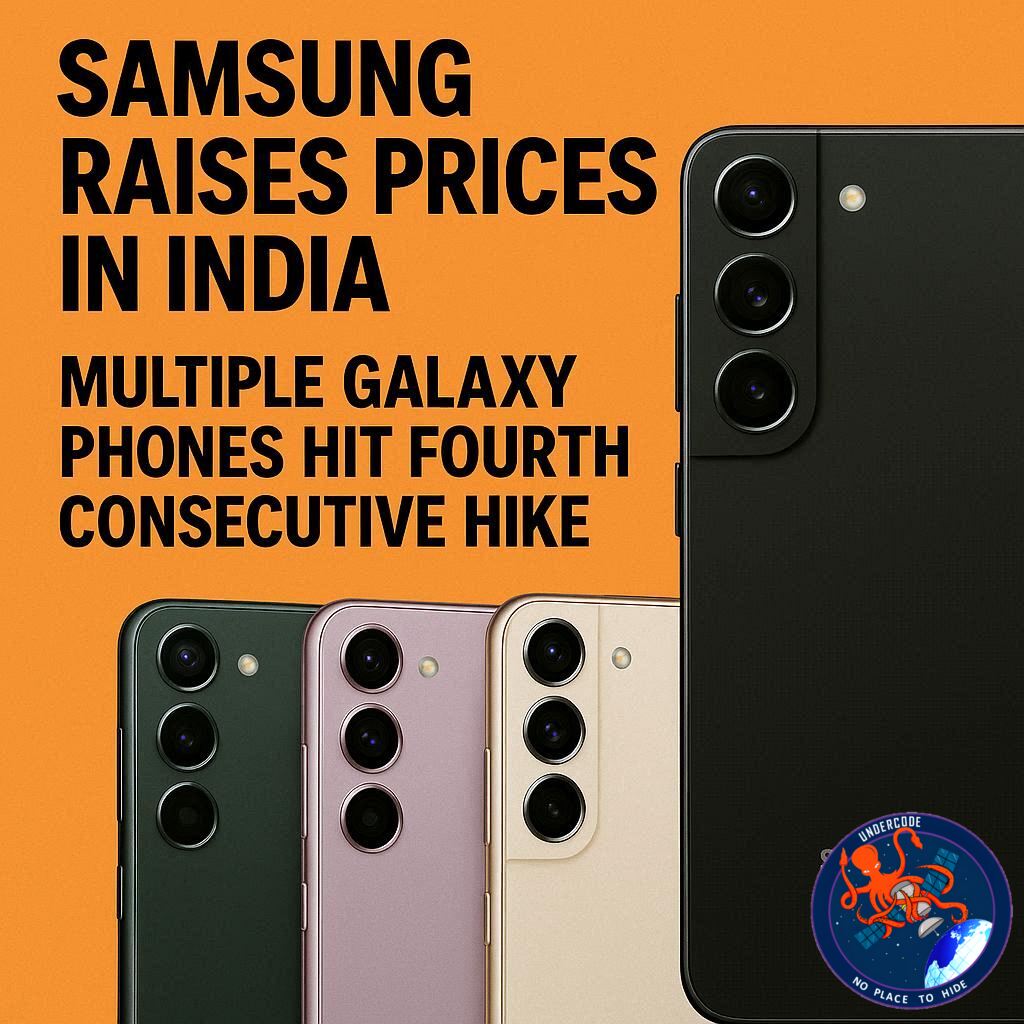
Samsung has once again adjusted its pricing strategy in the Indian smartphone market, continuing a pattern of repeated price increases throughout 2026. In a move that signals ongoing cost pressures and possible supply chain constraints, the company has raised prices on several entry-level and mid-range Galaxy smartphones. This latest revision marks the fourth consecutive monthly price hike since the beginning of the year, affecting a wide range of devices across the Galaxy F and Galaxy M series. While Samsung maintains strong profitability globally, these changes may influence consumer behavior in price-sensitive markets like India, where affordability plays a crucial role in purchasing decisions. Alongside these increases, the company is also reportedly balancing its portfolio by offering discounts on newer models to maintain competitiveness.
the Original
Samsung has increased the prices of multiple smartphones in India for the fourth time in 2026, continuing a trend of monthly hikes since January. The affected devices include models from the Galaxy F series and Galaxy M series, such as Galaxy F06, Galaxy F07, Galaxy F36, Galaxy F70E, Galaxy M06, Galaxy M07, Galaxy M17, Galaxy M17E, and Galaxy M36. The price increases reportedly range between INR 500 and INR 2,000 (approximately $6 to $24 USD), making these devices less accessible to budget-conscious consumers.
The pricing update was shared via internal communication from Samsung India to retailers, as reported by industry sources. Although Samsung has not officially disclosed the reason behind these price adjustments, speculation points toward rising component costs, particularly memory prices, which have historically impacted smartphone pricing. Despite these hikes, Samsung continues to report strong financial performance, including significant profits in Q1 2026.
The repeated price increases could influence consumer purchasing decisions, potentially leading some buyers to delay or cancel purchases. This may affect sales volume in the short term, especially in competitive segments where alternatives are available. However, Samsung appears to be balancing this strategy by introducing promotional discounts on other models, such as the Galaxy A37 and Galaxy A57, which may help offset consumer dissatisfaction caused by rising prices.
What Undercode Says:
Market Pressure and Pricing Strategy Evolution
Samsung’s repeated price hikes across consecutive months suggest a deliberate pricing strategy rather than a one-time adjustment. The inclusion of multiple devices from both the Galaxy F and Galaxy M series indicates that the company is recalibrating its entire budget segment rather than targeting isolated models. This approach often reflects broader macroeconomic pressures, including component shortages, fluctuating currency values, or increased manufacturing costs. In emerging markets like India, such adjustments can significantly alter demand elasticity, as consumers in lower-income brackets are highly sensitive to even minor price changes.
Supply Chain Constraints and Component Costs
One of the most plausible explanations behind these increases lies in the rising cost of components, particularly memory chips and storage modules. The smartphone industry heavily depends on global semiconductor supply chains, which have experienced volatility in recent years. When memory prices increase, manufacturers like Samsung Electronics often pass these costs onto consumers to preserve margins. Given that entry-level and mid-range devices operate on thinner profit margins compared to flagship models, even small cost increases can necessitate retail price adjustments.
Impact on Budget Segment Competitiveness
The affected models, including devices from the Galaxy F06 and Galaxy M36 lineup, compete in one of the most price-sensitive smartphone categories. Competitors in this segment often rely on aggressive pricing and promotional offers to capture market share. With repeated price increases, Samsung risks weakening its competitive position unless the perceived value of its devices—through features, software support, or brand trust—continues to outweigh cost concerns for consumers.
Consumer Behavior and Demand Shifts
Frequent price hikes can lead to hesitation among buyers, especially in markets where smartphones are considered semi-discretionary purchases. Consumers may delay upgrades, switch to alternative brands, or wait for promotional periods before making decisions. This behavioral shift can temporarily reduce sales volumes, even if long-term brand loyalty remains intact. The psychological impact of “rising prices” can sometimes be more influential than the actual numerical increase itself.
Strategic Balancing with Discounts and Promotions
While raising prices on certain models, Samsung appears to be counterbalancing its strategy by offering discounts on newer devices such as the Galaxy A series. This dual approach allows the company to maintain revenue growth while still attracting price-sensitive customers. By positioning discounted newer models alongside increased prices on older ones, Samsung can subtly encourage upgrades without eroding overall profitability.
Global Profitability vs Regional Pricing Adjustments
Despite localized price increases, Samsung continues to demonstrate strong financial performance globally. This indicates that regional pricing adjustments are part of a broader optimization strategy rather than a response to financial distress. Markets like India often serve as volume-driven regions where pricing flexibility is used to balance global revenue targets with local purchasing power.
Long-Term Implications for the Smartphone Market
If price increases persist across multiple cycles, the broader smartphone market in India could see shifts in consumer preferences toward brands offering more stable pricing. Over time, this may encourage manufacturers to adopt more transparent pricing strategies or introduce cost-efficient models tailored specifically for emerging markets. Samsung’s actions may therefore influence not only its own sales trajectory but also the competitive dynamics of the entire industry.
🔍 Fact Checker Results
Verified Price Increase Trend
✅ Reports confirm that Samsung has increased prices multiple times in 2026 across several smartphone models in India, including budget and mid-range devices.
Component Cost Speculation
❌ While rising memory and component costs are a widely cited explanation, Samsung has not officially confirmed this as the direct cause of the price hikes.
Market Impact Assessment
✅ It is reasonable and supported by market behavior that repeated price increases in price-sensitive regions can affect consumer purchasing decisions and demand patterns.
📊 Prediction
Short-Term Market Behavior
Samsung is likely to experience a temporary slowdown in sales for affected models as consumers adjust to higher price points. Budget-conscious buyers may delay purchases or seek alternatives from competing brands.
Medium-Term Strategy Adjustment
The company may rely more heavily on promotional discounts and bundled offers to maintain competitiveness while preserving higher base prices. This could help stabilize demand without reversing the pricing trend.
Long-Term Pricing Stabilization
If component costs stabilize, Samsung may slow down further price increases and shift focus toward value differentiation rather than price adjustments, especially in highly competitive emerging markets like India.
🕵️📝✔️Let’s dive deep and fact‑check.
References:
Reported By: www.sammobile.com
Extra Source Hub (Possible Sources for article):
https://www.discord.com
Wikipedia
OpenAi & Undercode AI
Image Source:
Unsplash
Undercode AI DI v2
Bing
🔐JOIN OUR CYBER WORLD [ CVE News • HackMonitor • UndercodeNews ]
📢 Follow UndercodeNews & Stay Tuned:
𝕏 formerly Twitter 🐦 | @ Threads | 🔗 Linkedin | 🦋BlueSky | 🐘Mastodon


