
Listen to this Post
A New Chapter in Foldable Engineering
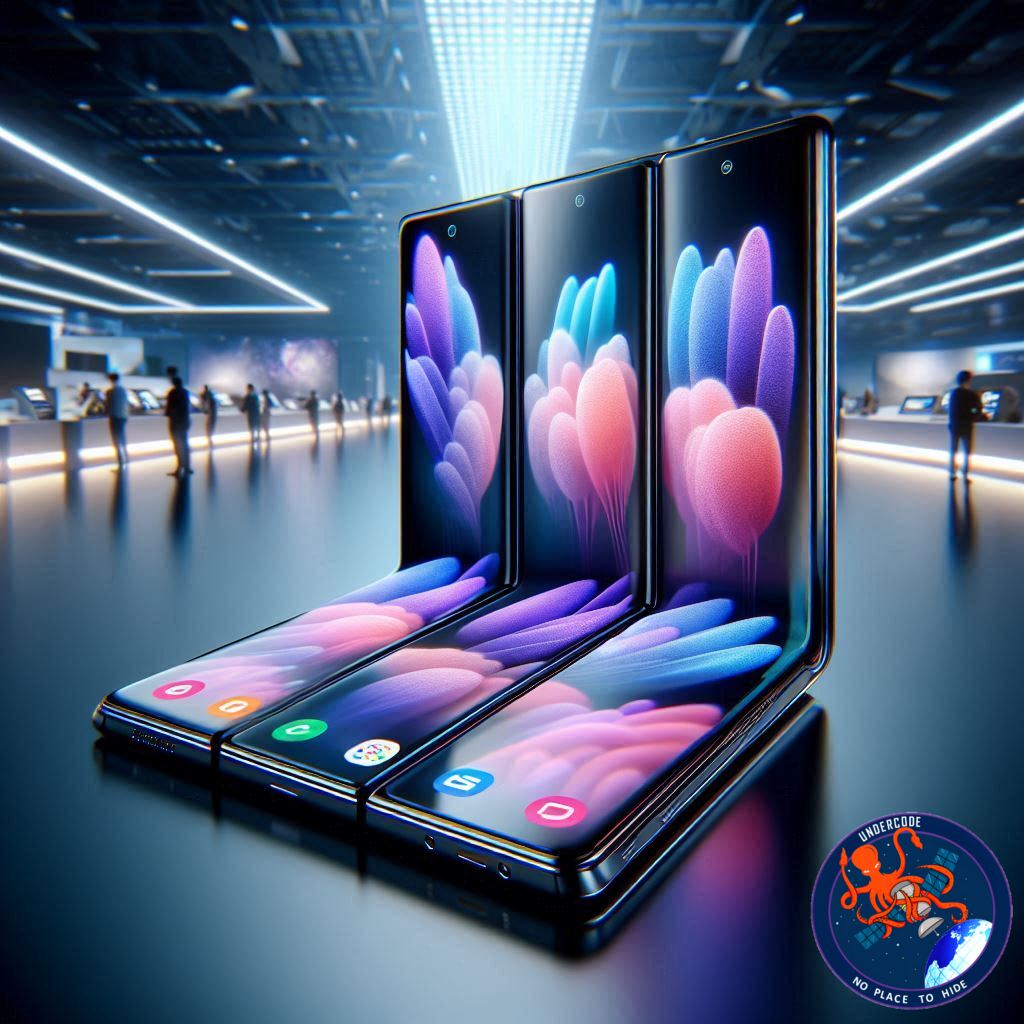
Samsung has officially released the Galaxy Z TriFold, a device that shifts the entire conversation around foldable smartphones. What once felt like distant sci-fi is now a tangible slab of glass and metal that folds twice, stretches into a 10-inch workspace, and collapses into a regular-sized phone that fits in the pocket. With its South Korean launch set for December 12 and a US debut expected in early 2026, Samsung is pushing the boundaries of industrial design, mobile multitasking, and tablet-level convenience.
the Original
Triple-Fold Architecture
Samsung’s Galaxy Z TriFold introduces an inward-folding mechanism supported by two hinges, allowing the device to split into three sections. This design hides the main display when folded, protecting it from damage. In its closed state, users interact with a 6.5-inch cover display, while the fully extended configuration reveals a 10-inch tablet-like screen. Samsung has also added on-screen alerts that warn users if the device is not folded correctly.
Form Factor and Build
The TriFold measures just 3.9mm at its thinnest point when unfolded, though it weighs 309 grams. The frame is built with premium materials, maintaining rigidity despite the complex hinge structure. The device carries an IP48 rating, offering resistance to water submersion up to 1.5 meters for 30 minutes.
Performance Hardware
The smartphone is powered by a customized Snapdragon 8 Elite processor, paired with 16GB of RAM and storage options of 512GB or 1TB. Despite its unique design, Samsung integrates a comprehensive three-cell 5,600mAh battery system. All cells are distributed across the folding layers for balanced power delivery. Charging includes 45W wired support and 15W wireless charging.
Rivalry With Huawei
Samsung’s Galaxy Z TriFold enters a competitive field already influenced by Huawei’s Mate XTs, introduced earlier this year. While Samsung opts for an inward-folding configuration, Huawei chooses an outward-folding design that leaves the display exposed but offers a larger 10.2-inch stretch. The companies take different paths in performance, usability, and durability.
Display And Hardware Differences
Samsung uses a 10-inch QXGA+ Dynamic AMOLED 2X panel with 120Hz refresh rate and 1,600-nit brightness. Huawei counters with a slightly larger 10.2-inch OLED display at 2232×3184 resolution. Samsung’s chipset is the Snapdragon 8 Elite, while Huawei relies on its Kirin 9020 processor.
Camera Systems
Samsung’s camera configuration consists of a 200MP main sensor, 12MP ultra-wide lens, and a 10MP telephoto with 3x optical zoom. Both its main and cover screens support 10MP selfie cameras. Huawei offers a 50MP primary camera, a 40MP ultra-wide shooter, a 12MP telephoto lens, and an 8MP front camera.
Battery And Charging
Both devices pack 5,600mAh batteries. Samsung offers 45W wired and 15W wireless charging, while Huawei goes more aggressive with 66W wired and 50W wireless charging. Samsung holds the edge in water resistance since Huawei does not match its IP48 rating.
Software Layers
Samsung runs Android 16 complete with One UI optimizations for multi-window functionality and pro-level productivity. Huawei’s Mate XTs ships with HarmonyOS 5.1, following the brand’s post-Google era software strategy.
What Undercode Say:
Engineering Complexity as a Selling Point
A tri-fold design is not just an aesthetic choice. It is a structural challenge that only a handful of companies in the world can attempt. For Samsung, the Galaxy Z TriFold is a declaration of dominance in hinge engineering. Two hinges must maintain perfect alignment, distribute stress evenly, and fold the screen without visible creasing or long-term wear. The thinner unfolded profile shows that Samsung prioritizes refinement over sheer display size.
Inward Fold vs Outward Fold Philosophy
Samsung’s inward-folding philosophy clearly favors durability. Protecting the main tablet display against environmental wear is a long-term advantage. Huawei’s outward-folding design is visually striking but exposes vulnerabilities. Consumers who invest in ultra-premium hardware often prioritize longevity, making Samsung’s approach more commercially practical.
Performance Expectations and Thermal Considerations
Packing a Snapdragon 8 Elite inside a triple-folding frame is bold. Heat dissipation becomes more complex in segmented designs, yet Samsung’s reputation suggests deliberate thermal layering that avoids hot spots. Huawei’s Kirin 9020 is strong but still trails behind Qualcomm’s flagship architecture in raw performance benchmarks.
Cameras as a Statement of Premium Identity
Samsung sends a message with its 200MP main sensor. It wants the TriFold not just to be a productivity machine, but a serious camera system. For a form factor with limited physical depth, achieving this level of optics is an accomplishment. Huawei’s cameras are excellent, yet Samsung’s configuration shows clear ambition to lead in imaging.
Battery Distribution and Multi-Cell Strategies
Three battery cells working in unison across the foldable layers is a critical design choice. Samsung distributes power sources to maintain weight balance and prevent instability at the hinge areas. Huawei’s faster charging speeds look impressive, but Samsung’s engineering stability may produce better battery longevity.
Software Experience as the Real Differentiator
Any foldable device lives or dies by its software. Samsung has spent years refining multi-window workflows, app continuity, and UI transitions. Android 16 with One UI appears built for tri-fold functionality. HarmonyOS 5.1 is elegant but suffers from app ecosystem limitations outside China. Global users ultimately gain more value from Samsung’s offering.
Market Positioning and Future Implications
Samsung intends to define a new category, one that sits between smartphones, tablets, and productivity machines. The TriFold is not just a device, it is a blueprint for future portable computers. The competition will push Samsung to improve further, but for now, it holds one of the most advanced mobile designs on the planet.
Fact Checker Results
✅ Samsung’s Galaxy Z TriFold launches in South Korea on December 12 and is expected in the US in early 2026.
✅ The device features a 10-inch display, Snapdragon 8 Elite processor, and 5,600mAh battery.
❌ Huawei Mate XTs does not provide an IP48 water-resistance rating.
Prediction
Foldable innovation is entering a new cycle 📈. Tri-fold devices will evolve into productivity-focused mobile workstations, and manufacturers will push toward lighter bodies, crease-free screens, and more powerful thermals. 🌟 By 2027, tri-fold models may become the new luxury standard for professionals and creators seeking pocket-sized tablets.
🕵️📝✔️Let’s dive deep and fact‑check.
References:
Reported By: timesofindia.indiatimes.com
Extra Source Hub (Possible Sources for article):
https://www.quora.com
Wikipedia
OpenAi & Undercode AI
Image Source:
Unsplash
Undercode AI DI v2
Bing
🔐JOIN OUR CYBER WORLD [ CVE News • HackMonitor • UndercodeNews ]
📢 Follow UndercodeNews & Stay Tuned:
𝕏 formerly Twitter 🐦 | @ Threads | 🔗 Linkedin | 🦋BlueSky | 🐘Mastodon


