
Listen to this Post
A Major Step Beyond Wireless Audio
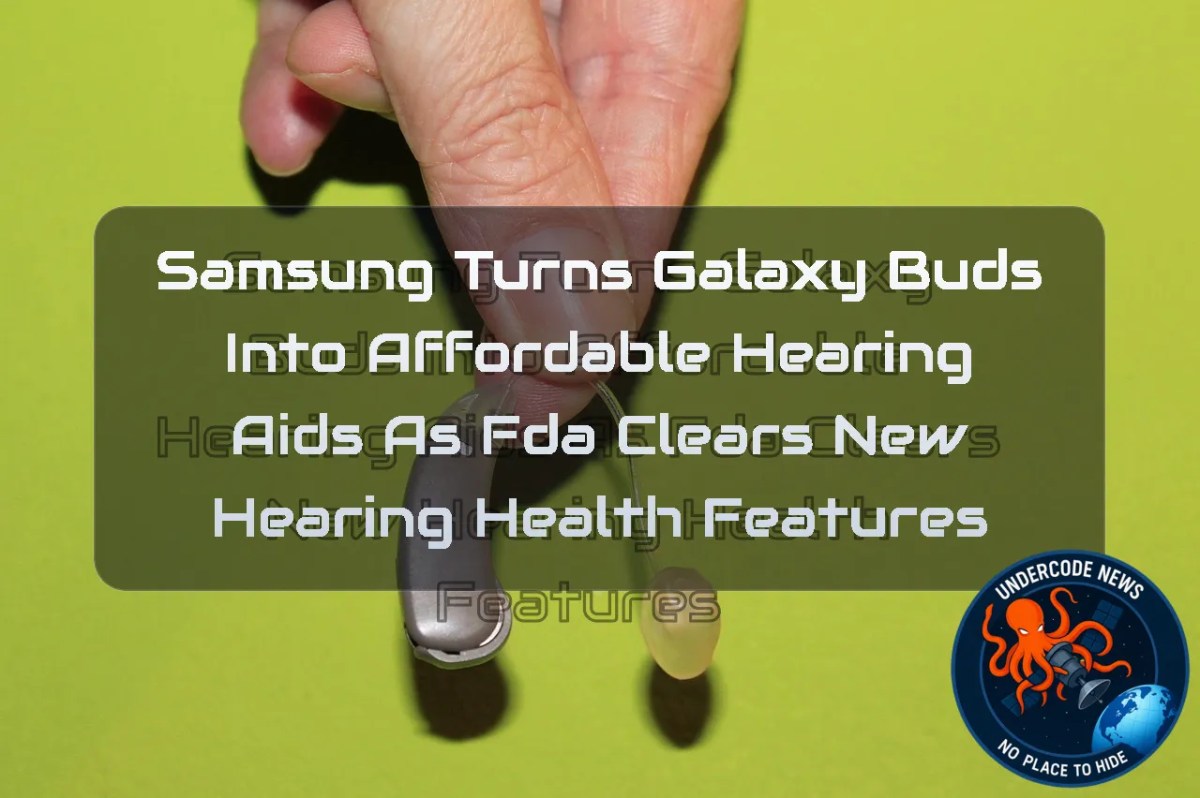
Samsung is pushing its Galaxy Buds lineup into a new and surprisingly important area: hearing health. The company says the U.S. Food and Drug Administration (FDA) has cleared its Galaxy Buds Hearing Aid feature, allowing compatible earbuds to function as over-the-counter hearing aids for adults with perceived mild to moderate hearing loss.
What makes the announcement particularly interesting is that Samsung is not treating this simply as another software enhancement. The company has developed a system that combines a hearing assessment with personalized sound amplification, potentially allowing millions of people to use technology they already carry in their pockets as an accessible first step toward better hearing.
The announcement also reflects a broader change taking place across consumer technology. Wireless earbuds are no longer limited to music, calls and noise cancellation. Increasingly, they are becoming health-oriented devices capable of monitoring, interpreting and responding to aspects of the user’s physical environment.
Samsung’s Galaxy Buds Take On a New Role
Samsung says its Hearing Aid feature will allow compatible Galaxy Buds to amplify sounds that users struggle to hear, including distant voices and certain high-frequency sounds.
Instead of relying on a generic amplification profile, the feature is designed to personalize the listening experience according to the user’s hearing profile. That means the earbuds can potentially provide different levels of amplification depending on which frequencies are more difficult for an individual to perceive.
This is an important distinction. Simply making everything louder is not necessarily an effective solution for hearing loss. Personalized amplification can be much more useful because hearing difficulties can vary considerably from one person to another.
The Hearing Test Is Built Into Galaxy Buds
Samsung is also introducing a Hearing Test designed to assess potential hearing loss.
According to the company, the test can be performed directly through the Galaxy Buds settings menu and takes approximately five minutes. Users do not need to download a separate application to access the feature.
The company says the Hearing Test is registered as a Software as a Medical Device and provides medical-grade results. Samsung developed the solution with the National Acoustic Laboratories and Samsung Medical Center, while clinical validation studies were conducted at Vanderbilt University Medical Center, San Jose State University and the University of Memphis.
That combination of software, hardware and clinical validation is what makes Samsung’s announcement more significant than a typical firmware update.
From Hearing Test to Personalized Amplification
The process is designed to be relatively straightforward.
First, a user conducts the Hearing Test using compatible Galaxy Buds. The results are then used to establish an individualized hearing profile.
The Hearing Aid feature can subsequently use that profile to amplify sounds in areas where the user has difficulty hearing.
For someone who struggles with high-frequency sounds, for example, the system may adjust amplification accordingly. Someone who has difficulty hearing quieter or more distant voices could receive a different audio profile.
The idea is simple: rather than forcing every user into the same amplification setting, the earbuds attempt to adapt to the individual’s hearing characteristics.
Why This Matters More Than Another Earbud Feature
The significance of
The World Health Organization estimates that more than 1.5 billion people experience some degree of hearing loss. That number is expected to rise to approximately 2.5 billion by 2050.
Hearing loss is therefore not a niche issue affecting a small percentage of the population. It is a massive global health challenge.
Yet many people who could benefit from hearing assistance do not use traditional hearing aids.
The Barriers Are Not Only Medical
Cost is one major obstacle, but it is not the only one.
Some people avoid hearing aids because of social stigma. Others may have difficulty accessing audiologists or specialized healthcare services. In some regions, professional hearing care can also be expensive, geographically inaccessible or difficult to obtain.
This is where consumer electronics could make an important difference.
People may be far more comfortable wearing a pair of Samsung Galaxy Buds than wearing a traditional hearing device. The earbuds look like ordinary consumer technology, are familiar to millions of users and can perform several functions beyond hearing assistance.
That familiarity could help reduce one of the psychological barriers surrounding hearing technology.
Galaxy Buds 3 Pro and Galaxy Buds 4 Pro Get the Feature
Samsung confirmed that the Hearing Aid and Hearing Test capabilities will become available for the Galaxy Buds 3 Pro and Galaxy Buds 4 Pro in the United States and selected additional markets.
The company says the features are scheduled to arrive during the fourth quarter of 2026.
That means the technology will not immediately transform every Galaxy Buds model into a hearing device. Compatibility remains limited, at least initially, and availability will depend on market and regulatory approval.
FDA Clearance Adds Credibility
The FDA clearance is arguably one of the most important elements of the announcement.
Samsung is entering a space where software can directly influence a user’s perception of sound, meaning regulatory oversight matters considerably. FDA clearance signals that the feature has undergone a level of evaluation beyond what would normally be expected from a standard consumer audio enhancement.
At the same time, users should understand the distinction between an FDA-cleared consumer hearing solution and comprehensive medical care.
A hearing feature built into earbuds can be convenient and useful, but it should not automatically be viewed as a substitute for professional evaluation in every situation.
Hearing Health Could Become the Next Major Earbud Battlefield
For years, the competition between premium earbuds has focused on sound quality, active noise cancellation, battery life, microphone performance and ecosystem integration.
That competition is changing.
Apple, Samsung, Google and other technology companies have increasingly demonstrated that earbuds can become platforms for health-related features. Hearing assistance is particularly interesting because the hardware already contains many of the components required to process sound in real time.
Microphones capture environmental audio. Speakers deliver processed sound. Wireless connectivity provides access to software. Mobile processors can analyze information and personalize the experience.
The basic technology foundation is already there.
The Smartphone Is Becoming a Health Gateway
The Galaxy Buds development also illustrates a larger transformation in consumer technology.
The smartphone was once primarily a communication device. It became a camera, navigation system, payment terminal and entertainment platform.
Wearables followed a similar path.
Smartwatches began as notification companions but evolved into devices capable of monitoring heart activity, exercise, sleep and other health-related metrics.
Now earbuds are following the same trajectory.
They are becoming another category of always-available personal computing devices, except their primary connection to the world is through sound.
Accessibility Could Become a Competitive Advantage
There is also a strong accessibility argument behind Samsung’s move.
Traditional hearing aids can be highly specialized products, and many consumers may be reluctant to begin using them. A pair of wireless earbuds that can also provide hearing assistance could make the transition less intimidating.
For some users, the psychological difference between saying “I need a hearing aid” and “I use Galaxy Buds” may be significant.
Technology companies have an opportunity to make accessibility features feel less like specialized medical equipment and more like ordinary technology.
That could ultimately encourage more people to address hearing difficulties earlier.
But Convenience Should Not Replace Professional Care
There is an important limitation that should not be overlooked.
Hearing loss can have many causes, and not every hearing problem should be handled through consumer electronics alone.
A sudden change in hearing, severe hearing impairment, pain, dizziness, persistent ringing or other unusual symptoms may require professional medical evaluation.
Even when an over-the-counter hearing solution is appropriate, users should understand what the device can and cannot address.
The most valuable role for products such as Galaxy Buds may therefore be as an accessible entry point into hearing care rather than a universal replacement for audiology services.
Samsung Is Blurring the Line Between Consumer Electronics and Healthcare
Samsung’s latest move demonstrates how quickly that boundary is disappearing.
A product originally designed for listening to music can now potentially test aspects of hearing and provide personalized amplification.
That is a remarkable transformation.
The same trend is visible across the broader technology industry. Sensors, machine learning, miniaturized processors and increasingly sophisticated software are turning ordinary consumer devices into platforms capable of performing functions that once required dedicated equipment.
Galaxy Buds are becoming another example of that evolution.
What This Could Mean for the Future of Earbuds
The next generation of earbuds could go considerably further.
Future devices could potentially offer more sophisticated hearing profiles, environmental sound adaptation, personalized voice enhancement and improved communication assistance.
Imagine earbuds that automatically recognize that
Imagine walking outdoors and having the earbuds automatically modify amplification based on surrounding noise.
Or imagine a system that identifies a meaningful change in hearing performance over time and encourages the user to seek professional evaluation.
Those capabilities could fundamentally change how people think about earbuds.
Samsung’s Strategy Extends Beyond Hardware
There is also a business strategy behind this announcement.
Samsung sells smartphones, tablets, watches, earbuds and other connected devices. Health-related features can make those products more valuable as part of a larger ecosystem.
A Galaxy Buds user who relies on personalized hearing settings has another reason to remain within Samsung’s ecosystem.
The more personal a device becomes, the harder it is to view it as a simple commodity.
This could become particularly important as premium earbuds increasingly offer similar audio specifications.
The Galaxy Buds Brand Could Become More Than Audio
Samsung has spent years positioning Galaxy Buds as competitors to other premium wireless earbuds.
The addition of hearing-related capabilities gives the product a different identity.
It becomes not only a way to listen to music, but also a device that can help users interact with their environment.
That distinction could become increasingly important as manufacturers search for new reasons to persuade consumers to upgrade their existing earbuds.
A Five-Minute Test Could Change the Conversation
Perhaps the most powerful aspect of
If a hearing assessment can be performed in roughly five minutes through a device that someone already owns, the psychological barrier to checking one’s hearing may become much lower.
Many people postpone health checks because they require appointments, travel, time and money.
Technology cannot eliminate every barrier, but it can sometimes reduce the first one: taking the initial step.
And that first step can matter.
Hearing Loss Is Often Gradual and Easy to Ignore
One reason hearing problems can remain untreated for years is that hearing loss often develops gradually.
People may compensate without realizing it.
They increase television volume. They ask others to repeat themselves. They avoid noisy conversations. They rely more heavily on subtitles.
Family members may notice the change before the person experiencing it does.
A convenient hearing test could help turn those subtle signs into something measurable.
The Social Impact Could Be Bigger Than Expected
Hearing ability is closely connected to communication.
Difficulty hearing conversations can lead to frustration, misunderstandings and social withdrawal. In workplaces, it can make meetings and group discussions more difficult. At home, it can affect communication with family members.
Therefore, improving hearing is not simply about making audio louder.
It can also be about helping people participate more comfortably in everyday life.
That is why developments like
What Undercode Says:
The Earbud Is Becoming a Personal Health Device
The most important lesson from
Samsung Is Targeting a Huge Unmet Need
With more than 1.5 billion people experiencing some degree of hearing loss, even a small percentage of users adopting accessible hearing technology could represent a substantial global impact.
Accessibility Can Drive Consumer Adoption
Samsung is effectively combining a mainstream consumer product with an accessibility function. That combination could help normalize hearing assistance for people who might otherwise avoid traditional hearing devices.
The Familiar Form Factor Matters
Galaxy Buds already look like ordinary wireless earbuds. That familiarity could make hearing assistance feel less stigmatizing and more socially acceptable.
FDA Clearance Changes the Conversation
Regulatory clearance gives
Software Is Becoming Medical Infrastructure
The development demonstrates how software increasingly interacts with regulated health functions. A software update can now change what a consumer device is capable of doing medically.
Personalized Audio Is the Key
The most interesting part is not simply amplification. Personalization is what potentially makes the system useful for different hearing profiles.
The Hearing Test Creates a Feedback Loop
A hearing assessment followed by personalized amplification creates a complete software-driven workflow: measure, interpret, personalize and assist.
Five Minutes Could Reduce Friction
The shorter and easier the testing process becomes, the more likely consumers may be to actually use it.
Convenience Has Real Value
A technology solution does not have to replace professional healthcare to be valuable. Sometimes its biggest contribution is making the first step easier.
Traditional Hearing Aid Markets Could Face Pressure
If consumer earbuds continue improving their hearing capabilities, traditional hearing-device manufacturers may face increasing competition at the lower and moderate end of the market.
Earbuds Already Have the Necessary Hardware
Microphones and speakers are already essential components of wireless earbuds. The major innovation is increasingly coming from software, algorithms and regulatory approval.
Artificial Intelligence Could Push This Further
Future hearing systems could use machine learning to separate voices from background noise, recognize speech patterns and dynamically adapt sound based on context.
Restaurants Could Become an Important Use Case
Crowded environments are among the most challenging listening situations for people with hearing difficulties. Better speech enhancement could therefore become one of the most valuable future applications.
The Technology Could Improve Communication
Hearing assistance is ultimately about communication rather than simply sound amplification. The ability to understand conversations may be more important than raw audio volume.
Health Features Increase Device Stickiness
When users personalize a device around their health needs, that device can become significantly more difficult to replace with a competing product.
Samsung Is Building an Ecosystem
Galaxy Buds are increasingly connected to
Competitors Will Almost Certainly Respond
Samsung’s move could accelerate competition in hearing accessibility across premium earbuds. Rival manufacturers have strong incentives to develop similar capabilities.
Regulatory Approval Will Remain Critical
Healthcare-related features cannot simply be treated like music-processing features. Regulatory requirements will increasingly shape what technology companies can launch.
Not Every Hearing Problem Is the Same
A personalized consumer device can help in appropriate situations, but hearing loss has many potential causes. That makes professional evaluation important when symptoms are concerning or unusual.
Consumer Education Will Matter
Companies will need to explain limitations clearly. Overpromising what earbuds can do could undermine consumer trust.
Accessibility Could Become a Selling Point
Technology companies increasingly compete on accessibility. Hearing assistance could become as important to product differentiation as camera quality or battery life.
The Price Barrier Could Eventually Fall
As the technology becomes more common, competition could push sophisticated hearing assistance into increasingly affordable consumer products.
The Industry Is Moving Toward Invisible Technology
The most successful accessibility technology may be technology that does not feel like specialized equipment. Everyday products can provide assistance without changing how users present themselves socially.
Hearing Assistance Could Become Normalized
When millions of people use familiar earbuds for hearing support, the stigma surrounding hearing assistance could gradually decrease.
Wearables Are Moving Beyond Fitness
The next generation of wearable technology will increasingly focus on communication, accessibility, prevention and personalized health.
Samsung Has Chosen a Powerful Category
Hearing is particularly well suited to earbuds because audio processing is already their fundamental purpose. Samsung does not need to create an entirely new hardware category.
The Software Update Becomes More Valuable
Instead of buying a new medical device, users may eventually receive significant health-related improvements through software updates to hardware they already own.
Hardware Longevity Could Improve
If manufacturers continue delivering new capabilities through software, existing devices may remain useful for longer, although compatibility and regulatory restrictions will still matter.
Data Privacy Will Become More Important
Hearing profiles are personal health-related information. As these systems become more sophisticated, companies will need strong safeguards around how hearing data is stored, processed and shared.
Trust Will Become a Competitive Advantage
Consumers will care not only about accuracy but also about how responsibly companies handle sensitive health information.
The Medical and Consumer Worlds Are Converging
Samsung’s announcement is another example of consumer electronics moving into areas traditionally occupied by medical technology.
The Earbud Could Become a Digital Health Companion
In the long term, earbuds could monitor environmental sound, hearing performance and communication conditions continuously, creating a highly personalized audio environment.
The Biggest Impact May Come Quietly
The technology does not need to revolutionize healthcare overnight. If it helps even a portion of people recognize hearing difficulties and seek assistance earlier, its impact could be meaningful.
Samsung’s Timing Is Strategic
Launching this capability as the wireless-earbud market becomes increasingly mature gives Samsung another way to differentiate premium Galaxy Buds.
The Galaxy Ecosystem Gains Another Layer
Samsung’s strategy is becoming increasingly ecosystem-driven. Phones, watches and earbuds can each contribute different pieces to a user’s digital experience.
Hearing Technology Could Become Mainstream
The long-term direction appears clear: hearing assistance is moving away from being exclusively associated with specialized medical devices and toward mainstream consumer technology.
The Real Test Starts After Launch
Clinical validation and regulatory clearance are important, but widespread real-world adoption will ultimately determine how transformative the feature becomes.
This Is Bigger Than a Galaxy Buds Update
Samsung’s announcement represents a broader technological shift. The earbuds people wear every day are gradually becoming intelligent interfaces between humans, their environment and their health.
Deep Analysis: Commands for Understanding
Command 01 — Identify the Core Shift
The central shift is from earbuds as entertainment hardware to earbuds as multifunctional personal technology.
Command 02 — Examine the Regulatory Signal
FDA clearance demonstrates that Samsung is treating the hearing feature as more than an ordinary audio enhancement.
Command 03 — Evaluate Accessibility
The combination of familiar hardware and hearing assistance could reduce psychological and practical barriers to adopting hearing technology.
Command 04 — Compare Traditional Models
Traditional hearing aids remain specialized medical devices, while Samsung is bringing hearing assistance into a mainstream consumer product category.
Command 05 — Track Ecosystem Effects
The feature strengthens
Command 06 — Watch Competitors
The next major development will likely be increased competition among consumer-electronics companies in hearing accessibility.
Command 07 — Monitor AI Integration
Machine learning could eventually allow earbuds to distinguish speech, background noise and environmental sounds more intelligently.
Command 08 — Consider Privacy
Personal hearing profiles could become sensitive datasets, making data protection an increasingly important part of the product’s success.
Command 09 — Measure Adoption
The most important metric will not be the announcement itself but how many people actually use the Hearing Test and Hearing Aid functions.
Command 10 — Watch Market Expansion
Samsung’s initial U.S. rollout could serve as a foundation for broader international availability if regulatory approvals continue.
Command 11 — Evaluate Professional Care
Consumer hearing technology should complement, rather than automatically replace, professional medical evaluation where clinically appropriate.
Command 12 — Follow the Hardware
Future Galaxy Buds generations could introduce better microphones, improved speakers and more sophisticated audio-processing capabilities specifically designed around hearing accessibility.
Command 13 — Analyze Social Impact
The normalization of hearing assistance through ordinary earbuds could reduce some of the stigma associated with traditional hearing devices.
Command 14 — Track Pricing
If hearing assistance becomes a standard feature of premium earbuds, competition could eventually make advanced hearing technology more accessible.
Command 15 — Look Beyond Samsung
The broader story is not about one Galaxy Buds generation. It is about the transformation of everyday electronics into increasingly capable health interfaces.
✅ FDA Clearance
Samsung says the U.S. FDA has cleared the Galaxy Buds Hearing Aid feature for compatible devices, making this a regulated hearing-assistance development rather than merely a conventional audio enhancement.
✅ Hearing Loss Statistics
The World Health Organization has estimated that more than 1.5 billion people experience hearing loss, with the number expected to rise substantially by 2050. The scale cited in the original report is consistent with the broader global hearing-loss trend.
⚠️ Medical Limitations
The Hearing Test and Hearing Aid functions should not be interpreted as a universal replacement for professional hearing care. The technology is intended for specific users and conditions, while other hearing symptoms may require professional evaluation.
Prediction
(+1) Hearing Assistance Will Become a Major Earbud Feature
Samsung’s move is likely to encourage competitors to expand hearing-related capabilities across premium wireless earbuds. Over time, personalized hearing assistance could become as familiar as active noise cancellation.
(+1) Consumer Hearing Technology Will Become More Accessible
As more companies enter the category, competition could reduce costs and make sophisticated hearing assistance available to a much larger population.
(+1) AI Will Make Hearing Profiles More Dynamic
Future earbuds could move beyond a static hearing test and continuously adapt sound processing according to the user’s environment, conversation and listening conditions.
(+1) The Stigma Around Hearing Devices Could Decline
When hearing assistance is delivered through products that already look like ordinary earbuds, more people may feel comfortable using it.
(+1) Earbuds Could Become Health Platforms
Samsung’s announcement points toward a future where earbuds monitor and support multiple aspects of health and accessibility rather than serving only as audio accessories.
(-1) Regulatory Complexity Could Slow Expansion
Healthcare-related features require regulatory approval in many markets, meaning Samsung may not be able to launch the same capabilities everywhere at the same time.
(-1) Users May Overestimate What Earbuds Can Do
The convenience of an earbud-based solution could lead some users to underestimate the importance of professional assessment when hearing problems are severe, sudden or otherwise concerning.
(+1) The Biggest Winner Could Be Accessibility
Regardless of which company ultimately dominates the category, the strongest long-term outcome could be a world where hearing assistance is easier to access, less stigmatized and increasingly integrated into everyday technology.
▶️ Related Video (78% Match):
🕵️📝Let’s dive deep and fact‑check.
🎓 Live Courses & Certifications:
Join Undercode Academy for Verified Certifications
🚀 Request a Custom Project:
Secure, high-velocity infrastructure and disruptive technological engineering. Contact our engineering team for high-tier development and proprietary systems:
[email protected]
💎 Smart Architecture | 🛡️ Secure by Design | ⭐ Trusted by Thousands
References:
Reported By: www.sammobile.com
Extra Source Hub (Possible Sources for article):
https://www.digitaltrends.com
Wikipedia
OpenAi & Undercode AI
Image Source:
Unsplash
Undercode AI DI v2
🔐JOIN OUR CYBER WORLD [ CVE News • HackMonitor • UndercodeNews ]
📢 Follow UndercodeNews & Stay Tuned:
𝕏 formerly Twitter 🐦 | @ Threads | 🔗 Linkedin | 🦋BlueSky | 🐘Mastodon | 📺Youtube


