
Listen to this Post
 Introduction: A Silent Tech War That Could Redefine the Auto Industry
Behind the scenes of flashy smartphone launches and electric vehicle unveilings, a far more consequential battle is unfolding—one that could determine the future of artificial intelligence in transportation. Tech giant Samsung Electronics and EV leader Tesla are deepening their partnership in a way that could reshape both industries. With billions on the line and cutting-edge chip technology at stake, this collaboration signals a major shift in who controls the brains behind tomorrow’s machines.
the Original Report
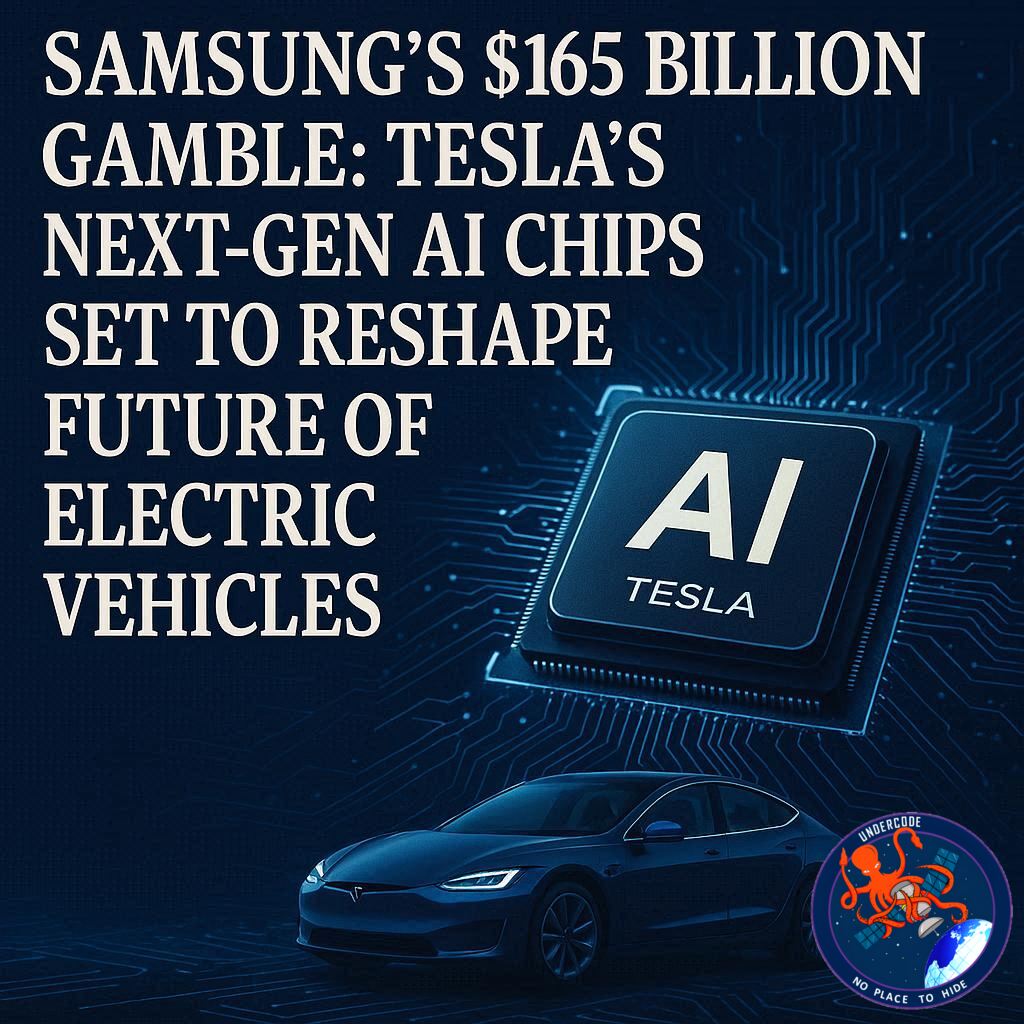
Samsung had previously confirmed a major agreement with Tesla, valued at approximately $16.5 billion, to manufacture the automaker’s next-generation AI chips. These chips, referred to as AI6, are expected to be built using Samsung’s advanced 2-nanometer (2nm) semiconductor process, one of the most cutting-edge manufacturing technologies currently under development.
During a recent
Interestingly, the production will not take place in South Korea, where Samsung is headquartered. Instead, it will occur at Samsung’s large-scale semiconductor manufacturing facility in Texas, United States. This aligns with broader industry trends of expanding chip production capabilities within the U.S. to strengthen supply chains and reduce geopolitical risks.
Han further clarified that full-scale production of Tesla’s next-generation AI chips is expected to begin in the second half of 2027. These chips will play a crucial role in Tesla’s future electric vehicles, likely powering advanced driver-assistance systems and autonomous driving capabilities.
This is not the first collaboration between the two companies. Samsung had previously manufactured Tesla’s AI4 chips, while the current AI5 generation is being produced by TSMC, the dominant player in the global semiconductor foundry market.
Samsung’s ability to secure this deal highlights its growing competitiveness in the advanced chip manufacturing space, particularly in the 2nm segment. Only a handful of companies worldwide possess the capability to produce chips at this level of precision, making Samsung a valuable partner for firms like Tesla.
Meanwhile, TSMC continues to lead the industry but is reportedly operating at near-full capacity, leaving limited room for additional large-scale contracts. This capacity constraint may have opened the door for Samsung to secure Tesla’s next-generation chip production deal.
Overall, the partnership underscores a strategic alignment between two innovation-driven companies, each aiming to push the boundaries of what technology can achieve in their respective fields.
What Undercode Say:
The Strategic Power Play Behind Samsung’s Foundry Expansion
Samsung’s move isn’t just about manufacturing chips—it’s about reclaiming relevance in a sector long dominated by TSMC. By securing Tesla’s AI6 production, Samsung positions itself as more than a secondary player; it becomes a critical enabler of next-generation AI infrastructure.
Why Tesla Is Diversifying Its Chip Supply Chain
Tesla’s decision to shift part of its chip production back to Samsung reflects a broader strategy: diversification. Relying solely on TSMC exposes Tesla to capacity bottlenecks and geopolitical risks, particularly given Taiwan’s sensitive global position.
The Real Value of 2nm Technology
The jump to 2nm is not incremental—it’s transformative. Smaller nodes mean higher transistor density, improved energy efficiency, and faster processing speeds. For Tesla, this translates directly into better real-time decision-making for autonomous driving systems.
Texas as the New Silicon Battleground
Samsung’s Texas facility becoming the production hub is no coincidence. The U.S. government has been aggressively pushing domestic semiconductor manufacturing, and this deal aligns perfectly with those incentives. It also gives Tesla logistical advantages being a U.S.-based company.
Samsung’s Redemption Arc in Advanced Chips
Samsung has struggled in recent years to match TSMC’s yields and consistency at cutting-edge nodes. However, this deal suggests growing confidence in Samsung’s ability to execute at 2nm—a critical turning point for its foundry business.
Tesla’s AI Ambitions Go Beyond Cars
These chips are not just for vehicles. Tesla has broader AI ambitions, including robotics and full self-driving ecosystems. The AI6 chip could serve as the backbone for multiple product lines, making this deal even more significant.
The Hidden Risk: Execution Challenges
While the announcement is promising, the semiconductor industry is notoriously difficult. Delays, yield issues, or cost overruns could derail timelines. Samsung must prove it can deliver at scale without compromising quality.
TSMC’s Capacity Problem Becomes Samsung’s Opportunity
TSMC’s dominance has ironically created openings for competitors. With its order book nearly full, companies like Tesla are forced to look elsewhere, giving Samsung a rare chance to capture high-value contracts.
Economic Impact of a $16.5 Billion Deal
Converted into USD—which is already stated—this deal represents a massive injection into Samsung’s foundry division. It also signals confidence from one of the world’s most valuable automakers, strengthening investor sentiment.
The Long Timeline Signals Complexity
Production not starting until 2027 highlights just how complex next-gen chip manufacturing is. This isn’t a quick turnaround project; it’s a multi-year technological commitment involving R&D, testing, and scaling.
AI Chips as the New Oil of the Tech Economy
Control over AI chip production is quickly becoming as important as oil was in the 20th century. Companies that dominate this space will shape industries ranging from automotive to defense.
Competitive Pressure Will Intensify
This deal will likely push TSMC and other competitors to accelerate their own advancements. The race to sub-2nm technologies is already heating up, and Tesla’s involvement raises the stakes even further.
The Bigger Picture: Tech Convergence
This partnership is a perfect example of tech convergence—automotive, AI, and semiconductor industries merging into one ecosystem. The lines between these sectors are disappearing rapidly.
The Risk of Overdependence on AI
While AI chips promise massive advancements, overreliance introduces new vulnerabilities, including cybersecurity risks and system failures. Tesla’s future success will depend on balancing innovation with resilience.
Final Takeaway on Industry Direction
Samsung’s deal with Tesla isn’t just a contract—it’s a signal. The future of mobility will be defined not just by batteries or design, but by the intelligence embedded in every vehicle.
🔍 Fact Checker Results
Verified Deal and Production Timeline
✅ Samsung and Tesla have confirmed a $16.5 billion chip manufacturing agreement with production targeted for 2027.
Manufacturing Location Accuracy
✅ The chips are indeed planned for production at Samsung’s Texas facility, not in South Korea.
Industry Competition Context
❌ While TSMC is dominant, claims about “no capacity left” are slightly overstated—capacity is tight, but not entirely unavailable.
📊 Prediction
The Rise of Samsung as a Serious TSMC Rival
Samsung is likely to close the technological gap with TSMC faster than expected, especially if the AI6 production rollout succeeds without major setbacks.
Tesla’s Leap Toward Full Autonomy
With more powerful AI chips, Tesla could significantly accelerate its full self-driving roadmap, potentially reaching higher levels of autonomy before competitors.
A New Era of U.S.-Based Chip Manufacturing
This deal may trigger a wave of similar partnerships, reinforcing the United States as a central hub for advanced semiconductor production over the next decade.
🕵️📝✔️Let’s dive deep and fact‑check.
References:
Reported By: www.sammobile.com
Extra Source Hub (Possible Sources for article):
https://www.stackexchange.com
Wikipedia
OpenAi & Undercode AI
Image Source:
Unsplash
Undercode AI DI v2
Bing
🔐JOIN OUR CYBER WORLD [ CVE News • HackMonitor • UndercodeNews ]
📢 Follow UndercodeNews & Stay Tuned:
𝕏 formerly Twitter 🐦 | @ Threads | 🔗 Linkedin | 🦋BlueSky | 🐘Mastodon


