
Listen to this Post
Introduction
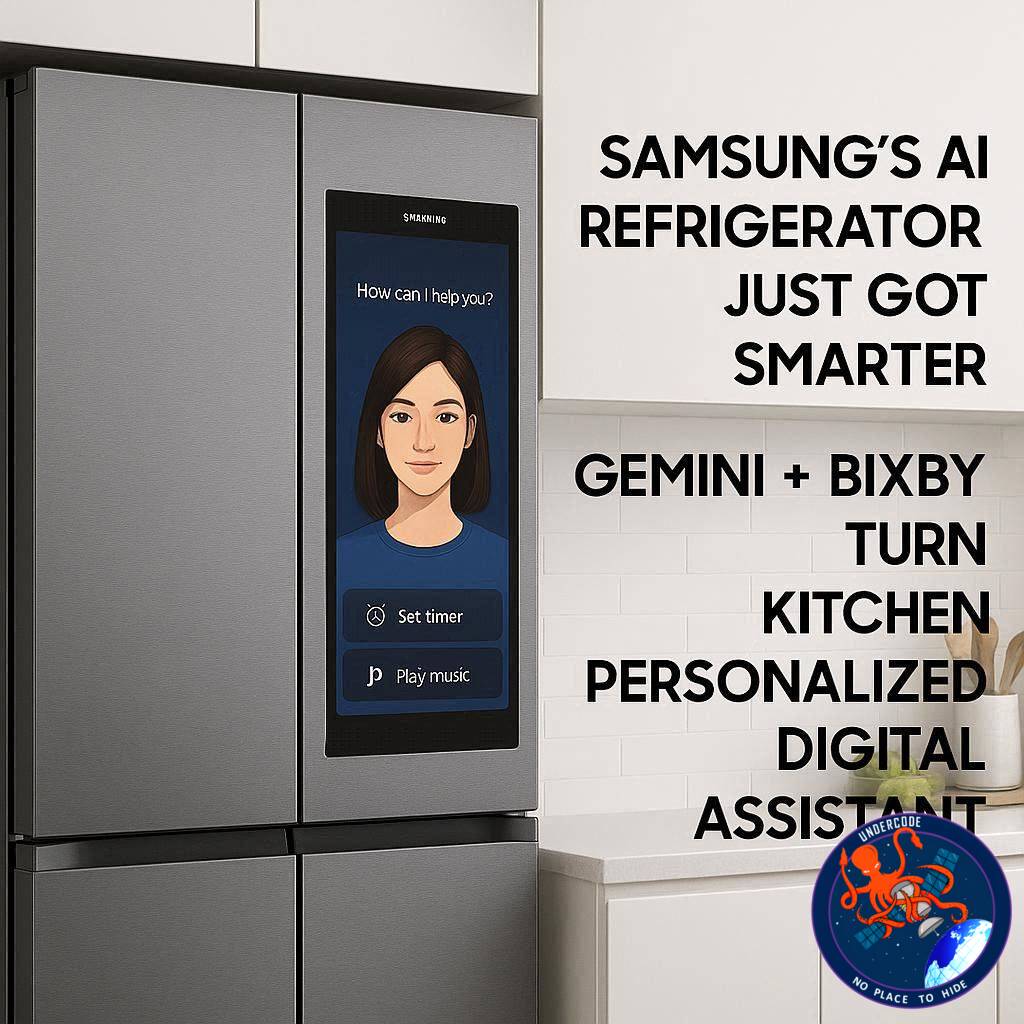
Smart homes are evolving rapidly, but Samsung is now pushing the idea even further by transforming the refrigerator into a fully interactive AI-powered kitchen assistant. The company has officially released a major software update for its Bespoke AI Family Hub refrigerators in the United States, bringing advanced artificial intelligence features powered by Google Gemini, upgraded Bixby capabilities, and personalized recommendation tools through Now Brief widgets.
The update signals Samsung’s aggressive strategy to merge AI with everyday household appliances. Instead of simply storing food, the refrigerator now acts as a digital companion capable of recognizing groceries, learning family habits, suggesting recipes, and even understanding natural human conversation. It reflects a broader industry trend where appliances are no longer static machines but evolving platforms powered by software updates and cloud-based intelligence.
Samsung Expands AI Features Inside the Kitchen
Samsung announced that select 32-inch display versions of the Bespoke AI Family Hub refrigerators in the United States are now receiving a new over-the-network software update. Models equipped with smaller 9-inch displays are expected to receive the update later in phases.
The biggest upgrade comes from the integration of Google’s Gemini AI model. With Gemini onboard, the refrigerator can now recognize a much wider variety of food products, including both fresh groceries and packaged items. Previously, Samsung’s system could identify around 40 pre-programmed food categories, but Gemini significantly expands this capability with improved accuracy and adaptive learning.
This improvement is designed to make inventory tracking far more intelligent. The refrigerator can analyze stored food items and learn consumption patterns over time. If users regularly consume a specific product, the appliance can notify them when supplies are running low and suggest restocking options before items completely run out.
Samsung is clearly aiming to eliminate one of the most common household frustrations: forgetting groceries or wasting food due to poor tracking.
Bixby Evolves Into a More Natural Conversational Assistant
Another major improvement in the update is the upgraded version of Bixby. Samsung’s voice assistant now supports more advanced natural language understanding, allowing conversations to feel more human and contextual.
Instead of relying on rigid commands, users can speak casually. For example, if someone says, “Bixby, make round ice for my drinks,” the refrigerator automatically activates Sphere Ice Mode. More impressively, Bixby can now handle follow-up context and conditional instructions.
If a user says, “Make the refrigerator cooler if it gets hot outside,” Bixby asks what outside temperature should trigger the adjustment. Once the condition is defined, the refrigerator automatically changes cooling settings whenever that temperature threshold is reached.
This level of contextual awareness marks a major step toward truly intelligent home automation. Samsung is no longer treating Bixby as a simple command processor but rather as an adaptive assistant capable of understanding routines and preferences.
Personalized Widgets Bring a Social-Media Style Experience to Appliances
Samsung also introduced Now Brief widgets, which add a highly personalized layer to the Family Hub experience. These widgets function similarly to smartphone recommendation feeds but are designed specifically for kitchen and food-related tasks.
One of the highlighted features is Trending Recipes from Samsung Food, which recommends popular meal ideas based on user interests and available ingredients.
Another widget, FoodNote, tracks the ingredients most frequently used throughout the week and recommends recipes built around those items. Meanwhile, the “What’s For Today?” widget can either generate random meal ideas or create suggestions based on ingredients currently stored inside the refrigerator.
The system becomes even more personalized through Voice ID technology. Each family member can receive individual recommendations, reminders, and food suggestions based on their unique voice profile.
Samsung’s vision is becoming increasingly clear: the refrigerator is no longer just a kitchen appliance but a household AI hub capable of managing nutrition, convenience, and daily routines.
Samsung’s Long-Term Smart Home Strategy
Samsung executive Jeong Seung Moon explained that home appliances should continue evolving long after purchase. According to the company, the value of an appliance should grow as AI technology improves over time.
This philosophy mirrors the software-update ecosystem already common in smartphones and electric vehicles. By continuously updating appliances, Samsung can extend product lifespan while keeping consumers locked into its ecosystem of AI-powered services.
The strategy also helps Samsung compete directly with companies like Google, Amazon, and Apple in the connected home market. Rather than relying only on smart speakers or smartphones, Samsung is embedding AI directly into core household infrastructure.
What Undercode Says:
AI Appliances Are Quietly Becoming Subscription-Like Ecosystems
Samsung’s latest refrigerator update demonstrates how modern appliances are shifting away from traditional hardware-focused business models. The refrigerator itself is no longer the final product. Instead, it becomes a platform continuously enhanced through software, cloud AI, and ecosystem integration.
This is extremely important from a business perspective.
For decades, refrigerators were considered long-term static purchases. Consumers bought them once and expected little change over a 10-to-15-year lifespan. Samsung is now attempting to redefine that expectation entirely. By adding AI updates years after purchase, the company creates a “living appliance” concept similar to smartphones receiving annual feature upgrades.
The inclusion of Google Gemini is particularly strategic. Samsung understands that consumers increasingly value AI convenience over raw hardware specifications. Food recognition, predictive grocery management, and contextual voice interaction are practical features people can actually use daily.
However, this shift also introduces major questions around privacy and data collection.
For these features to function effectively, the refrigerator must continuously analyze food inventory, household routines, voice patterns, and behavioral habits. That means Samsung is potentially collecting massive amounts of domestic lifestyle data. While the company markets this as convenience, critics may eventually raise concerns about how deeply AI appliances monitor personal routines inside private homes.
Another interesting angle is how Samsung is transforming the kitchen into a recommendation engine.
Recipe suggestions, trending meals, and ingredient tracking resemble the same engagement tactics used by social media platforms. The goal is not merely utility but continuous interaction. Samsung wants users actively engaging with the refrigerator interface multiple times per day.
The Voice ID feature is also more significant than it initially appears. Personalized AI profiles inside home appliances could eventually connect with broader ecosystems involving shopping habits, fitness tracking, health monitoring, and digital assistants across multiple devices.
This creates a future where refrigerators may proactively suggest healthier diets, connect with grocery delivery services, or automatically manage household inventory without human involvement.
The broader smart appliance industry is clearly heading toward predictive automation.
Instead of users controlling devices manually, devices increasingly anticipate needs before commands are even given. Samsung’s latest update is another step toward that AI-driven future.
Yet there is still one major challenge: consumer trust.
Many users remain skeptical about always-listening devices inside private spaces. Refrigerators equipped with voice recognition and AI analytics may face resistance unless companies provide strong transparency around privacy protections and data handling.
From a competitive standpoint, Samsung is positioning itself aggressively ahead of rivals. Few companies currently offer this level of integrated AI functionality within kitchen appliances at scale.
The update also reveals Samsung’s confidence in Bixby despite years of criticism compared to assistants like Alexa or Google Assistant. By embedding Bixby deeply into appliance ecosystems rather than smartphones alone, Samsung may finally find a niche where its assistant becomes genuinely useful.
Another important detail is software longevity. If Samsung consistently delivers meaningful updates to appliances years after purchase, it could strengthen customer loyalty significantly. Consumers may begin viewing Samsung appliances similarly to premium tech products rather than disposable household machines.
The convergence of AI, home automation, and lifestyle personalization is accelerating rapidly. Samsung’s refrigerator update may appear like a simple feature enhancement, but it actually reflects a much larger technological transformation happening inside modern homes.
The kitchen is becoming intelligent infrastructure.
🔍 Fact Checker Results
✅ Gemini Integration Is Real
Samsung officially confirmed that Google Gemini is now integrated into select Bespoke AI Family Hub refrigerator models in the United States.
✅ Bixby’s Natural Language Improvements Are Part of the Update
The new software update expands Bixby’s contextual conversation abilities and allows conditional automation commands.
✅ Personalized Recipe Recommendations Exist
Samsung’s Now Brief widgets genuinely provide tailored recipe suggestions based on stored ingredients and user habits.
📊 Prediction
AI Refrigerators Could Become the Next Major Smart Home Battleground
Within the next five years, AI-powered refrigerators are likely to evolve into central smart-home control systems rather than simple kitchen devices. Samsung’s current strategy suggests future appliances may integrate grocery ordering, nutrition tracking, health recommendations, and predictive automation into one ecosystem.
As AI models improve, refrigerators could eventually identify expiration risks, recommend meal plans based on dietary goals, and automatically coordinate with online supermarkets for replenishment. Competitors like LG, Google, and Amazon will almost certainly intensify investment in AI-powered appliances after Samsung’s aggressive push.
The companies that dominate smart kitchens may ultimately gain control over broader household ecosystems, turning everyday appliances into long-term data and service platforms.
🕵️📝Let’s dive deep and fact‑check.
References:
Reported By: www.sammobile.com
Extra Source Hub (Possible Sources for article):
https://www.digitaltrends.com
Wikipedia
OpenAi & Undercode AI
Image Source:
Unsplash
Undercode AI DI v2
Bing
🔐JOIN OUR CYBER WORLD [ CVE News • HackMonitor • UndercodeNews ]
📢 Follow UndercodeNews & Stay Tuned:
𝕏 formerly Twitter 🐦 | @ Threads | 🔗 Linkedin | 🦋BlueSky | 🐘Mastodon


