
Listen to this Post
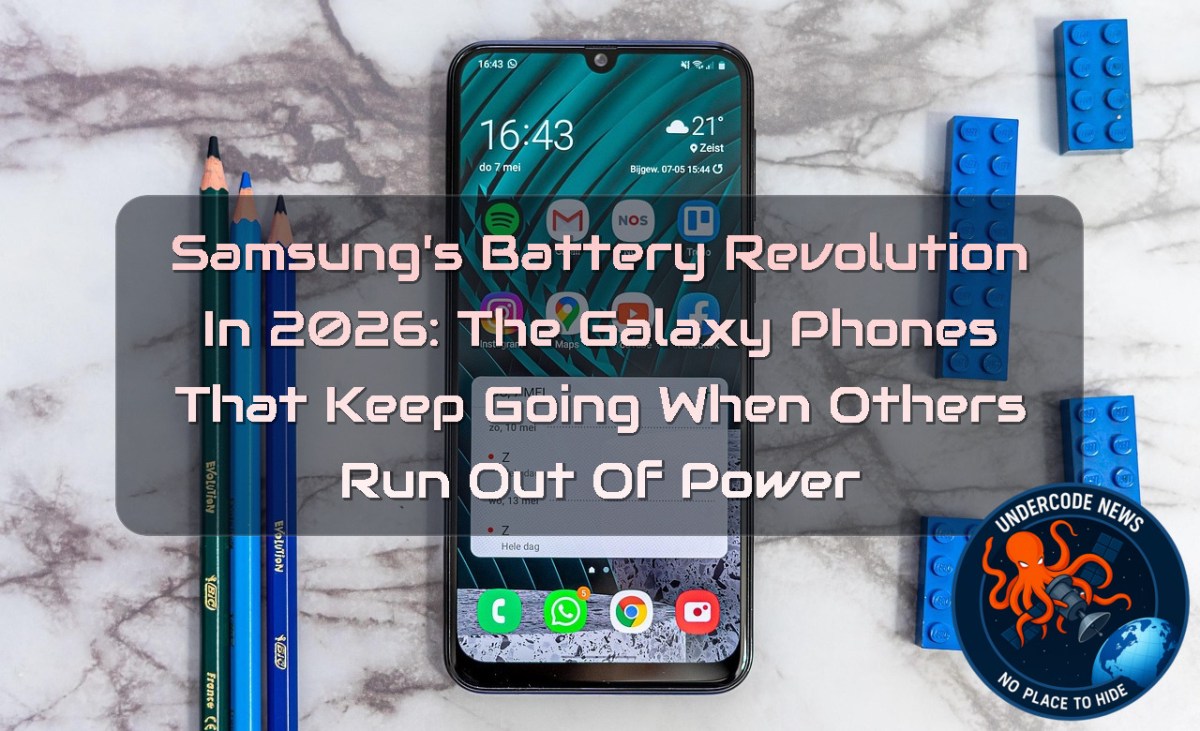 Introduction: Battery Life Has Become the New Smartphone Battleground
For years, smartphone buyers had to choose between premium performance and exceptional battery life. Flagship devices delivered cutting-edge features but often struggled to last through an intensive day, while budget phones offered larger batteries at the expense of speed, display quality, and camera performance. In 2026, Samsung has significantly narrowed that gap.
The company’s latest Galaxy lineup demonstrates that battery endurance is no longer an exclusive feature of oversized budget smartphones. Instead, Samsung has successfully integrated intelligent battery optimization, energy-efficient chipsets, vibrant AMOLED displays, and larger battery capacities across nearly every price segment. Whether you’re a mobile gamer, business professional, content creator, or casual user, there is now a Galaxy device capable of keeping up with your daily routine without constantly searching for a charger.
This year’s lineup highlights Samsung’s broader strategy: combining hardware efficiency with AI-powered software optimization to maximize every milliamp-hour while maintaining the premium experience users expect.
Samsung Focuses on Battery Endurance Across Every Price Range
Samsung’s 2026 smartphone portfolio places battery longevity at the center of the user experience.
Rather than simply increasing battery sizes, Samsung has improved nearly every factor affecting power consumption. More efficient processors, adaptive refresh rate displays, AI-based background app management, and software optimizations work together to extend battery life without sacrificing performance.
The result is a smartphone lineup where even mid-range devices can comfortably last an entire day—and in some cases, nearly two days—on a single charge.
Samsung Galaxy M35 5G: The Undisputed Battery Champion
Among all Galaxy smartphones released in 2026, the Samsung Galaxy M35 5G stands above the competition for one simple reason: its enormous 6,000mAh battery.
Designed specifically for users who prioritize endurance over everything else, the Galaxy M35 easily delivers up to two days of moderate usage. Heavy users can comfortably finish an entire day without experiencing battery anxiety.
Samsung pairs this massive battery with the efficient Exynos 1380 processor, ensuring power consumption remains low even during demanding workloads.
The 6.6-inch Super AMOLED display with a smooth 120Hz refresh rate also contributes to an enjoyable viewing experience while maintaining impressive efficiency.
Key Specifications
Battery: 6,000mAh
Charging: 25W Wired Fast Charging
Display: 6.6-inch Super AMOLED (120Hz)
Processor: Exynos 1380
Samsung Galaxy S25 Ultra: Premium Performance Without Battery Compromise
Samsung’s flagship Galaxy S25 Ultra proves that premium smartphones no longer have to sacrifice battery endurance for performance.
Although it carries a smaller 5,000mAh battery compared to the M35, Samsung’s flagship Snapdragon processor delivers significantly improved power efficiency.
Combined with
Its 45W fast charging further minimizes downtime, making it ideal for professionals and power users.
Key Specifications
Battery: 5,000mAh
Charging: 45W Fast Charging
Display: 6.9-inch Dynamic AMOLED 2X
Processor: Snapdragon Flagship Platform
Samsung Galaxy A56 5G: The Mid-Range Sweet Spot
The Galaxy A56 5G represents one of
Equipped with a 5,000mAh battery, the phone consistently provides full-day battery life under normal usage, while lighter users can often extend usage well into the second day.
Samsung complements the battery with a large 6.7-inch Super AMOLED display and efficient processing hardware, creating a balanced smartphone for users seeking longevity without paying flagship prices.
Perhaps even more attractive is Samsung’s commitment to providing up to six years of software updates, dramatically increasing the device’s long-term value.
Key Specifications
Battery: 5,000mAh
Charging: 45W Fast Charging
Display: 6.7-inch Super AMOLED
Software Support: Up to Six Years
Samsung Galaxy M55 5G: Built for Entertainment Enthusiasts
The Galaxy M55 5G is designed for users who spend hours watching videos, scrolling social media, gaming, or streaming content.
Its combination of a 5,000mAh battery, Snapdragon chipset, and 6.7-inch Super AMOLED+ display offers excellent endurance while maintaining smooth overall performance.
With support for 45W fast charging, users can quickly recharge and return to their entertainment sessions with minimal interruption.
Key Specifications
Battery: 5,000mAh
Charging: 45W Fast Charging
Display: 6.7-inch Super AMOLED+
Processor: Snapdragon Series
Samsung Galaxy A36 5G: Budget-Friendly Without Battery Anxiety
For buyers seeking affordability, the Galaxy A36 5G delivers surprising battery performance.
Its 5,000mAh battery comfortably powers a full day of regular usage, while Samsung’s intelligent battery management system helps reduce unnecessary background power consumption.
Support for 45W charging further increases the
For students, office workers, and everyday smartphone users, the Galaxy A36 provides one of the best battery-to-price ratios in Samsung’s lineup.
Key Specifications
Battery: 5,000mAh
Charging: 45W Fast Charging
Display: 6.7-inch Super AMOLED
Best For: Everyday Users
Which Samsung Galaxy Phone Offers the Best Battery Life?
When pure battery endurance is the deciding factor, the Galaxy M35 5G clearly leads Samsung’s 2026 lineup.
Its 6,000mAh battery allows many users to reach two full days between charges—a remarkable achievement in today’s smartphone market.
However, choosing the “best” battery phone ultimately depends on individual priorities.
Users wanting maximum performance should consider the Galaxy S25 Ultra, while those seeking the best balance between price, software longevity, and endurance will likely find the Galaxy A56 5G the most attractive option.
Meanwhile, the Galaxy A36 and M55 continue to strengthen Samsung’s reputation for offering dependable battery life even outside the premium segment.
Samsung’s Battery Improvements Extend Beyond Hardware
Battery capacity tells only part of the story.
Samsung’s software now plays an equally important role in extending battery life.
Adaptive refresh rates automatically reduce display power consumption.
AI-powered background management limits unnecessary application activity.
Modern AMOLED panels consume less energy when displaying darker interfaces.
Newer Snapdragon and Exynos processors deliver substantially better performance-per-watt compared to previous generations.
Together, these improvements often produce greater real-world battery gains than simply increasing battery size alone.
Software Support Remains a Critical Buying Factor
Battery life is only one aspect of long-term smartphone ownership.
Samsung recently discontinued software support for several older Galaxy devices, including the Galaxy A13, Galaxy A23 LTE, and Galaxy M33 5G.
Although these smartphones continue functioning normally, the absence of regular security updates means they become increasingly vulnerable to newly discovered cyber threats.
This reinforces the importance of choosing newer Galaxy devices that include extended software support, ensuring both longer usability and stronger security over time.
Deep Analysis
Samsung’s 2026 battery strategy reflects a broader shift occurring across the smartphone industry.
Manufacturers are increasingly focusing on efficiency rather than simply increasing battery capacity.
Several technologies contribute to these improvements:
AI-based battery prediction
Adaptive CPU scheduling
Variable refresh rate displays
Advanced semiconductor manufacturing
Improved thermal management
Background application optimization
Smarter charging algorithms
Developers and power users can also monitor battery health using Android debugging tools.
Useful ADB commands include:
adb shell dumpsys battery
Displays detailed battery information.
adb shell dumpsys batterystats
Generates battery usage statistics.
adb bugreport
Creates a complete diagnostic report for battery analysis.
adb shell cmd battery unplug
Simulates battery discharge during testing.
adb shell cmd battery reset
Restores normal battery behavior after testing.
Samsung’s AI battery management likely relies on machine learning models that observe charging patterns, application usage, screen-on time, and thermal behavior. By dynamically adjusting background activity, CPU frequencies, and charging behavior, these systems improve both daily endurance and long-term battery health.
Looking ahead, Samsung is also expected to benefit from advances in silicon-carbon battery technology, more efficient OLED panels, and next-generation chip fabrication processes. These innovations could eventually push flagship smartphones beyond two full days of regular use without requiring significantly larger batteries.
What Undercode Say:
Samsung’s 2026 lineup demonstrates that battery life has become one of the company’s strongest competitive advantages rather than just another specification on a marketing sheet.
The Galaxy M35 5G clearly targets endurance-focused consumers, and its 6,000mAh battery places it among the best battery smartphones in Samsung’s portfolio. While charging speed is limited to 25W, the trade-off is reasonable considering its exceptional longevity.
The Galaxy S25 Ultra represents a different philosophy. Instead of relying on a larger battery, Samsung optimizes every layer of the hardware and software stack to maximize efficiency. This approach is increasingly common among premium smartphones, where thermal management and chipset optimization often matter more than raw battery capacity.
The Galaxy A56 5G may actually be
The M55 5G continues
Meanwhile, the Galaxy A36 5G proves that entry-level buyers no longer need to accept poor battery life or slow charging as compromises.
Another noteworthy trend is
Battery technology has matured considerably over the past few years, shifting innovation toward energy efficiency instead of capacity alone. Processor architecture, display technology, modem efficiency, storage optimization, and software scheduling now contribute equally to real-world endurance.
Consumers should also evaluate software support alongside battery performance. A phone capable of lasting two days on a charge is less valuable if it stops receiving security updates after only a short period. Samsung’s commitment to extended software updates significantly enhances the long-term value of newer Galaxy devices.
The removal of older Galaxy models from
Looking beyond 2026, Samsung appears well-positioned to capitalize on emerging battery technologies, AI-driven power management, and increasingly efficient semiconductor manufacturing. These developments suggest future Galaxy devices will continue improving endurance without requiring dramatically larger batteries.
Overall, Samsung has successfully transformed battery life from a differentiating feature into a standard expectation across its smartphone ecosystem. That strategic shift strengthens its position against competitors while giving consumers greater flexibility regardless of their budget.
✅ Accurate: The Galaxy M35 5G is widely recognized for its 6,000mAh battery, making it one of Samsung’s longest-lasting smartphones. Under moderate usage, achieving close to two days of battery life is a realistic expectation, although actual results vary depending on workload and network conditions.
✅ Accurate:
✅ Mostly Accurate: Samsung has ended regular software update support for older models such as the Galaxy A13, Galaxy A23 LTE, and Galaxy M33 5G. While these devices continue to function, they no longer receive routine security updates, which may increase security risks over time.
Prediction
(+1) Samsung will continue expanding AI-powered battery optimization across both flagship and mid-range Galaxy devices, allowing future smartphones to deliver even longer battery life without significantly increasing battery size.
(-1) As mobile AI features, on-device processing, and increasingly demanding applications become more common, future smartphones may consume more power, forcing manufacturers to balance performance gains with battery efficiency more carefully than ever before.
▶️ Related Video (74% Match):
🕵️📝Let’s dive deep and fact‑check.
🎓 Live Courses & Certifications:
Join Undercode Academy for Verified Certifications
🚀 Request a Custom Project:
Secure, high-velocity infrastructure and disruptive technological engineering. Contact our engineering team for high-tier development and proprietary systems:
[email protected]
💎 Smart Architecture | 🛡️ Secure by Design | ⭐ Trusted by Thousands
References:
Reported By: www.legit.ng
Extra Source Hub (Possible Sources for article):
https://www.github.com
Wikipedia
OpenAi & Undercode AI
Image Source:
Unsplash
Undercode AI DI v2
🔐JOIN OUR CYBER WORLD [ CVE News • HackMonitor • UndercodeNews ]
📢 Follow UndercodeNews & Stay Tuned:
𝕏 formerly Twitter 🐦 | @ Threads | 🔗 Linkedin | 🦋BlueSky | 🐘Mastodon | 📺Youtube


