
Listen to this Post
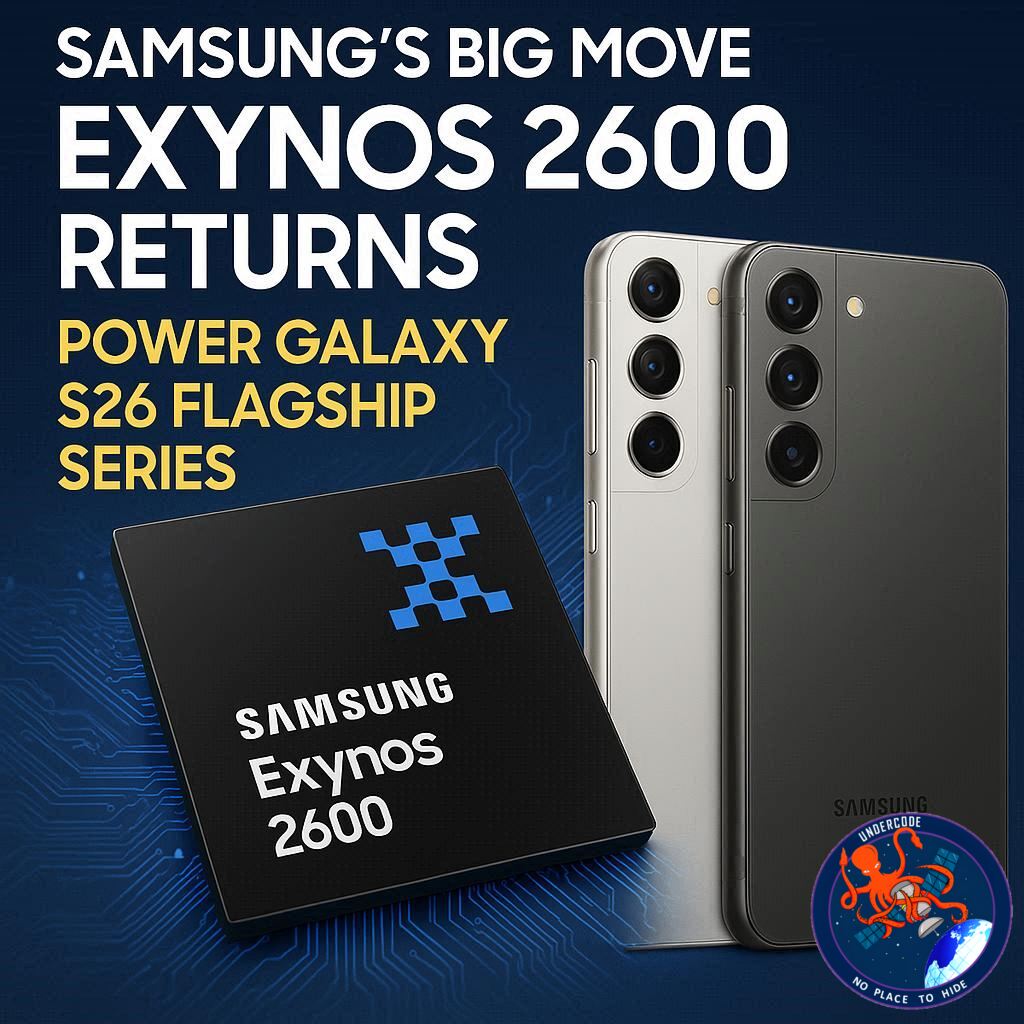
Samsung appears to be setting the stage for a bold shift in its flagship smartphone strategy — one that brings its in-house Exynos processor back into the global spotlight. The tech giant’s Q3 2025 earnings report might have just confirmed what fans and analysts have been speculating for months: the Exynos 2600 is ready to power the upcoming Galaxy S26 series.
Samsung Drops Its Biggest Hint Yet
Rumors have been swirling for months about Samsung’s plans for the Galaxy S26 lineup. While the company had previously relied heavily on Qualcomm’s Snapdragon chips for its premium smartphones, especially in key markets like the U.S. and China, the tide seems to be turning.
In its Q3 2025 earnings release, Samsung included a striking statement: it intends to “strengthen the competitiveness of the Exynos process for key flagship models in 2026.” This is more than corporate jargon—it’s a direct signal that the company is betting big on its homegrown silicon for next year’s top-tier devices.
There are only two product lines that qualify as Samsung’s “key flagship models”: the Galaxy S series and the Galaxy Z foldables. Earlier this year, the Galaxy Z Flip 7 marked a pivotal transition when Samsung swapped the Snapdragon chip for an Exynos processor. Now, with the upcoming Galaxy S26, S26+, and possibly even the S26 Ultra, that transition appears to be expanding.
According to multiple reports, both the Galaxy S26 and S26+ will be powered exclusively by the Exynos 2600. Even the Galaxy S26 Ultra—traditionally the most powerful and premium model in the lineup—is expected to adopt the Exynos chip in most regions. A Snapdragon 8 Gen 5 “Elite” version may still exist, but only for select markets like the United States, Japan, and China.
This strategic move suggests Samsung’s growing confidence in its semiconductor division and its renewed ambition to compete head-to-head with Qualcomm. After years of criticism regarding performance disparities between Exynos and Snapdragon variants, Samsung seems ready to silence the skeptics once and for all.
For loyal fans, this development is both exciting and nerve-wracking. The Exynos brand has faced its share of controversies—battery drain, overheating, and underperformance compared to Snapdragon chips. But recent reports indicate major architectural improvements, AI-driven efficiency, and closer optimization between hardware and software—potentially making the Exynos 2600 Samsung’s redemption chip.
In short, the writing is on the wall: Exynos is coming back, stronger than ever.
What Undercode Say:
This move is more than a hardware shift; it’s a strategic statement by Samsung. For years, the company has struggled to assert the same chip-level dominance enjoyed by Apple with its A-series processors. By reclaiming control of its flagship devices’ performance architecture, Samsung isn’t just reducing dependence on Qualcomm—it’s redefining its technological identity.
Let’s break down why this decision matters so much:
Vertical Integration and Cost Control
Producing its own chips allows Samsung to reduce costs and streamline its supply chain. In a competitive market where profit margins are razor-thin, that’s a significant advantage.
AI and On-Device Intelligence
The Exynos 2600 is rumored to feature an advanced neural processing unit (NPU), enhancing on-device AI capabilities. This could tie directly into Samsung’s broader AI ecosystem—especially with the rise of Galaxy AI features expected in 2026.
Performance Parity with Snapdragon
Early engineering benchmarks (though unofficial) suggest that the Exynos 2600 might finally match or even outperform Qualcomm’s Snapdragon 8 Gen 5 in sustained performance. If this holds true, Samsung will regain credibility among performance enthusiasts.
Regional Strategy Shift
The limited release of Snapdragon variants in the U.S., Japan, and China indicates a more focused marketing approach. Samsung could be leveraging those regions’ brand preferences while solidifying Exynos dominance globally.
Ecosystem Synergy
With Samsung’s semiconductor, mobile, and display divisions all working under one roof, the potential for deep integration is enormous. The Exynos 2600 could optimize everything—from power consumption on AMOLED displays to processing speed in the camera system.
Brand Reclamation
Exynos used to be a name associated with compromise. Now, Samsung has a chance to rewrite that narrative. If the Exynos 2600 delivers flagship-level performance with improved thermals and efficiency, it could restore consumer trust—and pride—in Samsung-made chips.
The Bigger Picture: Beyond Phones
The ripple effect could extend beyond smartphones. A successful Exynos relaunch may pave the way for deeper integration into wearables, tablets, and even Samsung’s AI PCs—creating a unified ecosystem rivaling Apple’s M-series synergy.
In essence, Samsung’s decision represents both a technical leap and a philosophical one. It’s a declaration that the company no longer wants to play second fiddle in the chip race. Instead, it’s doubling down on innovation, control, and national pride.
But risks remain. If the Exynos 2600 underperforms again, consumer backlash could be severe, especially in markets that remember past disappointments. Samsung’s success will depend not only on raw power but also on optimization, thermal management, and real-world experience—areas where Exynos chips historically stumbled.
Still, one thing is clear: Samsung is betting its flagship reputation on Exynos. And that makes 2026 one of the most pivotal years in the company’s smartphone history.
Fact Checker Results:
✅ Samsung’s Q3 2025 report explicitly references “strengthening Exynos competitiveness” for 2026 flagships.
✅ Multiple reports confirm Exynos 2600 development for Galaxy S26 series.
❌ Samsung has not officially confirmed full global deployment or chipset configurations per market.
Prediction 🔮
Samsung’s Exynos 2600-powered Galaxy S26 series will likely redefine the perception of in-house chipsets. If performance matches expectations, 2026 could mark the renaissance of Exynos—a comeback story that transforms Samsung from a follower in the chip space to a full-fledged competitor. However, if history repeats itself, the Exynos 2600 could risk damaging trust once again, making this one of the most crucial product launches in Samsung’s modern era.
🕵️📝✔️Let’s dive deep and fact‑check.
References:
Reported By: www.sammobile.com
Extra Source Hub (Possible Sources for article):
https://www.pinterest.com
Wikipedia
OpenAi & Undercode AI
Image Source:
Unsplash
Undercode AI DI v2
Bing
🔐JOIN OUR CYBER WORLD [ CVE News • HackMonitor • UndercodeNews ]
📢 Follow UndercodeNews & Stay Tuned:
𝕏 formerly Twitter 🐦 | @ Threads | 🔗 Linkedin | 🦋BlueSky | 🐘Mastodon


