
Listen to this Post
Introduction
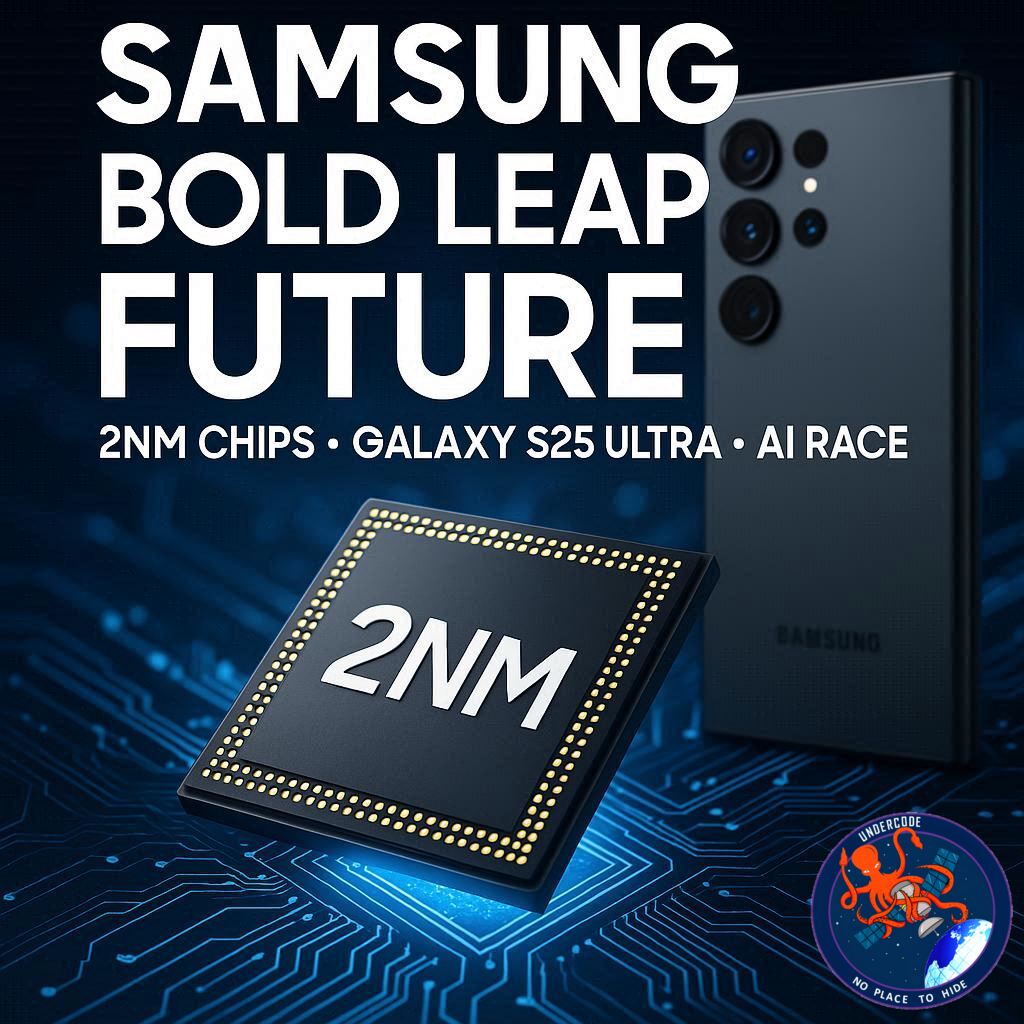
The tech battlefield is heating up, and Samsung is standing right at the center of it. With groundbreaking 2nm chip technology, upcoming flagship devices like the Galaxy S25 Ultra, Galaxy S25 FE, and the much-anticipated Fold 7, the South Korean giant is making waves across the semiconductor and smartphone industries. As chipmakers like TSMC, Intel, and newcomers such as Rapidus fight for dominance, Samsung is proving that it’s not just a competitor—it’s a frontrunner ready to rewrite the future of AI and mobile computing.
the Original
Samsung has emerged as one of the few companies in the world capable of manufacturing advanced 2nm and 3nm process node chips. Legendary chip designer Jim Keller, who has an impressive history with AMD, Apple, and Tesla, is currently in discussions with Samsung Electronics to produce Tenstorrent’s AI chips using Samsung’s 2nm process. In an interview with Nikkei Asia, Keller confirmed that Tenstorrent is also exploring Rapidus and TSMC as possible partners but noted that Intel still needs significant improvements before becoming a reliable contender with its 18A (2nm-class) process.
Meanwhile, Samsung Foundry has reportedly begun mass production of the Exynos 2600, possibly making it the world’s first 2nm smartphone processor. If successful, this achievement could position Samsung as a major challenger to TSMC’s dominance. The Exynos 2600 is rumored to feature ARM’s C1 CPU cores, an AMD RDNA-powered Xclipse 950 GPU, an advanced Neural Processing Unit (NPU), a next-generation ISP, an integrated 5G modem, and even satellite connectivity.
Samsung has already secured 2nm chip contracts from companies like Ambarella, DeepX, PFN, and Tesla, highlighting its rising influence in the semiconductor market. If the Exynos 2600 proves stable, companies such as AMD, Nvidia, and Qualcomm may also consider Samsung as an alternative supplier. The new processor is expected to debut inside the Galaxy S26 Pro next year, potentially redefining smartphone performance.
What Undercode Say:
Samsung’s bold push into 2nm technology is not just about smartphones—it’s about global technological leadership. Here’s what stands out when analyzing the bigger picture:
The Competitive Landscape
TSMC has been the gold standard for advanced chips, dominating contracts with Apple, Nvidia, and AMD. However, Samsung is positioning itself as a strong second option and perhaps the only real alternative. This competition ensures that no single company can monopolize the most advanced nodes.
Jim Keller’s Influence
Keller’s involvement is a major endorsement. His track record at AMD (Zen architecture), Apple (A-series chips), and Tesla (autonomous AI hardware) is legendary. If Keller trusts Samsung for 2nm AI chips, it signals that the South Korean firm is on par with, if not ahead of, its global rivals in certain aspects.
The Risk & Reward for Samsung
Launching the world’s first 2nm smartphone processor with the Exynos 2600 is a high-stakes move. If the chip performs flawlessly, Samsung could reshape the semiconductor market. However, any flaws in yield, thermal management, or efficiency could damage its reputation.
Smartphone Evolution
The Exynos 2600 is more than a CPU—it represents the convergence of AI, graphics, and communications. Features like low-Earth orbit satellite connectivity could make Galaxy smartphones indispensable in emergency scenarios, boosting Samsung’s brand appeal worldwide.
Impact on AI & Data Centers
Tenstorrent’s interest highlights the growing demand for AI-specific chips. With AI workloads expanding across industries, Samsung’s 2nm process could unlock faster, more efficient accelerators for training and inference tasks, putting it in direct competition with Nvidia’s CUDA ecosystem and TSMC’s production for AI giants.
Intel’s Struggles
Intel’s 18A process is promising on paper but still faces execution hurdles. If Samsung can prove reliability earlier, it may permanently sideline Intel from securing large AI chip contracts.
Long-Term Vision
Samsung isn’t just producing chips—it’s investing in becoming the backbone of the AI-driven world. The Exynos 2600 is a smartphone chip today, but tomorrow, Samsung’s 2nm fabs could power self-driving cars, cloud AI systems, and even next-generation robotics.
✅ Fact Checker Results
Samsung has indeed started work on 2nm process technology and secured contracts with Ambarella, DeepX, PFN, and Tesla.
TSMC remains the global leader but Samsung is aggressively positioning itself as the alternative.
Intel’s 18A process is in development, but it is not yet competitive in large-scale production.
🔮 Prediction
If Samsung successfully delivers stable 2nm chips ahead of rivals, it could win major contracts from AMD, Nvidia, and Qualcomm within the next two years. This would not only elevate the Exynos brand in smartphones but also cement Samsung as a global AI hardware powerhouse. The Galaxy S26 Pro could be the first step in redefining how consumers and enterprises alike perceive Samsung’s technological dominance.
🕵️📝✔️Let’s dive deep and fact‑check.
References:
Reported By: www.sammobile.com
Extra Source Hub:
https://www.medium.com
Wikipedia
OpenAi & Undercode AI
Image Source:
Unsplash
Undercode AI DI v2
🔐JOIN OUR CYBER WORLD [ CVE News • HackMonitor • UndercodeNews ]
📢 Follow UndercodeNews & Stay Tuned:
𝕏 formerly Twitter 🐦 | @ Threads | 🔗 Linkedin | 🦋BlueSky | 🐘Mastodon


