
Listen to this Post
Introduction
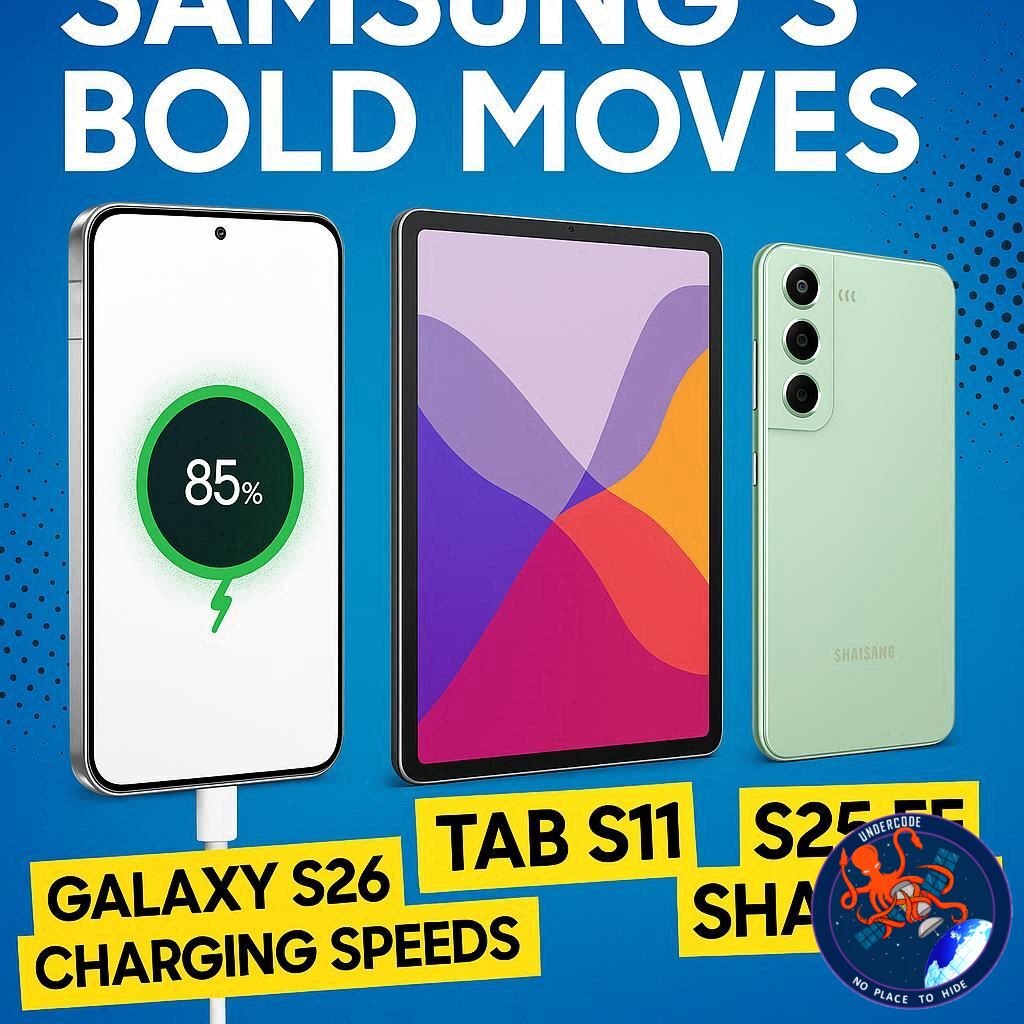
Samsung is preparing to reshape its mobile strategy with the upcoming Galaxy S26 series, the Galaxy Tab S11 lineup, and the highly anticipated S25 FE. Rumors are swirling around rebranding, reorganizing, and game-changing upgrades, but the spotlight has landed on one surprising detail — Samsung’s reluctance to speed up charging for its non-Ultra models. As Apple pushes charging innovation forward, many are questioning if Samsung is falling behind in one of the most crucial smartphone features: power efficiency and charging speed.
The Big Reveal: Charging Speeds of the Galaxy S26 Series
Samsung is expected to launch the Galaxy S26 series in just four months. Reliable leaks confirm that both the Galaxy S26 Pro and the Galaxy S26 Edge will continue to use 25W wired fast charging, the same as their predecessors, the S25 lineup. This decision has left many disappointed, especially as the Galaxy S26 Ultra is rumored to come with blazing-fast 60W charging.
The Galaxy S26 Pro is said to feature a 4,300mAh battery, while the S26 Edge will carry a slightly smaller 4,200mAh battery. Despite the modest 25W charging speeds, users can still expect a 50% charge in about 30 minutes and a full charge in roughly one hour. While the increase in battery capacity is welcome, many hoped these models would at least match the 45W fast charging already available on Ultra models.
In contrast, Apple’s iPhone 17 lineup has surged ahead in this department. The iPhone 17, iPhone 17 Pro, and iPhone 17 Pro Max boast 40W wired charging, with the iPhone Air supporting 27W charging. Even in wireless charging, Apple takes the lead with 25W support (20W on the Air). This means that across the board, the new iPhones outpace Samsung’s S26 Pro and S26 Edge in charging efficiency.
Yet, Samsung still holds an edge in other areas. The Galaxy S26 Edge reportedly outshines the iPhone Air with a larger 6.7-inch display, a 200MP+50MP dual rear camera setup, a slimmer body at just 5.5mm, and a bigger battery. These hardware advantages may help Samsung offset criticism, but the charging conversation remains a sticking point for many tech enthusiasts.
What Undercode Say:
Samsung’s strategy seems clear — reserving premium features like ultra-fast charging for Ultra models. This segmentation forces power users who demand the best to upgrade to the Ultra tier, ensuring higher margins for Samsung. However, this move risks alienating mid-tier buyers who increasingly expect flagship features at lower price points.
From a business perspective, Samsung is betting on brand loyalty and ecosystem integration. With Galaxy Tabs, Watches, and Buds tying into the same network, users may overlook slower charging speeds if the overall ecosystem delivers. But when competitors like Apple provide faster charging and strong ecosystems, Samsung’s gamble looks risky.
The Galaxy S26 Edge vs. iPhone Air comparison highlights Samsung’s design philosophy: bigger displays, higher megapixel counts, slimmer builds, and larger batteries. While Apple dominates software optimization, Samsung leans on hardware supremacy. Yet, charging speed remains the one hardware element where Apple currently leads — a surprising reversal of roles.
Looking deeper, this could be Samsung’s cautious play. Faster charging generates more heat, reduces long-term battery health, and demands advanced cooling systems. By sticking with 25W, Samsung ensures durability and stability, potentially appealing to long-term users. The Ultra tier, with better thermal solutions, can afford 60W speeds.
Still, in today’s spec-driven smartphone race, numbers sell. Consumers see 40W vs. 25W and perceive Apple as superior, regardless of practical benefits. Marketing plays a huge role, and Samsung may struggle to convince buyers that slower charging is a feature, not a limitation.
The Galaxy Tab S11 series and S25 FE will also play a vital role in shaping Samsung’s 2025 portfolio. Positioned as affordable yet powerful alternatives, they will appeal to students, casual users, and budget-conscious buyers. Samsung could leverage these launches to create an ecosystem entry point, then push users toward Ultra devices for premium perks like faster charging.
In short, Samsung is walking a fine line between reliability and innovation. While the Ultra models shine with cutting-edge specs, the Pro and Edge models risk looking outdated compared to Apple’s offerings. The question is whether Samsung’s loyal base values battery longevity and ecosystem perks more than raw charging speed.
✅ Fact Checker Results
Samsung confirmed 25W charging for the S26 Pro and Edge ❌
Apple iPhone 17 series indeed supports faster 40W wired charging ✅
S26 Edge hardware outclasses iPhone Air in display, camera, and battery ✅
🔮 Prediction
Samsung’s next big leap will not just be about speed but smart charging technology. Expect AI-driven charging optimization, better heat management, and possibly wireless breakthroughs by 2026. If Samsung can merge battery health longevity with faster charging, it could regain the upper hand in the charging wars. 🚀
🕵️📝✔️Let’s dive deep and fact‑check.
References:
Reported By: www.sammobile.com
Extra Source Hub:
https://www.facebook.com
Wikipedia
OpenAi & Undercode AI
Image Source:
Unsplash
Undercode AI DI v2
🔐JOIN OUR CYBER WORLD [ CVE News • HackMonitor • UndercodeNews ]
📢 Follow UndercodeNews & Stay Tuned:
𝕏 formerly Twitter 🐦 | @ Threads | 🔗 Linkedin | 🦋BlueSky | 🐘Mastodon


