
Listen to this Post
Introduction
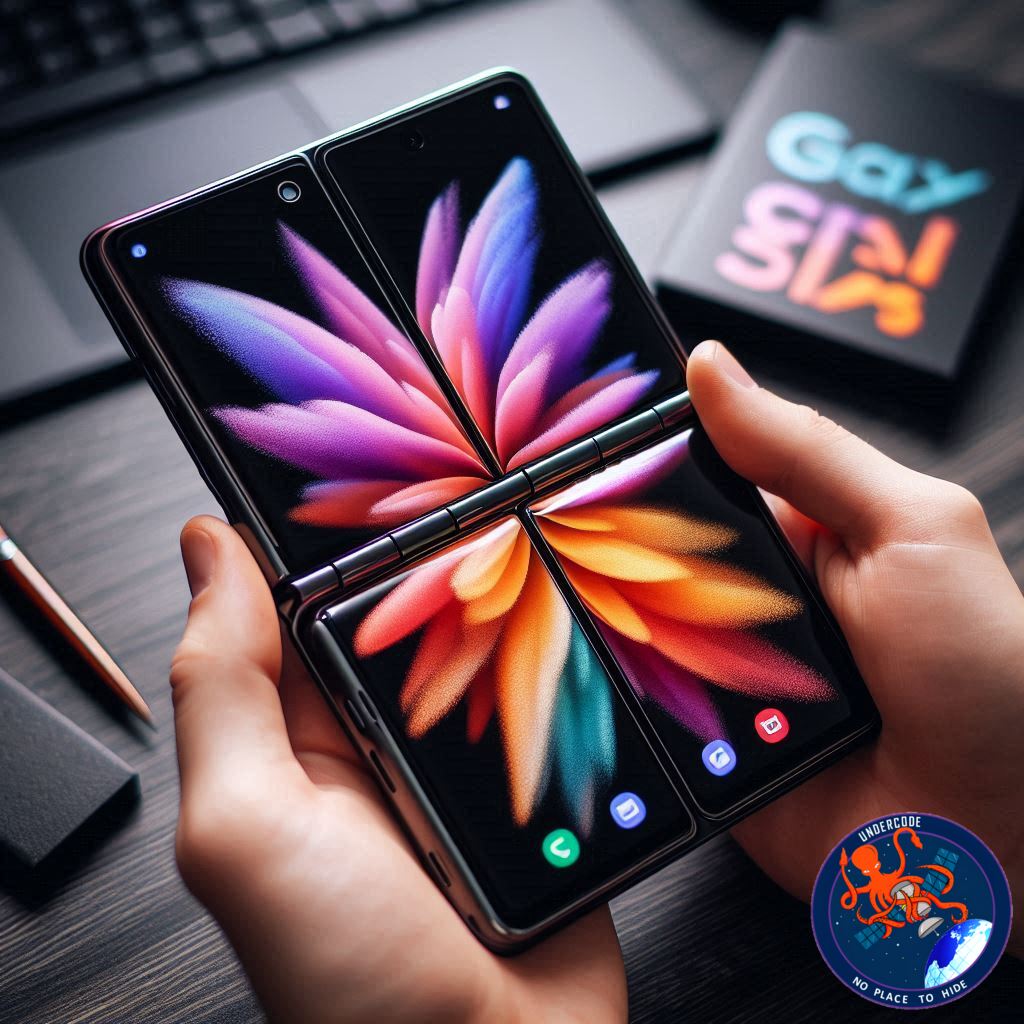
Tech fans have waited years for Samsung to unveil a foldable device that breaks past the familiar book-style format. After endless rumors, concept leaks, and whispered engineering challenges, the company has finally stepped into a new era. Samsung has revealed the Galaxy Z TriFold — a dual-hinged, phone-tablet hybrid that stretches the limits of flexible display design. With two folds, a massive 10-inch interior panel, and a refined cover screen pulled from the Fold 7 lineage, the TriFold marks one of the boldest shifts in Samsung’s hardware strategy. What follows is a deep dive into the device’s display technology, its unusual engineering choices, and what this means for the broader foldable market.
Main Summary
A New Category Takes Shape
Samsung’s introduction of the Galaxy Z TriFold signals a leap forward in foldable technology. For years, the industry speculated whether a dual-hinged device was even practical. This week, Samsung confirmed it is not only possible — it is polished.
A Massive 10-Inch Interior Screen
The TriFold’s star attraction is its 10-inch foldable display, the largest Samsung has ever placed on a mobile device. The panel folds twice, creating a compact exterior when shut and a tablet-like canvas when open. This design outpaces previous Fold models and redefines the idea of a phone that transforms.
Reinforced for a Dual-Hinge Future
Samsung has not shared the full technical breakdown, but it emphasized a reinforced overcoat layered over a shock-absorbing substrate. This suggests Samsung re-engineered the panel stack to ensure durability across two fold points instead of one — an engineering hurdle that has stalled competitors for years.
Brightness Differences Across Devices
Comparisons to Samsung’s current lineup reveal intentional trade-offs. While the Fold 7 delivers a blistering 2,600-nit peak brightness on its 8-inch inner panel, the TriFold’s larger 10-inch screen peaks at 1,600 nits. This level matches the Galaxy Tab S11 and earlier Fold models. It appears Samsung prioritized flexibility, longevity, and structural soundness over extreme brightness.
Cover Screen Borrowed from the Fold 7
The cover screen continues Samsung’s strategy of reusing successful components. The TriFold appears to use the same exterior panel found on the Galaxy Z Fold 7 — a highly capable display with solid brightness and clarity. Though Samsung didn’t explicitly confirm LTPO support, it would be unusual for a flagship model at this tier to skip adaptive refresh technology.
A Familiar Yet Radical Form
This mixture of new and borrowed hardware creates a device that feels both futuristic and familiar. The TriFold pushes boundaries with its dual-hinged internal panel while maintaining reliability through proven external components. For a first-generation entry into a new category, Samsung’s approach hints at cautious ambition.
A Glimpse at Samsung’s Long-Term Strategy
The TriFold is more than a product launch. It is a statement of intent. Samsung is expanding foldables beyond the book form factor, signaling that future devices may mix, merge, or completely redraw mobile categories. For consumers, it introduces a new option between a traditional phone and a tablet—one that folds into an surprisingly portable size.
What Undercode Say:
Dual-Hinge Engineering Is the Real Breakthrough
The TriFold’s most important feature isn’t its size — it’s the mechanics. Adding a second hinge doubles the stress points, meaning Samsung had to rethink layer compression, crease resistance, and hinge synchronization. Early foldables struggled with a single hinge; synchronizing two in a single panel is a significant engineering milestone. This suggests Samsung has matured its flexible OLED technology well beyond the industry standard.
Balancing Durability and Visual Performance
The drop in brightness from the Fold 7 is not a flaw; it is a strategic safeguard. Larger foldable panels generate more heat, have higher structural flexibility, and require thicker protective layers. A 1,600-nit limit likely ensures longer panel lifespan and reduces consumption in tablet mode. Samsung appears to have prioritized endurance — a wise decision for a first-generation device.
Borrowing Components Signals Confidence
Samsung’s decision to reuse the Fold 7’s cover screen is smart. It reduces production risks, maintains quality consistency, and reserves innovation effort for the more complex folding system. This also hints that the TriFold’s internal display consumed most of Samsung’s R&D budget, making it the centerpiece around which everything else was assembled.
The
This device is not meant to replace the Fold 7. Instead, it carves out a premium tier above it. The Fold series remains the “daily foldable” for mainstream users, while the TriFold steps into the ultra-premium experimental category. Think of it as Samsung’s Galaxy Note moment — bold, large, and intended to spark a new trend.
Tablet Replacement Potential
A 10-inch panel puts the TriFold within striking distance of dedicated tablets. This raises a critical question: does Samsung envision a future where tablets shrink in product relevance? The TriFold acts as a signal. By merging categories, Samsung may be preparing consumers for a world where pocketable tablets become the norm rather than the exception.
Ecosystem Implications
This device will ripple across Samsung’s ecosystem. App developers must adapt UI layouts for tri-segment folding, multi-angle usage, and dynamic transition animations. Software is now just as important as hardware. Expect One UI updates that introduce multi-stage layout shifting — a feature that could define the user experience.
Competitor Pressure Will Intensify
Samsung’s reveal corners competitors. Google, Xiaomi, and Huawei have teased multi-fold concepts but haven’t delivered a commercial-ready version. With the TriFold officially launched, the pressure shifts. If Samsung manages stability and sales, the rest of the industry will accelerate.
A Blueprint for Foldable Evolution
The TriFold may become the foundation for future innovations: triple-fold tablets, desktop-sized portable screens, or ultra-compact laptops that fold into your pocket. This isn’t the end of foldable evolution — it is the beginning of Samsung’s next chapter.
Fact Checker Results
Samsung confirmed the TriFold uses a 10-inch folding panel. ✅
Peak brightness of the inner display is capped at 1,600 nits. ✅
LTPO on the cover screen is not yet officially confirmed. ❌
Prediction
Samsung will likely expand the TriFold line into a yearly series, giving it the same momentum the Fold lineup received in its early days. 📱
Developers will rush to optimize apps for multi-segment fold usage, triggering a wave of UI innovation. 🔧
Expect Samsung to increase brightness, crease reduction, and hinge reliability in the next TriFold generation. 🔮
🕵️📝✔️Let’s dive deep and fact‑check.
References:
Reported By: www.sammobile.com
Extra Source Hub (Possible Sources for article):
https://www.reddit.com/r/AskReddit
Wikipedia
OpenAi & Undercode AI
Image Source:
Unsplash
Undercode AI DI v2
Bing
🔐JOIN OUR CYBER WORLD [ CVE News • HackMonitor • UndercodeNews ]
📢 Follow UndercodeNews & Stay Tuned:
𝕏 formerly Twitter 🐦 | @ Threads | 🔗 Linkedin | 🦋BlueSky | 🐘Mastodon


