Listen to this Post
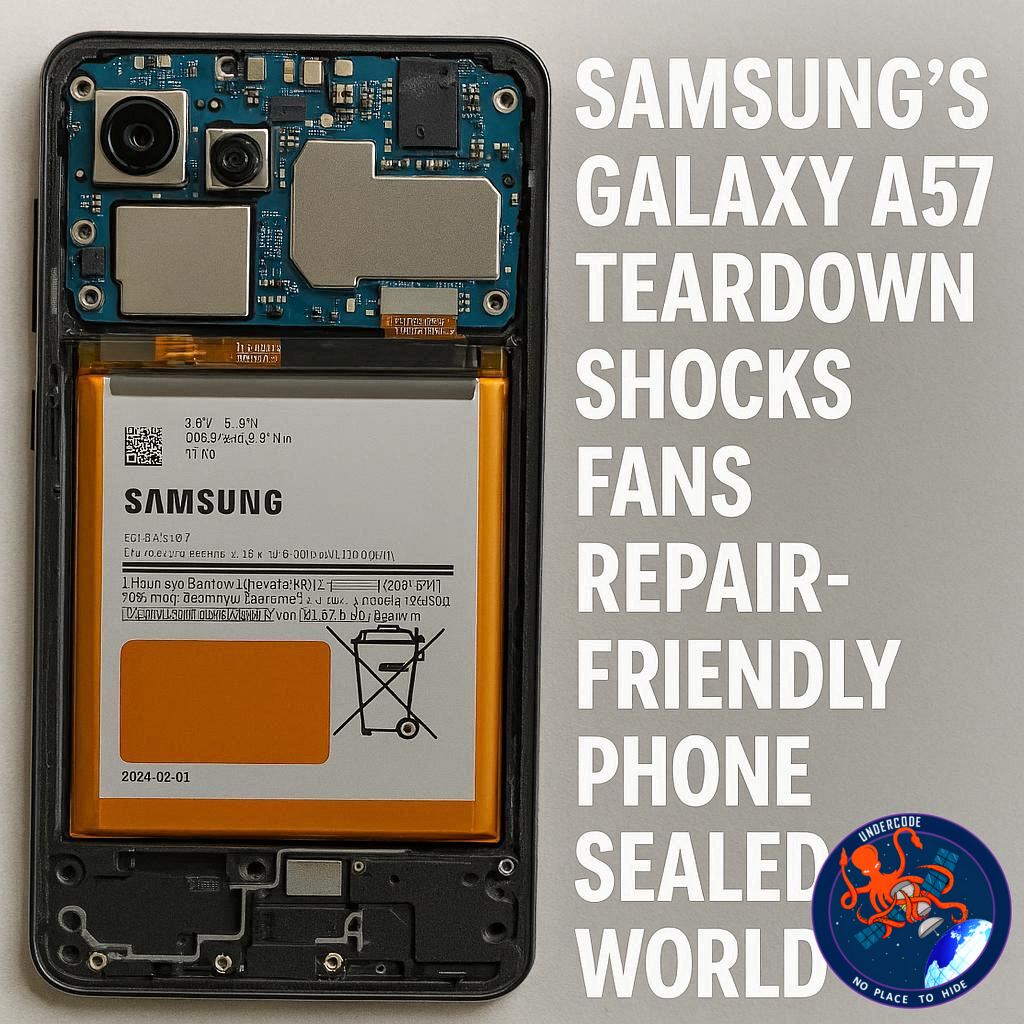
Introduction: A Rare Win for Repairability in Modern Smartphones
In an era where smartphones are increasingly difficult to repair, Samsung’s latest mid-range release is turning heads for an unexpected reason. While most manufacturers continue to prioritize slim designs over accessibility, the newly unveiled Galaxy A57 appears to strike a rare balance between performance and practicality. Even before the device officially hits store shelves, a detailed teardown video has surfaced online—revealing a surprisingly repair-friendly internal design that could redefine expectations for mid-range devices in 2026.
the Original Report: Inside the Galaxy A57’s Surprisingly Accessible Design
Samsung recently introduced two new additions to its Galaxy A series lineup—the Galaxy A57 and Galaxy A37—positioned as successors to the previous generation models. Despite the phones not yet being available for purchase, early hands-on content has already begun circulating online, offering a closer look at what users can expect under the hood.
A teardown video published by PBKreviews provides a comprehensive breakdown of the Galaxy A57’s internal structure. According to the video, the phone’s rear camera lens covers can be removed independently without opening the entire back panel. By applying heat and gently prying them off, users can access certain components without full disassembly. However, removing the back panel itself still requires heating and careful separation using a prying tool.
Once inside, the phone reveals a neatly organized layout. The internal components include rear camera modules, a motherboard cover, a battery unit, and multiple smaller boards responsible for different functions such as audio output, vibration, and connectivity. These elements are secured with a total of 18 screws, indicating a structured yet manageable assembly process.
The motherboard cover features a graphite thermal sheet designed to dissipate heat efficiently, alongside an earpiece speaker sealed with a rubber gasket. Beneath this cover lies the mainboard, which houses the phone’s triple-camera setup: a 50MP primary sensor with optical image stabilization, a 12MP ultra-wide camera, and a 5MP macro lens.
Further inspection shows another graphite thermal layer on the reverse side of the motherboard, along with a thermal pad protecting the processor. Once removed, the chipset—identified as Samsung E8865—becomes visible. The front-facing camera is positioned above the motherboard and is secured with adhesive, requiring careful handling during removal.
In the lower section of the device, removing the secondary boards exposes the fingerprint scanner. The battery is housed in an adhesive pouch equipped with four pull tabs, making extraction significantly easier compared to traditional glued-in batteries. Beneath the battery lies a vapor chamber cooling system, reportedly larger than the one used in the previous Galaxy A56 model.
An additional highlight from the teardown is the phone’s internal design around the SIM tray and external ports. The video notes that inserting a SIM ejector tool into the wrong openings—such as the speaker or microphone—will not damage internal components, as they are strategically positioned away from these entry points.
Overall, PBKreviews awarded the Galaxy A57 a repairability score of 9 out of 10, matching its predecessor and placing it among the most repair-friendly smartphones currently available.
What Undercode Say:
The Comeback of Repairable Smartphones
The Galaxy A57’s teardown reveals something the industry has quietly moved away from—repairability as a feature. Over the past decade, flagship and even mid-range devices have become increasingly sealed, glued, and difficult to fix without specialized tools. Samsung’s approach here suggests a subtle but meaningful shift in priorities, especially in response to growing global pressure for right-to-repair policies.
Engineering Choices That Actually Matter
The use of pull tabs for battery removal might seem minor, but it’s a critical design decision. Many modern smartphones still rely heavily on strong adhesives that make battery replacement risky and time-consuming. By implementing a user-friendly removal system, Samsung reduces both repair costs and the likelihood of accidental damage during maintenance.
Thermal Design Signals Performance Intent
The presence of multiple graphite sheets and a larger vapor chamber indicates that Samsung is not just focusing on repairability—it’s also investing in sustained performance. Heat management is a major bottleneck in mid-range devices, and this design suggests the Galaxy A57 could handle prolonged workloads more efficiently than its predecessors.
A Strategic Move in the Mid-Range Market
Samsung appears to be using the Galaxy A57 as a strategic weapon in the mid-range segment. While competitors often cut corners to maintain pricing, Samsung is adding value through durability and serviceability. This could resonate strongly with users who want longevity rather than just raw specs.
Repairability as a Marketing Advantage
A 9/10 repairability score is not just a technical detail—it’s a marketing asset. As consumers become more environmentally conscious, devices that are easier to repair gain an edge. Reduced electronic waste and longer product lifespans are becoming key decision factors, especially in Europe and North America.
Design Consistency Shows Long-Term Planning
Matching the repairability score of the Galaxy A56 suggests consistency in Samsung’s design philosophy. This isn’t a one-off experiment—it’s part of a broader strategy. Maintaining similar internal layouts across generations also simplifies repairs and part replacements, benefiting both technicians and consumers.
Hidden User Protection Features
One of the more overlooked aspects is the protection against accidental SIM ejector misuse. This small but thoughtful design choice reflects real-world usage patterns. Many users have damaged devices by inserting tools into the wrong holes, and Samsung’s internal spacing reduces that risk significantly.
The Balance Between Glue and Screws
While the device still uses adhesive in certain areas, the reliance on screws for most components strikes a healthy balance. Fully adhesive-based designs are cheaper to manufacture but harder to repair. Samsung’s hybrid approach suggests a deliberate compromise between cost efficiency and serviceability.
Implications for Future Samsung Devices
If the Galaxy A57 proves successful, it could influence the design of future Galaxy devices, including flagship models. Consumer demand for repairable electronics is growing, and companies that adapt early may gain a long-term competitive advantage.
Industry-Wide Ripple Effect
Other manufacturers may feel pressure to follow suit. When a major player like Samsung demonstrates that repairability doesn’t have to come at the expense of performance or design, it challenges the status quo across the entire smartphone industry.
Fact Checker Results
Accuracy of Teardown Claims
✅ The teardown details align with standard smartphone engineering practices and are consistent with previous Galaxy A-series designs.
Repairability Score Credibility
✅ A 9/10 score is plausible given the presence of screws, pull tabs, and modular components.
Thermal and Hardware Observations
❌ The exact performance impact of the larger vapor chamber cannot be confirmed without real-world testing.
Prediction
The Rise of Repairability as a Selling Point
The Galaxy A57 could mark the beginning of a broader industry shift where repairability becomes a core feature rather than an afterthought. As regulations tighten and consumer awareness grows, devices that are easy to fix will likely dominate the mid-range market. Samsung’s early move in this direction positions it to lead a new wave of practical, sustainable smartphone design—potentially forcing competitors to rethink their strategies sooner than expected.
🕵️📝✔️Let’s dive deep and fact‑check.
References:
Reported By: www.sammobile.com
Extra Source Hub (Possible Sources for article):
https://www.digitaltrends.com
Wikipedia
OpenAi & Undercode AI
Image Source:
Unsplash
Undercode AI DI v2
Bing
🔐JOIN OUR CYBER WORLD [ CVE News • HackMonitor • UndercodeNews ]
📢 Follow UndercodeNews & Stay Tuned:
𝕏 formerly Twitter 🐦 | @ Threads | 🔗 Linkedin | 🦋BlueSky | 🐘Mastodon