
Listen to this Post
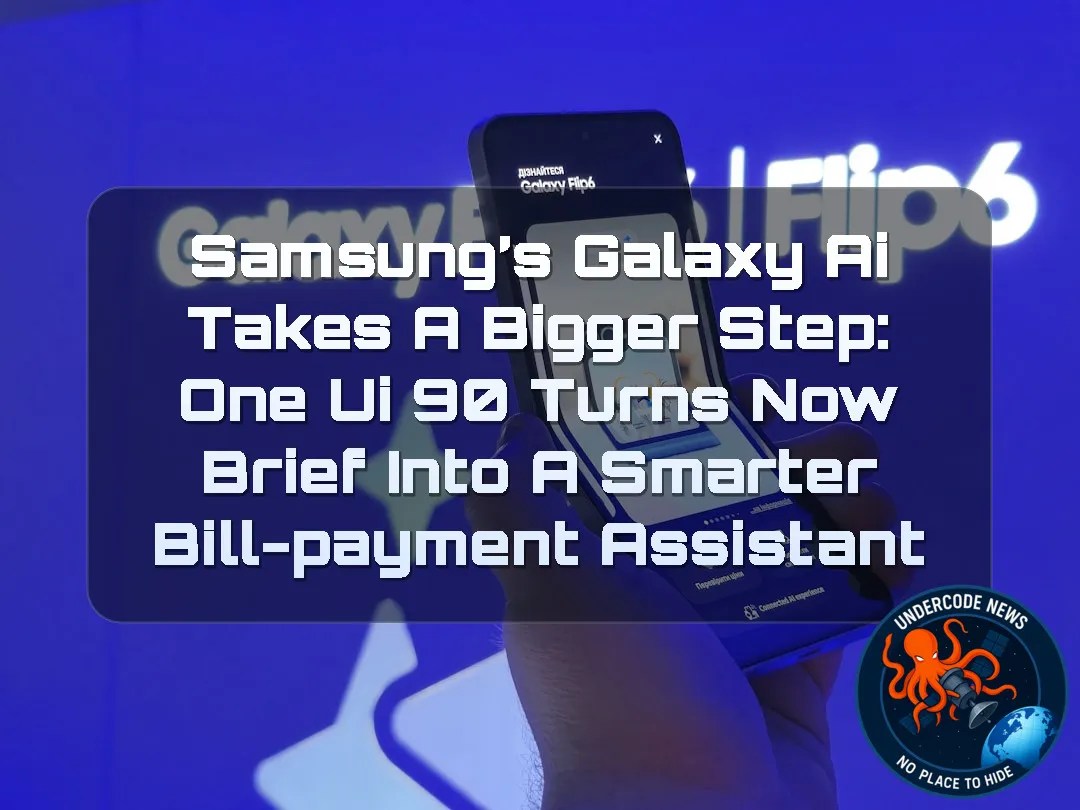 A More Useful Galaxy AI Experience Is Taking Shape
Samsung’s Galaxy AI strategy is gradually moving beyond flashy demonstrations and toward something much more practical: helping people manage everyday tasks with less effort. The latest example is the company’s upgraded Now Brief feature in One UI 9.0, which is gaining bill-payment capabilities for users in India.
The idea is simple but potentially powerful. Instead of merely presenting information about the user’s day, Now Brief can monitor incoming bills, identify payment deadlines, remind users before those deadlines arrive, and connect the reminder directly to Samsung Wallet for payment.
That evolution is important because artificial intelligence becomes considerably more valuable when it quietly solves routine problems. People rarely need another AI chatbot telling them what they already know. They need technology that notices what matters, remembers deadlines, and helps complete tasks at the right moment.
According to the source article, Samsung is introducing this experience through a feature called Pay Now, available on devices running One UI 9.0, including the Galaxy Z Flip 8, Galaxy Z Fold 8, and Galaxy Z Fold 8 Ultra in the Indian market.
From AI Summaries to Real-World Assistance
When Samsung introduced Now Brief alongside the Galaxy S25 and One UI 7.0, the feature generated mixed reactions. Its concept was interesting, but early versions did not necessarily deliver the kind of indispensable assistance users expected from an AI-powered daily briefing.
Samsung subsequently refined the experience with newer hardware and software. With One UI 8.5, Now Brief became more sophisticated, and One UI 9.0 appears to push it further toward an assistant that can respond to real-world responsibilities rather than simply summarize information.
The addition of bill reminders represents a meaningful change in philosophy. A daily briefing can be interesting, but a notification reminding someone that an electricity, mobile, credit-card, or other bill is approaching its deadline can have a direct practical benefit.
What Pay Now Is Designed to Do
Samsung’s new Pay Now functionality is described as an AI-assisted bill-management feature aimed at the Indian market. It can track incoming bills, determine their due dates, and generate reminders intended to prevent missed payments.
The important part is that the system is designed to connect multiple stages of the process. Instead of receiving a reminder in one application, opening another application to check the bill, and then manually searching for a payment method, the user can potentially move from the Now Brief notification toward payment through Samsung Wallet.
That creates a more seamless experience and illustrates where smartphone AI could be heading: not simply answering questions, but coordinating actions across applications.
Samsung Wallet Becomes Part of the Workflow
The integration with Samsung Wallet is arguably one of the most important elements of the feature.
Users who connect supported credit cards, debit cards, or a Unified Payments Interface account to Samsung Wallet can use the payment infrastructure connected to the notification experience. This reduces the number of steps between recognizing that a bill is due and actually paying it.
The distinction matters. An AI reminder that says “your bill is due tomorrow” is useful. An AI system that identifies the bill, tells you when it is due, and places the payment option immediately in front of you is substantially more useful.
The ultimate goal is convenience without requiring the user to remember every detail manually.
Why India Is the First Major Focus
Samsung’s decision to develop Pay Now specifically for India is also significant.
The company says engineers at its research and development centers in Bengaluru and Noida worked on the functionality to address the needs of Indian consumers. That demonstrates how Samsung is increasingly adapting Galaxy AI features to regional markets instead of assuming that one global AI experience will work equally well everywhere.
India has a large and sophisticated digital-payment ecosystem, with UPI playing a central role in everyday transactions. Integrating bill-management functionality with Samsung Wallet therefore gives the feature a particularly relevant environment in which to operate.
This regional approach could become increasingly important as smartphone manufacturers compete on AI.
The Bigger AI Strategy Behind the Feature
Pay Now should not be viewed as an isolated Samsung Wallet enhancement.
It fits into a broader direction in which smartphone manufacturers are attempting to transform AI from something users deliberately activate into something that works in the background.
The most successful AI features may eventually be the ones people barely notice. Instead of opening an AI application and asking what needs to happen next, the phone could understand the user’s schedule, transactions, communications, devices, and habits and surface useful information automatically.
Samsung’s upgraded Now Brief is moving toward that model.
AI That Understands Context
Context is becoming one of the most important battlegrounds in consumer AI.
A traditional notification simply tells a user that something happened. A contextual assistant attempts to understand why that information matters.
For example, knowing that a bill arrived is one thing. Knowing that the bill is due tomorrow, that the user normally pays it from a particular account, and that a payment method is already available could make the notification dramatically more useful.
That is the difference between information delivery and assistance.
The Foldable Galaxy Devices Become AI Testbeds
The Galaxy Z Fold 8, Galaxy Z Fold 8 Ultra, and Galaxy Z Flip 8 are particularly interesting platforms for these experiences because Samsung can position its newest foldables as more than hardware upgrades.
Large foldable displays are naturally suited to multitasking, while compact foldables can emphasize glanceable information. An AI feature such as Now Brief can therefore complement both form factors.
A Fold user might have a detailed bill-management interface open alongside other applications, while a Flip user could benefit from a quick notification or reminder without fully opening the phone.
This makes AI functionality part of the hardware experience rather than merely another software feature.
The Z Fold 8 Ultra Raises the Stakes
Samsung’s Ultra branding has increasingly become associated with pushing hardware and software beyond the conventional flagship category.
If Samsung wants the Z Fold 8 Ultra to justify a premium position, AI experiences need to feel equally sophisticated. Simply adding another chatbot would not be enough.
Features such as Pay Now demonstrate a different approach: integrating intelligence into everyday workflows.
The strongest argument for premium AI may ultimately be convenience rather than novelty.
The Galaxy Z Flip 8 Has a Different Opportunity
The Galaxy Z Flip 8 could benefit from the same technology in a different way.
The compact external display is designed for quick interactions. Users frequently want to check information without opening their phone, and timely reminders are particularly well suited to this type of interaction.
A bill reminder that appears at the right time could be more useful on a compact screen than a long AI-generated summary.
This reinforces a larger point: AI does not always need a large display. Sometimes the best AI interaction is a small piece of information arriving at exactly the right moment.
Samsung’s AI Roadmap Goes Beyond Payments
According to the source, Samsung’s Indian engineering teams are already working on additional AI capabilities.
These reportedly include contextual smart-home controls, automated management of connected devices across the ecosystem, and AI-driven health-monitoring capabilities for elderly users.
Those ambitions reveal a much larger vision.
Samsung is not merely trying to make Galaxy phones smarter. It appears to be moving toward an ecosystem in which Galaxy devices understand context and coordinate actions across multiple categories of technology.
Contextual Smart-Home Controls Could Be the Next Step
Imagine a smartphone understanding that a user has arrived home and automatically presenting relevant controls for lighting, climate, security, or entertainment.
That sounds straightforward, but the difficult part is context.
The system needs to determine which actions are appropriate, which devices are available, which users are present, and whether an action should be automated or require confirmation.
AI could potentially become the layer connecting these individual devices.
Automated Ecosystem Management Could Change Galaxy Devices
Samsung operates across smartphones, tablets, watches, televisions, appliances, earbuds, and other connected products.
That gives the company an unusual opportunity.
If AI can understand the relationships between those products, the Galaxy ecosystem could become considerably more cohesive. Instead of users managing individual devices independently, the AI layer could coordinate them based on circumstances.
The smartphone could effectively become the control center for an intelligent personal ecosystem.
AI and Elderly Care Could Be More Important Than Entertainment
The reported interest in AI-driven health monitoring for elderly users may ultimately be more consequential than many of Samsung’s consumer-facing AI features.
Technology that helps detect unusual patterns, reminds users about important activities, or helps family members manage connected devices could have meaningful real-world value.
However, health-related AI also requires substantially higher standards for privacy, accuracy, reliability, and user consent.
The convenience of AI should never come at the cost of creating false confidence around sensitive health information.
Privacy Becomes Critical as AI Gets More Contextual
The more useful an AI assistant becomes, the more information it needs.
A system that monitors bills potentially interacts with financial information. A system that controls a smart home can learn when someone is home. A system designed to assist elderly users could process highly sensitive information.
That creates a fundamental tension.
The same contextual intelligence that makes AI valuable can also make privacy failures more serious.
Samsung therefore has an important responsibility to explain clearly what information is processed, where it is processed, how long it is retained, and what users can disable.
Convenience Must Not Become Automatic Spending
Payment automation also introduces another important consideration.
Reminding someone about a bill is relatively low risk. Making payment easier is more powerful. Automatically initiating transactions is a completely different level of responsibility.
Users should remain able to understand what they are paying, how much they are paying, which account is being charged, and when the transaction occurs.
The ideal design should make payments easier without making them invisible.
Why Deep Wallet Integration Matters
The deeper Samsung Wallet integration could become one of the strongest elements of Pay Now if implemented carefully.
Wallet applications already sit close to the financial workflow. Connecting them with AI-generated reminders can remove unnecessary friction.
Instead of forcing users to switch between messages, email, banking applications, and payment services, the Galaxy device can potentially present the relevant information in one place.
The value comes from reducing cognitive load.
AI Is Moving Toward Invisible Infrastructure
The smartphone industry has spent years selling AI as a visible feature.
Manufacturers highlight image generators, writing assistants, translation tools, summarization, and chatbots because these features are easy to demonstrate.
But the next phase may be less theatrical.
AI that quietly recognizes an upcoming payment deadline may be less exciting during a product launch, but potentially more useful over hundreds of days of normal smartphone ownership.
That could be the real test for Galaxy AI.
The Battle Is No Longer Just About Bigger Models
Samsung is competing in a market where Google, Apple, Microsoft, and other technology companies are all developing increasingly capable AI systems.
But the winner in consumer devices may not necessarily be the company with the most impressive model.
Integration matters.
An AI model connected deeply to payments, communication, devices, settings, and hardware can sometimes provide more practical value than a more powerful model operating in isolation.
Samsung Has an Ecosystem Advantage
Samsung’s broad hardware portfolio gives it an important strategic advantage.
The company can connect smartphones with watches, earbuds, televisions, appliances, tablets, and smart-home products.
If Galaxy AI becomes the intelligence layer tying those products together, Samsung could create a differentiated ecosystem experience.
The challenge is making that ecosystem feel coherent rather than complicated.
One UI 9.0 Could Be a Turning Point
One UI updates traditionally focus on interface improvements, customization, performance, and new features.
But the growing role of AI is changing what a major software release represents.
One UI 9.0 is increasingly interesting because it demonstrates how Samsung can integrate AI into existing services rather than simply placing an AI assistant on top of the operating system.
Pay Now is an example of this philosophy.
The Real Test Will Be Accuracy
For a feature like Pay Now, accuracy matters more than cleverness.
If the system correctly recognizes bills and deadlines, it can become genuinely useful.
If it repeatedly generates incorrect reminders, misses bills, duplicates notifications, or misunderstands payment information, users will quickly stop trusting it.
AI assistants live or die by trust.
False Positives Could Become Annoying
A system that sends too many reminders can create notification fatigue.
Users already receive messages from banks, payment providers, retailers, applications, and operating systems.
Samsung therefore needs to make Now Brief intelligent enough to distinguish between information that deserves attention and information that can wait.
The best assistant should reduce noise rather than become another source of it.
Regional Development Is a Competitive Advantage
The fact that Samsung’s Bengaluru and Noida teams are involved in developing India-specific functionality is strategically important.
Local engineering teams understand regional payment habits, consumer expectations, and ecosystem requirements more deeply than a centralized global team might.
This approach could allow Samsung to create specialized AI experiences for different markets.
The future of AI may therefore become increasingly localized.
The Same Strategy Could Expand Globally
If Pay Now proves successful in India, Samsung could potentially use the underlying concept as a model for other regions.
The exact payment systems would obviously differ by country, but the core idea remains universal.
Bills have due dates.
People forget things.
Phones are always nearby.
AI can connect those three realities.
Now Brief Could Become a Personal Operations Center
The long-term opportunity for Now Brief is much bigger than a morning summary.
It could eventually become a personal operations dashboard.
Payments, appointments, travel plans, device status, reminders, messages, smart-home events, and other contextual information could theoretically appear according to relevance rather than application ownership.
That would make the feature less like a briefing and more like an intelligent personal command center.
What Undercode Say:
AI Becomes Valuable When It Removes Friction
The most interesting aspect of Samsung’s latest move is not the word “AI.” It is the reduction of friction. A useful assistant should eliminate repetitive steps rather than merely produce impressive answers.
Bill Reminders Are Surprisingly Practical
Bill management is an excellent use case because it solves a real problem. Missing a deadline can result in late fees, service interruptions, or unnecessary stress.
Context Is the Real Upgrade
The deeper evolution is contextual intelligence. Samsung is trying to make Now Brief understand when information matters, not merely display information.
Notifications Need Intelligence
Modern smartphones already produce enormous numbers of notifications. AI has to become better at prioritization if it wants to be useful.
Payment Integration Raises Expectations
Once Samsung connects reminders directly to Samsung Wallet, users will expect the system to understand more of the payment process.
Trust Is More Important Than Speed
A fast AI assistant that provides unreliable financial information is worse than a slower system that users can trust.
Financial Features Need Strong Guardrails
Payment-related functionality should always preserve transparency and user control.
Samsung Wallet Gets a Bigger Role
Samsung Wallet could evolve from a storage and payment utility into a central component of Samsung’s broader AI ecosystem.
India Is an Important AI Laboratory
India’s advanced digital-payment environment makes it a logical market for testing contextual bill-management features.
Local Engineering Matters
Samsung’s Bengaluru and Noida teams demonstrate how regional engineering can help create features around local consumer behavior.
Foldables Need More Than New Hardware
Foldable phones increasingly need software experiences that justify their premium positioning.
The Fold 8 Is an AI Platform
The Z Fold 8 family can provide the large-screen environment necessary for deeper multitasking and contextual AI workflows.
The Flip 8 Has Its Own AI Advantage
The Z Flip 8 can turn AI into a glanceable experience through quick interactions and external-display notifications.
Ultra Models Need Differentiation
Premium devices cannot rely solely on specifications. Intelligent software could become one of their strongest differentiators.
Samsung Is Building an Ecosystem
The company has the hardware portfolio necessary to connect phones, watches, televisions, appliances, earbuds, and other devices.
AI Could Become the Connecting Layer
Rather than requiring users to manage every device individually, AI could coordinate the ecosystem around context.
Smart Homes Are the Logical Next Step
Contextual controls could eventually allow Galaxy devices to understand routines and suggest or perform appropriate home actions.
Automation Requires Restraint
Automation should be predictable and reversible. Users should always understand what their devices are doing.
Elderly Assistance Could Be Significant
AI-driven assistance for older users could become one of the most meaningful applications of contextual smartphone intelligence.
Health AI Requires Higher Standards
Any health-related feature must prioritize accuracy, privacy, consent, and responsible presentation.
Privacy Will Define Consumer Trust
The more context an AI system collects, the more important privacy architecture becomes.
On-Device Processing Could Matter
Where technically possible, processing sensitive information locally could reduce exposure and improve consumer confidence.
Cloud AI Still Has a Role
More complex AI tasks may require cloud infrastructure, creating a need for transparent data-handling policies.
Users Need Meaningful Controls
AI features should provide understandable controls rather than burying important privacy settings inside complicated menus.
AI Should Not Become Invisible Spending
The convenience of payment automation must not remove the user’s awareness of financial transactions.
Confirmation Can Be a Feature
For important financial actions, a clear confirmation step can provide a useful balance between convenience and control.
Accuracy Determines Adoption
Users will continue using Pay Now only if its bill detection and deadline recognition are consistently reliable.
Personalization Can Increase Value
The system could become more useful when it learns which bills matter most and when users typically handle them.
Personalization Also Increases Risk
The same data that makes personalization powerful can become sensitive if poorly protected.
Samsung Faces a Competitive AI Market
Samsung is competing against companies with strong AI ecosystems, including Google and Apple.
Integration Could Beat Hype
A perfectly integrated AI experience can be more useful than a technically impressive feature that exists in isolation.
The Smartphone Could Become Proactive
The traditional smartphone waits for users to open applications. Contextual AI attempts to anticipate what users need.
Proactive Does Not Mean Autonomous
The best design should distinguish between suggesting an action and performing an action.
AI Needs an Understanding of Relevance
The future of assistants may depend less on generating text and more on determining what deserves attention.
Now Brief Has Room to Grow
Its evolution from daily summaries toward payments suggests that Samsung views Now Brief as a broader platform rather than a static feature.
Regional AI Could Become Normal
Different countries have different payment systems, languages, regulations, and consumer habits, making regional AI development increasingly valuable.
Samsung Could Expand Pay Now
If the feature performs well, similar functionality could eventually be adapted to other markets and payment ecosystems.
Ecosystem Lock-In Is a Double-Edged Sword
Deep integration can make Samsung devices more convenient, but users may also become increasingly dependent on proprietary services.
The Real Competition Is Convenience
The next smartphone battle may not be about who has the fastest processor or most cameras. It may be about who removes the most everyday friction.
AI’s Best Feature May Be the One You Forget Exists
If Now Brief reliably prevents missed payments without constantly demanding attention, it could become exactly the kind of technology users appreciate without thinking about it.
Deep Analysis: What the Feature Reveals About Samsung’s AI Strategy
Command-Level Inspection of One UI
For technically minded Galaxy users, the software environment can be inspected through Android Debug Bridge when developer access is appropriately configured.
adb shell getprop ro.build.version.release
adb shell getprop ro.build.version.oneui
These commands can help identify Android and One UI build information on a connected test device. They do not enable Pay Now or bypass regional restrictions; they simply provide software-version information.
Checking the Installed Samsung Wallet Package
On a development or testing device, package information can be inspected with:
adb shell pm list packages | grep -i wallet
This can help determine whether Samsung Wallet-related packages are installed, although package names and implementation details can vary between regions and software releases.
Inspecting Device Information
A broader device inspection can be performed with:
adb shell getprop | grep -Ei model|device|product|build
This is useful when comparing Galaxy models, firmware builds, and regional configurations.
Why Commands Matter for AI Features
Technical inspection is useful because AI features are increasingly dependent on operating-system versions, regional firmware, installed services, and account configurations.
A feature being announced does not necessarily mean that every Galaxy device in every country receives exactly the same functionality.
Regional Availability Is a Major Variable
Samsung’s Pay Now implementation is specifically described for the Indian market. That means users in other regions should not automatically assume the same experience will appear on their devices.
Regional payment infrastructure is one of the biggest reasons why AI features can differ between countries.
Software Builds Can Change Quickly
Samsung can introduce features through firmware updates, server-side activation, or application updates.
Consequently, the experience available on launch day may not necessarily represent the final form of the feature months later.
Server-Side AI Adds Another Layer
Some AI capabilities can depend on cloud services rather than being entirely contained within the smartphone.
This means that even identical hardware can potentially provide different experiences depending on account status, region, network availability, service configuration, or Samsung’s backend infrastructure.
AI Features Are Becoming System Features
This is perhaps the most important technical trend.
AI is increasingly moving from individual applications into the operating system itself.
Once that happens, applications, notifications, payments, devices, and settings can potentially become connected through contextual intelligence.
Samsung’s Challenge Is Coordination
Building individual AI functions is relatively straightforward compared with making them cooperate correctly.
A useful ecosystem requires the AI layer to understand conflicting events, prioritize information, respect permissions, and avoid taking inappropriate actions.
The Operating System Becomes the Intelligence Layer
If Samsung succeeds, One UI could evolve from being primarily a visual interface into an intelligent coordination layer.
That would fundamentally change what users expect from an Android skin.
The Notification Becomes an Action Surface
Traditional notifications tell users that something happened.
AI-powered notifications can potentially provide context and actions.
Pay Now represents this transition by connecting a reminder with a payment workflow.
AI Can Reduce Cognitive Load
People do not necessarily struggle because bill payments are technically difficult.
They struggle because there are dozens of recurring responsibilities competing for attention.
AI can help by remembering those responsibilities and surfacing them at appropriate times.
But AI Can Also Increase Cognitive Load
Poorly designed AI can create more work.
Too many reminders, unnecessary predictions, incorrect suggestions, and unexplained actions can quickly become frustrating.
The challenge is not simply adding intelligence.
The challenge is adding useful intelligence.
The Best AI Is Selective
A smart assistant should know when not to interrupt.
This is particularly important for financial reminders, where users may already have several notifications from banks and payment providers.
Samsung Needs Explainability
When an AI system identifies a bill, users should ideally be able to understand why it believes the payment is relevant.
This becomes even more important if the system makes mistakes.
Security Must Be Designed Into the Workflow
Payment-related AI should operate within strict application permissions and security boundaries.
The convenience layer should never become a shortcut around existing authentication and transaction protections.
AI and Wallet Integration Could Become a Major Trend
Other smartphone manufacturers are likely to pursue similar concepts.
Once consumers become accustomed to receiving contextual financial reminders, isolated payment applications may feel less convenient.
The Smartphone Is Becoming a Personal Assistant Again
Interestingly, the AI revolution is bringing smartphones back toward an older concept: the personal assistant.
The difference is that modern assistants have access to vastly more contextual information and computational power.
The Next Phase Is Predictive
The logical progression is straightforward.
First, the phone tells you what happened.
Then it tells you what is happening.
Eventually, it attempts to predict what you will need next.
That is where contextual AI becomes truly transformative.
Prediction Requires Responsibility
Predictive systems can be powerful, but they can also make incorrect assumptions.
A payment reminder is relatively simple.
Predicting a user’s behavior and automatically changing device settings, purchasing products, or making financial decisions would require much stronger safeguards.
Samsung Has a Narrow Path to Walk
The company needs to make Galaxy AI feel proactive without making it feel intrusive.
That balance will determine whether users embrace these features or disable them.
The Bigger Picture
Pay Now may look like a small One UI feature, but it represents a much bigger transition.
Samsung is trying to turn the smartphone from a collection of applications into an intelligent system that understands relationships between information, services, devices, and users.
That is a much more ambitious goal than simply adding another chatbot.
✅ One UI 9.0 and the New Galaxy Foldables
The supplied article states that the Galaxy Z Flip 8, Galaxy Z Fold 8, and Galaxy Z Fold 8 Ultra run One UI 9.0 out of the box and include the upgraded Now Brief experience. These claims are treated here as source-reported product information.
✅ Samsung Wallet Integration
The article specifically states that Pay Now connects with Samsung Wallet and can use linked credit cards, debit cards, or UPI accounts for bill payments. This is consistent with the feature description provided in the source material.
✅ Indian R&D Development
The source attributes development of the India-focused feature to Samsung’s Bengaluru and Noida engineering teams. This has been preserved as a reported claim rather than presented as independently verified engineering documentation.
❌ Global Availability Should Not Be Assumed
The feature described is specifically positioned for the Indian market. It would be inaccurate to assume that identical bill-payment functionality is automatically available on every Galaxy device worldwide.
⚠️ AI Health Monitoring Requires Additional Verification
The source mentions future work involving AI-driven health monitoring for elderly users. This should be understood as an engineering direction or reported development effort, not evidence that a fully deployed medical-monitoring system is already available.
Prediction
(+1) Samsung Will Push Now Brief Beyond Notifications
Samsung is likely to continue transforming Now Brief from a passive information summary into a more proactive assistant. Bill payments are a natural starting point because they involve predictable schedules and clear deadlines.
(+1) Wallet Integration Will Become More Important
If users respond positively to Pay Now, Samsung has a strong incentive to connect additional financial and transactional workflows to Samsung Wallet.
(+1) Regional AI Features Will Expand
Samsung’s India-focused approach could become a blueprint for developing AI experiences tailored to individual countries rather than deploying identical features globally.
(+1) Smart-Home AI Could Become the Next Major Step
Contextual control of connected appliances, televisions, lighting, security systems, and other devices fits naturally into Samsung’s broader ecosystem strategy.
(+1) Foldables Could Become Samsung’s AI Showcase
The Z Fold and Z Flip families provide Samsung with distinctive hardware environments in which to demonstrate contextual AI, multitasking, glanceable notifications, and ecosystem control.
(-1) Privacy Concerns Will Increase
As Samsung’s AI systems gain access to more financial, behavioral, household, and potentially health-related information, privacy concerns will inevitably become more significant.
(-1) Poor AI Accuracy Could Hurt Adoption
If Now Brief frequently misidentifies bills, sends irrelevant reminders, or produces inaccurate information, users may quickly disable the feature.
(-1) Over-Automation Could Create User Resistance
Consumers may appreciate AI reminders but become uncomfortable if financial or household actions occur without clear confirmation.
(+1) The Real Winner Could Be Invisible AI
The strongest long-term outcome for Samsung may be an assistant that quietly handles routine information without constantly demanding the user’s attention.
The Bigger Meaning for Galaxy AI
Samsung Is Moving From AI Features to AI Infrastructure
The most important takeaway is that Samsung appears to be shifting its AI strategy from isolated features toward an intelligence layer integrated throughout One UI.
That distinction matters.
A chatbot is something users open.
A contextual operating-system assistant is something users live with.
The Future Galaxy Experience Could Be More Proactive
The Galaxy smartphone of the future may not wait for users to remember everything.
It could surface bills before deadlines, suggest actions based on schedules, coordinate smart-home devices, summarize relevant information, and connect Galaxy hardware around the user’s circumstances.
The challenge will be ensuring that this intelligence remains useful, secure, transparent, and under the user’s control.
The Galaxy Z Fold 8 Family Represents More Than Hardware
Samsung’s newest foldables are arriving at a moment when smartphone competition is increasingly shifting toward software intelligence.
Better cameras and faster processors remain important, but AI could determine how people actually interact with those devices every day.
The Z Fold 8, Z Fold 8 Ultra, and Z Flip 8 therefore represent more than another generation of foldable hardware.
They are potential showcases for Samsung’s attempt to make the smartphone understand what the user needs before the user explicitly asks.
The Most Important Upgrade May Be the One You Barely Notice
A new camera can impress users instantly.
A faster processor can be measured.
A brighter display can be seen.
But an AI system that quietly prevents a missed payment may deliver its value differently.
You notice it when something that normally causes stress simply does not happen.
That is where Samsung’s latest Now Brief evolution becomes particularly interesting.
The future of Galaxy AI may not be defined by how loudly Samsung talks about artificial intelligence.
It may be defined by how many small, frustrating, repetitive tasks the phone can quietly take off the user’s plate.
▶️ Related Video (72% Match):
🕵️📝Let’s dive deep and fact‑check.
🎓 Live Courses & Certifications:
Join Undercode Academy for Verified Certifications
🚀 Request a Custom Project:
Secure, high-velocity infrastructure and disruptive technological engineering. Contact our engineering team for high-tier development and proprietary systems:
[email protected]
💎 Smart Architecture | 🛡️ Secure by Design | ⭐ Trusted by Thousands
References:
Reported By: www.sammobile.com
Extra Source Hub (Possible Sources for article):
https://www.pinterest.com
Wikipedia
OpenAi & Undercode AI
Image Source:
Unsplash
Undercode AI DI v2
🔐JOIN OUR CYBER WORLD [ CVE News • HackMonitor • UndercodeNews ]
📢 Follow UndercodeNews & Stay Tuned:
𝕏 formerly Twitter 🐦 | @ Threads | 🔗 Linkedin | 🦋BlueSky | 🐘Mastodon | 📺Youtube


