
Listen to this Post
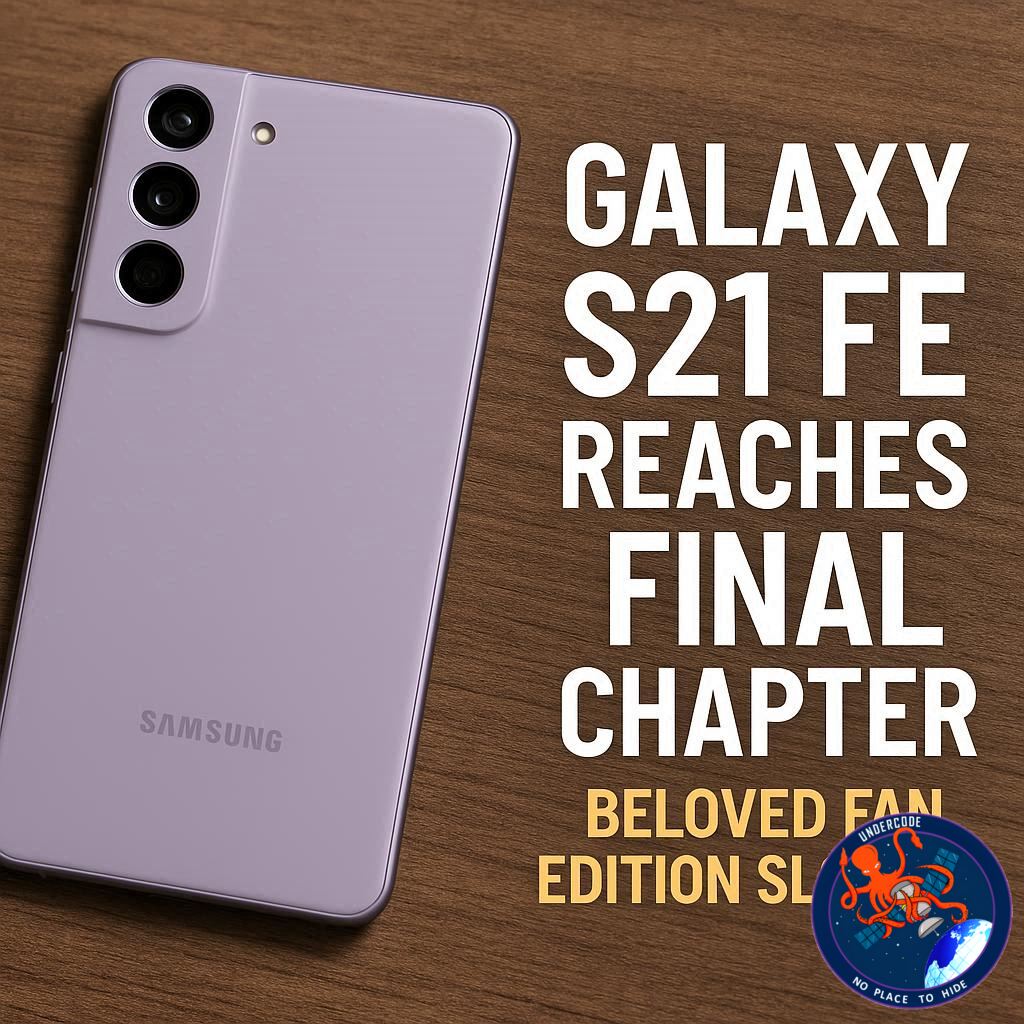
The Galaxy S21 FE, once hailed as Samsung’s “flagship for the people,” is now nearing the end of its software journey. With Samsung’s latest policy shift, the phone will no longer receive monthly security patches — marking the end of an era for one of the company’s most popular Fan Edition devices. But what does this mean for current users, and is it time to upgrade to the newer Galaxy S24 FE or S25 FE?
The Final Update Cycle Begins
It has been over three years since Samsung launched the Galaxy S21 FE, a device that bridged the gap between affordability and flagship performance. Launched in early 2022 with Android 12 and One UI 4.0, the phone impressed users with premium features borrowed from the Galaxy S21 series — yet at a more accessible price.
Now, as we enter the final quarter of 2025, the company has confirmed that the Galaxy S21 FE is being demoted from monthly to quarterly security updates. This means users will now receive new patches every three months, unless a critical vulnerability demands immediate attention. It’s a natural transition for Samsung devices that have aged past their prime update window, but for loyal owners, it still feels like a curtain call.
The demotion is part of Samsung’s updated software roadmap, aligning resources toward its latest lineup — including the Galaxy S25 FE, Galaxy S25 Ultra, and Galaxy Z Fold 7. These new models are now taking center stage with faster processors, better displays, and extended update commitments.
Samsung is expected to roll out Android 16, the fourth and final major OS update for the Galaxy S21 FE, before the end of October 2025. This will bring the device to its limit in terms of Android upgrades — four full generations from launch, a commendable record compared to many competitors.
Since its debut, the Galaxy S21 FE has received:
Android 12 (One UI 4.0) – Launch version (2022)
Android 13 (One UI 5.0) – Late 2022
Android 14 (One UI 6.0) – 2023
Android 15 (One UI 7.0) – Early 2025
Once Android 16 arrives, the S21 FE will have completed an impressive four-version upgrade cycle — something that would have been unthinkable a few years ago in the Android world.
However, with reduced update frequency, security reliability becomes a concern. Users who rely heavily on their devices for sensitive transactions or business may want to consider moving on.
Samsung subtly encourages this migration, highlighting the Galaxy S24 FE and S25 FE as prime successors. Both devices boast thinner bezels, brighter AMOLED displays, larger batteries, and the Exynos 2400 chipset, which delivers a noticeable performance leap. Camera improvements are also substantial — particularly in low-light and portrait photography.
What Undercode Say:
The Galaxy S21 FE’s transition marks an important shift in Samsung’s long-term software philosophy. The company’s decision to extend major OS updates to four versions reflects its growing commitment to sustainability and user loyalty. Yet, it also reveals the strategic phasing out of older hardware to push consumers toward newer models — a familiar but finely tuned playbook in the smartphone industry.
From a technological standpoint, the S21 FE still holds up remarkably well. Its Snapdragon 888 processor (or Exynos 2100 in some regions) continues to deliver flagship-grade performance for everyday use, gaming, and photography. What has changed isn’t so much its power, but its position in Samsung’s ecosystem.
This “demotion” is not about capability — it’s about alignment. Samsung is consolidating its update efforts around the S24 and S25 series, which represent its new generation of AI-driven, camera-centric devices. The company is preparing for a future where AI-powered photography, on-device translation, and real-time voice synthesis become standard, and older devices may not have the hardware acceleration to support these features seamlessly.
For existing S21 FE owners, this is less of a tragedy and more of a graduation. The phone is reaching the end of its promised support — but it’s doing so with grace. Few midrange models have aged this well, both in performance and in community reputation.
The Galaxy S25 FE, by contrast, embodies Samsung’s new identity: a hybrid of premium design and mid-tier pricing, with sustainability and long-term usability at its core. It’s faster, smarter, and more energy-efficient — and thanks to Samsung’s partnership with Google, it’s expected to receive five years of OS support and six years of security updates.
So, while the S21 FE’s quarterly update phase might sound like a downgrade, it’s also a symbol of progress. Samsung is clearly learning from its past — and reshaping the way it handles device longevity.
In many ways, the S21 FE represents a pivotal moment in smartphone history: when users began demanding not just features, but trust and time. The device’s legacy lies not only in what it offered, but in how it changed the expectations of the Android ecosystem.
If you’re holding on to your S21 FE, you still have a solid phone — but if you crave the bleeding edge, the S25 FE is calling. It’s not just an upgrade; it’s a look into Samsung’s future vision of the “smartphone lifespan.”
Fact Checker Results
✅ The Galaxy S21 FE has officially moved from monthly to quarterly security updates.
✅ The device is expected to receive its final Android OS upgrade (Android 16) in October 2025.
❌ It will not receive Android 17 or beyond — support ends after this cycle.
Prediction 📱
Samsung will likely announce a farewell campaign or trade-in incentive for Galaxy S21 FE owners once Android 16 rolls out, encouraging upgrades to the Galaxy S25 FE. Expect the S25 FE to become one of Samsung’s best-selling devices in 2025–2026, thanks to its balanced pricing and flagship-level AI integration.
🕵️📝✔️Let’s dive deep and fact‑check.
References:
Reported By: www.sammobile.com
Extra Source Hub (Possible Sources for article):
https://www.linkedin.com
Wikipedia
OpenAi & Undercode AI
Image Source:
Unsplash
Undercode AI DI v2
Bing
🔐JOIN OUR CYBER WORLD [ CVE News • HackMonitor • UndercodeNews ]
📢 Follow UndercodeNews & Stay Tuned:
𝕏 formerly Twitter 🐦 | @ Threads | 🔗 Linkedin | 🦋BlueSky | 🐘Mastodon


