Listen to this Post
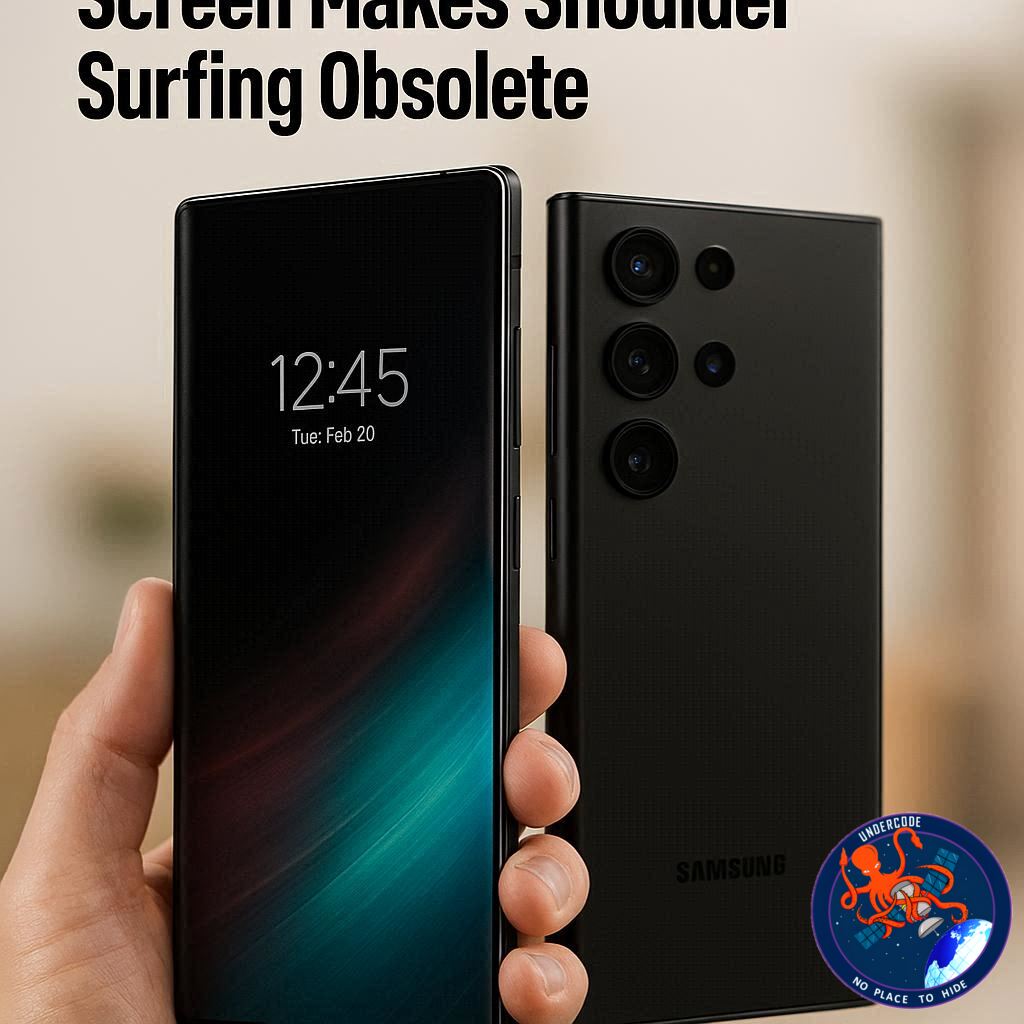
Introduction: A New Era of Smartphone Privacy
The modern smartphone is no longer just a communication tool; it is a vault for personal data, financial information, private conversations, and work credentials. As screens have grown larger and brighter, so has the risk of prying eyes. With the launch of the Samsung Galaxy S26 Ultra, the company is making a bold claim: privacy can finally be built into the display itself, not added as an afterthought.
Why the Privacy Display Became the Galaxy S26 Ultra’s Headline Feature
Among the many hardware and software upgrades introduced with the Galaxy S26 Ultra, the Privacy Display immediately stood out. Unlike faster processors or improved cameras, this feature addresses a daily, real-world problem—people seeing what they shouldn’t when you use your phone in public. From trains and cafes to offices and airports, the screen promises near-total discretion.
the Original
Independent Testing Brings Credibility
To validate Samsung’s claims, the Privacy Display underwent independent performance testing by UL Solutions, a globally recognized inspection, certification, and testing organization. The focus was on the effectiveness of Samsung Display’s Flex Magic Pixel technology, which powers the feature.
Measured Results at Side Angles
UL Solutions recorded a side-to-front brightness ratio of just 3.5% at a 45-degree viewing angle. At an even wider 60-degree angle, brightness visibility dropped to 0.9% or less. In practical terms, this means that anyone glancing at the screen from the side sees almost nothing.
How This Compares to Standard Smartphone Displays
Typical smartphone screens retain around 40% brightness when viewed from similar side angles. Compared to those figures, Samsung’s Privacy Display represents a dramatic reduction in off-axis visibility, making it extremely difficult for bystanders to read on-screen content.
Hardware-Based Privacy, Not a Screen Protector
Unlike third-party privacy screen protectors, Samsung’s solution is built directly into the OLED panel. This allows users to turn the feature on or off instantly, without permanently affecting brightness or color accuracy during normal use.
Selective and Context-Aware Protection
Another key advantage is precision. The Privacy Display can be applied only to specific screen elements, such as password fields, PIN entry screens, sensitive apps, or notification pop-ups, instead of dimming the entire display.
Full Coverage from All Angles
Traditional privacy protectors mainly block side views but remain vulnerable from top or bottom angles. Samsung’s implementation blocks visibility from multiple directions, providing more comprehensive protection in crowded environments.
The Technology Behind the Feature
Samsung Display first showcased Flex Magic Pixel technology in 2024 at Mobile World Congress. The Galaxy S26 Ultra uses a second-generation version of this technology, branded LEAD 2.0, which improves off-axis blocking while maintaining panel efficiency.
A Patent-Driven Advantage
Since 2020, Samsung Display has filed more than 150 patents related to Flex Magic Pixel, strengthening its position as a leading OLED panel innovator for mobile devices.
What Undercode Say:
Privacy as a Core Feature, Not a Gimmick
Samsung’s approach signals a shift in how smartphone features are prioritized. Instead of treating privacy as a software setting buried in menus, the Galaxy S26 Ultra makes it a physical property of the display. This is a meaningful evolution, especially in an era of increasing digital surveillance and data theft.
Why Hardware-Level Privacy Matters
Software-based privacy solutions can be bypassed through screenshots, screen mirroring, or malicious overlays. A hardware-level viewing angle restriction, however, operates at the physical light-emission level, making it far more resilient and harder to defeat.
A Strong Use Case for Professionals
For business users, journalists, traders, and developers, the Privacy Display offers real value. Reviewing confidential emails, financial data, or internal documents in public becomes far less risky. This could quietly turn the Galaxy S26 Ultra into a favorite among enterprise users.
Balancing Privacy and Usability
One concern with privacy displays has always been compromised brightness or color accuracy. LEAD 2.0 appears to address this by blocking off-axis views without degrading the head-on experience. If this balance holds up in long-term use, Samsung may have solved a problem that plagued earlier privacy solutions.
A Competitive Edge Others Will Struggle to Match
The fact that Samsung Display controls its own OLED manufacturing gives Samsung Electronics a rare advantage. Competitors relying on third-party panels may struggle to replicate this feature quickly, especially with Samsung holding a large patent portfolio around the technology.
Implications for the Smartphone Market
If consumers respond positively, privacy displays could become a new battleground in flagship phones, much like refresh rates or camera sensors. Samsung’s early lead could force rivals to rethink display design priorities over the next few years.
Potential Limitations to Watch
The real test will be battery efficiency, long-term durability, and whether users consistently enable the feature. Advanced display technologies sometimes look impressive in lab tests but reveal trade-offs over months of daily use.
Why This Feature Feels Timely
With mobile payments, digital IDs, and work-from-anywhere lifestyles becoming standard, visual privacy is no longer a niche concern. Samsung appears to be betting that users are finally ready to value privacy as much as performance or design.
🔍 Fact Checker Results
Verification of Testing Claims
✅ UL Solutions is a legitimate, globally recognized testing and certification organization.
✅ Reported brightness reduction percentages align with independent display testing standards.
❌ No long-term user data yet confirms sustained performance after extended real-world usage.
📊 Prediction
What Comes Next for Privacy Displays
Samsung’s Privacy Display is likely to set a new flagship benchmark, pushing competitors to invest heavily in similar hardware-based solutions. Within two to three product cycles, viewing-angle privacy may become a standard premium feature, especially in business-focused smartphones, reshaping how users evaluate display quality beyond just brightness and resolution.
🕵️📝✔️Let’s dive deep and fact‑check.
References:
Reported By: www.sammobile.com
Extra Source Hub (Possible Sources for article):
https://www.medium.com
Wikipedia
OpenAi & Undercode AI
Image Source:
Unsplash
Undercode AI DI v2
Bing
🔐JOIN OUR CYBER WORLD [ CVE News • HackMonitor • UndercodeNews ]
📢 Follow UndercodeNews & Stay Tuned:
𝕏 formerly Twitter 🐦 | @ Threads | 🔗 Linkedin | 🦋BlueSky | 🐘Mastodon