
Listen to this Post
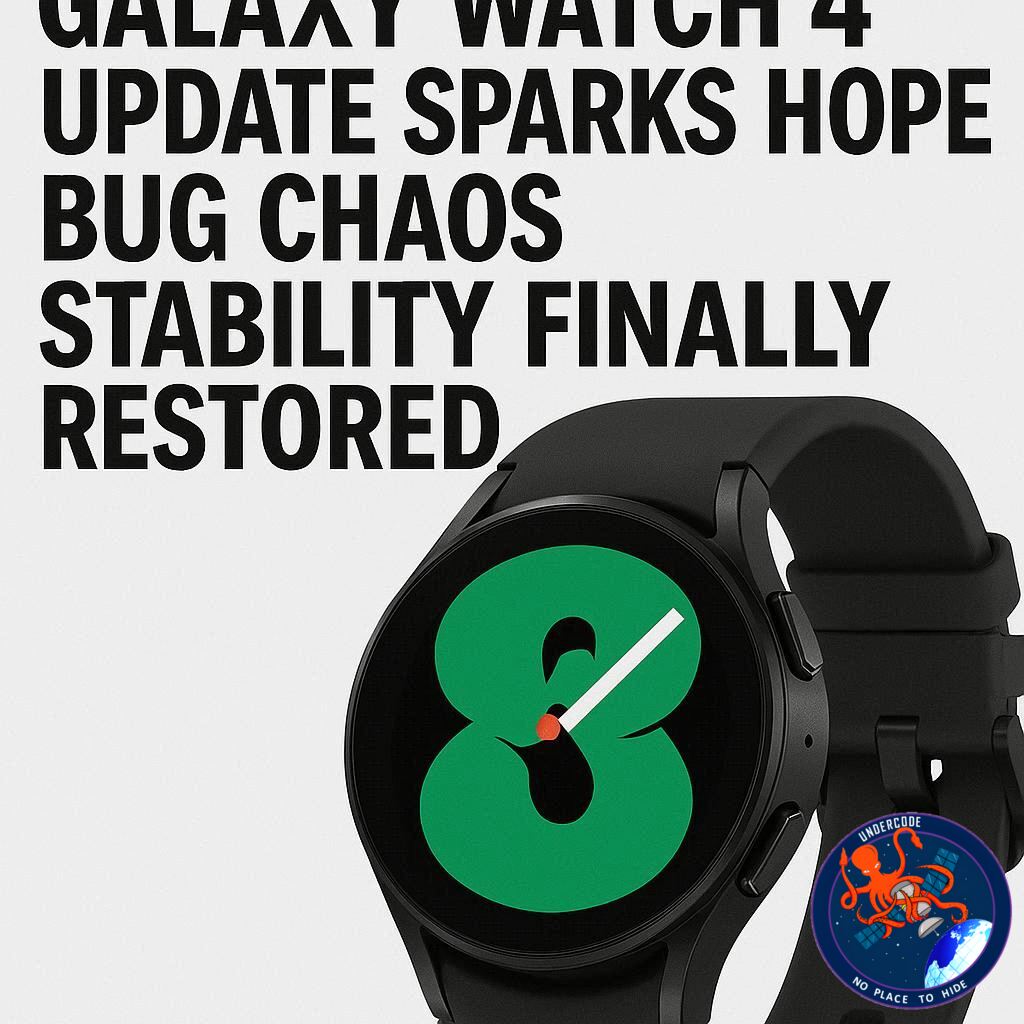
Introduction: A Much-Needed Fix After Months of Frustration
After months of complaints, glitches, and underwhelming performance, Samsung is once again attempting to restore confidence in one of its most popular wearables. The Samsung Galaxy Watch 4, once praised for its seamless integration and advanced features, has faced increasing scrutiny due to persistent bugs introduced by earlier updates. Now, a fresh software rollout promises not just security improvements but also something users have been desperately waiting for—stability.
the Original Report: Incremental Update With Big Expectations
Samsung has begun rolling out a new software update for the Galaxy Watch 4 in South Korea, marking another step in its ongoing effort to fix lingering issues. This update arrives roughly three months after the smartwatch received the Wear OS 6-based One UI 8 Watch update—an upgrade that was expected to enhance performance but instead introduced a wave of bugs and slowdowns.
Shortly after the problematic rollout, Samsung attempted damage control by releasing a security patch. However, that update failed to fully address user concerns, leaving many frustrated with inconsistent performance and reduced reliability. Now, the latest update—carrying firmware version R870XXU2JZC2—has been released, bringing the February 2026 security patch as an improvement over the January version distributed earlier in the year.
Beyond security enhancements, Samsung claims the update significantly improves system stability and reliability. These changes suggest that the company is focusing not just on patching vulnerabilities but also on optimizing overall user experience—something that had noticeably declined since the major OS upgrade.
Currently, the update is limited to the Wi-Fi-only variant of the Galaxy Watch 4 in South Korea. However, Samsung is expected to expand availability to LTE models and other regions in the coming days. Users can manually check for the update through the Galaxy Wearable app by navigating to the software update section and initiating the download.
While the update may seem incremental on paper, it represents a critical moment for Samsung. With increasing competition in the wearable market, maintaining performance consistency is no longer optional—it’s essential.
What Undercode Says: Samsung’s Silent Struggle With Software Consistency
The Hidden Cost of Rapid Software Evolution
Samsung’s aggressive push to keep its ecosystem updated has become a double-edged sword. While frequent updates signal innovation and commitment, they also expose a recurring weakness: insufficient real-world testing. The issues seen with the Galaxy Watch 4 after the Wear OS 6 transition highlight how even established tech giants can miscalculate the complexity of integrating new software layers.
Wear OS Integration: Ambitious but Risky
The partnership between Samsung and Google for Wear OS has always carried high expectations. However, blending Samsung’s One UI customization with Google’s core system is far from seamless. Each update introduces new dependencies, and even minor mismatches can cascade into major performance issues—exactly what users experienced.
User Trust: Hard to Build, Easy to Lose
What makes this situation particularly delicate is user trust. Smartwatches are not just gadgets—they are daily companions tracking health, notifications, and routines. When performance drops, the impact is immediate and personal. Samsung’s repeated need to “fix” updates risks creating a perception that its software releases are rushed rather than refined.
Regional Rollouts: Strategy or Limitation?
The decision to release updates first in South Korea is not new, but it reveals an interesting strategy. Samsung appears to be using its home market as a testing ground before global deployment. While practical, this approach also delays solutions for international users, potentially widening dissatisfaction outside its core region.
Stability Updates: A Sign of Deeper Issues?
The emphasis on “stability and reliability improvements” in changelogs often signals deeper underlying problems. These are not flashy features but corrective measures—indications that previous updates disrupted fundamental system operations. In this context, the latest patch is less about progress and more about recovery.
Competitive Pressure in the Wearables Market
Samsung is no longer operating in a vacuum. Brands like Apple and emerging Android competitors are raising the bar for consistency and performance. In such an environment, even minor bugs can push users toward alternative ecosystems. Stability is now a competitive feature, not just a technical requirement.
The Bigger Picture: Software as the New Battlefield
Hardware innovation has plateaued in many ways, making software the primary battleground. Samsung’s challenge is no longer about building better watches—it’s about delivering flawless experiences. Updates like this one are critical, but they also underline how fragile that balance has become.
A Step Forward, But Not the Finish Line
While the new update is a positive development, it does not erase the past issues. Instead, it serves as a reminder that maintaining software quality requires continuous effort. Samsung’s real test will be whether future updates arrive polished—or repeat the same cycle of release and repair.
🔍 Fact Checker: الحقيقة وراء التحديث
✅ Verified Update Rollout
Samsung has indeed released a new firmware update for the Galaxy Watch 4 in South Korea with improved stability and a February 2026 security patch.
✅ Previous Bugs Confirmed
The earlier One UI 8 Watch update based on Wear OS 6 caused performance issues, widely reported by users and acknowledged indirectly through follow-up patches.
❌ Global Availability Misconception
The update is not yet globally available; it is currently limited to the Wi-Fi variant in South Korea.
📊 Prediction: Will Samsung Regain User Confidence?
Samsung’s ability to recover from this situation will depend on consistency over time rather than a single update. If the company continues delivering stable, well-tested software patches, it can rebuild trust and maintain its position in the wearable market. However, another flawed major update could significantly damage its reputation, especially as consumers become less tolerant of post-release fixes. The next few update cycles will likely determine whether the Galaxy Watch series remains a leader—or becomes a cautionary tale in software reliability.
🕵️📝✔️Let’s dive deep and fact‑check.
References:
Reported By: www.sammobile.com
Extra Source Hub (Possible Sources for article):
https://www.digitaltrends.com
Wikipedia
OpenAi & Undercode AI
Image Source:
Unsplash
Undercode AI DI v2
Bing
🔐JOIN OUR CYBER WORLD [ CVE News • HackMonitor • UndercodeNews ]
📢 Follow UndercodeNews & Stay Tuned:
𝕏 formerly Twitter 🐦 | @ Threads | 🔗 Linkedin | 🦋BlueSky | 🐘Mastodon


