
Listen to this Post
Edit
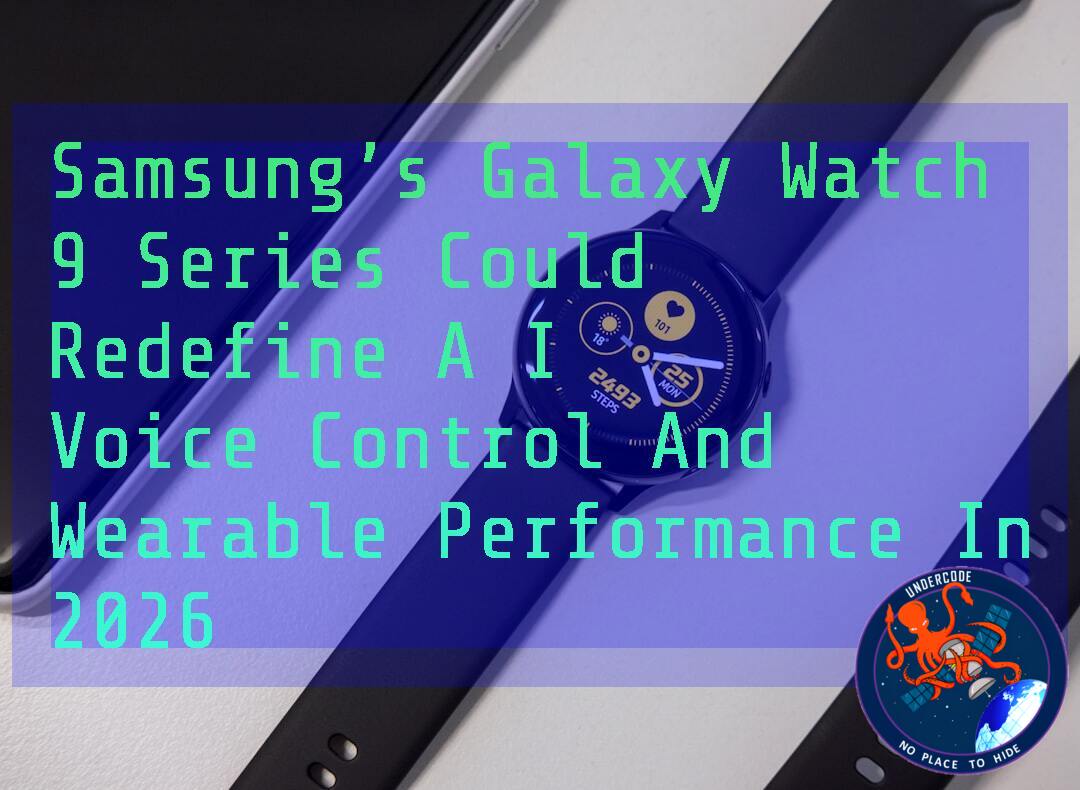
Samsung’s Next Galaxy Watch Lineup Signals a Smarter Wearable Future
Introduction
Samsung appears ready to continue its aggressive expansion of the smartwatch market with the upcoming Galaxy Watch 9 series, and early discoveries hidden inside Google’s latest Wear OS software suggest that the company is preparing a major evolution in AI-powered wearable interaction. While Samsung traditionally launches two smartwatch models every year, recent developments indicate that the South Korean technology giant could once again release three separate premium smartwatches in 2026.
The newly leaked codenames discovered inside Google’s Wear OS application strongly point toward the existence of the Galaxy Watch 9, Galaxy Watch 9 Classic, and a next-generation Galaxy Watch Ultra 2. More importantly, the leaks reveal that Samsung may finally deliver one of the most requested smartwatch features in recent years: seamless voice interaction without requiring wake phrases such as “Hey Google” or “Hi Bixby.”
This subtle but powerful shift could significantly change how users interact with wearable AI assistants throughout the day.
Hidden Wear OS Files Reveal Samsung’s New Smartwatch Strategy
Recent findings uncovered by Android Authority inside Google’s Wear OS software revealed three internal Samsung smartwatch codenames: Fresh 9, Wise 9, and Project X2.
These names are not random placeholders. Samsung has historically used similar internal naming patterns for previous smartwatch generations. The Galaxy Watch 8 carried the codename Fresh 8, while the Galaxy Watch 8 Classic was internally called Wise 8. This makes it highly likely that Fresh 9 and Wise 9 directly correspond to the Galaxy Watch 9 and Galaxy Watch 9 Classic.
The most interesting codename, however, is Project X2.
Samsung’s Galaxy Watch Ultra (2025) was previously identified internally as Project V2. The naming similarity strongly suggests that Project X2 is actually the upcoming Galaxy Watch Ultra 2, a device expected to compete directly against Apple’s premium wearable ecosystem and high-end Garmin devices.
Samsung’s growing focus on multiple wearable tiers shows a strategic shift. Instead of targeting a single smartwatch audience, the company now appears to be segmenting its wearable lineup into three categories:
Standard Premium Smartwatch
The Galaxy Watch 9 will likely target mainstream Android users seeking balanced features and affordability.
Traditional Luxury Smartwatch Experience
The Galaxy Watch 9 Classic may continue Samsung’s rotating bezel tradition while offering premium materials and refined aesthetics.
Rugged Ultra Performance Category
The Galaxy Watch Ultra 2 appears designed for outdoor enthusiasts, fitness professionals, athletes, and advanced productivity users.
Raise-to-Talk Could Become the Biggest User Experience Upgrade
One of the most important leaked features is Samsung’s potential implementation of Raise-to-Talk functionality.
This feature allows users to simply raise their wrist toward their face and begin speaking naturally without saying a wake phrase beforehand. Instead of activating the assistant using “Hey Google” or “Hi Bixby,” the smartwatch intelligently detects user intent through movement and proximity.
Apple users have enjoyed similar functionality for years through the Apple Watch ecosystem, and Samsung’s delayed adoption has often been criticized by Android wearable users.
If implemented correctly, Raise-to-Talk could completely change daily smartwatch usability.
Faster AI Interaction
Users will no longer need to repeat robotic activation commands before every interaction.
Reduced Friction
Simple actions like replying to messages, setting reminders, or checking weather updates become significantly faster.
Better Accessibility
For users with physical limitations or those constantly moving during workouts, eliminating wake phrases improves overall usability.
Natural Human Interaction
The feature moves wearable AI closer to real conversational computing rather than command-based interaction.
Samsung’s timing is critical because wearable AI assistants are rapidly becoming central to productivity ecosystems. Smartwatches are evolving from notification devices into standalone AI companions.
Samsung Could Split Chipset Strategy Between Models
The leak also suggests Samsung may continue using the Exynos W1000 chipset for the Galaxy Watch 9 and Galaxy Watch 9 Classic.
The Exynos W1000 already powers the Galaxy Watch 8 series and delivered respectable battery efficiency alongside stable performance. Keeping the same chipset may help Samsung optimize software reliability while reducing manufacturing costs.
However, the Galaxy Watch Ultra 2 could become significantly more powerful.
Reports indicate Samsung may equip the Ultra model with Qualcomm’s Snapdragon Wear Elite processor, a next-generation wearable chipset announced earlier this year.
This potential chipset split is extremely important.
Why Snapdragon Wear Elite Matters
Qualcomm designed the Snapdragon Wear Elite specifically for AI-enhanced wearable tasks.
Key advantages could include:
Faster voice recognition
Improved AI processing
Better fitness tracking computation
Enhanced battery optimization
Superior thermal management
Improved standalone LTE performance
If Samsung truly adopts Qualcomm’s new processor for the Ultra 2, it may signal the beginning of a dual-chip wearable strategy where flagship models receive substantially more advanced AI capabilities than standard editions.
One UI 9 Watch and Wear OS 7 Could Push Software Forward
All upcoming Galaxy Watch models are expected to ship with One UI 9 Watch based on Wear OS 7.
Samsung’s wearable software has steadily matured over recent years, especially after its partnership with Google strengthened the Wear OS ecosystem.
Wear OS 7 is expected to focus heavily on:
Smarter AI Assistant Integration
Context-aware responses and predictive actions may become core wearable features.
Better Health Tracking
Samsung continues investing heavily in sleep analysis, heart monitoring, stress detection, and fitness metrics.
Battery Optimization
Wear OS historically struggled with efficiency. The next version aims to reduce background power drain.
Improved Cross-Device Ecosystem
Samsung increasingly integrates Galaxy smartphones, tablets, earbuds, and watches into a unified ecosystem experience.
The combination of Wear OS 7 and One UI 9 Watch could position Samsung as the dominant Android wearable manufacturer for another generation.
What Undercode Say:
Samsung’s smartwatch strategy is no longer reactive. It has become aggressively predictive.
For years, Apple controlled the perception of premium smartwatch innovation while Android wearables struggled with fragmentation, inconsistent software optimization, and weak battery life. Samsung’s latest direction suggests the company now understands that the future of smartwatches is no longer about hardware alone. The real competition is AI interaction quality.
The Raise-to-Talk feature may appear small on paper, but psychologically it changes how users communicate with machines. Every removed friction point increases engagement frequency.
Samsung also appears to be creating a three-tier wearable hierarchy similar to its smartphone business model.
The standard Galaxy Watch 9 likely becomes the mass-market product.
The Classic model preserves Samsung’s identity among traditional watch enthusiasts.
The Ultra 2 targets the high-profit premium category dominated by Apple Ultra devices.
This segmentation allows Samsung to dominate multiple demographics simultaneously.
Another important signal is Qualcomm’s possible return to Samsung wearables through Snapdragon Wear Elite.
Historically, Samsung preferred its own Exynos wearable chips for vertical integration. A shift toward Qualcomm inside Ultra devices may indicate Samsung recognizes limitations in scaling advanced AI processing under current Exynos efficiency constraints.
That decision alone could reshape the wearable semiconductor market.
The AI race is quietly moving toward wearable computing.
Smartphones are becoming saturated. Smartwatches now represent the next frontier for contextual AI delivery because they remain physically attached to users throughout the day.
Samsung understands this.
A watch continuously monitors movement, heart rate, sleep patterns, location, exercise behavior, and communication habits. That creates an incredibly powerful real-time behavioral dataset for future AI systems.
Raise-to-Talk is likely only the beginning.
Future Galaxy Watches may eventually support proactive AI conversations, predictive health alerts, contextual recommendations, and offline local AI processing.
Samsung’s integration with Google also matters more than most consumers realize.
Wear OS nearly collapsed years ago due to poor optimization and lack of ecosystem support. Samsung effectively revived Google’s wearable platform by merging its hardware expertise with Google services.
This partnership now threatens Apple’s ecosystem dominance more seriously than before.
The Galaxy Watch Ultra 2 could become Samsung’s most strategically important wearable product yet.
Not because of hardware specifications alone, but because it may represent Samsung’s first true AI-first wearable device.
The wearable industry itself is entering a transition period.
Consumers no longer buy smartwatches purely for notifications or fitness tracking. They increasingly expect intelligent assistance, predictive behavior, and seamless interaction.
That expectation shift benefits companies capable of integrating AI deeply into lightweight wearable systems.
Samsung appears determined to become one of them.
Deep Analysis
Linux-Based Wear OS Package Inspection Commands
Researchers often inspect Android and Wear OS application packages using reverse engineering tools. Analysts discovering hidden smartwatch codenames commonly rely on APK extraction and decompilation methods.
adb devices
adb shell pm list packages
adb pull /system/app/
Extracting Wear OS APK Files
apktool d WearOS.apk
jadx-gui WearOS.apk
Searching Internal Codenames
grep -Ri "Fresh 9" .
grep -Ri "Wise 9" .
grep -Ri "Project X2" .
Monitoring Smartwatch Logs
adb logcat
adb shell dumpsys activity
Kernel and Hardware Inspection
cat /proc/cpuinfo
getprop ro.product.model
getprop ro.build.version.release
AI Voice Assistant Debugging
adb shell dumpsys voiceinteraction
adb shell settings list secure
Bluetooth Wearable Analysis
bluetoothctl
hcitool scan
Battery Optimization Monitoring
adb shell dumpsys battery
adb shell dumpsys batterystats
Qualcomm Chipset Verification
adb shell getprop | grep qcom
Samsung One UI Service Inspection
adb shell pm list packages | grep samsung
These commands are frequently used by Android researchers, firmware analysts, and wearable security enthusiasts investigating hidden product references and software capabilities before official launches.
Fact Checker Results
✅ Multiple internal codenames related to Samsung’s upcoming smartwatches were reportedly discovered inside Google’s Wear OS application files.
✅ Samsung previously used similar codename structures for earlier Galaxy Watch generations, making the leaked naming pattern highly believable.
✅ Raise-to-Talk functionality already exists in competing wearable ecosystems like Apple Watch, making Samsung adoption technically realistic and commercially logical.
❌ Samsung has not officially confirmed the Galaxy Watch Ultra 2 branding or Snapdragon Wear Elite integration at the time of reporting.
❌ Final hardware specifications, battery performance, and AI capabilities remain unverified until Samsung’s official launch announcement.
❌ Some leaked software references may represent experimental prototypes rather than finalized commercial products.
Prediction
(+1) Samsung’s AI-focused wearable strategy will likely accelerate Android smartwatch adoption globally during late 2026.
(+1) Raise-to-Talk could become one of the most advertised Galaxy Watch features because it visibly improves everyday convenience.
(+1) Qualcomm’s Snapdragon Wear Elite may push wearable AI processing into a new performance category for premium smartwatches.
(-1) Battery life could become a major concern if Samsung aggressively expands always-on AI functionality.
(-1) Samsung risks fragmentation if premium AI features become exclusive to Ultra devices only.
(-1) Apple may rapidly counter Samsung’s AI wearable momentum with deeper Siri and health ecosystem integration.
▶️ Related Video (78% Match):
🕵️📝Let’s dive deep and fact‑check.
References:
Reported By: www.sammobile.com
Extra Source Hub (Possible Sources for article):
https://www.digitaltrends.com
Wikipedia
OpenAi & Undercode AI
Image Source:
Unsplash
Undercode AI DI v2
Bing
🎓 Live Courses & Certifications:
Join Undercode Academy for Verified Certifications
🚀 Request a Custom Project:
Secure, high-velocity infrastructure and disruptive technological engineering. Contact our engineering team for high-tier development and proprietary systems:
[email protected]
🔐JOIN OUR CYBER WORLD [ CVE News • HackMonitor • UndercodeNews ]
📢 Follow UndercodeNews & Stay Tuned:
𝕏 formerly Twitter 🐦 | @ Threads | 🔗 Linkedin | 🦋BlueSky | 🐘Mastodon | 📺Youtube


