
Listen to this Post
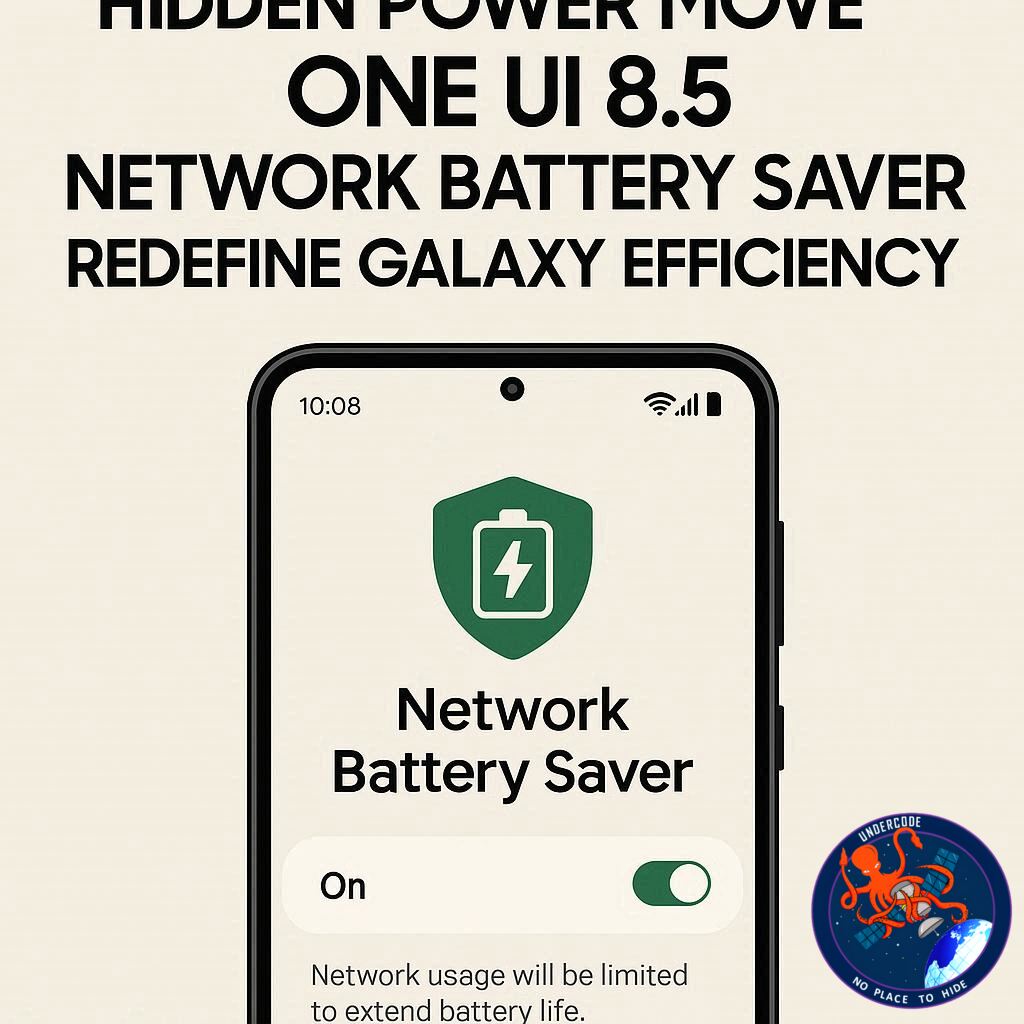
Samsung’s One UI has always been about refining the Android experience — smoother visuals, smarter layouts, and performance tuned to near perfection. But the upcoming One UI 8.5 may bring more than cosmetic polish. Behind its sleek interface lies a quietly revolutionary feature: Network Battery Saver, designed to stretch your phone’s battery life using artificial intelligence that understands you.
The Game-Changing Discovery
What was once thought to be a minor update for the Galaxy S25 Ultra is now shaping into a milestone release. Deep within the leaked One UI 8.5 firmware, developers discovered a new capability that could transform how Galaxy devices handle battery life. The Network Battery Saver works by intelligently reducing network activity when your phone isn’t being used — such as while you’re sleeping or idle.
This system doesn’t just rely on timers or screen inactivity. Instead, it harnesses Personal Data Intelligence, Samsung’s AI-driven behavior engine, already present in Galaxy devices. By analyzing daily patterns — when you sleep, where you work, when you scroll endlessly on social media — it learns your habits. The result? A battery system that knows when to rest without asking.
There are already three distinct lines of code found in the firmware that hint at its behavior:
“Save battery by limiting network performance when your phone isn’t likely to be used, such as when you’re sleeping.”
“Network battery saver uses Personal Data Intelligence to determine when to apply network performance limits, such as when you’re at home or when you’re unlikely to use your phone.”
“To use Network Battery Saver, turn on Personal Data Intelligence in Settings.”
The implications are clear — Samsung is not merely adding a power-saving mode. It’s introducing a contextual energy management system that blends AI understanding with deep OS integration. This move could potentially make the Galaxy S26 series, expected in early 2026, one of the most energy-optimized flagship lineups in Android history.
While visuals and small UI improvements in One UI 8.5 will enhance the overall user experience, this new feature signifies something deeper — the shift from reactive design (user-controlled) to predictive intelligence (AI-controlled). That’s a massive philosophical evolution in mobile UX.
And Samsung isn’t new to this game. Its Personal Data Intelligence already powers contextual recommendations, smarter app interactions, and tailored experiences across the Galaxy ecosystem. But integrating it directly with battery management is a masterstroke — one that fuses machine learning with practical endurance benefits.
If executed right, it could mean fewer overnight drains, more efficient background syncing, and a seamless blend of performance and preservation. Imagine waking up to a phone that still has 90% charge — not because you turned off Wi-Fi, but because your phone knew you were asleep and acted accordingly.
What Undercode Say:
This discovery isn’t just a technical tweak — it’s a philosophical pivot in how smartphones manage themselves. The Network Battery Saver represents a growing trend in AI-driven sustainability, where devices learn from behavior rather than forcing users to constantly toggle power modes.
Samsung’s strategy here mirrors the quiet efficiency of Apple’s background optimization but with a uniquely Android openness. By allowing users to manage which apps access Personal Data Intelligence, Samsung keeps user control and transparency at the core of the experience — a critical balance in an age of privacy concerns.
But the real brilliance lies in leveraging existing AI data instead of introducing yet another standalone system. Samsung is effectively recycling intelligence it already gathers for other smart features. This not only enhances efficiency but also strengthens the brand’s AI infrastructure without reinventing the wheel.
If you look deeper, this update could also pave the way for cross-device battery management within the Galaxy ecosystem — from phones to tablets and even wearables. Imagine your phone and watch coordinating power states to conserve energy collectively. That’s where this trajectory seems headed.
From a technical standpoint, adaptive network throttling could mean dynamic control over background data synchronization, push notifications, and app refresh intervals. The AI might even learn which apps matter most to you — keeping messaging services active while silencing heavy sync tasks overnight.
For users, the benefits are clear: longer battery life, less micromanagement, and smarter system autonomy. For Samsung, it’s a move that signals confidence in its AI-first ecosystem vision. The Galaxy S26, launching in early 2026, may thus mark the moment Samsung fully integrates intelligence into energy management.
Yet there’s a lingering question: how much will users trust an algorithm to decide when to restrict connectivity? Samsung will need to walk a fine line between empowerment and intrusion. The company’s inclusion of manual app management in the settings menu shows they’re aware of this delicate balance.
If done right, this could become one of those background features that define long-term brand loyalty — something users never see, but always feel. The subtle power that turns “battery anxiety” into confidence.
Fact Checker Results:
✅ The leaked One UI 8.5 firmware indeed mentions “Network Battery Saver.”
✅ Personal Data Intelligence is already an existing Samsung AI feature used across Galaxy devices.
❌ Samsung has not officially confirmed this feature yet — findings are based on firmware code leaks.
Prediction 🔮
When One UI 8.5 officially debuts with the Galaxy S26 lineup, Samsung may market this as part of its “AI Efficiency Suite”, integrating it alongside new Galaxy AI tools. Expect tighter synchronization between battery, performance, and network systems across devices. Within a year, other Android OEMs will likely follow suit — because once your phone knows when you’re asleep, the era of passive power-saving is over.
🕵️📝✔️Let’s dive deep and fact‑check.
References:
Reported By: www.sammobile.com
Extra Source Hub (Possible Sources for article):
https://www.linkedin.com
Wikipedia
OpenAi & Undercode AI
Image Source:
Unsplash
Undercode AI DI v2
Bing
🔐JOIN OUR CYBER WORLD [ CVE News • HackMonitor • UndercodeNews ]
📢 Follow UndercodeNews & Stay Tuned:
𝕏 formerly Twitter 🐦 | @ Threads | 🔗 Linkedin | 🦋BlueSky | 🐘Mastodon


