
Listen to this Post
Introduction
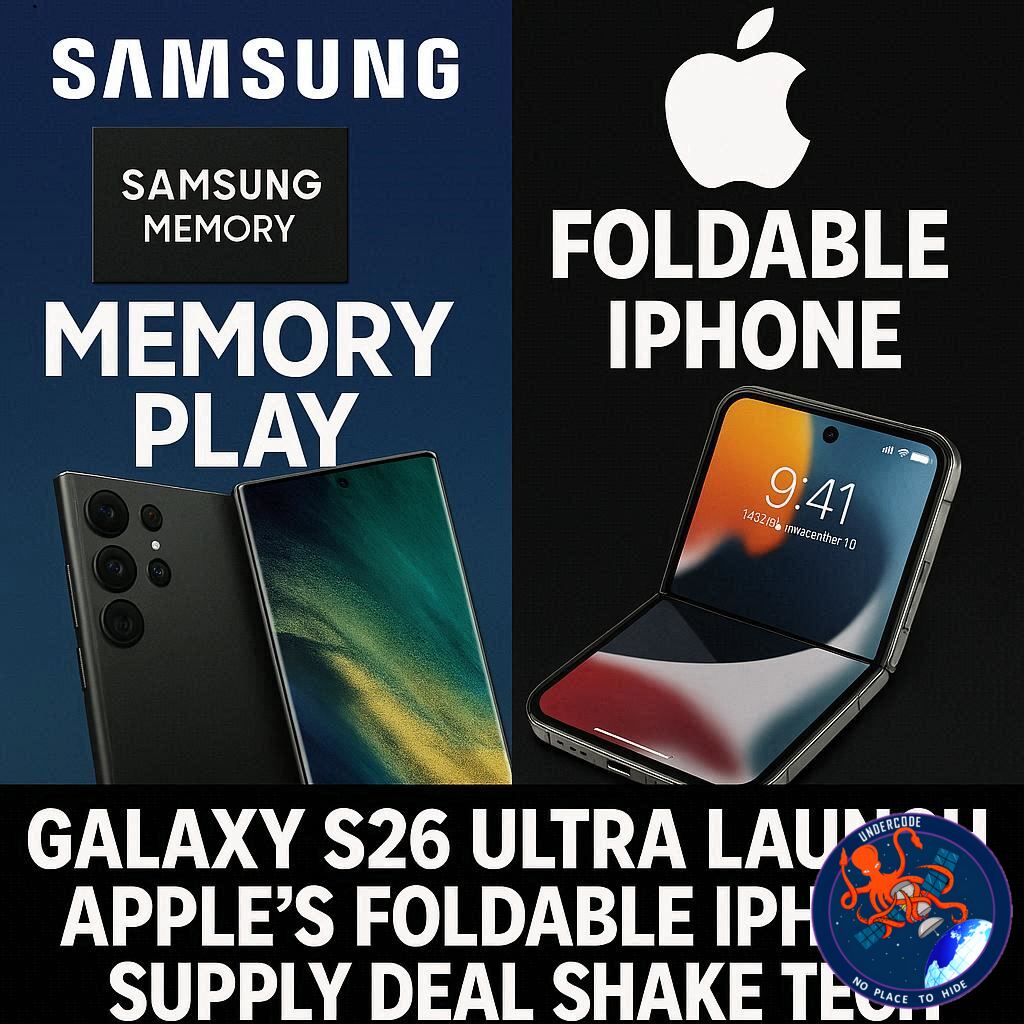
Samsung’s latest flagship Galaxy S26 Ultra and Buds 4 Pro are now available for pre‑order, marking another milestone in its smartphone lineup. But while fans line up for the newest Galaxy experience, a quieter yet more consequential story has emerged in the background: Apple’s upcoming foldable iPhone is reportedly turning to Samsung — not just for display panels, but for RAM memory chips. This development highlights dramatic shifts in supply chain dynamics, competitive positioning, and pricing pressures across the global tech ecosystem.
Original
Samsung has launched pre‑orders for its brand‑new Galaxy S26 Ultra and Buds 4 Pro. Meanwhile, the broader tech world is buzzing about Apple’s anticipated first foldable iPhone, expected later this year. This device is poised to compete directly with foldables like Samsung’s Galaxy Z Fold 8 and Google’s Pixel 11 Pro Fold. Rumors had already suggested that Apple would source foldable OLED panels from Samsung Display — a relationship that now appears to extend into memory as well.
According to a report from The Bell, Apple has placed an order with Samsung Electronics for 12 GB of LPDDR5X RAM for its foldable iPhone. Samsung isn’t alone in this — Apple reportedly also ordered similar memory chips from Micron and SK Hynix — but Samsung secured the largest share, thanks largely to its higher manufacturing capacity.
The report further claims that Samsung Electronics will sell these memory chips to Apple at almost double the price it commanded last year. However, because Apple buys memory chips in enormous volumes, it appears to have negotiated prices that are lower than what other customers are paying.
Underlying all of this is a broader memory chip shortage. Major technology players — including Amazon, AMD, Google, Meta, and Nvidia — are snapping up memory chips for AI accelerators, data centers, and server farms. This intense demand has driven up prices, leaving fewer chips available for consumer electronics such as smartphones. As a result, memory chip costs have reportedly doubled compared to the previous year.
What Undercode Says:
Samsung’s Strategic Win
Samsung securing the largest share of Apple’s RAM orders isn’t just a supply win — it’s a validation of Samsung’s manufacturing leadership. It signals that even arch‑rival Apple recognizes Samsung’s scale advantages. For Samsung, this isn’t merely revenue; it’s influence in the supply ecosystem of its biggest competitor.
Pricing Pressure and Margin Implications
The reported near‑doubling of RAM prices underscores the intense supply–demand imbalance in memory markets. What matters most here is not the sticker price itself, but how pricing power is shifting toward suppliers. Samsung and others are capturing more value due to scarcity, potentially boosting margins even as consumers face slower innovation diffusion due to component bottlenecks.
Apple’s Supply Diversification Strategy
Buying RAM from Samsung, Micron, and SK Hynix reflects Apple’s diversification strategy — spreading risk and ensuring supply continuity. But Samsung’s outsized allotment suggests that supply chain reality sometimes trumps vendor preference. It’s one thing to design differentiated silicon; it’s another to secure supply under global shortages.
Memory Crunch Fueled by AI Demand
The bigger picture is the memory crunch driven by AI infrastructure build‑outs. Enterprises are pouring capital into data centers and AI accelerators that consume high‑bandwidth memory at unprecedented rates. This corporate demand pulls supply away from consumer products like smartphones, forcing price realignments and potentially slowing innovation cycles in mobile segments.
Competitive Dynamics in Foldables
Apple’s foldable iPhone — long a rumor — now has a clearer supply story. If Samsung provides both displays and memory, Apple’s competitive edge in foldables may be narrower than anticipated. Samsung’s multi‑generation experience in foldables gives it a head start, and supplying components to Apple could inadvertently reinforce that advantage by giving Samsung capital to reinvest in R&D.
Broader Industry Impacts
Memory shortages and pricing volatility affect device roadmaps across the industry. Smaller OEMs, lacking Apple’s buying power, could see even tighter supply and higher costs. This may consolidate market share among big players with deep pockets, accelerating a trend toward market concentration in consumer electronics.
Consumer‑Level Effects
For end users, the immediate impact may show up in device pricing and release schedules. As component costs rise and supply remains constrained, smartphone makers may push flagship prices higher or delay launches. The Galaxy S26 Ultra’s release comes amid this tension — a premium device in a premium supply environment.
Supply Chain as Strategic Leverage
Finally, this episode highlights how supply chains have become strategic battlegrounds. Control over manufacturing — whether displays, memory, or advanced chips — isn’t just operational. It’s leverage in competitive positioning, bargaining, and future‑proofing product ecosystems.
Fact Checker Results
✔️ Samsung is reportedly supplying 12 GB LPDDR5X RAM to Apple for its foldable iPhone, according to The Bell.
✔️ Apple is also sourcing memory chips from Micron and SK Hynix, with Samsung taking the largest share due to capacity.
✔️ Memory chip prices have increased significantly due to high demand from AI and data center applications.
Prediction
Looking ahead, Samsung’s role as a key component supplier to Apple may propagate longer‑term collaboration and interdependence, even as the two remain fierce competitors in the smartphone market. The memory shortage is likely to persist into 2026, driven by sustained AI infrastructure investment, keeping prices elevated and pushing OEMs to rethink supply strategies. We may also see renewed investment in alternative memory technologies and capacity expansion as companies seek to relieve bottlenecks — potentially reshaping the semiconductor landscape over the next few years.
🕵️📝✔️Let’s dive deep and fact‑check.
References:
Reported By: www.sammobile.com
Extra Source Hub (Possible Sources for article):
https://www.quora.com/topic/Technology
Wikipedia
OpenAi & Undercode AI
Image Source:
Unsplash
Undercode AI DI v2
Bing
🔐JOIN OUR CYBER WORLD [ CVE News • HackMonitor • UndercodeNews ]
📢 Follow UndercodeNews & Stay Tuned:
𝕏 formerly Twitter 🐦 | @ Threads | 🔗 Linkedin | 🦋BlueSky | 🐘Mastodon


