
Listen to this Post
Introduction: A Quiet but Important Shift in Samsung’s Strategy
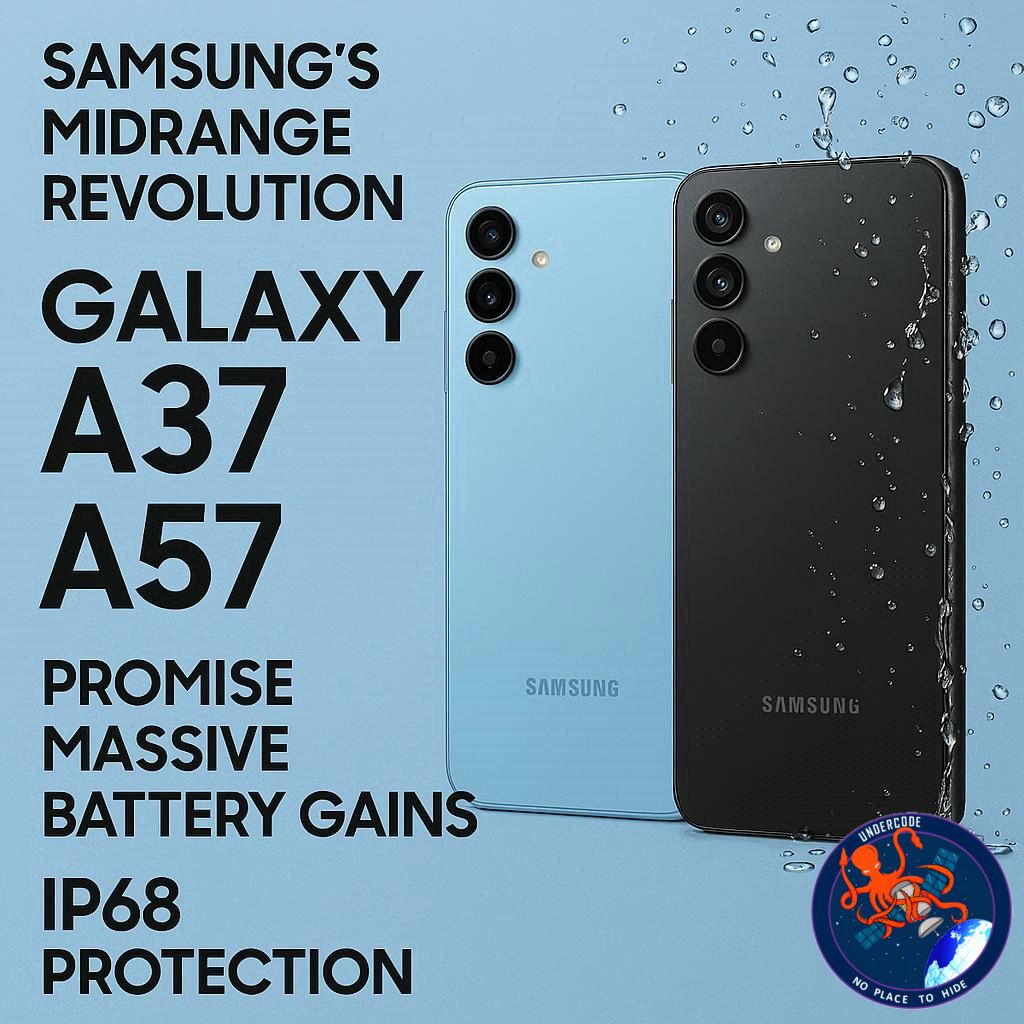
While flagship launches usually steal the spotlight, Samsung’s mid-range lineup often tells the more important story about where everyday smartphone priorities are heading. With the Galaxy S26 series now officially unveiled, Samsung is clearly turning its attention to the next wave of affordable devices. Fresh regulatory data suggests that the upcoming Galaxy A37 and Galaxy A57 could mark one of the biggest practical upgrades the Galaxy A series has seen in years, especially in battery endurance and durability.
Context: What Comes After the Galaxy S26 Launch
Following the announcement of the Galaxy S26 lineup, Samsung is expected to accelerate work on its mid-range portfolio. Historically, this phase signals refinements focused on longevity, efficiency, and real-world usability rather than experimental features. The Galaxy A37 and Galaxy A57 appear to follow that exact playbook, aiming to raise everyday standards instead of chasing flagship-level specs.
Source of the Leak: EU ENERGY Labels Surface
The latest details come from EU ENERGY labels listed in the EPREL database. These labels are designed to give consumers a standardized look at energy efficiency, durability, and repairability. While they don’t reveal full specifications, they are often reliable indicators of battery performance and long-term sustainability.
Battery Performance: Galaxy A37 Sets a New Benchmark
According to the EU listing, the Galaxy A37 earns an A rating for battery life. The device is rated to last up to 53 hours on a single charge, a substantial leap compared to previous models. Its battery is also certified to maintain performance for up to 1,200 charging cycles before replacement becomes necessary.
Durability Scores: A37’s Trade-Offs
Beyond battery life, the Galaxy A37 receives a B rating for drop resistance and a C rating for repairability. This suggests improved structural resilience but a design that may still pose challenges for DIY repairs or third-party servicing.
Galaxy A57 Battery Ratings: Nearly as Strong
The Galaxy A57 closely matches its smaller sibling with an A-rated battery capable of up to 52 hours of usage on a single charge. Like the A37, it is rated for 1,200 charge cycles, signaling a shared battery technology across both devices.
Structural Strength: A57 Takes the Lead
Where the Galaxy A57 differentiates itself is durability. The phone achieves an A rating for drop resistance, indicating a tougher build than the A37. However, repairability remains at a C rating, reinforcing Samsung’s continued preference for sealed designs over modular repairs.
IP68 Rating: A Major Upgrade for Mid-Range Phones
Both the Galaxy A37 and Galaxy A57 feature an IP68 rating for dust and water resistance. This is a notable improvement over the previous Galaxy A36 and A56 models, which lacked this level of protection. IP68 certification places these phones closer to flagship durability standards than traditional mid-range devices.
Looking Back: How the Galaxy A36 and A56 Compare
For perspective, the Galaxy A36 offers up to 41 hours of battery life with a Class C energy efficiency rating. The Galaxy A56 improves slightly with 44 hours and a Class B rating. Against this backdrop, the A37 and A57 represent a clear generational leap in efficiency and endurance.
Charging and Cameras: Familiar but Refined
Despite the battery improvements, both new models stick with 45W fast charging, matching the previous generation. Samsung is also expected to introduce upgraded camera systems, though details remain limited at this stage. The focus appears to be refinement rather than reinvention.
Battery Longevity Concerns: One Step Back?
One surprising downgrade is battery cycle longevity. While the new models are rated for 1,200 charge cycles, their predecessors reportedly reached up to 2,000 cycles. This suggests Samsung may be prioritizing higher immediate capacity and efficiency over ultra-long-term battery lifespan.
What Undercode Says:
Battery Life as the New Mid-Range Battlefield
Samsung’s emphasis on 50+ hour battery ratings signals a shift in mid-range competition. Instead of chasing higher refresh rates or experimental camera features, the company is betting that users value phones that simply last longer between charges.
IP68 for Everyone, Not Just Flagships
By bringing IP68 protection to the Galaxy A series, Samsung is quietly redefining what “mid-range” means. Water and dust resistance were once premium-only features, and their inclusion here raises consumer expectations across the entire segment.
Efficiency Over Raw Capacity
The improved battery life likely comes from efficiency gains rather than massive battery size increases. This points to better software optimization and chipset tuning, which often have a greater real-world impact than raw hardware upgrades.
Repairability Remains a Weak Spot
The consistent C rating for repairability suggests Samsung is still not prioritizing ease of repair. As right-to-repair regulations gain momentum in Europe, this could become a growing point of criticism for future Galaxy A models.
A Calculated Compromise on Battery Cycles
Reducing rated charge cycles from 2,000 to 1,200 may worry power users, but most consumers replace their phones long before hitting that limit. Samsung appears comfortable making this trade-off to achieve better short-term performance.
Positioning Against Competitors
With these upgrades, the Galaxy A37 and A57 are positioned to challenge rivals from Xiaomi, Realme, and Motorola, particularly in battery endurance and durability—two areas where spec sheets translate directly into user satisfaction.
A Signal of Samsung’s Broader Direction
Taken together, these changes suggest Samsung sees the mid-range market as mature and competitive. Incremental but meaningful improvements, rather than flashy features, are now the primary way to stand out.
🔍 Fact Checker Results:
Battery Ratings Verification
EU ENERGY labels confirm A-rated battery life for both models, supporting claims of 52–53 hours of usage.
Durability and IP Claims
The IP68 rating and drop-resistance scores align with the EPREL database entries.
Longevity Figures Context
The 1,200 charge cycle rating is accurate but represents a reduction compared to the previous generation.
📊 Prediction:
Mid-Range Expectations Will Rise
If these figures translate into real-world performance, consumers will begin to expect multi-day battery life and flagship-level protection as standard in mid-range phones.
Pressure on Competitors
Rival brands may be forced to match IP68 ratings and battery efficiency to stay competitive in 2026.
A Quiet Bestseller in the Making
The Galaxy A37 and A57 are unlikely to dominate headlines, but their focus on durability and endurance could make them some of Samsung’s strongest-selling phones of the year.
🕵️📝✔️Let’s dive deep and fact‑check.
References:
Reported By: www.sammobile.com
Extra Source Hub (Possible Sources for article):
https://www.twitter.com
Wikipedia
OpenAi & Undercode AI
Image Source:
Unsplash
Undercode AI DI v2
Bing
🔐JOIN OUR CYBER WORLD [ CVE News • HackMonitor • UndercodeNews ]
📢 Follow UndercodeNews & Stay Tuned:
𝕏 formerly Twitter 🐦 | @ Threads | 🔗 Linkedin | 🦋BlueSky | 🐘Mastodon


