
Listen to this Post
Introduction: The Next Revolution in Human-Tech Connection
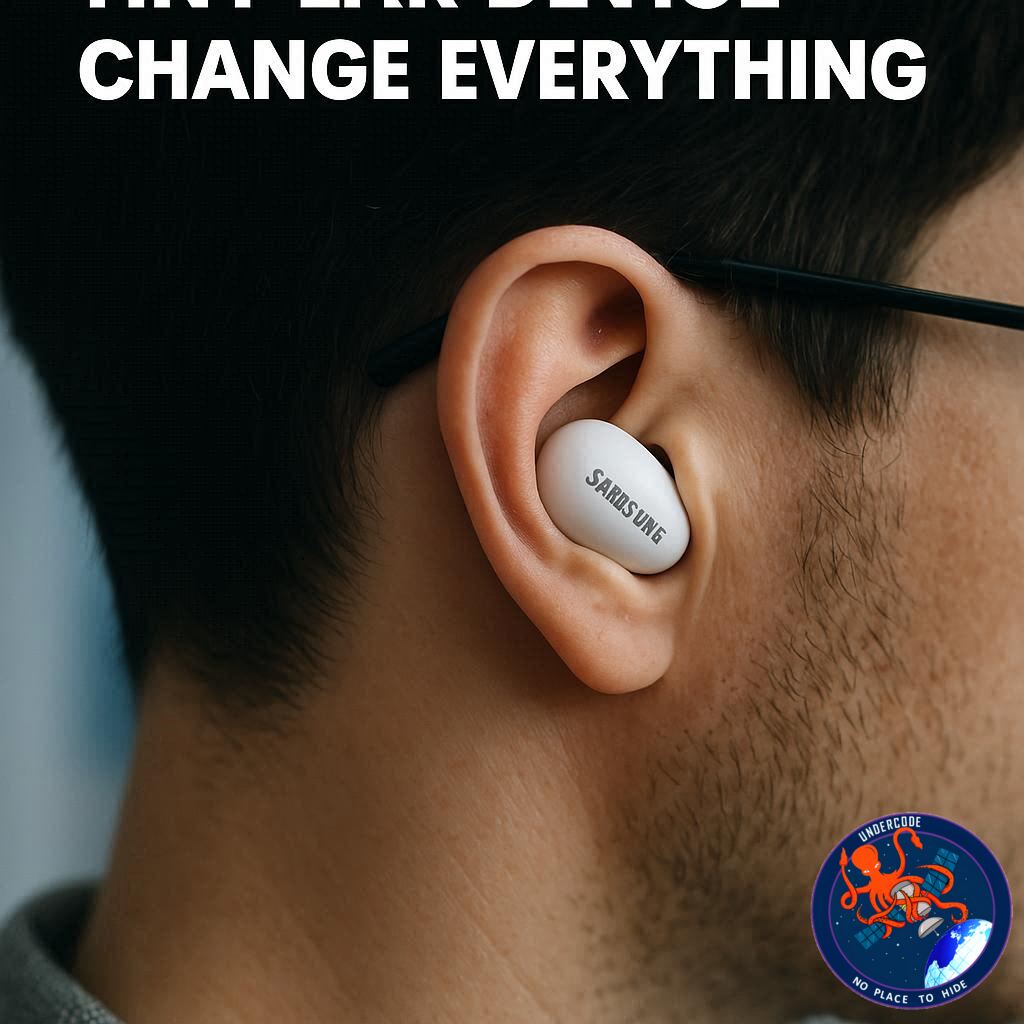
Samsung has once again shattered expectations with its latest innovation — a compact, ear-mounted EEG (electroencephalogram) device capable of reading brainwaves with astonishing accuracy. Developed in partnership with Hanyang University’s Department of Biomedical Engineering, this futuristic gadget represents a giant leap forward for brain-computer interface (BCI) technology. It promises to reshape how we interact with our devices, merging neuroscience with artificial intelligence in ways that were once pure science fiction.
The Future in Your Ear: A Samsung’s New EEG Device
Samsung’s collaboration with Hanyang University has led to the creation of a groundbreaking around-the-ear EEG device that redefines how brain signals are captured. Unlike conventional EEGs that require electrodes placed across the scalp, this sleek, compact design can monitor brain activity directly from the ears — making it not just innovative but also user-friendly and portable.
This new Ear-EEG device can function effectively outside laboratory settings, expanding its real-world applications. Samsung envisions its use in several crucial domains:
Drowsiness Detection: The device can alert drivers or students when concentration levels drop, improving road safety and classroom engagement.
AI-Driven Preference Recognition: When paired with artificial intelligence, it can predict what kind of videos a user prefers — achieving an impressive 92.85% accuracy during internal tests.
Neuromarketing and Entertainment: Brands could one day use this data to gauge audience reactions to content, creating personalized experiences.
Moreover, the potential integration of this technology into AR glasses, XR headsets, or wireless earbuds could unlock entirely new modes of interaction — controlling devices with thought signals, enhancing immersion in entertainment, or even tracking mental health indicators in real time.
Professor Chang-Hwan Im from Hanyang University praised the project as a prime example of academic and industrial synergy, emphasizing its potential in fields beyond education and marketing — including entertainment, wellness, and mental health management.
What Undercode Say: A Deep Dive into the Implications 🔍
Samsung’s ear-based EEG innovation marks a pivotal moment in biometric interface evolution. For decades, EEG technology was bulky, inaccessible, and largely confined to medical and research environments. By miniaturizing and decentralizing it, Samsung is bringing neuro-monitoring to mainstream consumers.
This development could signal a new wave of wearable computing where our gadgets don’t just respond to touch or voice — they anticipate our emotions and intentions. Imagine smart earbuds that automatically pause your playlist when you’re feeling drowsy, or AR glasses that adjust their visuals based on your focus levels.
From a market standpoint, the implications are immense. The global BCI (Brain-Computer Interface) market, valued at billions of dollars, is projected to grow rapidly as companies like Samsung, Neuralink, and Meta race to harness the brain’s electrical language. Samsung’s entry into this space could provide it with a strategic advantage in wearable AI ecosystems, integrating seamlessly with the Galaxy Watch, Galaxy Buds, and future XR devices.
Ethical and Privacy Considerations 🧩
However, this futuristic leap raises critical ethical questions. If devices can interpret our emotional states or preferences, who owns that neural data? How securely will it be stored or monetized? Regulators and ethicists will have to define clear boundaries between neural convenience and cognitive privacy.
Technological Synergy and AI Integration 🤖
Pairing EEG data with machine learning algorithms could accelerate breakthroughs in adaptive user interfaces. AI models could learn to interpret subtle neurological signals, transforming them into actionable commands or predictive insights. This would make everyday technology more intuitive, emotional, and “aware.”
The Future Landscape 🌐
If Samsung continues down this path, we may soon see the first commercial-grade brainwave tracking earbuds within the Galaxy ecosystem. These could revolutionize sectors like:
Healthcare: Monitoring stress, fatigue, and mental health in real time.
Education: Tracking learning engagement for better cognitive performance.
Entertainment: Tailoring media experiences based on mood and attention.
Safety: Preventing accidents by detecting early signs of drowsiness.
In short, Samsung’s EEG project isn’t just another gadget — it’s the beginning of a new human-computer dialogue.
✅ Fact Checker Results
The collaboration between Samsung and Hanyang University is officially verified.
The 92.85% accuracy figure for AI-based preference detection comes directly from internal tests.
The Ear-EEG concept is scientifically supported by biomedical engineering publications and not speculative.
🔮 Prediction: Where Samsung’s Brainwave Tech is Headed
Within the next five years, Samsung is likely to integrate Ear-EEG sensors into Galaxy Buds or AR headsets, allowing users to control devices using brain signals. These wearables could also become powerful tools for mental health monitoring, helping users track mood swings or focus levels. As AI and BCI technologies converge, Samsung might lead a new era of neuro-responsive smart devices, blurring the boundaries between mind and machine.
🕵️📝✔️Let’s dive deep and fact‑check.
References:
Reported By: www.sammobile.com
Extra Source Hub:
https://www.quora.com
Wikipedia
OpenAi & Undercode AI
Image Source:
Unsplash
Undercode AI DI v2
🔐JOIN OUR CYBER WORLD [ CVE News • HackMonitor • UndercodeNews ]
📢 Follow UndercodeNews & Stay Tuned:
𝕏 formerly Twitter 🐦 | @ Threads | 🔗 Linkedin | 🦋BlueSky | 🐘Mastodon


