
Listen to this Post
 Introduction: A Silent but Strategic Shift in Samsung’s Memory Playbook
Samsung is making moves that suggest a major strategic reset in its semiconductor ambitions. After losing ground in the AI-driven memory race over the past few years, the company now appears determined to reclaim relevance by acting earlier, faster, and more aggressively than before. The latest signal is subtle but significant: next-generation LPDDR6X memory samples have already been shipped to key partners, even though the standard itself has not yet been finalized. This early push hints at a broader plan to reassert Samsung’s influence across mobile, data center, and AI hardware markets.
the Original
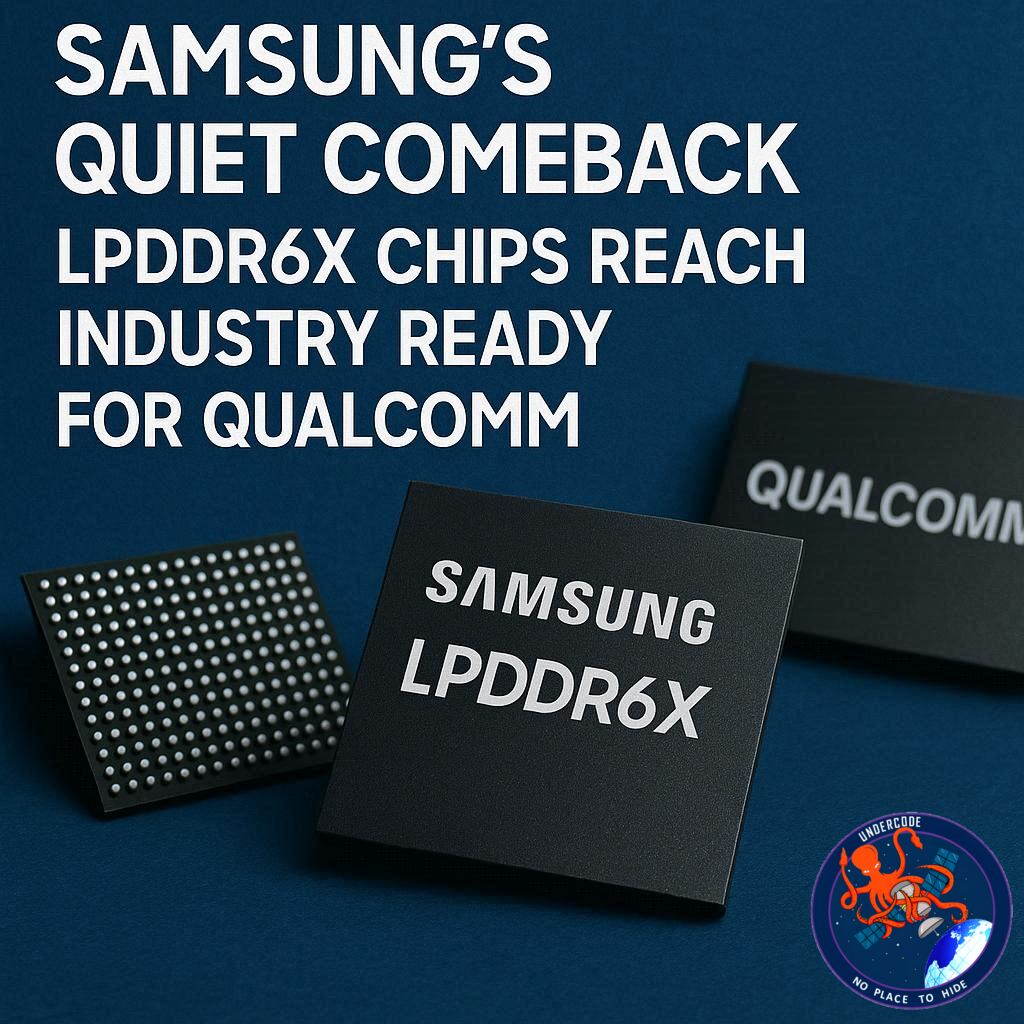
Samsung has recently shown signs of renewed competitiveness in the memory chip sector. Following its announcement of mass production for sixth-generation high-bandwidth memory (HBM4), reports now indicate that Samsung Electronics has shipped LPDDR6X memory samples to Qualcomm. According to a report by The Bell, these samples are intended for next-generation processors expected to launch in the second half of 2027.
What makes this move unusual is timing. Samsung has not yet commercially launched LPDDR6 DRAM, yet it is already distributing LPDDR6X chips that remain under development. Industry observers believe this memory could be used in Qualcomm’s AI250 accelerator cards aimed at data centers, as well as in future automotive processors. The AI250 system alone is expected to integrate more than 1,000GB of LPDDR6X memory, positioning Samsung as a potentially preferred supplier.
Traditionally, LPDDR memory is associated with smartphones, tablets, laptops, and wearables. However, its adoption is expanding. Nvidia has recently begun using LPDDR memory in its AI accelerator platforms, signaling a broader industry shift.
From a technical standpoint, LPDDR6 promises major gains, with maximum data transfer speeds reaching 14.4Gbps and peak bandwidth of 38.4GB/s. That represents a 44% speed improvement and a 20% bandwidth increase over LPDDR5X. LPDDR6X is expected to push performance and efficiency even further, although the JEDEC has not yet finalized the LPDDR6X standard.
Samsung’s urgency is understandable. Despite being the world’s largest memory chip manufacturer for decades, it failed to fully capitalize on the recent AI boom, particularly in high-bandwidth memory. This misstep allowed competitors such as Micron and SK hynix to overtake it in the HBM3E race, costing Samsung billions in potential revenue.
Determined not to repeat that mistake, Samsung has accelerated development across multiple fronts, including HBM4 for AI servers and LPDDR6/6X for consumer electronics and data centers. Shipping under-development LPDDR6X samples to Qualcomm appears to be part of a broader effort to showcase design leadership early, gather feedback from key customers, and fine-tune products long before mass production begins.
What Undercode Say:
Samsung’s decision to ship LPDDR6X samples before even launching LPDDR6 is not a technical accident; it’s a strategic statement. The company is signaling that it no longer wants to be a passive follower of market demand, especially in AI-adjacent segments where timing is everything. In the post-AI-boom semiconductor landscape, being first to demonstrate capability often matters more than being first to ship at scale.
This move also reflects a deeper shift in how low-power memory is perceived. LPDDR was once firmly associated with smartphones and battery-constrained devices. Today, as AI accelerators chase efficiency alongside raw performance, low-power DRAM is becoming attractive even in data centers. Qualcomm’s AI250 platform, rumored to use massive amounts of LPDDR6X, is a clear example of this changing equation.
From Samsung’s perspective, early sampling serves multiple purposes. It rebuilds trust with major clients after recent HBM setbacks, it places Samsung back into early design discussions, and it allows the company to influence how future chips are architected around its memory solutions. In effect, Samsung is trying to embed itself into the roadmap of its partners rather than waiting for finalized standards.
There is also a competitive psychology at play. After being outpaced by Micron and SK hynix in recent HBM cycles, Samsung cannot afford another reactive stance. By pushing LPDDR6X forward aggressively, it is attempting to flip the narrative from “missed the AI wave” to “shaping the next one.” Even if LPDDR6X adoption in data centers remains limited, the reputational benefit of early leadership is substantial.
However, this strategy is not without risk. Shipping under-development memory tied to an unfinished standard means potential redesigns, inefficiencies, or delays if specifications change. But Samsung appears willing to absorb that risk in exchange for relevance. In today’s semiconductor market, hesitation is often more costly than technical revisions.
Ultimately, this is less about LPDDR6X alone and more about Samsung’s renewed mindset. The company is acting like a challenger again, not a complacent incumbent. If it can align early innovation with reliable mass production, this aggressive posture could mark the beginning of a real comeback in advanced memory technologies.
Fact Checker Results
Samsung has confirmed mass production of HBM4 and ongoing work on LPDDR6-class memory.
Reports of LPDDR6X samples reaching Qualcomm come from credible industry media, not official product launches.
LPDDR6X specifications remain preliminary and are not yet finalized by JEDEC.
Prediction
Samsung’s early LPDDR6X push will likely secure it design wins in at least one major AI or automotive platform before 2027. If execution matches ambition, this could restore Samsung’s reputation as a memory technology leader rather than a late responder to industry shifts.
🕵️📝✔️Let’s dive deep and fact‑check.
References:
Reported By: www.sammobile.com
Extra Source Hub (Possible Sources for article):
https://www.instagram.com
Wikipedia
OpenAi & Undercode AI
Image Source:
Unsplash
Undercode AI DI v2
Bing
🔐JOIN OUR CYBER WORLD [ CVE News • HackMonitor • UndercodeNews ]
📢 Follow UndercodeNews & Stay Tuned:
𝕏 formerly Twitter 🐦 | @ Threads | 🔗 Linkedin | 🦋BlueSky | 🐘Mastodon


