
Listen to this Post
A New Push for Premium Home Entertainment
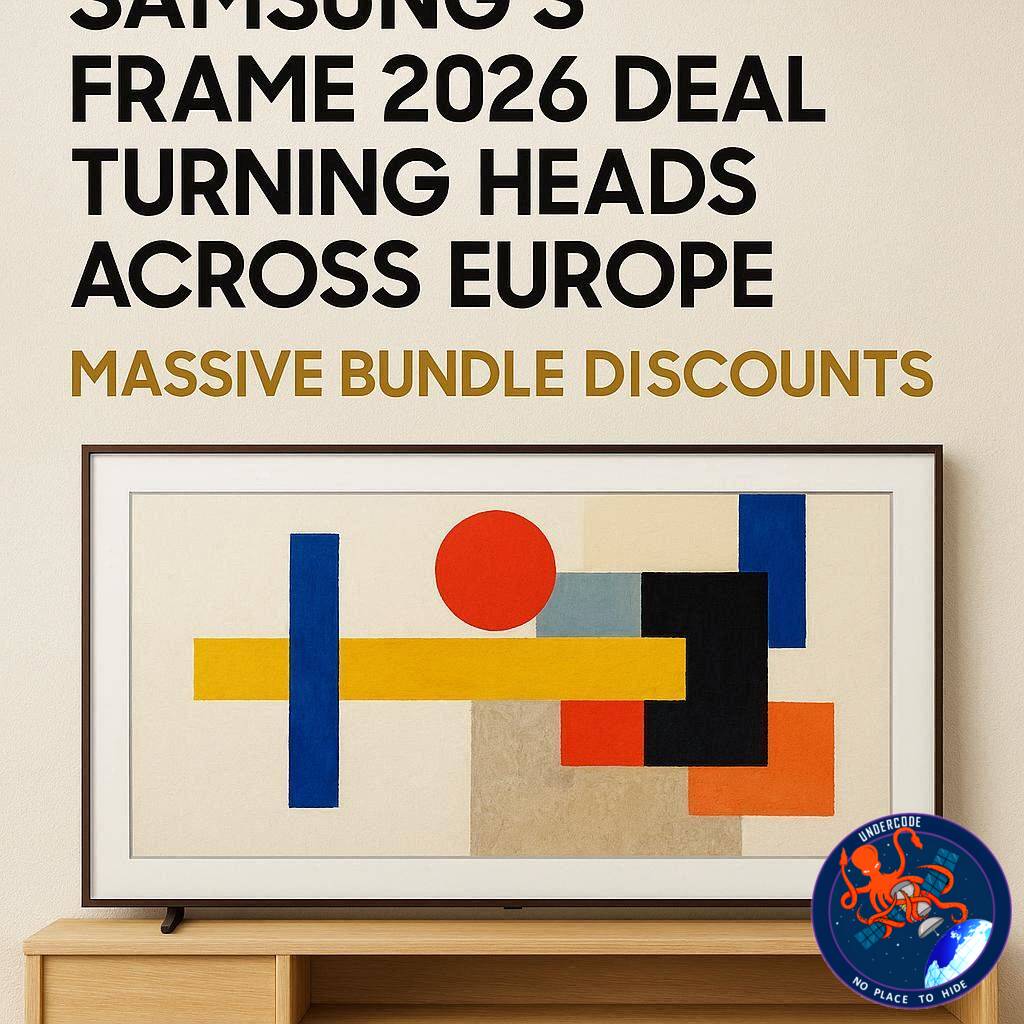
Samsung is aggressively promoting its 2026 lineup of The Frame televisions in the Netherlands, and the company’s latest pre-order campaign is clearly designed to attract buyers looking for a complete entertainment setup rather than just another TV. The promotion combines Samsung’s signature lifestyle television with wireless speaker bundles, allowing customers to unlock bigger discounts depending on the audio package they choose.
The Frame series has always occupied a unique place in Samsung’s ecosystem. Unlike traditional televisions that disappear into a black rectangle when switched off, The Frame transforms into digital artwork, making it part television and part decorative centerpiece. Samsung appears determined to strengthen that identity in 2026 by pairing the TV with premium wireless audio products and attractive early purchase incentives.
The entry-level 43-inch version of The Frame 2026 begins at approximately $1,090 USD after converting from the listed €999 European price. That price represents the base model before any bundle savings are applied. Buyers who decide to add compatible wireless speakers can significantly reduce the overall cost of the entertainment package, making the promotion more appealing for consumers already planning a living room upgrade.
Samsung Netherlands is also pushing an additional trade-in style offer that gives customers up to around $110 USD off when recycling an older television. This strategy not only lowers the purchase barrier but also aligns with Samsung’s broader sustainability messaging. Instead of simply discounting products directly, the company is creating layered incentives that reward ecosystem adoption and device replacement.
The timing of the offer is notable. Television manufacturers are facing slower upgrade cycles globally as consumers hold onto premium TVs longer than before. To counter that trend, brands like Samsung are increasingly bundling accessories and services to increase perceived value. Rather than competing solely on screen quality, companies are now selling a complete lifestyle package.
The Frame lineup has become especially popular among homeowners who dislike the appearance of conventional televisions in modern interior spaces. Samsung’s marketing around the product has consistently focused on aesthetics, art display functionality, and customizable bezels. The company appears to understand that this segment of buyers is willing to pay more for technology that blends into home design.
Wireless speaker bundling also serves another purpose for Samsung. It encourages deeper integration into the company’s entertainment ecosystem, potentially leading consumers toward additional Samsung products in the future. Once users adopt Samsung audio systems alongside Samsung televisions, switching to competing brands becomes less attractive.
The company’s approach mirrors a growing trend in consumer electronics where manufacturers no longer sell isolated hardware. Instead, they push interconnected experiences. Apple has done this with its devices for years, while Samsung continues expanding its own ecosystem strategy across TVs, phones, tablets, audio products, and smart home technology.
Another interesting element is the psychological effect of “scaling discounts.” Buyers often perceive increasing bundle savings as a challenge to maximize value. This can encourage customers to spend more overall because the larger package appears more financially efficient than buying products separately later.
Samsung’s European promotions frequently act as a testing ground for larger international campaigns. If the Dutch pre-order strategy proves successful, similar bundle offers could appear in other regions throughout 2026. The company has historically replicated successful regional promotions across broader markets.
The entertainment industry itself is also evolving in a way that benefits premium TVs. Streaming services now support increasingly advanced visual formats, while gaming consoles demand higher refresh rates and enhanced HDR performance. Consumers upgrading their entertainment setups may see more justification for investing in premium display technology than they did several years ago.
At the same time, economic uncertainty in parts of Europe means buyers are becoming more selective with high-ticket purchases. Samsung’s multi-layered discount structure appears specifically engineered to reduce hesitation without heavily damaging the premium perception of The Frame brand.
What Undercode Says:
Samsung Is Selling Lifestyle, Not Just Hardware
Samsung’s latest promotion highlights a major transformation happening inside the consumer electronics market. Television brands are no longer competing only through technical specifications like brightness levels, refresh rates, or processor power. Instead, they are competing emotionally through design, lifestyle branding, and ecosystem loyalty.
The Frame is one of the clearest examples of this strategy. Samsung successfully repositioned a television into a luxury décor product. That distinction matters because consumers shopping for interior aesthetics behave differently from traditional electronics buyers. They are often less price-sensitive and more focused on how technology fits into their environment.
The company’s bundling strategy also reflects growing pressure within the global TV industry. Innovation in display technology has slowed from the consumer perspective. Modern TVs are already “good enough” for many households, making it harder for manufacturers to convince people to upgrade annually. Because of this, brands now rely heavily on emotional marketing and value-added bundles.
Another key factor is the rise of premium audio adoption. Consumers increasingly understand that sound quality dramatically impacts entertainment experiences. By pairing wireless speakers with The Frame, Samsung is effectively eliminating one of the biggest weaknesses of slim televisions: poor built-in audio performance.
This promotion is also a subtle form of ecosystem locking. Once a customer buys multiple Samsung entertainment products together, future upgrades naturally lean toward staying within Samsung’s ecosystem for compatibility and convenience. This mirrors strategies used by major tech giants across smartphones, smart homes, and wearables.
There is also a sustainability angle worth noting. Trade-in incentives create the appearance of environmentally responsible consumption while simultaneously accelerating product replacement cycles. It is a clever marketing balance: encouraging consumers to buy new hardware while presenting the process as eco-conscious.
The European market is particularly important here. Consumers in Europe often prioritize home aesthetics and minimalist design more heavily than some other regions. The Frame’s artistic positioning fits naturally into that demand, especially among younger homeowners and apartment dwellers who want technology to blend seamlessly into modern interiors.
Samsung’s pricing structure is equally strategic. Starting at roughly $1,090 USD places The Frame in premium territory without pushing it fully into luxury exclusivity. That price bracket captures aspirational buyers who want high-end design but may not be willing to spend several thousand dollars on ultra-premium displays.
What makes this campaign especially effective is its layered incentive structure. Customers are not receiving just one discount. They are offered bundle savings, trade-in reductions, and perceived long-term ecosystem value simultaneously. This creates stronger psychological purchase justification.
The company is also capitalizing on entertainment consumption trends. Streaming platforms, next-generation gaming, and smart home integration continue driving demand for advanced home entertainment systems. Samsung clearly recognizes that modern buyers increasingly view their living room setup as an experience hub rather than just a television.
There is another important dimension: status signaling. The Frame has evolved into a subtle luxury symbol among design-conscious consumers. Owning a television that doubles as art communicates taste and modernity in a way traditional TVs rarely do.
Competitors will likely respond aggressively. Brands such as LG and Sony already compete heavily in premium television segments, but Samsung’s lifestyle-focused positioning gives it a unique advantage. Rivals may eventually expand their own design-first product categories to compete more directly.
The success of these promotions could influence Samsung’s broader strategy for 2027 and beyond. If bundle-based marketing continues delivering strong conversion rates, consumers may see even more aggressive ecosystem packaging across Samsung’s product portfolio.
From a business perspective, this strategy increases average revenue per customer while also strengthening brand loyalty. Instead of selling a single television, Samsung is effectively selling an entire entertainment environment.
Ultimately, this deal demonstrates how modern tech companies are shifting away from isolated product sales toward fully integrated lifestyle ecosystems. The television is no longer just the product. The experience surrounding it has become the real commodity.
🔍 Fact Checker Results
✅ Samsung Netherlands Is Offering Bundle Discounts
Samsung Netherlands is actively promoting pre-order discounts tied to wireless speaker bundles for The Frame 2026 TV lineup.
✅ The Base Price Conversion Is Accurate
The listed €999 starting price converts to approximately $1,090 USD depending on exchange rate fluctuations.
✅ Trade-In Discounts Are Part of the Promotion
Samsung is also providing additional savings through an old TV recycling and trade-in style program.
📊 Prediction
Samsung’s Lifestyle TV Strategy Could Expand Rapidly
Samsung will likely continue investing heavily in “design-first” televisions as traditional hardware innovation reaches maturity. Products like The Frame are positioned to become more important to Samsung’s future than purely specification-driven TVs because they appeal to emotional and aesthetic buying behavior.
Premium Audio Bundles May Become Standard
The success of integrated entertainment promotions could push Samsung and competitors toward offering more default TV-and-audio packages instead of standalone television sales.
Ecosystem Marketing Will Intensify
Consumers should expect Samsung to deepen integration between TVs, smart home products, Galaxy devices, and audio systems, creating a more interconnected ecosystem that encourages long-term brand loyalty.
🕵️📝Let’s dive deep and fact‑check.
References:
Reported By: www.sammobile.com
Extra Source Hub (Possible Sources for article):
https://www.instagram.com
Wikipedia
OpenAi & Undercode AI
Image Source:
Unsplash
Undercode AI DI v2
Bing
🔐JOIN OUR CYBER WORLD [ CVE News • HackMonitor • UndercodeNews ]
📢 Follow UndercodeNews & Stay Tuned:
𝕏 formerly Twitter 🐦 | @ Threads | 🔗 Linkedin | 🦋BlueSky | 🐘Mastodon


