
Listen to this Post
A Fresh Look at a Growing Environmental Crisis
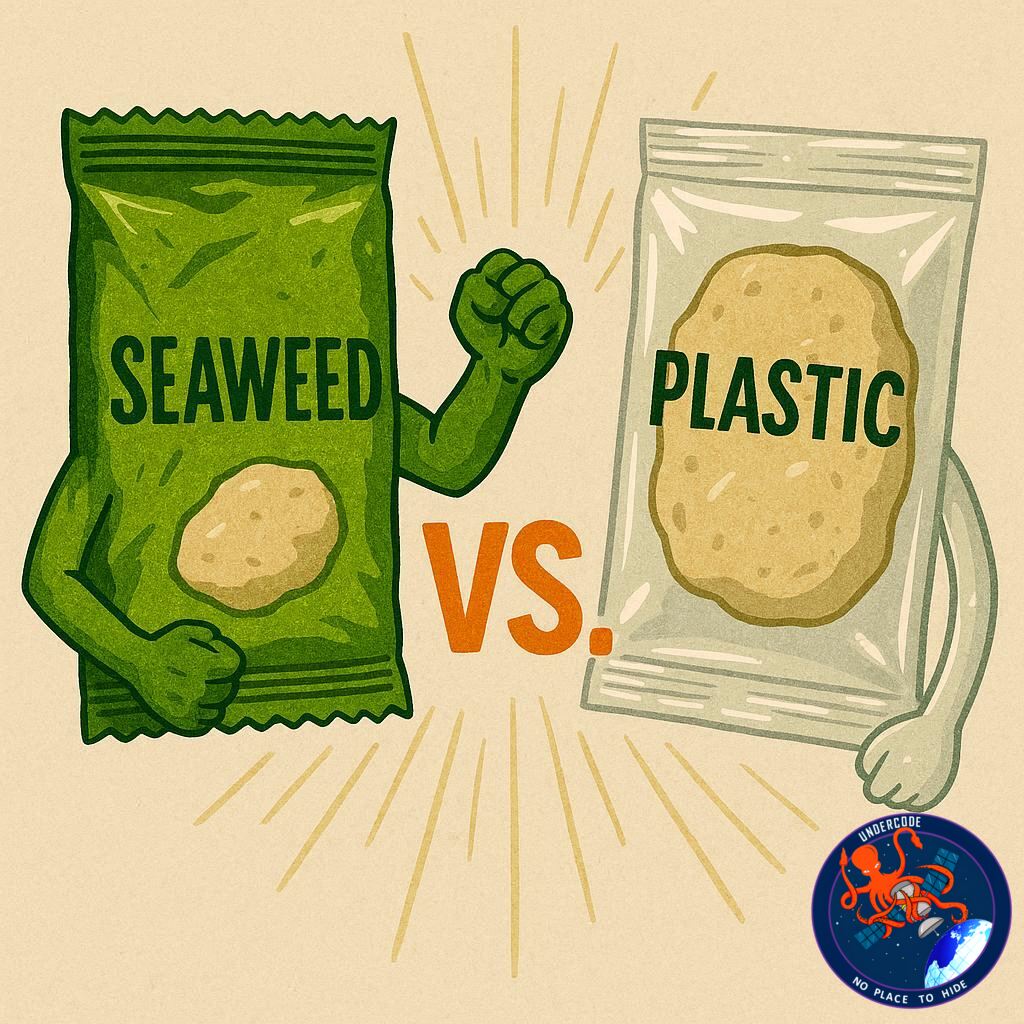
Plastic pollution has become one of the most pressing environmental challenges of our time. From oceans filled with microplastics to landfills overflowing with non-biodegradable waste, the world is struggling to manage the consequences of decades of plastic dependence. While recycling efforts and policy changes have made some progress, the need for a truly sustainable alternative remains urgent. This is where an unexpected hero steps in—seaweed. A Wales-based company called PlantSea is exploring how this abundant marine resource could replace conventional plastics, offering a solution that not only reduces waste but also fully biodegrades after use.
The Original Story in Focus
A recent video report highlights the innovative work of PlantSea, a company dedicated to developing seaweed-based materials as a substitute for traditional plastics. Their focus is on everyday packaging products, where synthetic materials such as PVA (polyvinyl alcohol) and PVOH are commonly used. These materials, while often marketed as dissolvable or environmentally friendly, still pose environmental concerns due to their incomplete degradation and potential microplastic residues.
PlantSea’s approach involves harnessing the natural properties of seaweed to create packaging that breaks down completely without leaving harmful traces. Unlike petroleum-based plastics, seaweed grows rapidly, requires no freshwater, and absorbs carbon dioxide as it develops. This makes it not only renewable but also environmentally beneficial during its production phase.
The company is targeting industries that rely heavily on disposable packaging, aiming to replace synthetic materials with biodegradable alternatives. Their innovations are still under development, but early results suggest that seaweed-based materials can match the flexibility and durability needed for packaging applications.
The video also places this innovation within a broader context of technological experimentation, where startups are exploring unconventional solutions to global problems. Alongside seaweed packaging, other featured concepts include underwater energy systems, futuristic transportation technologies, and even ideas for living underwater.
Despite the diversity of innovations presented, the core message remains clear: solving environmental challenges requires bold thinking and a willingness to rethink everyday materials. Seaweed, often overlooked as a simple marine plant, may hold the key to reducing our dependence on harmful plastics.
The report emphasizes that while seaweed-based packaging is promising, scaling production and achieving cost competitiveness will be crucial. The transition from traditional plastics to biodegradable alternatives will depend on industry adoption, regulatory support, and consumer acceptance.
Ultimately, PlantSea’s work represents a small but significant step toward a more sustainable future—one where packaging no longer contributes to long-term environmental damage.
Why Seaweed Could Be a Game-Changer
Seaweed stands out as a unique raw material due to its environmental advantages. It grows quickly, often doubling in size within days, and does not require fertilizers or pesticides. Unlike land-based crops, it does not compete for agricultural space, making it an ideal candidate for sustainable production.
Additionally, seaweed farming can actively improve ocean health by absorbing excess nutrients and carbon dioxide. This dual benefit—resource generation and environmental restoration—makes it particularly attractive in the fight against climate change.
Challenges That Cannot Be Ignored
Despite its promise, seaweed-based packaging faces several hurdles. One of the biggest challenges is scalability. Producing enough material to replace even a fraction of global plastic usage requires significant infrastructure and investment.
Cost is another major factor. Traditional plastics are cheap due to decades of optimization and large-scale production. Competing with these prices will be difficult for emerging technologies like seaweed-based materials.
There are also logistical concerns, such as storage, transportation, and shelf life. Biodegradable materials may degrade too quickly if not handled properly, which could limit their practicality in certain applications.
What Undercode Says:
The Shift from Petrochemicals to Bio-Based Materials
The transition from fossil-fuel-based plastics to bio-based alternatives marks a fundamental shift in industrial thinking. Seaweed represents a departure from traditional resource extraction toward regenerative systems that work with nature rather than against it. This shift is not just technological—it is philosophical.
Market Readiness vs Environmental Urgency
While the environmental need for alternatives is urgent, the market is not always ready to adopt them. Businesses prioritize cost efficiency and reliability, which can slow down the adoption of new materials. Seaweed packaging must prove not only that it is sustainable but also that it is economically viable.
Consumer Perception and Behavioral Change
Consumer acceptance will play a critical role in the success of seaweed-based products. People are increasingly aware of environmental issues, but convenience and price still dominate purchasing decisions. Bridging this gap will require strong branding, education, and policy support.
The Role of Innovation Ecosystems
PlantSea’s work highlights the importance of innovation ecosystems that support startups tackling global challenges. Collaboration between governments, researchers, and private companies will be essential to scale solutions like seaweed packaging.
Potential for Industry Disruption
If seaweed-based materials achieve widespread adoption, they could disrupt multiple industries, from food packaging to e-commerce. This disruption would not only reduce plastic waste but also reshape supply chains and manufacturing processes.
Environmental Trade-Offs and Hidden Costs
Even sustainable solutions can have trade-offs. Large-scale seaweed farming may impact marine ecosystems if not managed responsibly. It is crucial to balance innovation with ecological preservation to avoid unintended consequences.
Policy as a Driving Force
Government regulations and incentives will likely determine the speed of adoption. Bans on single-use plastics and subsidies for sustainable materials could accelerate the transition toward alternatives like seaweed packaging.
Long-Term Sustainability Outlook
Seaweed’s potential extends beyond packaging. It could be used in textiles, construction materials, and even biofuels. This versatility positions it as a cornerstone of future sustainable industries.
Fact Checker Results
Verified Environmental Benefits
✅ Seaweed is widely recognized as a fast-growing, carbon-absorbing resource that does not require freshwater or fertilizers.
Partial Truth About Plastic Alternatives
⚠️ Some “biodegradable” plastics like PVA and PVOH do not fully break down in all environments, supporting the need for better alternatives.
Uncertain Commercial Viability
❌ There is currently no large-scale evidence that seaweed-based packaging can fully replace conventional plastics in cost and volume.
📊 Prediction
The Rise of Ocean-Based Materials
Seaweed and other marine resources are likely to become central to sustainable material innovation over the next decade.
Gradual Industry Adoption
Large corporations may begin integrating seaweed packaging in niche products before scaling to mainstream use.
Policy-Driven Acceleration
Stricter global regulations on plastic waste could significantly speed up the adoption of biodegradable alternatives like seaweed.
🕵️📝✔️Let’s dive deep and fact‑check.
References:
Reported By: edition.cnn.com
Extra Source Hub (Possible Sources for article):
https://www.quora.com
Wikipedia
OpenAi & Undercode AI
Image Source:
Unsplash
Undercode AI DI v2
Bing
🔐JOIN OUR CYBER WORLD [ CVE News • HackMonitor • UndercodeNews ]
📢 Follow UndercodeNews & Stay Tuned:
𝕏 formerly Twitter 🐦 | @ Threads | 🔗 Linkedin | 🦋BlueSky | 🐘Mastodon


