
Listen to this Post
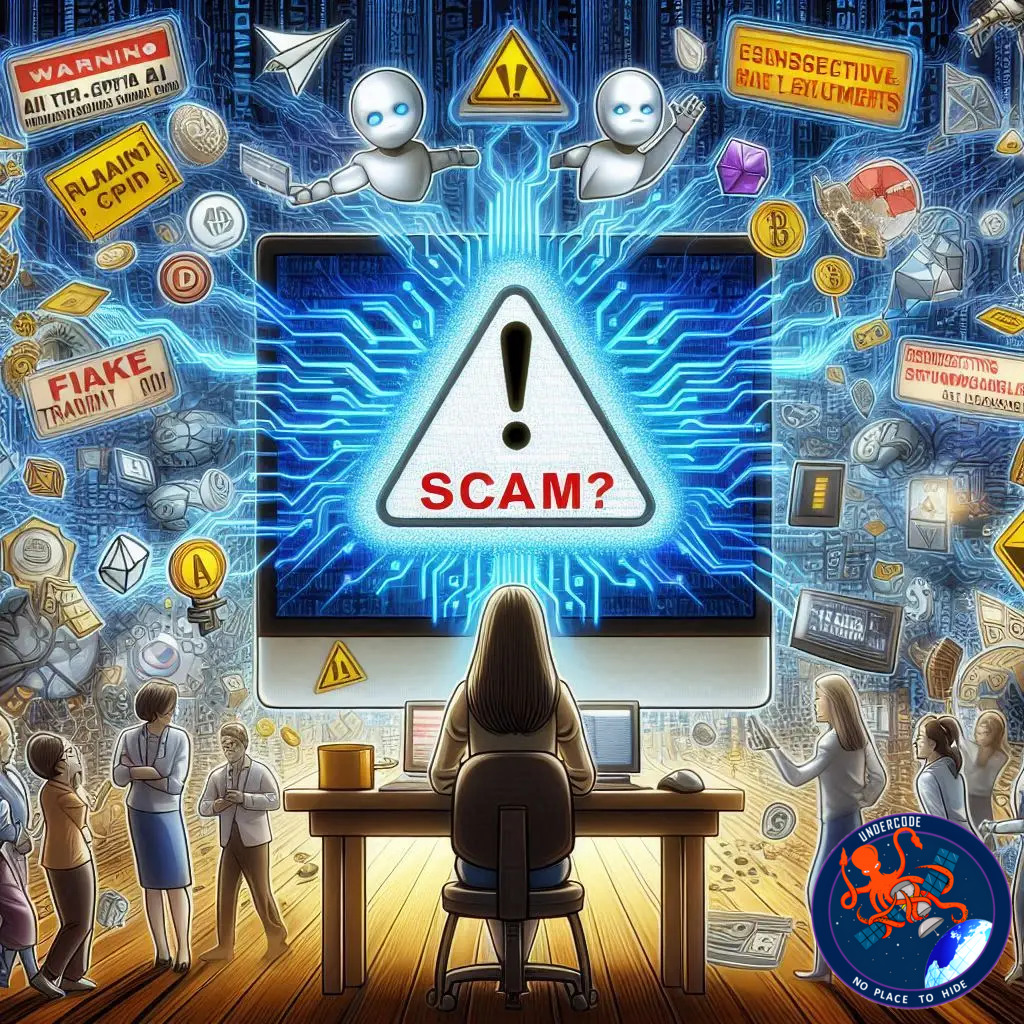
A Digital Promise That Turned Into a Financial Trap
The U.S. Securities and Exchange Commission has uncovered what it describes as a carefully staged cryptocurrency fraud that drained more than $14 million from retail investors. What began as polished social media advertisements and friendly WhatsApp investment groups ended in locked accounts, vanished platforms, and money routed overseas. At the center of the case is a network of fake crypto trading platforms and so-called AI-powered investment clubs that promised easy profits, technological sophistication, and exclusive opportunities. None of it was real.
How the Scam Was Built to Look Legitimate
According to the SEC, the operation followed a familiar but increasingly refined playbook. Potential investors were first approached through targeted ads on social media platforms. These ads promoted artificial intelligence–driven investment insights and invited users to join private investment clubs hosted on messaging apps such as WhatsApp. Once inside, victims were slowly drawn into a world designed to mimic professional financial advisory services.
The Companies Named in the SEC Complaint
The SEC has filed charges against several entities allegedly involved in the scheme. On the trading platform side, the defendants include Morocoin Tech Corp., Berge Blockchain Technology Co., Ltd., and Cirkor Inc. On the investment club side, the complaint names AI Wealth Inc., Lane Wealth Inc., AI Investment Education Foundation (AIIEF) Ltd., and Zenith Asset Tech Foundation. Each entity played a specific role in guiding investors from initial interest to financial loss.
Social Media Ads as the First Hook
The fraud relied heavily on modern marketing techniques. Social media advertisements promised access to elite AI-generated trading strategies, often framed as a way for ordinary investors to compete with institutions. These ads did not immediately ask for money. Instead, they focused on education, community, and long-term wealth building, lowering skepticism and encouraging engagement.
WhatsApp Investment Clubs and Manufactured Trust
Once users joined the WhatsApp groups, the tone shifted. Each group featured a so-called “professor” who shared daily commentary on macroeconomic trends, stock market movements, and crypto narratives. Alongside the professor was an “assistant” who handled logistics, answered questions, and maintained constant engagement. Together, they created a rhythm that felt professional, attentive, and credible.
The Illusion of AI-Powered Trading Signals
A key selling point was the claim that investment recommendations were generated by advanced artificial intelligence systems. These “AI signals” were presented as data-driven, emotionless, and superior to human judgment. In reality, the SEC alleges that these signals were entirely fabricated, serving only to push investors toward the next stage of the scam.
Fake Platforms Disguised as Regulated Exchanges
Victims were eventually encouraged to open accounts on one of three crypto asset trading platforms. Morocoin Tech Corp., established around December 2023, operated through the site h5.morocoin[.]top and is now delinquent. Berge Blockchain Technology Co., Ltd., established around June 2022, used bergev[.]org and is also delinquent. Cirkor Inc., launched around May 2024 at cirkortrading[.]com, was administratively dissolved in October 2025. All three platforms falsely claimed to be licensed or government-approved.
No Trades, No Assets, No Real Market
Despite professional-looking dashboards and account balances, the SEC states that no actual trading ever occurred. The platforms were entirely fictitious. The numbers investors saw on their screens were invented, and the infrastructure existed solely to receive deposits and simulate growth.
Security Token Offerings That Never Existed
To escalate the fraud, the platforms promoted Security Token Offerings tied to supposedly legitimate companies. AI Wealth and Lane Wealth promoted a token called SCT, allegedly issued by a company named SatCommTech. AIIEF and Zenith promoted a token called HMB, said to be issued by HumanBlock. The SEC determined that both issuing companies were fictional and that the tokens had no real-world backing.
Withdrawal Attempts Triggered a Second Scam
When investors attempted to withdraw funds, the deception deepened. The platforms demanded additional payments, claiming they were required for taxes, liquidity unlocking, or account verification. These advance fees were simply another layer of theft. After payments were made, access to accounts was abruptly cut off.
The Money Trail Leads Overseas
The SEC estimates that at least $14 million was misappropriated. Of that total, approximately $7.4 million was held in cryptocurrency assets, while $6.6 million moved through traditional fiat accounts. Funds were routed through a complex network of bank accounts and crypto wallets, often linked to individuals in China, Hong Kong, Indonesia, and Southeast Asia, including Chinese and Burmese nationals.
High-Dollar Losses and Individual Cases
Some individual losses were staggering. One Morocoin investor wired more than $1 million across seven transactions to accounts in China and Hong Kong. Another investor using the Cirkor platform sent over $1.4 million to a bank in Indonesia. These cases highlight how quickly trust turned into irreversible financial damage.
Online Warnings That Came Too Late
Reports on platforms such as Reddit later surfaced, with victims describing similar experiences across different investment clubs. Some noted that AIIEF used recurring aliases like “Richard Dill” and “Daisy Akemi” for its professors and assistants, reinforcing the idea that these were scripted roles rather than real professionals.
Alleged Overseas Coordination
The complaint also alleges that an unnamed individual based in Beijing paid for the registration of AI Wealth, Lane Wealth, and Zenith. This detail suggests centralized coordination behind what appeared to be separate and independent investment communities.
Legal Charges and Regulatory Response
The SEC has charged the defendants with violating the anti-fraud provisions of the Securities Act of 1933 and the Securities Exchange Act of 1934. The agency is seeking permanent injunctions, civil penalties, and the return of stolen funds with prejudgment interest. The case is being handled by the SEC’s Cyber and Emerging Technologies Unit.
A Warning From the SEC
Laura D’Allaird, Chief of the Cyber and Emerging Technologies Unit, described the case as an example of a common but devastating scam targeting U.S. retail investors. Her message was direct: fraud does not become legal simply because it uses new technology or fashionable language.
What Undercode Say:
The Weaponization of AI Hype
This case underscores how artificial intelligence has become a powerful psychological tool in financial fraud. The scammers did not need working algorithms or real models. They only needed the perception of AI sophistication to override investor caution and create a sense of inevitability around profits.
Trust Engineering Through Community Design
The use of WhatsApp groups was not incidental. Group chats create social proof, repetition, and emotional reinforcement. When dozens of members appear to agree with a “professor,” skepticism erodes. This is behavioral engineering, not accidental persuasion.
Fake Compliance as a Confidence Multiplier
Claims of government licenses, regulated status, and Security Token Offerings were strategically chosen. These terms sound technical, official, and compliant, even to investors with limited regulatory knowledge. The scam thrived in the gray zone between innovation and regulation.
Why Withdrawals Are Always the Breaking Point
Nearly all modern investment scams collapse at the withdrawal stage. The moment money flows only inward, the illusion cannot hold. Advance fees, taxes, or unlocking charges are red flags that consistently appear when platforms lack real liquidity.
Cross-Border Complexity as a Shield
Routing funds through multiple countries complicates recovery and enforcement. This is not just about hiding money; it is about exploiting jurisdictional friction. The longer the trail, the harder it becomes for victims to reclaim losses.
The Repeatability Problem
What makes this case particularly concerning is how easily it can be replicated. New names, new platforms, new tokens, same structure. Until investor education catches up with scam innovation, these schemes will continue to resurface.
Retail Investors as Primary Targets
Despite narratives about institutional crypto crime, retail investors remain the most exposed. Limited resources, emotional decision-making, and social media influence combine into a perfect attack surface.
Regulation After the Damage Is Done
Enforcement actions are necessary, but they are reactive. By the time charges are filed, the money is usually gone. Prevention, early detection, and platform accountability remain the missing pieces in the broader crypto ecosystem.
Fact Checker Results
✅ The SEC confirmed more than $14 million in investor losses tied to fake crypto platforms.
✅ The named companies and platforms were found to be unregistered or fictitious.
❌ No evidence supports the existence of the promoted AI systems, tokens, or issuing companies.
Prediction
🔮 AI-themed investment scams will increase as generative tools become mainstream.
📉 Retail investors will remain primary targets without stronger platform-level safeguards.
⚖️ Regulatory enforcement will intensify, but recovery rates for victims will stay low.
🕵️📝✔️Let’s dive deep and fact‑check.
References:
Reported By: thehackernews.com
Extra Source Hub (Possible Sources for article):
https://www.reddit.com
Wikipedia
OpenAi & Undercode AI
Image Source:
Unsplash
Undercode AI DI v2
Bing
🔐JOIN OUR CYBER WORLD [ CVE News • HackMonitor • UndercodeNews ]
📢 Follow UndercodeNews & Stay Tuned:
𝕏 formerly Twitter 🐦 | @ Threads | 🔗 Linkedin | 🦋BlueSky | 🐘Mastodon


