
Listen to this Post
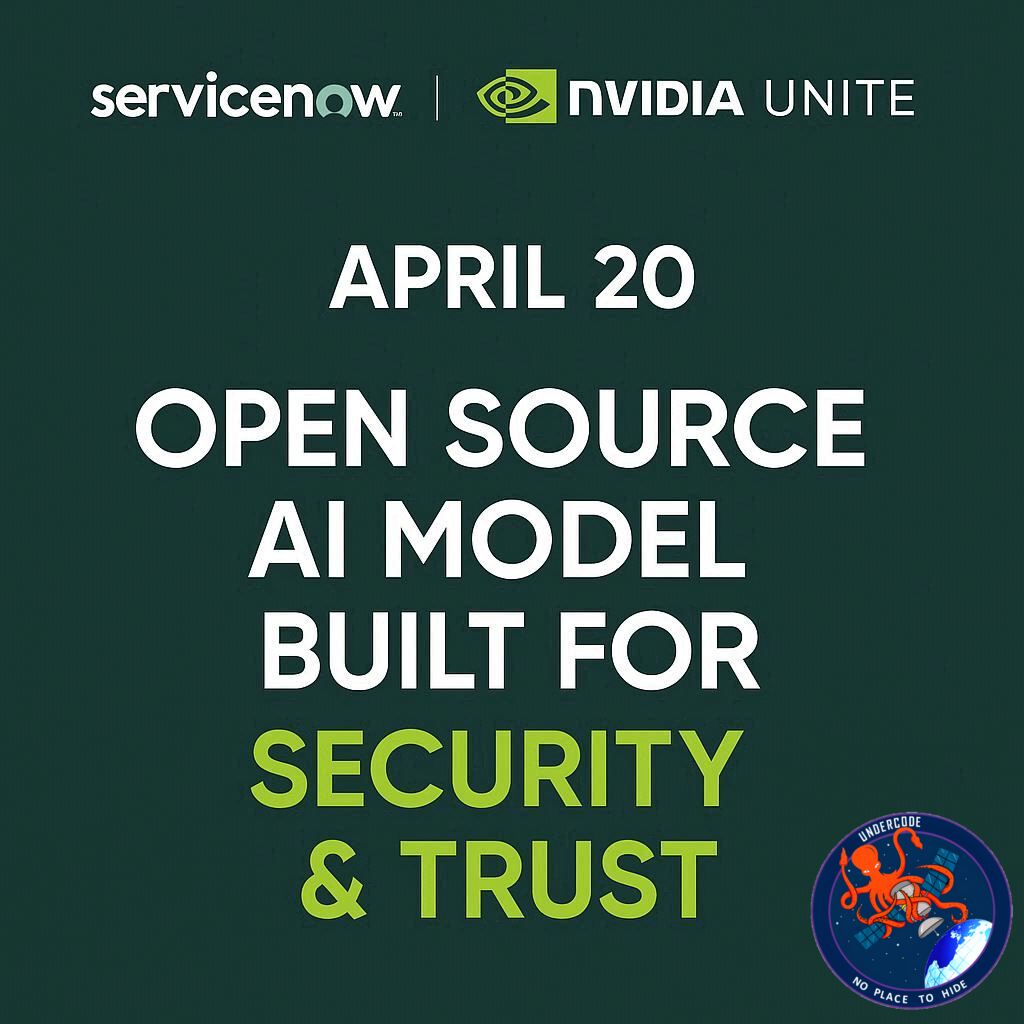
🎯 Introduction: The New Frontier of Secure AI
In an era where artificial intelligence dominates business headlines, one question continues to haunt the corporate world: can AI truly be secure? ServiceNow and Nvidia believe the answer lies in open-source innovation. Their latest creation, Apriel 2.0, isn’t just another large language model — it’s a calculated move toward building trusted and auditable AI systems that merge performance with protection. This collaboration marks a bold attempt to redefine how organizations, from finance to federal agencies, harness AI while keeping sensitive data firmly under control.
🧩 The Promise of Apriel 2.0
Software giant ServiceNow and U.S. chipmaker Nvidia have expanded their strategic partnership with the launch of Apriel 2.0, a next-generation open-source AI model crafted specifically for enterprise use. This model enables businesses to build customized AI agents capable of performing complex, multistep tasks with minimal human input. What sets Apriel 2.0 apart is its balance between high reasoning power and lightweight architecture — it delivers accuracy comparable to much larger models while consuming fewer resources.
Apriel 2.0 builds upon Nvidia’s Nemotron open model architecture, granting developers access to its core code so they can design and deploy agents tailored to their organization’s needs. Integrated within the ServiceNow AI Platform, the model inherits each enterprise’s governance, compliance, and data protection protocols. According to Joe Davis, Executive Vice President of Platform Engineering and AI at ServiceNow, Apriel 2.0 automatically aligns with existing security permissions and audit trails through Now LLM, ensuring consistent oversight across every AI output.
Expected to roll out in early 2026 and available on Hugging Face, Apriel 2.0 follows its predecessor, the Apriel Nemotron 15B, with an enhanced focus on performance, safety, and transparency. It’s designed not just for innovation but for trust — a keyword echoing across the AI landscape as organizations grapple with growing data privacy fears.
🧩 Security at the Core
Both Nvidia and ServiceNow are positioning Apriel 2.0 as a secure alternative to mainstream agentic AI systems that often prioritize scale over safety. Kari Briski, Nvidia’s Vice President of Generative AI for Enterprise, highlighted that open models offer transparency and control, two pillars essential for enterprises managing sensitive workflows. These qualities make Apriel 2.0 particularly appealing to federal agencies, financial institutions, and healthcare organizations, all of which face strict regulatory scrutiny.
As industries increasingly embrace automation, the tension between convenience and confidentiality intensifies. Many companies are eager to use AI agents for efficiency but remain wary of the risks. Agents, by nature, require deep access to proprietary data — and this access, if mishandled, can lead to breaches or data loss. ServiceNow claims Apriel 2.0 addresses these concerns by embedding responsible data vetting, safety guardrails, and transparency controls, creating an environment where innovation doesn’t compromise integrity.
🧩 The ROI Dilemma
The launch of Apriel 2.0 comes at a critical juncture. Despite widespread enthusiasm for AI, many enterprises report minimal ROI from their internal deployments. Consumer-facing chatbots, in particular, often yield more security risks than productivity gains. Yet, AI agents remain a promising frontier. Gartner predicts that by 2027, up to half of all internal decision-making processes within businesses could be partially automated by these intelligent agents.
The challenge lies in balancing cost efficiency with operational trust. Apriel 2.0’s open-source nature could be the key to unlocking that equilibrium, allowing developers to customize, monitor, and optimize their systems without depending solely on black-box solutions from closed vendors.
What Undercode Say:
Apriel 2.0 represents a strategic evolution in enterprise AI — one that bridges the gap between openness and security. While most corporations chase speed and automation, ServiceNow and Nvidia are quietly building a framework where governance becomes the real product. This approach reflects a maturing AI landscape, where organizations are no longer satisfied with flashy demos but demand reliability, explainability, and control.
From an analytical perspective, Apriel 2.0 could reshape how trust is engineered into AI systems. Traditional proprietary models often obscure their internal mechanics, making it difficult for enterprises to ensure compliance or mitigate bias. An open-source model, on the other hand, invites transparency and fosters collaborative innovation. Developers can audit, refine, and even co-create features aligned with industry-specific ethics and security needs.
Moreover, this partnership signals Nvidia’s continued push beyond hardware dominance. By embedding itself deeper into enterprise ecosystems, Nvidia isn’t just providing GPUs; it’s becoming the core infrastructure of digital intelligence. ServiceNow, meanwhile, benefits by strengthening its AI credibility, transforming from a workflow automation platform into a trust-first AI ecosystem.
Still, the road ahead won’t be without friction. Open-source models often face sustainability challenges — from managing community contributions to preventing malicious code injections. The real test for Apriel 2.0 will be whether ServiceNow can maintain its compliance rigor while keeping the system truly open and flexible. If successful, it could become a blueprint for responsible AI adoption, especially in regulated industries where trust isn’t optional.
Another intriguing layer is economic. With enterprises cautious about AI investments, the cost-efficiency of Apriel 2.0 could make it an attractive entry point. Its modular architecture means smaller teams can deploy specialized agents without massive infrastructure budgets. This democratization of AI security might redefine the ROI equation, transforming AI from an experimental expense into a measurable business asset.
The philosophical impact, too, is significant. By embedding ethical and safety guardrails into an open model, ServiceNow and Nvidia are challenging the narrative that transparency and protection are mutually exclusive. In truth, they’re interdependent — and Apriel 2.0 may prove that security can scale alongside innovation.
If Apriel 2.0 achieves widespread adoption, it could shift enterprise AI toward a federated trust network, where organizations collaborate on secure, transparent, and compliant systems. In that sense, this isn’t merely a product launch. It’s a statement about the future of AI governance, where open source becomes the foundation of digital ethics.
🔍 Fact Checker Results
✅ Apriel 2.0 is confirmed to be an open-source model developed by ServiceNow and Nvidia.
✅ The model operates within ServiceNow’s AI Platform, inheriting enterprise-level security policies.
✅ Scheduled rollout and Hugging Face availability are consistent with ServiceNow’s official statements.
📊 Prediction
🔮 Over the next two years, Apriel 2.0 could become a benchmark for secure, auditable AI in enterprise environments.
📈 Expect rapid adoption among finance, government, and healthcare sectors prioritizing compliance.
💡 If transparency continues to drive AI policy, open-source security frameworks like Apriel 2.0 will dominate the market narrative.
🕵️📝✔️Let’s dive deep and fact‑check.
References:
Reported By: www.zdnet.com
Extra Source Hub (Possible Sources for article):
https://www.quora.com
Wikipedia
OpenAi & Undercode AI
Image Source:
Unsplash
Undercode AI DI v2
Bing
🔐JOIN OUR CYBER WORLD [ CVE News • HackMonitor • UndercodeNews ]
📢 Follow UndercodeNews & Stay Tuned:
𝕏 formerly Twitter 🐦 | @ Threads | 🔗 Linkedin | 🦋BlueSky | 🐘Mastodon


