
Listen to this Post
Introduction: A Security Provider Under Digital Fire
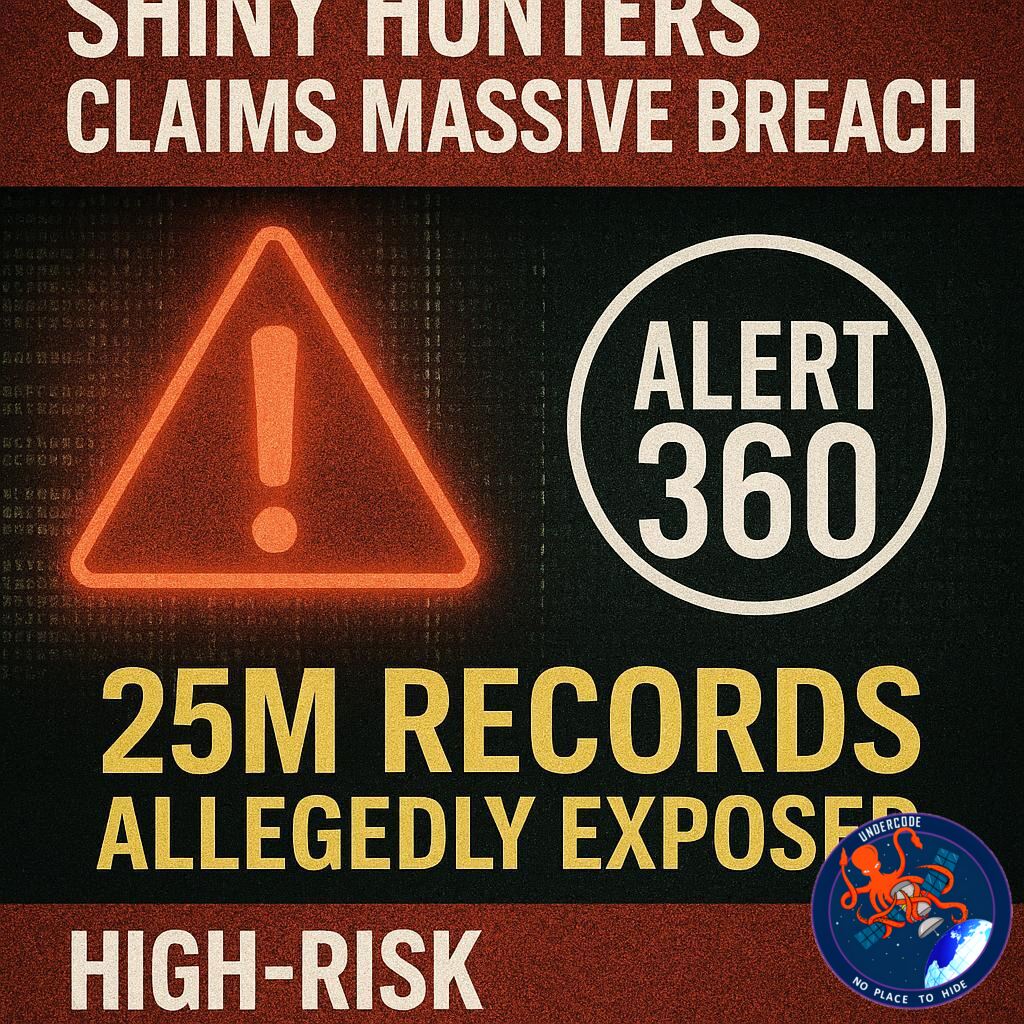
The cybersecurity landscape has once again been shaken by a high-profile claim involving a major U.S. security monitoring company. According to threat intelligence posts attributed to the well-known hacking collective ShinyHunters, Alert 360 Opco Inc. may have suffered a significant data breach exposing millions of records. The alleged incident raises serious concerns not only about the company itself but also about the broader implications for its customers, infrastructure, and trust in managed security providers. While the claims remain unverified, the details shared present a structured and credible threat narrative that security analysts cannot ignore.
the Alleged Incident (ShinyHunters Claim Breakdown)
ShinyHunters has reportedly claimed responsibility for a major breach involving Alert 360, a U.S.-based security and monitoring service provider.
The group alleges that more than 2.5 million records were exposed during the incident.
The total dataset size is said to exceed 10GB of compressed data.
The leaked material reportedly includes personally identifiable information (PII), which could involve sensitive customer details.
Internal corporate data is also claimed to be part of the breach, increasing the severity of the incident.
A negotiation or chat log is mentioned in the leak description, suggesting attempted extortion activity.
This detail implies that the attackers may have attempted to monetize the breach before public disclosure.
The presence of negotiation records often indicates ransomware-style pressure tactics.
ShinyHunters is known for data theft operations focused on monetization rather than disruption alone.
The group has historically targeted organizations with high-value databases for resale or leverage.
Alert 360 operates in the security monitoring sector, making it a strategically sensitive target.
A breach of this nature could expose customer surveillance or security-related information.
Such exposure may increase downstream risks like phishing and impersonation attacks.
The claim suggests potential compromise of both customer-facing and internal systems.
If verified, attackers could gain insights into security infrastructure and operational workflows.
The post describing the breach was reportedly updated on April 18, 2026.
No official confirmation from Alert 360 has been publicly reported at this stage.
The situation remains classified as unverified by independent cybersecurity analysts.
However, the structure of the claim aligns with known extortion-based breach patterns.
The scale of the alleged data set indicates a potentially systemic compromise.
Security providers are considered high-value targets due to their access to sensitive environments.
A breach of this nature could have cascading effects beyond a single organization.
Customers associated with the provider may face secondary targeting risks.
The credibility of ShinyHunters as an actor adds weight to the concern.
Their previous campaigns have involved large-scale data leaks and extortion attempts.
The inclusion of negotiation logs increases the likelihood of a real intrusion event.
Even without confirmation, the intelligence signals are considered high risk.
The cybersecurity community is closely monitoring for verification or denial.
At present, the incident is best categorized as a credible but unconfirmed threat.
The potential impact extends across privacy, corporate security, and trust in managed services.
What Undercode Say:
The alleged Alert 360 breach claim reflects a pattern increasingly seen in modern cyber extortion ecosystems where data theft is combined with psychological pressure tactics.
The mention of negotiation logs is particularly significant because it shifts the narrative from passive data leakage to active ransom-based interaction between attacker and victim.
If accurate, this suggests that Alert 360 was engaged in a direct extortion scenario rather than a silent exfiltration event.
ShinyHunters’ historical behavior shows a preference for monetizing stolen data rather than purely destructive cyber operations, which aligns with this claim structure.
The reported 2.5 million records indicate a large-scale database compromise, likely involving customer identity information and internal operational records.
For a security monitoring provider, this creates a paradoxical risk scenario where the protector becomes a compromised node in the threat chain.
Such breaches often carry a multiplier effect because the victim organization already has privileged access to sensitive client environments.
If internal systems were accessed, attackers may gain insight into security protocols, monitoring systems, or vulnerability management processes.
This would significantly increase the downstream threat surface for clients relying on Alert 360 services.
The inclusion of PII in the alleged dataset is one of the most critical risk factors because it enables identity-based attacks at scale.
Phishing campaigns become more effective when attackers have accurate personal and organizational data.
The extortion angle suggests that data may already be in circulation or at least partially validated by attackers.
Even if no ransomware encryption occurred, data theft alone is sufficient for long-term exploitation.
The credibility of the claim is strengthened by its structured presentation and consistency with known breach reporting patterns in underground forums.
However, absence of official confirmation introduces uncertainty, making attribution and impact assessment incomplete.
In cybersecurity intelligence terms, this would be classified as a high-confidence threat indicator but not yet a verified incident.
Organizations in similar sectors often face repeated targeting due to their strategic position in digital infrastructure ecosystems.
Security providers, ironically, are high-value targets because they centralize access to multiple clients.
A breach in such an environment can function as a gateway to broader supply chain attacks.
The reported dataset size of 10GB compressed suggests either extensive user data or inclusion of logs and internal documentation.
Log data can be especially dangerous if it contains system architecture details or authentication records.
If chat logs are authentic, they may reveal attacker-victim communication patterns useful for forensic reconstruction.
This could also help determine whether negotiation attempts were successful or rejected.
Rejection often leads to public data dumps in extortion ecosystems.
ShinyHunters’ involvement increases attention because of their established reputation in large-scale data leaks.
Their operations typically emphasize volume, resale value, and psychological pressure.
The lack of official response at this stage leaves room for speculation and monitoring.
Cybersecurity analysts will likely watch for sample data leaks or dark web marketplace postings.
Until verification occurs, organizations are advised to treat the situation as an active risk signal rather than confirmed breach.
Fact Checker Results:
Claim remains unverified by official sources at this stage.
ShinyHunters attribution is plausible but not independently confirmed.
Reported data scale and structure align with known breach patterns.
Prediction:
If the claim proves accurate, Alert 360 may face immediate regulatory scrutiny and customer trust challenges.
Partial data leaks could emerge on underground forums within days or weeks.
Secondary phishing and impersonation attacks against affected users are highly likely to increase.
🕵️📝✔️Let’s dive deep and fact‑check.
References:
Reported By: x.com
Extra Source Hub (Possible Sources for article):
https://www.medium.com
Wikipedia
OpenAi & Undercode AI
Image Source:
Unsplash
Undercode AI DI v2
Bing
🔐JOIN OUR CYBER WORLD [ CVE News • HackMonitor • UndercodeNews ]
📢 Follow UndercodeNews & Stay Tuned:
𝕏 formerly Twitter 🐦 | @ Threads | 🔗 Linkedin | 🦋BlueSky | 🐘Mastodon


