
Listen to this Post
Introduction: A Luxury Brand Pulled Into a Cyberstorm
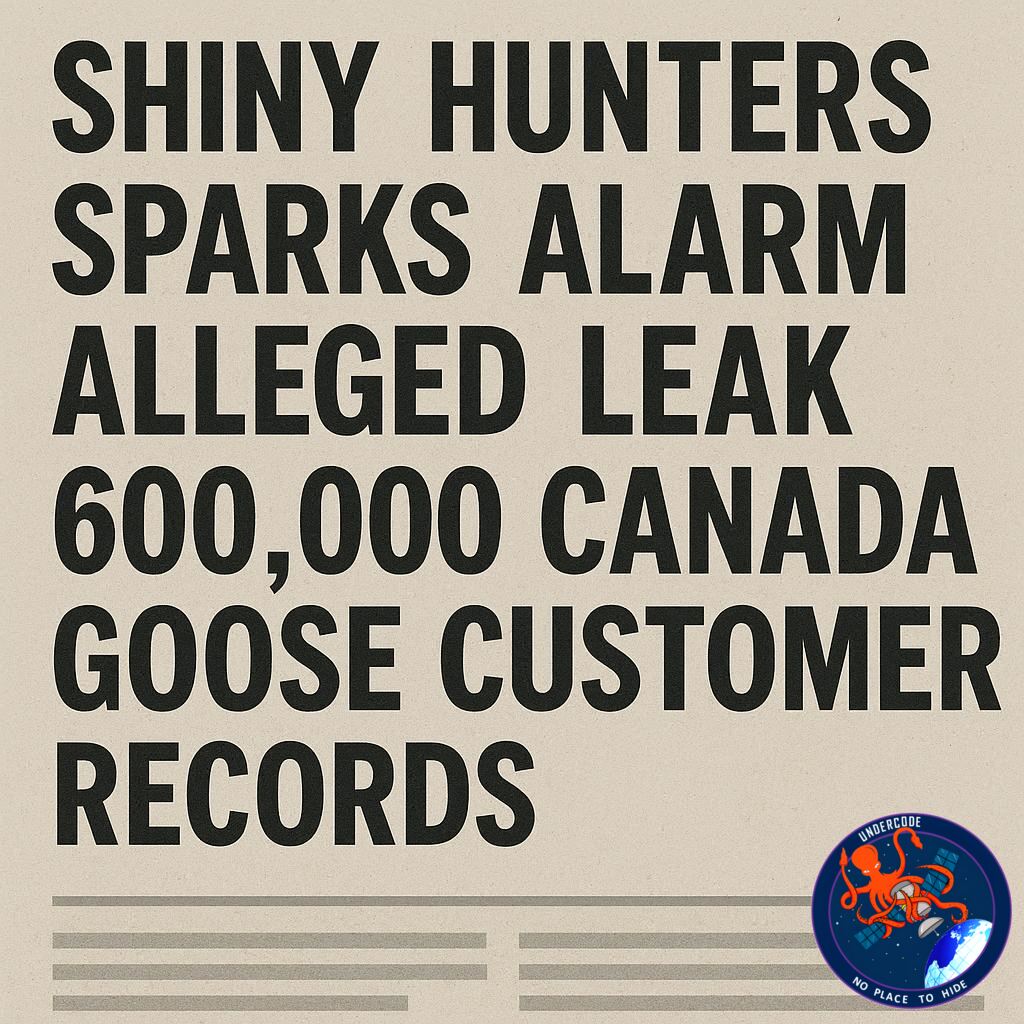
A fresh cybersecurity controversy is unfolding after claims surfaced that hundreds of thousands of customer records tied to the luxury outerwear brand Canada Goose may have been exposed online. The allegations, shared widely across threat-monitoring circles, have reignited concerns about how premium retail brands secure customer data in an era where cybercriminal groups increasingly target high-profile names for attention and leverage. While the company denies that a confirmed breach has taken place, the sheer scale of the leaked dataset has placed the incident under intense scrutiny from researchers, customers, and regulators alike.
the Original Report
According to posts circulated by the cybersecurity-focused account “Cybersecurity News Everyday,” the hacking collective ShinyHunters allegedly leaked more than 600,000 customer records connected to Canada Goose. The exposed data reportedly includes customer names, contact information, partial payment card details, IP addresses, and order-related records. Such a combination of personal and transactional data, if verified, could present serious risks ranging from phishing campaigns to identity fraud.
The report emphasizes that Canada Goose has publicly disputed claims of a confirmed breach, stating that it is still investigating the origin and authenticity of the dataset. Company representatives have suggested that the information may not have come directly from their internal systems, leaving open the possibility of third-party exposure or recycled data from older incidents. Despite this, the leaked files have been widely discussed across threat-intelligence channels, drawing attention to the potential scope of customer impact.
The allegations were originally highlighted via a social media post dated February 16, 2026, and later linked to analysis hosted on hendryadrian.com. The post quickly gained traction among cybersecurity watchers, even though view counts remained relatively modest at the time. This pattern is common in early-stage breach disclosures, where awareness spreads rapidly within niche communities before reaching mainstream attention.
Notably, no ransomware demand or extortion ultimatum was mentioned alongside the leak, suggesting that the motivation may have been reputational damage, data trading, or simple exposure rather than immediate financial coercion. The absence of such demands has added another layer of uncertainty, making it harder to determine whether this incident fits the mold of a traditional data breach or a more complex data aggregation leak.
What Undercode Say:
The alleged Canada Goose data leak highlights a recurring and uncomfortable reality in modern cybersecurity: denial does not equal safety. When companies publicly state that “no breach has been confirmed,” it often reflects uncertainty rather than reassurance. Investigations take time, and during that window, leaked data can already be circulating in underground forums, copied, mirrored, and weaponized by multiple actors.
From an analytical standpoint, the data types described in this leak are particularly concerning. Even partial payment card information, when combined with names, email addresses, IP data, and order histories, can dramatically increase the success rate of targeted fraud and social-engineering attacks. Cybercriminals rarely rely on a single dataset; instead, they enrich leaks like this with previously stolen data to build highly detailed consumer profiles.
Another red flag is the continued appearance of ShinyHunters in large-scale leak narratives. Whether acting alone or as a brand name used by multiple actors, the group has become synonymous with high-visibility data exposures. This creates a psychological effect as well: once a well-known name is attached to a leak, public trust erodes faster, regardless of whether the claims are ultimately proven accurate.
For luxury brands like Canada Goose, the reputational stakes are even higher. Customers purchasing premium products expect not only quality goods but also discretion and strong data protection. Any perception of weak cybersecurity can damage brand loyalty, especially among high-spending customers who are more likely to be targeted by fraudsters.
There is also a broader supply-chain angle to consider. Modern e-commerce ecosystems rely on payment processors, logistics platforms, marketing tools, and customer-support vendors. A breach or misconfiguration in any one of these external systems can expose data while leaving the primary brand technically uncompromised. This often leads to public confusion, as companies deny internal breaches while customers still see their data leaked online.
Ultimately, incidents like this reinforce the need for transparency. Clear communication, timely updates, and concrete mitigation steps matter more than blanket denials. In today’s threat landscape, silence or ambiguity can be just as damaging as confirmation.
🔍 Fact Checker Results
✅ The ShinyHunters group has previously been linked to large-scale data leak claims.
❌ Canada Goose has not confirmed that its internal systems were breached.
✅ An investigation into the authenticity and source of the data is reportedly ongoing.
📊 Prediction
If the leaked dataset is validated, Canada Goose may face increased regulatory scrutiny and potential customer notification requirements in multiple jurisdictions. Even without confirmation, similar allegations are likely to trigger broader audits across luxury retail brands, pushing the industry toward stricter third-party security controls and more proactive breach disclosures.
🕵️📝✔️Let’s dive deep and fact‑check.
References:
Reported By: x.com
Extra Source Hub (Possible Sources for article):
https://www.medium.com
Wikipedia
OpenAi & Undercode AI
Image Source:
Unsplash
Undercode AI DI v2
Bing
🔐JOIN OUR CYBER WORLD [ CVE News • HackMonitor • UndercodeNews ]
📢 Follow UndercodeNews & Stay Tuned:
𝕏 formerly Twitter 🐦 | @ Threads | 🔗 Linkedin | 🦋BlueSky | 🐘Mastodon


