
Listen to this Post
Introduction
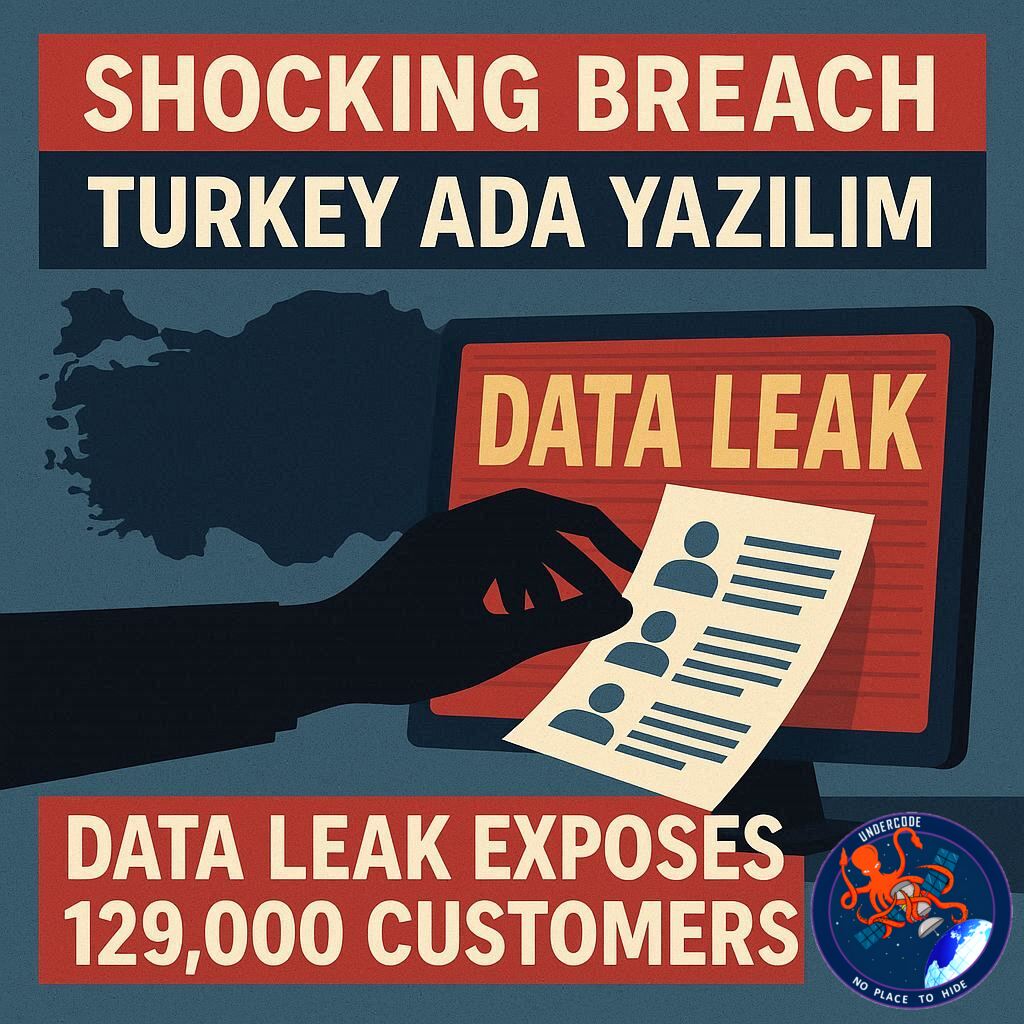
A massive cyberattack has rocked Turkey’s insurance industry, targeting one of the country’s most prominent software providers, Ada Yazılım. The breach reportedly exposed highly sensitive data, including national ID numbers, policy information, and personal records of more than 129,000 customers. This incident has raised serious questions about cybersecurity practices in Turkey’s financial and insurance sectors, leaving thousands of individuals vulnerable to fraud, identity theft, and exploitation on the dark web.
The Data Breach Uncovered
The news broke after Dark Web Intelligence reported that the data was already circulating on underground forums. Hackers are believed to have gained access to confidential databases belonging to Ada Yazılım, a company providing core software solutions for insurance firms across Turkey.
The compromised data allegedly includes:
Turkish National ID numbers
Full names and personal details
Insurance policy information
Contact details and financial records
Experts warn that this information could be used for identity theft schemes, phishing campaigns, and fraudulent insurance claims. Victims may soon face targeted scams that exploit the leaked data for financial gain.
National Impact of the Breach
Turkey has faced repeated cyberattacks in recent years, targeting government institutions, banks, and private corporations. This particular breach is significant because Ada Yazılım’s software is widely used by insurance providers across the country. The exposure of such critical data not only harms individuals but also erodes trust in digital infrastructure.
Cybersecurity analysts believe the hackers could be part of organized groups exploiting weak defense systems in the region. While Turkish authorities have yet to issue an official statement, pressure is mounting for stronger regulations and more advanced protection measures.
Global Implications
This breach highlights a global pattern where financial and insurance companies remain prime targets for hackers. Sensitive data stored by these institutions is highly valuable on the dark web, often sold in bulk to cybercriminals. Turkey’s incident mirrors similar breaches seen in Europe, the US, and Asia, where millions of citizens had their private information exposed due to insufficient digital safeguards.
What Undercode Say:
From a deeper analytical perspective, this breach at Ada Yazılım is not an isolated event but part of a wider cybersecurity crisis. Let’s break it down:
Data Sensitivity: Unlike ordinary leaks, this breach involves government-issued national IDs. Such data is almost impossible to change, meaning the victims face lifetime exposure.
Weak Cyber Defense: Insurance firms rely heavily on third-party providers like Ada Yazılım. If the provider’s defenses are weak, all partner companies become vulnerable, creating a chain reaction.
Economic Risks: Fraudulent claims, fake policy registrations, and financial scams could cause millions in losses to both insurance companies and customers.
Dark Web Activity: The leaked data has high resale value. On underground forums, national ID-based packages are often sold to cybercriminals specializing in credit fraud and identity theft.
Trust Deficit: Customers may begin to doubt digital insurance platforms. This could push parts of the population back to offline, paper-based systems, slowing digital transformation in Turkey.
Government Accountability: If authorities fail to act decisively, this incident could trigger political debate about Turkey’s cybersecurity readiness and data protection laws.
Future Threats: Hackers may not stop here. Once they find weak spots in a country’s infrastructure, they often strike again—meaning Turkey could be bracing for another wave of larger cyberattacks.
The Ada Yazılım breach demonstrates how one provider’s failure can ripple through an entire industry, creating vulnerabilities that stretch far beyond a single company. This is a wake-up call for Turkey’s financial sector, where cybersecurity investments must become a top priority rather than an afterthought.
✅ Fact Checker Results
The report from Dark Web Intelligence confirms the breach with customer data allegedly circulating online. While official Turkish authorities have not yet made a detailed statement, cybersecurity researchers and dark web trackers have validated the claim.
🔮 Prediction
If Turkey fails to upgrade its cybersecurity infrastructure, we may soon witness larger-scale breaches targeting banks, government systems, and healthcare providers. Criminal groups could escalate attacks, moving from data theft to ransomware operations, holding entire institutions hostage. On the flip side, this incident may push Turkey toward stricter cybersecurity laws, stronger enforcement, and mandatory audits for companies handling sensitive data.
🕵️📝✔️Let’s dive deep and fact‑check.
References:
Reported By: x.com
Extra Source Hub:
https://www.reddit.com/r/AskReddit
Wikipedia
OpenAi & Undercode AI
Image Source:
Unsplash
Undercode AI DI v2
🔐JOIN OUR CYBER WORLD [ CVE News • HackMonitor • UndercodeNews ]
📢 Follow UndercodeNews & Stay Tuned:
𝕏 formerly Twitter 🐦 | @ Threads | 🔗 Linkedin | 🦋BlueSky | 🐘Mastodon


