
Listen to this Post
Introduction
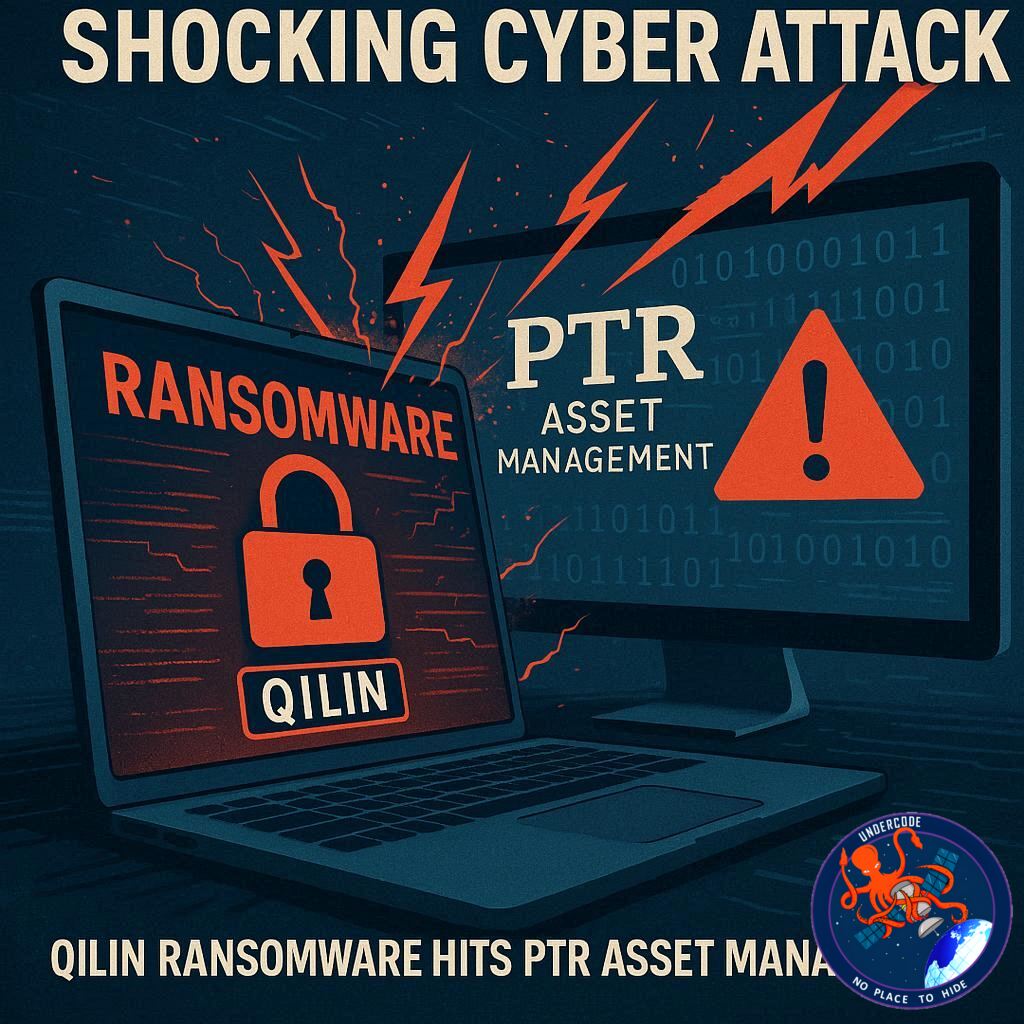
Cybersecurity threats continue to escalate in 2025, with financial institutions remaining prime targets for sophisticated ransomware groups. On September 28, 2025, intelligence monitoring revealed that PTR Asset Management became the latest victim of the infamous Qilin ransomware gang. This breach adds to a growing list of financial sector attacks, exposing how vulnerable even high-value firms remain against evolving cybercrime syndicates.
the Incident
ThreatMon Ransomware Monitoring reported that at 16:57 UTC+3 on September 28, 2025, the Qilin ransomware group officially listed PTR Asset Management as one of its victims on the dark web. The alert was flagged through ThreatMon’s end-to-end threat intelligence platform, designed to track ransomware activity, Indicators of Compromise (IOC), and Command-and-Control (C2) data.
PTR Asset Management, a financial firm, now faces the consequences of a ransomware attack, where sensitive corporate data may have been encrypted, stolen, or both. While details of the ransom demand remain undisclosed, the group’s track record suggests they may seek both financial payments and public pressure to coerce compliance.
The incident highlights the dark web’s growing role as a communication and extortion hub for ransomware actors. ThreatMon’s monitoring ensures that organizations and researchers can stay updated on these malicious campaigns, but the rapid rise of such attacks makes prevention increasingly challenging.
Alongside this news, online discussions trended around unrelated topics such as Milan Fashion Week 2025, Middle Eastern politics, and Lebanese local events. Yet in cybersecurity circles, the Qilin attack dominated as another reminder that no financial institution is beyond reach.
In just a single post, the ransomware monitoring alert revealed the magnitude of today’s cyberthreat landscape: sophisticated, fast-moving, and highly publicized through dark web leaks.
What Undercode Say:
The Qilin ransomware attack against PTR Asset Management is not an isolated event—it’s part of a broader trend targeting global finance. The group has built a reputation for using double extortion tactics, where they not only encrypt data but also leak sensitive files to pressure victims.
From a technical standpoint, Qilin operates like a professionalized cybercrime syndicate. They often recruit affiliates, supply advanced ransomware payloads, and rely on dark web marketplaces for exposure. By adding PTR Asset Management to their victim list, they signal both strength and credibility in the underground economy.
This incident underlines a critical weakness in financial cybersecurity: outdated security systems and reliance on legacy infrastructure. Asset management companies, handling billions of dollars in investments, remain attractive because they balance wealth concentration with relatively limited cyber defense budgets compared to global banks.
Financial institutions should not underestimate ransomware gangs. Qilin and similar groups often:
Exploit phishing and credential theft.
Take advantage of unpatched software.
Target companies with large data repositories.
Another layer to this story is the public visibility of ransomware operations. Unlike the past, where breaches stayed hidden, today’s attacks are publicly broadcast on dark web portals and amplified by threat monitoring platforms. This public shaming accelerates financial and reputational damages.
Economically, the impact on PTR Asset Management could be severe. Data breaches often lead to regulatory fines, loss of investor trust, and massive recovery costs. Even if the ransom is paid, reputation damage lingers long after.
From a geopolitical perspective, ransomware gangs like Qilin may operate with indirect state protection or indifference, particularly if they are based in jurisdictions with weak cybercrime enforcement. This global imbalance makes dismantling such groups exceedingly difficult.
What’s most alarming is that the attack comes at a time when cyber resilience discussions dominate boardrooms. Yet despite awareness, firms continue to fall victim, proving that cyber risk is not merely a technical issue but also a governance and investment priority.
In the long run, PTR Asset Management’s breach will likely become a case study for both failure in cyber defense and the necessity of proactive intelligence monitoring. The fact that ThreatMon flagged the attack so quickly shows the importance of real-time monitoring systems—but monitoring alone cannot prevent breaches.
The undercurrent here is clear: the financial sector is under siege, and unless companies drastically overhaul their digital defenses, more high-profile breaches will follow.
Fact Checker Results ✅❌
✅ Qilin ransomware has officially listed PTR Asset Management as a victim.
✅ ThreatMon confirmed the incident on September 28, 2025.
❌ No verified ransom amount or specific leaked data has been disclosed yet.
Prediction 🔮
The Qilin ransomware attack on PTR Asset Management may trigger a wave of copycat strikes against mid-tier financial institutions, as attackers seek quick payouts before defenses tighten. Regulators may also respond with stricter cybersecurity compliance requirements for asset management firms. Expect the cyber insurance market to react sharply, with rising premiums for financial service providers in the coming months.
🕵️📝✔️Let’s dive deep and fact‑check.
References:
Reported By: x.com
Extra Source Hub:
https://www.facebook.com
Wikipedia
OpenAi & Undercode AI
Image Source:
Unsplash
Undercode AI DI v2
🔐JOIN OUR CYBER WORLD [ CVE News • HackMonitor • UndercodeNews ]
📢 Follow UndercodeNews & Stay Tuned:
𝕏 formerly Twitter 🐦 | @ Threads | 🔗 Linkedin | 🦋BlueSky | 🐘Mastodon


