
Listen to this Post
Introduction: A Viral Claim That Set Off Global Alarms
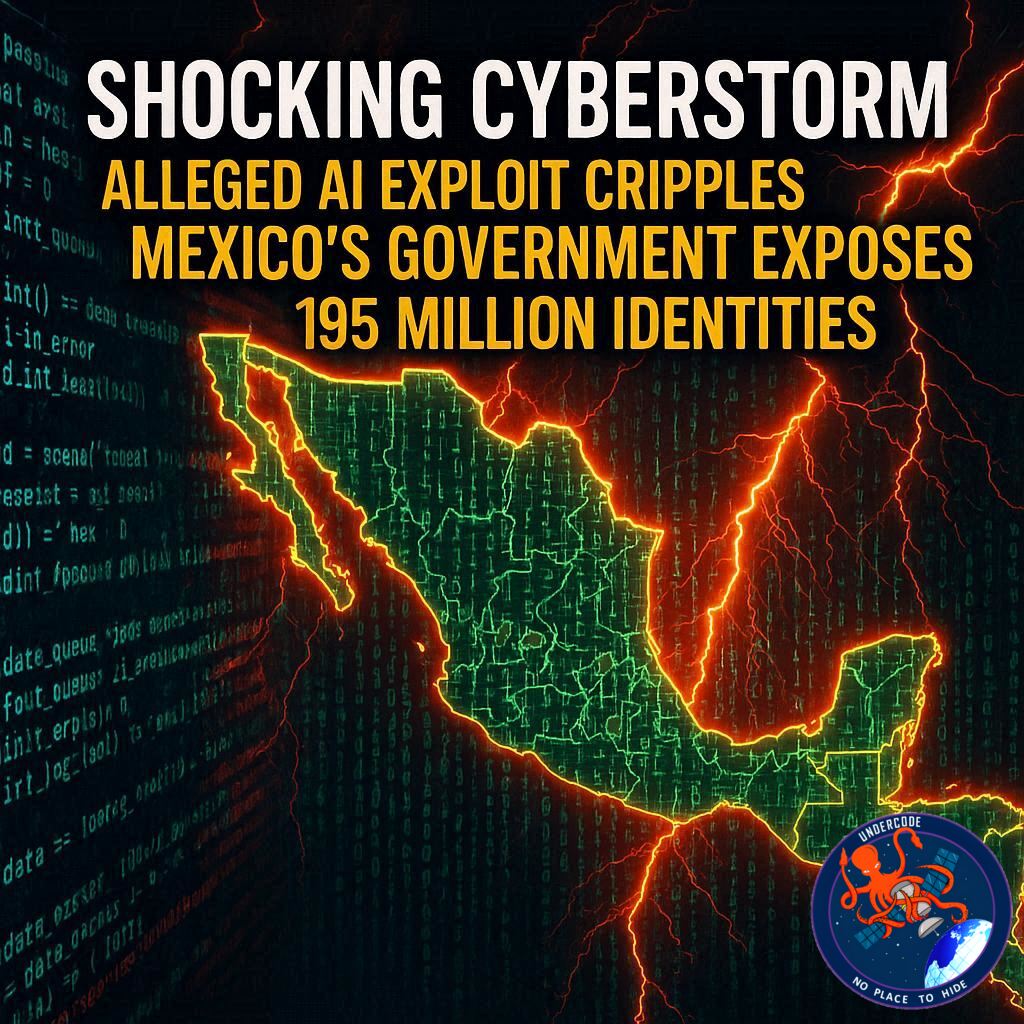
A single post from a cybersecurity-focused social account has ignited intense debate across the infosec world. The claim is explosive: attackers allegedly abused cutting-edge AI tools to breach multiple Mexican government agencies, siphoning massive volumes of sensitive data and exposing nearly 200 million identities. While details remain murky, the allegation alone underscores how deeply artificial intelligence is now entangled with modern cyber warfare—and how quickly unverified claims can shake public trust.
the Original Report
The post, shared by Cybersecurity News Everyday, alleges that hackers successfully exploited AI coding assistants linked to Anthropic’s Claude Code and OpenAI’s GPT-4.1 during a major cyberattack targeting the government of Mexico.
According to the claim, the operation compromised at least ten government agencies along with one financial institution. The attackers reportedly exfiltrated more than 150GB of internal data, a haul said to include highly sensitive records. Most alarming is the figure attached to the breach: an alleged exposure of 195 million identities, a number that—if accurate—would place this incident among the largest data compromises ever reported in the region.
The information traces back to a short social media update citing hendryadrian.com, offering no technical breakdown, no breach timeline, and no official confirmation from affected institutions. Despite the lack of supporting evidence, the post quickly circulated among cybersecurity watchers, fueled by growing anxiety around AI misuse, government security gaps, and the speed at which digital rumors can shape public narratives.
What Undercode Says:
The Rise of AI as a Convenient Scapegoat
High-profile breaches increasingly feature AI tools in their narratives, sometimes with little proof. Naming Claude Code and GPT-4.1 immediately amplifies fear, but it also risks oversimplifying complex attack chains that usually rely on human error, misconfigurations, or unpatched systems rather than “AI hacking” in the cinematic sense.
Understanding What “Exploited AI” Really Means
AI coding assistants do not autonomously attack systems. If they were involved, it would likely be indirect—such as generating malware snippets, automating phishing content, or accelerating reconnaissance. That distinction matters, yet it is often lost in sensational summaries.
The Implausibility of the Numbers
The claim of 195 million exposed identities raises red flags. Mexico’s population is roughly in that range, which suggests either duplication, inclusion of historical datasets, or simple exaggeration. Massive numbers drive engagement, but they also demand proportionally massive evidence.
Why Government Targets Attract Grand Narratives
Attacks on government agencies carry political weight. They invite speculation about national security failures and institutional weakness, making them fertile ground for dramatic storytelling—even before facts are established.
AI Tools vs. Human Operators
Even if AI assisted the attackers, responsibility still lies with human decision-makers. Framing AI as the primary villain distracts from the real issue: inadequate security governance, poor access controls, and delayed incident response.
The Speed of Cyber Rumors
This case highlights how quickly a single post can harden into “accepted truth.” In cybersecurity, repetition often substitutes for verification, especially when claims align with existing fears about AI.
What Silence Really Means
The absence of official confirmation does not automatically disprove the incident—but it does mean the story is incomplete. Governments often delay disclosure, yet credible breaches eventually surface through multiple independent channels.
Why This Story Still Matters
Even if overstated, the claim reflects a real trend: AI is lowering the barrier to entry for cybercrime. The tools are neutral, but their accessibility changes the threat landscape in ways defenders are still struggling to absorb.
🔍 Fact Checker Results
Verification Status and Evidence Gaps
✅ No official confirmation from Mexican authorities or affected agencies
❌ No technical indicators, breach samples, or forensic details provided
⚠️ Claims currently rest on a single social media source and should be treated as unverified
📊 Prediction
Where This Narrative Is Headed
In the short term, this story is likely to be repeated and reshaped, regardless of verification. Expect more headlines linking AI tools to cybercrime, tighter scrutiny on government cybersecurity practices, and growing pressure on AI developers to publicly clarify how their systems can—and cannot—be misused in real-world attacks.
🕵️📝✔️Let’s dive deep and fact‑check.
References:
Reported By: x.com
Extra Source Hub (Possible Sources for article):
https://www.discord.com
Wikipedia
OpenAi & Undercode AI
Image Source:
Unsplash
Undercode AI DI v2
Bing
🔐JOIN OUR CYBER WORLD [ CVE News • HackMonitor • UndercodeNews ]
📢 Follow UndercodeNews & Stay Tuned:
𝕏 formerly Twitter 🐦 | @ Threads | 🔗 Linkedin | 🦋BlueSky | 🐘Mastodon


