
Listen to this Post
Introduction
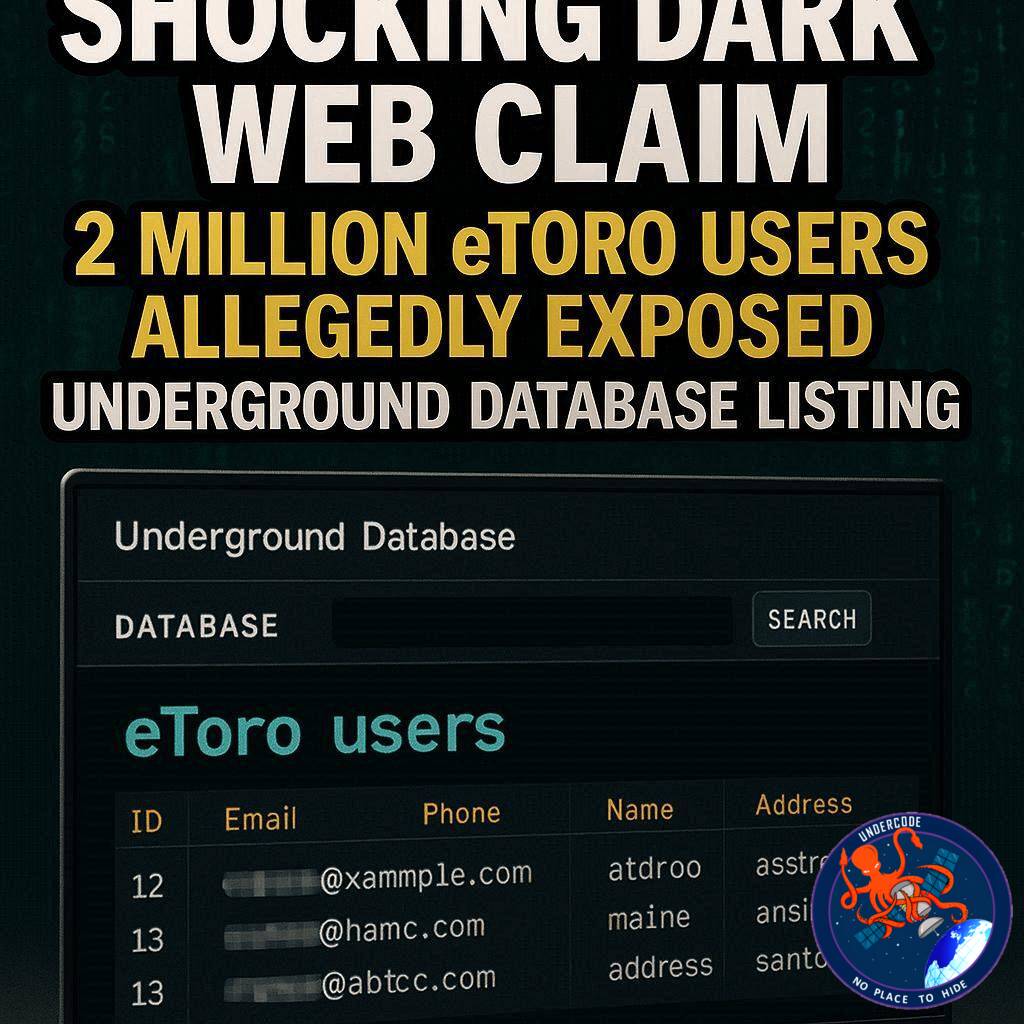
A new underground cybercrime claim has surfaced involving the alleged sale of a massive database tied to one of the world’s most recognized trading platforms. The listing, appearing on dark web forums, suggests that information belonging to millions of users of a major crypto and trading service may be circulating among threat actors. While such posts frequently appear in cybercriminal marketplaces, they often blur the line between real data breaches and fabricated marketing tactics designed to attract buyers. This particular case follows a familiar pattern seen in financial-sector targeting, where attackers exploit brand recognition to create urgency and credibility around unverified datasets.
the Alleged Dark Web Listing
The post circulating on underground forums claims the existence of a database containing information linked to approximately 2 million users of a well-known trading platform. The actor advertising the data provides very limited technical evidence, instead relying on vague descriptions and references to sample data allegedly accessible through external links. No verifiable proof has been presented to confirm that the dataset originates from a direct compromise of the platform’s internal systems. At this stage, the authenticity of the claim remains entirely unverified, and there is no indication from official sources that a breach has occurred. Analysts note that the origin of such datasets is often unclear, with many listings later revealed to be recycled from older leaks or compiled from unrelated breaches. Underground marketplaces frequently reuse well-known financial brand names to increase attention and perceived value, even when no actual connection exists. In many cases, these datasets are a mixture of publicly available information, previously leaked credentials, or phishing-derived records. Cybercriminals often package and rebrand old data to simulate novelty and increase its commercial appeal. If such a dataset were genuine, it could pose significant risks to affected users, including credential stuffing attacks, phishing campaigns, identity fraud, and social engineering attempts. Trading and crypto platform users are especially attractive targets due to the financial value associated with their accounts and the increasing adoption of digital assets. However, without technical validation, it is impossible to determine whether this claim reflects a real breach, a partial leak, or a completely fabricated advertisement designed solely for profit in underground markets.
What Undercode Say:
The Reality Behind Underground Data Markets
The appearance of large “investor database” listings on dark web forums is not unusual and often follows a predictable economic pattern within cybercrime ecosystems. Sellers rely heavily on brand recognition to create perceived legitimacy, even when no actual breach has been confirmed. Well-known trading platforms like eToro become frequent targets in naming conventions because they increase buyer interest regardless of authenticity. In reality, many of these datasets are assembled from multiple smaller leaks, phishing campaigns, or scraped public information. The cybercrime economy values scale and perceived exclusivity more than actual verification. This means that even low-quality or outdated data can be marketed as “high-value financial intelligence” if packaged correctly.
The Problem of Verification in Cyber Intelligence
One of the biggest challenges in assessing claims like this is the lack of technical evidence provided by threat actors. Listings often avoid detailed proof such as hashes, sample validation methods, or forensic indicators that could confirm authenticity. Instead, they rely on vague screenshots or limited sample records hosted externally, which may themselves be staged or manipulated. Without independent verification, it becomes impossible to determine whether the dataset reflects a real compromise or simply recycled information. Cybersecurity analysts must therefore treat such claims as unconfirmed until corroborated by multiple independent sources or official breach disclosures.
Financial Platforms as High-Value Targets
Trading platforms and crypto services are consistently prioritized by cybercriminals due to the financial incentives they represent. Even partial datasets containing email addresses or usernames can be weaponized for credential stuffing attacks, especially when users reuse passwords across multiple services. Additionally, investors are often targeted through social engineering campaigns that impersonate platform support teams or regulatory bodies. The perceived wealth of users on these platforms makes them more likely to be targeted in scams involving phishing, SIM swapping, or account takeover attempts. This dynamic ensures that even unverified leaks generate significant attention in underground markets.
The Economics of Fake Leaks
Not every dark web listing is designed to sell real data. In many cases, the primary goal is to generate revenue through fraudulent sales or reputation building within criminal forums. Sellers may reuse previously exposed datasets, combine unrelated leaks, or fabricate entire records to create the illusion of exclusivity. Buyers in these markets often operate under pressure to act quickly, which reduces the likelihood of thorough verification. This environment enables misinformation and fake datasets to circulate widely, sometimes being mistaken for legitimate breaches by external observers.
Risk Implications for Users
Even when unverified, such claims highlight ongoing risks for users of financial and crypto platforms. If any portion of the dataset were legitimate, it could be used in large-scale automated attacks targeting account credentials. Attackers often exploit human behavior patterns, such as password reuse and weak authentication practices, to gain unauthorized access. Users who fail to enable multi-factor authentication or who rely on SMS-based verification are particularly vulnerable. The broader implication is that cybersecurity hygiene remains critical regardless of whether a specific breach is confirmed.
Intelligence Monitoring and Ongoing Analysis
Continuous monitoring of underground forums remains essential to determine whether such claims evolve into verified incidents. Cyber intelligence teams typically look for repeated appearances of the same dataset, corroborating evidence from multiple threat actors, or confirmation from affected organizations. In many cases, initial listings disappear or are retracted once they fail to gain traction or are exposed as fraudulent. Until stronger indicators emerge, this case remains within the category of unverified cyber threat chatter.
🔍 Fact Checker results
Lack of Technical Proof
No forensic or technical indicators have been provided to confirm the legitimacy of the alleged dataset.
No Official Breach Confirmation
There is currently no evidence or statement confirming a direct compromise of the trading platform.
High Likelihood of Market Inflation
Similar listings are frequently inflated or fabricated to increase perceived value in underground markets.
📊 Prediction
The most likely outcome is that this listing will either fade without confirmation or be reclassified as recycled or low-quality data. However, there remains a moderate probability that fragments of real user information—potentially from older unrelated breaches—could be mixed into the dataset and repackaged. If no independent verification emerges, the claim will likely be absorbed into the broader category of dark web marketing noise rather than a confirmed security incident.
🕵️📝Let’s dive deep and fact‑check.
References:
Reported By: x.com
Extra Source Hub (Possible Sources for article):
https://stackoverflow.com
Wikipedia
OpenAi & Undercode AI
Image Source:
Unsplash
Undercode AI DI v2
Bing
🔐JOIN OUR CYBER WORLD [ CVE News • HackMonitor • UndercodeNews ]
📢 Follow UndercodeNews & Stay Tuned:
𝕏 formerly Twitter 🐦 | @ Threads | 🔗 Linkedin | 🦋BlueSky | 🐘Mastodon


