
Listen to this Post
Introduction: The Hidden Energy Cost of AI’s Race for Power
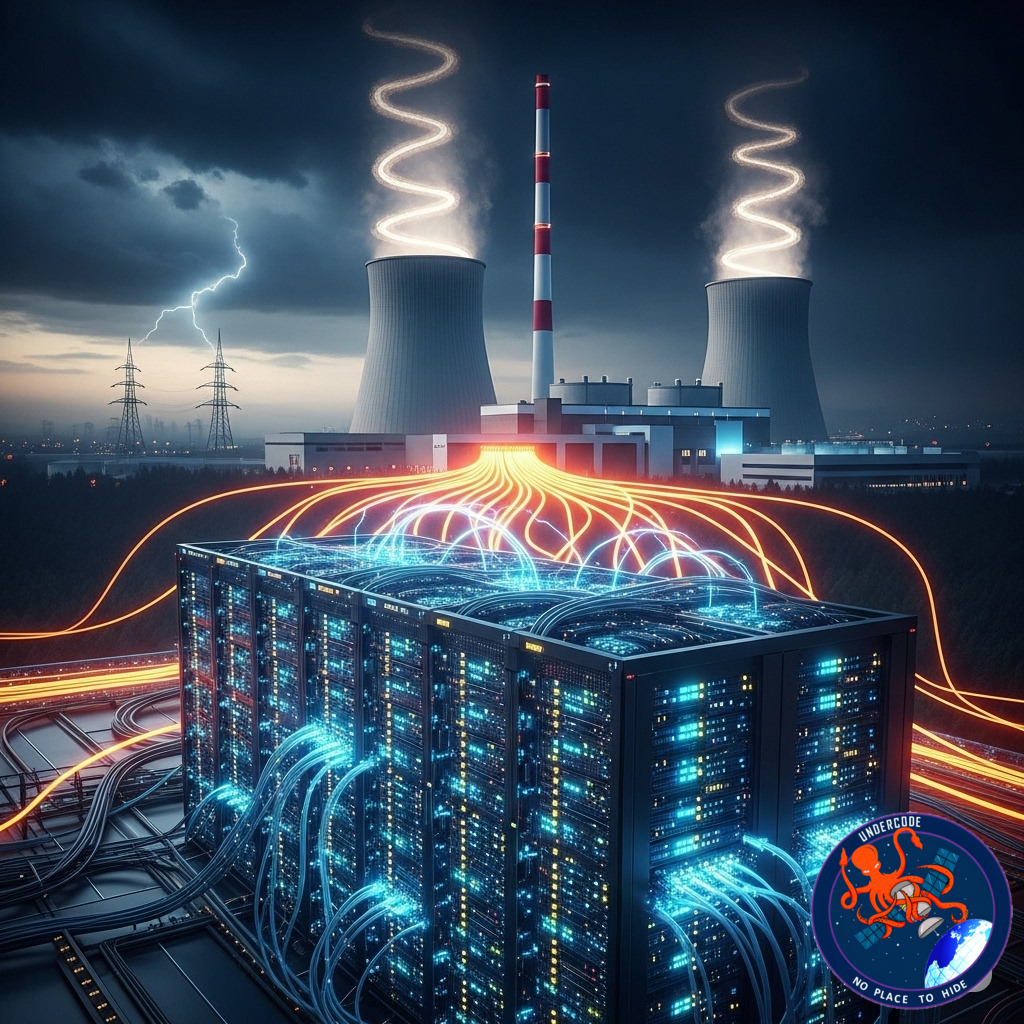
A groundbreaking new report has pulled back the curtain on one of the tech world’s most pressing — and least discussed — challenges: the staggering electricity demands of training massive artificial intelligence models. While much attention is given to AI’s speed, accuracy, and transformative potential, far fewer people realize just how much power these systems require, especially during the intensive training phases. The findings reveal that by the end of this decade, training the largest AI models could require as much energy as some of the biggest nuclear power plants, raising serious questions about infrastructure, sustainability, and the balance between innovation and resource limits.
AI’s Growing Appetite for Energy
A recent joint study by the Electric Power Research Institute and Epoch AI takes a close look at the extreme energy needs tied specifically to training huge “frontier” AI models — those cutting-edge systems that push the limits of computational power. Unlike previous broad estimates that lumped together both training and everyday usage (known as inference), this report narrows in on the intense, localized energy demand that comes when tech giants build vast data center clusters for AI training.
The Numbers Behind the Power Surge
The study warns that the largest AI training runs will require between 1 and 2 gigawatts of electricity by 2028, with projections reaching 4 to 16 gigawatts by 2030 in extreme cases. While the upper limit is considered unlikely, even the lower estimates are staggering. To put it in perspective, a single model could require up to 1% of the total U.S. power capacity — an amount comparable to the output of one of the country’s largest nuclear power plants.
Exponential Growth in Demand
According to Jaime Sevilla, director of Epoch AI, the energy demands of training state-of-the-art AI models are doubling every year. This exponential growth means that in just a few years, AI’s electricity consumption could rival — or surpass — major national energy sectors.
Beyond Training: Total AI Energy Consumption
The report also notes that when both training and inference are considered, total U.S. power demand for AI could hit 50 gigawatts by 2030, up from about 5 gigawatts today. That would represent over 5% of the nation’s total generation capacity. This rapid increase signals a fundamental shift in how electricity grids and energy infrastructure must adapt to the digital era’s needs.
Strategic Implications for Policymakers and Industry
While the report acknowledges significant uncertainty in these projections, it provides critical data for governments, utility companies, and tech giants. Planning for such massive power requirements will be essential to avoid shortages, environmental backlash, and economic bottlenecks.
The Reality for AI Leaders Like OpenAI
Even top AI companies, including OpenAI, are struggling with the logistical and financial hurdles of building the colossal data centers necessary to sustain their ambitions. The hunger for computing capacity shows no signs of slowing, driven by the fact that each leap forward in AI performance often comes from massively scaling up computational resources.
What Undercode Say:
The explosive growth in AI’s electricity consumption is more than a tech story — it is a looming infrastructure and policy challenge. This trend reflects three converging factors: the escalating computational complexity of “frontier” AI models, the aggressive scaling strategies of hyperscalers, and the exponential growth curve of AI adoption across industries.
The projection that a single AI training run might demand nearly 1% of the entire U.S. energy capacity is an unprecedented benchmark in computing history. By comparison, the energy footprint of the entire Bitcoin network — often criticized for its consumption — may be dwarfed by AI’s future demand if these projections hold.
From a grid stability perspective, accommodating such high-power draws will require not only new generation capacity but also strategic geographical distribution of data centers. Concentrating power-hungry clusters in a single location risks creating localized energy stress, which can cause grid instability or force utilities into costly upgrades.
There is also a geopolitical dimension. Nations that can reliably generate and deliver large-scale electricity to AI developers will gain a strategic advantage, potentially becoming global hubs for AI innovation. Conversely, regions with weaker energy infrastructure risk being excluded from the next phase of technological progress.
Environmental considerations add another layer of complexity. If this growth is powered primarily by fossil fuels, the resulting carbon emissions could undermine global climate goals. This makes renewable integration not just desirable, but imperative. Data center operators will face mounting pressure from both regulators and the public to commit to clean energy sourcing.
Another notable point is the compounding nature of AI’s demand. As models get bigger, the inference phase — when the trained model is deployed to users — will also consume more energy. That means even after the energy-intensive training period, the ongoing operational costs will remain high, multiplying the overall strain on the grid.
Tech companies, regulators, and the energy sector will need to adopt a more integrated planning approach. Possible strategies include co-locating AI data centers with renewable generation facilities, investing in advanced cooling technologies to reduce waste heat, and designing more energy-efficient algorithms that reduce training loads without sacrificing performance.
While the high-end estimates of 16 gigawatts by 2030 for a single training run might seem far-fetched today, the current doubling rate of AI’s energy demands suggests these figures cannot be dismissed outright. Strategic investment in both energy infrastructure and AI efficiency research will be critical to preventing a collision between technological ambition and energy realities.
🔍 Fact Checker Results:
✅ The Electric Power Research Institute and Epoch AI did release a joint report on AI energy demands.
✅ Projected power needs for AI could reach 50 GW in the U.S. by 2030.
✅ Energy demands for training large AI models are doubling annually.
📊 Prediction:
By 2030, the AI sector will likely trigger a wave of energy infrastructure investments, with renewable energy partnerships becoming standard for major AI firms. While the most extreme projections may not materialize, U.S. power demand from AI could still easily surpass 5% of total capacity, making energy policy a central factor in AI’s growth trajectory.
🕵️📝✔️Let’s dive deep and fact‑check.
References:
Reported By: axioscom_1755003860
Extra Source Hub:
https://www.reddit.com/r/AskReddit
Wikipedia
OpenAi & Undercode AI
Image Source:
Unsplash
Undercode AI DI v2
🔐JOIN OUR CYBER WORLD [ CVE News • HackMonitor • UndercodeNews ]
📢 Follow UndercodeNews & Stay Tuned:
𝕏 formerly Twitter 🐦 | @ Threads | 🔗 Linkedin | 🦋BlueSky | 🐘Mastodon


