
Listen to this Post
Introduction
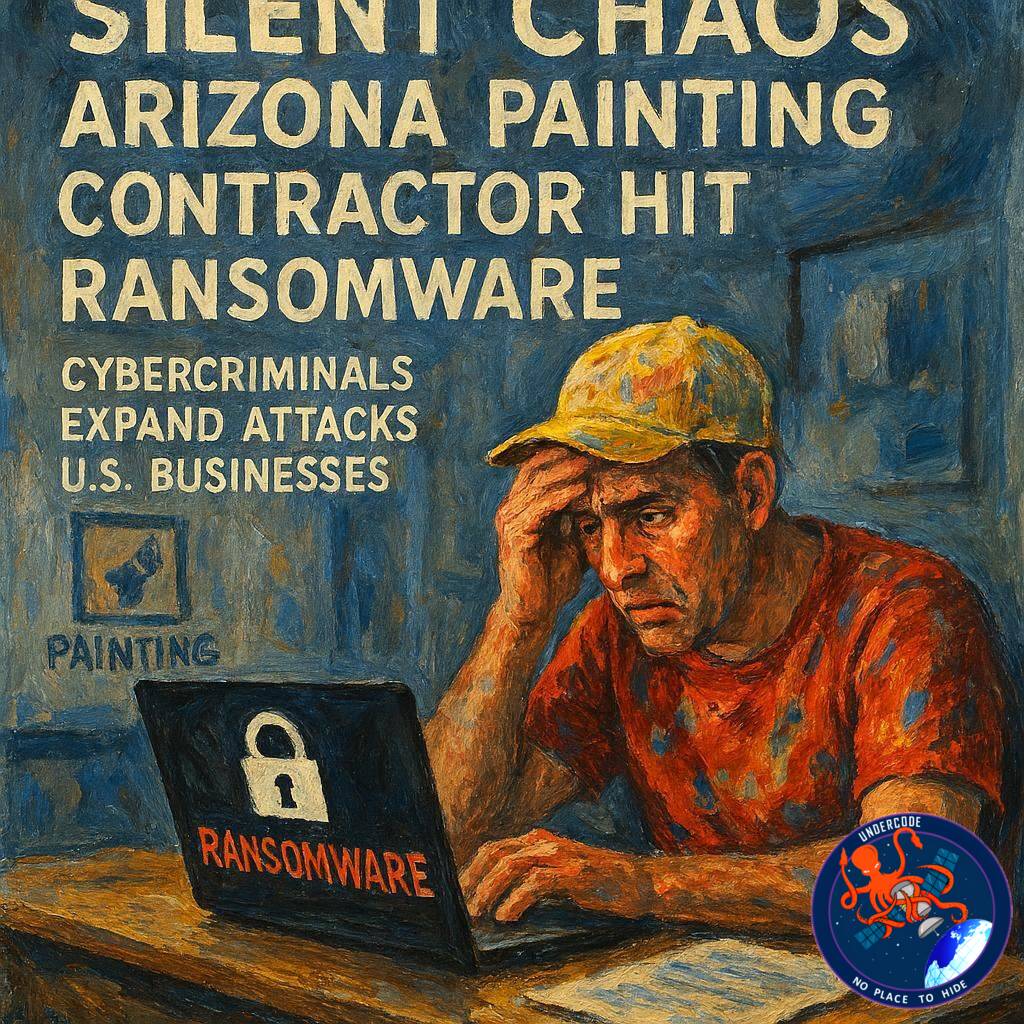
A fresh ransomware incident has placed another American company in the growing crosshairs of cybercriminal groups targeting critical industries. Arizona Professional Painting, a Phoenix-based contractor known for handling large-scale commercial and industrial painting projects, was reportedly attacked by the ransomware group known as “thegentlemen.” The incident allegedly disrupted systems connected to the company’s official domain, raising concerns about operational downtime, data exposure, and the increasing vulnerability of construction-related businesses in the United States.
The report surfaced through cybersecurity monitoring accounts on X, formerly Twitter, where threat intelligence trackers have become a fast-moving source for breach disclosures and ransomware leak announcements. While technical details remain limited, the attack reflects a wider trend: ransomware gangs are no longer focusing only on hospitals, banks, or tech firms. Construction companies, contractors, and industrial service providers are now becoming profitable targets.
Arizona Professional Painting Allegedly Targeted by “thegentlemen”
Arizona Professional Painting, operating from Phoenix, Arizona, specializes in commercial and industrial painting services across the United States. According to the cybersecurity monitoring account Cybersecurity News Everyday, the company experienced a ransomware incident tied to the group “thegentlemen.”
The attack reportedly affected systems associated with the company’s website, azpropaint.com, although no official statement from the company has confirmed the extent of the breach at the time of reporting. Cybersecurity researchers monitoring ransomware activity often observe attackers leaking victim names before negotiations become public, making early-stage incidents difficult to independently verify.
What makes this event notable is the industry involved. Construction and industrial contractors are not traditionally viewed as “high-tech” organizations, yet they frequently store highly valuable operational data, employee information, contracts, project blueprints, supplier details, and financial records. These assets can become extremely valuable leverage for ransomware operators.
Construction Firms Are Becoming Prime Targets
For years, ransomware attacks primarily focused on healthcare institutions, government agencies, and financial organizations. That pattern is rapidly changing.
Construction and industrial firms are increasingly vulnerable because many still rely on outdated infrastructure, fragmented networks, and weak cybersecurity practices. In many cases, operational continuity matters more than digital resilience, which gives attackers a powerful advantage. A halted project can cost thousands—or even millions—of dollars per day.
Cybercriminals understand this pressure. If a contractor loses access to scheduling systems, procurement databases, payroll software, or communication tools, projects can immediately stall. Attackers use this urgency to force companies into rapid ransom negotiations.
Smaller and medium-sized contractors are particularly exposed because they often lack dedicated cybersecurity teams. Instead, IT management may be outsourced or minimally staffed, leaving security gaps unnoticed for months.
The Rise of Ransomware Branding
Groups like “thegentlemen” operate similarly to organized criminal businesses. They use public leak sites, branding strategies, affiliate programs, and even negotiation portals. Modern ransomware gangs have evolved beyond isolated hackers into structured cyber-extortion enterprises.
Many groups now publicly announce victims before releasing stolen files. This tactic increases psychological pressure while damaging the victim’s reputation. Even if encrypted systems are restored, the threat of leaked contracts, employee records, or confidential project documents can create lasting consequences.
The naming strategy itself is intentional. Ransomware groups often adopt memorable titles to build fear and visibility across the underground cybercrime ecosystem. Reputation among criminals matters because affiliates choose which ransomware operation to join based on profitability and technical sophistication.
Another US Organization Reportedly Hit the Same Day
The same cybersecurity monitoring source also reported that another ransomware group, “genesis,” allegedly targeted Prescott & Holden, a US legal firm known for defending client rights.
Although details remain unconfirmed, the timing illustrates how widespread ransomware activity has become. Law firms represent especially attractive targets because they possess confidential legal records, contracts, sensitive communications, and litigation material.
The simultaneous appearance of attacks against both a construction contractor and a legal organization highlights the indiscriminate nature of modern ransomware campaigns. Today’s attackers are less concerned about industry and more focused on opportunity, weak defenses, and the likelihood of payment.
What Undercode Says:
Ransomware Has Shifted From Disruption to Economic Warfare
The Arizona Professional Painting incident may appear minor compared to attacks on major corporations, but it actually reflects a deeper transformation inside the ransomware economy. Modern cybercriminals are no longer simply encrypting files for quick payouts. They are strategically targeting industries where operational disruption creates immediate financial panic.
Construction businesses are particularly vulnerable because deadlines govern the entire industry. Every delayed project impacts contractors, subcontractors, suppliers, property owners, and investors simultaneously. Attackers understand this chain reaction. In many cases, the ransom itself becomes cheaper than operational downtime.
Industrial Sectors Often Underestimate Digital Risk
A major issue across industrial sectors is the false belief that cybersecurity threats mainly affect technology companies. Many contractors focus heavily on physical security while overlooking digital infrastructure entirely.
Yet modern construction companies depend on cloud-based planning systems, remote project management platforms, payroll software, vendor communication networks, and mobile field devices. A ransomware infection can instantly paralyze all of these systems.
This gap between operational dependence and cybersecurity preparedness is exactly what ransomware groups exploit.
Public Leak Announcements Are Psychological Weapons
One of the most dangerous developments in ransomware culture is the use of public exposure as a weapon. Attackers increasingly publish victim names before negotiations conclude.
This tactic creates pressure from multiple directions:
Clients begin questioning trustworthiness.
Employees fear personal data exposure.
Business partners worry about supply chain compromise.
Media attention increases reputational damage.
Even organizations that refuse to pay ransom can still suffer severe long-term consequences through public embarrassment and regulatory scrutiny.
Cybercrime Has Become Professionalized
Groups like “thegentlemen” and “genesis” are part of a cybercriminal ecosystem that now resembles legitimate business operations. Many ransomware organizations have:
Affiliate recruitment systems
Revenue-sharing models
Dedicated developers
Customer-style negotiation support
Data leak platforms
Branding and marketing tactics
Some operations even maintain internal rules about which countries or sectors can be targeted.
This professionalization makes ransomware harder to stop because the ecosystem continuously regenerates itself. When one group disappears, affiliates simply migrate elsewhere.
Small and Mid-Sized Companies Face the Greatest Risk
Large corporations often attract headlines, but mid-sized businesses are becoming the preferred targets. Attackers see them as ideal victims because:
They possess valuable data.
They usually lack advanced security teams.
Cyber insurance may cover ransom payments.
Recovery capabilities are weaker.
Incident response preparation is limited.
Construction contractors fit this profile almost perfectly.
The Human Factor Remains the Weakest Link
Despite advanced malware, most ransomware attacks still begin through human error:
Phishing emails
Weak passwords
Remote desktop exposure
Fake software updates
Compromised credentials
Technology alone cannot solve these problems. Employee awareness training and access control policies remain essential defenses.
Supply Chain Risks Could Escalate
One overlooked concern is third-party compromise. Contractors often interact with architects, suppliers, vendors, government agencies, and payment processors. A breach inside one organization can create pathways into several others.
This interconnected environment makes ransomware more dangerous than isolated data theft. It creates cascading operational risks across entire business ecosystems.
Regulatory Pressure Is Likely to Increase
As ransomware incidents continue expanding across critical industries, governments may introduce stricter cybersecurity requirements for contractors handling sensitive infrastructure or public projects.
Future regulations could mandate:
Breach disclosure timelines
Mandatory security audits
Backup standards
Multi-factor authentication
Cyber incident reporting frameworks
Companies ignoring cybersecurity today may eventually face legal and financial consequences beyond the ransomware attack itself.
Cybersecurity Is Becoming a Core Business Requirement
For years, cybersecurity was treated as an optional IT expense. That era is ending rapidly.
Businesses now face a reality where digital resilience directly affects operational survival. Contractors, manufacturers, law firms, healthcare providers, and logistics companies all depend on connected systems.
A ransomware incident is no longer just a technical failure. It is a business continuity crisis.
🔍 Fact Checker Results
✅ Verified Information
The X account “Cybersecurity News Everyday” did publicly report the alleged ransomware incident involving Arizona Professional Painting on May 9, 2026.
⚠️ Unconfirmed Breach Scope
There is currently no public confirmation from Arizona Professional Painting regarding the scale of the attack, data theft, or operational damage.
✅ Industry Trend Matches Broader Cybersecurity Data
Cybersecurity researchers and federal agencies have repeatedly warned that ransomware attacks against industrial and construction sectors are increasing across the United States.
📊 Prediction
Rising Attacks on Non-Tech Industries
Ransomware gangs will likely continue shifting toward construction, manufacturing, logistics, and legal sectors because these industries often have weaker cybersecurity defenses but high operational urgency.
Leak Site Extortion Will Become More Aggressive
Future ransomware operations may rely even more heavily on public shaming tactics, including partial data leaks and countdown timers designed to pressure victims into paying quickly.
Cybersecurity Spending Will Surge in Industrial Markets
Construction and industrial companies are expected to dramatically increase investments in endpoint protection, employee training, network monitoring, and disaster recovery systems over the next several years as attacks become more frequent and costly.
🕵️📝Let’s dive deep and fact‑check.
References:
Reported By: x.com
Extra Source Hub (Possible Sources for article):
https://www.quora.com/topic/Technology
Wikipedia
OpenAi & Undercode AI
Image Source:
Unsplash
Undercode AI DI v2
Bing
🔐JOIN OUR CYBER WORLD [ CVE News • HackMonitor • UndercodeNews ]
📢 Follow UndercodeNews & Stay Tuned:
𝕏 formerly Twitter 🐦 | @ Threads | 🔗 Linkedin | 🦋BlueSky | 🐘Mastodon


