
Listen to this Post
 Introduction: Hidden Supply Chain Attacks Escalate in 2026 Cyber Landscape
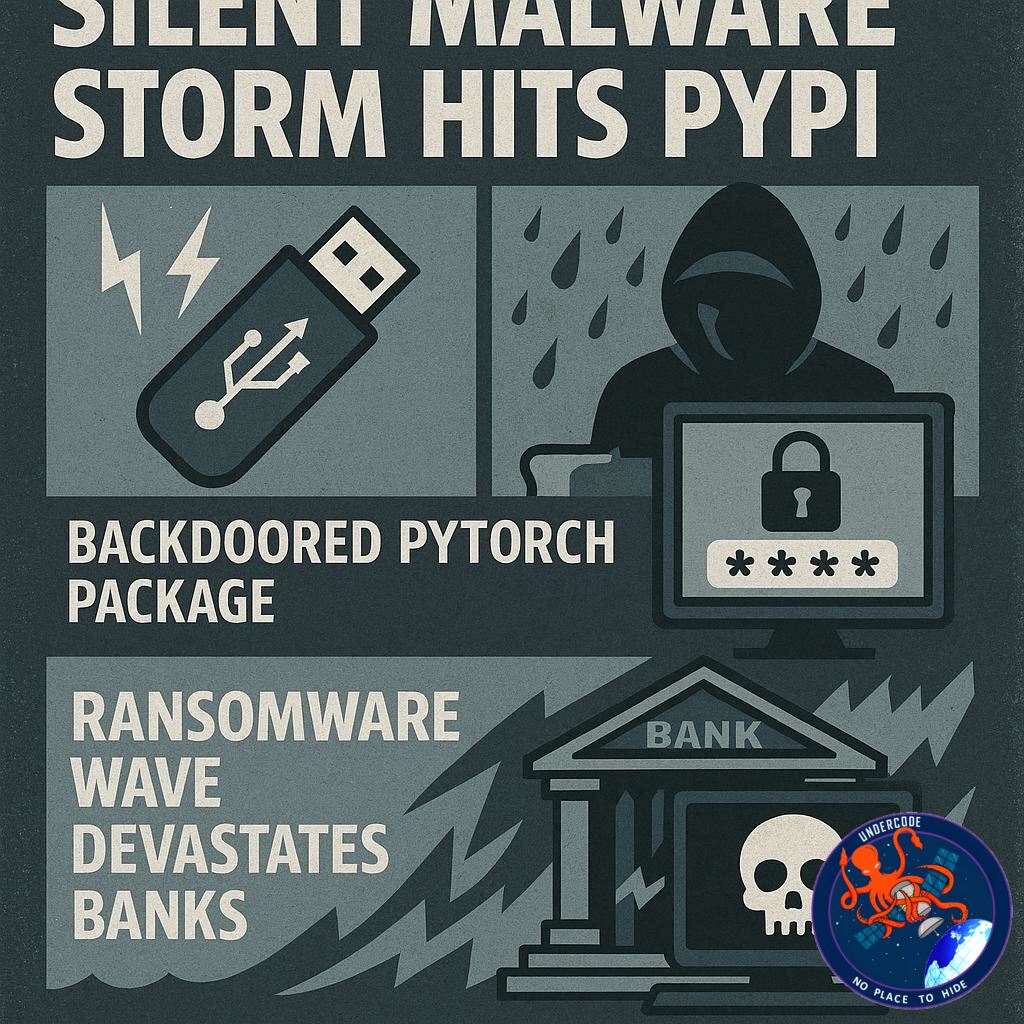
A new wave of cybersecurity incidents has exposed how fragile modern software supply chains have become, with attackers increasingly targeting trusted developer ecosystems. In the latest discovery, a compromised PyTorch Lightning package published on PyPI delivered a stealth credential-stealing payload that executed automatically upon import. At the same time, a separate ransomware campaign has been linked to large-scale data theft from major financial institutions in South Africa. Together, these incidents highlight a growing trend: attackers are no longer breaking systems directly—they are infiltrating the tools developers trust most.
Cybersecurity Incident
A malicious version of the PyTorch Lightning package (lightning==2.6.3) was found on the Python Package Index (PyPI) containing a hidden backdoor designed to steal credentials. Once installed, the package automatically executed a JavaScript payload during import, silently launching a background process without user awareness. This behavior allowed attackers to potentially harvest sensitive authentication data from compromised systems.
Security systems detected the anomaly after Microsoft Defender flagged the activity under the name “ShaiWorm,” effectively blocking further execution in many protected environments. The attack demonstrates a classic supply-chain compromise, where trusted open-source libraries are weaponized to distribute malware at scale.
In a separate but equally alarming development, the ransomware group “PrinzEugen” carried out a prolonged three-week cyberattack targeting Standard Bank Group and Liberty in South Africa. Beginning on February 27, 2026, the attackers reportedly exfiltrated approximately 1.2TB of internal corporate data from compromised servers.
The dual nature of these incidents—one focusing on developer infrastructure infiltration and the other on financial sector extortion—illustrates how cybercriminal strategies are diversifying. Rather than relying on single-vector attacks, threat actors are combining stealthy supply chain infections with large-scale data extraction campaigns.
What Undercode Says:
The Hidden Danger Inside Trusted Python Ecosystems
The compromised PyTorch Lightning package reveals how open-source ecosystems can become silent distribution channels for malware. Attackers no longer need to breach systems directly when they can simply poison widely used dependencies.
JavaScript Payload Execution Inside Python Imports
The use of a JavaScript-based payload inside a Python package highlights a hybrid attack strategy designed to evade traditional detection systems. By triggering execution during import, attackers ensured immediate activation without user interaction.
Microsoft Defender’s Rapid Detection Response
Microsoft Defender identifying the malware as “ShaiWorm” demonstrates the importance of behavioral detection systems. Signature-based tools alone would likely have missed this evolving cross-language payload technique.
Supply Chain Security Becoming a Primary Attack Surface
This incident reinforces a major shift in cybersecurity priorities. Supply chain attacks are becoming more valuable to threat actors because a single compromised package can impact thousands of downstream applications.
Ransomware Campaign Against South African Financial Institutions
The PrinzEugen ransomware operation targeting Standard Bank Group and Liberty shows the continued focus on high-value financial institutions. Exfiltrating 1.2TB of data suggests long-term access and deep network penetration.
Data Exfiltration Over Encryption-Only Strategies
Instead of simply locking systems, attackers increasingly prefer stealing data before deploying ransomware. This dual strategy increases pressure on victims through both operational disruption and data exposure threats.
Extended Attack Duration Indicates Weak Early Detection
A three-week undetected presence in banking systems suggests gaps in internal monitoring and incident response. Long dwell time significantly increases the impact of any breach.
Cross-Sector Cyber Threat Escalation
The combination of developer ecosystem attacks and financial sector breaches indicates that cybercriminal groups are diversifying targets rather than focusing on a single industry.
Automation in Modern Malware Deployment
The automatic execution of payloads upon package import shows a shift toward fully automated infection chains that require minimal attacker intervention once deployed.
Growing Trust Exploitation in Open Source Communities
Attackers are increasingly exploiting the trust developers place in repositories like PyPI. This trust-based exploitation model is now one of the most effective attack vectors globally.
🔍 Fact Checker Results
The PyTorch Lightning package compromise aligns with known supply-chain attack patterns in open-source ecosystems.
Microsoft Defender’s “ShaiWorm” detection reflects real-time behavioral threat identification techniques.
The reported 1.2TB exfiltration figure from the ransomware campaign remains unverified independently but matches typical large-scale financial sector breaches.
📊 Prediction
Cybersecurity threats are expected to increasingly target developer ecosystems like PyPI, npm, and GitHub rather than end-user systems directly. Supply chain poisoning will likely become more automated, with malware embedded deeper into dependency layers to evade detection. Financial institutions will continue facing hybrid attacks combining ransomware deployment with pre-encryption data theft. Detection systems will shift further toward AI-driven behavioral analysis as traditional signature-based defenses become insufficient against multi-language, cross-platform payloads.
🕵️📝Let’s dive deep and fact‑check.
References:
Reported By: x.com
Extra Source Hub (Possible Sources for article):
https://www.medium.com
Wikipedia
OpenAi & Undercode AI
Image Source:
Unsplash
Undercode AI DI v2
Bing
🔐JOIN OUR CYBER WORLD [ CVE News • HackMonitor • UndercodeNews ]
📢 Follow UndercodeNews & Stay Tuned:
𝕏 formerly Twitter 🐦 | @ Threads | 🔗 Linkedin | 🦋BlueSky | 🐘Mastodon


