
Listen to this Post
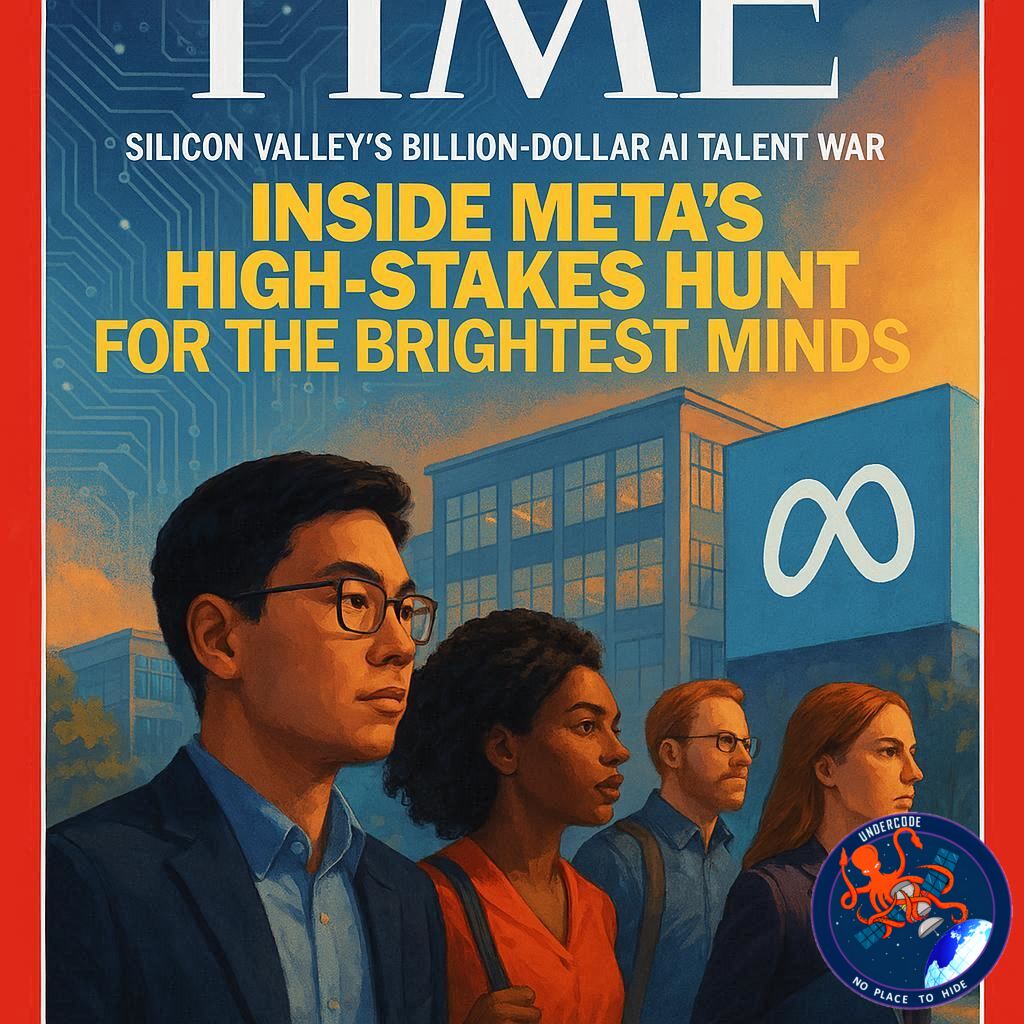
The New Gold Rush in AI
Silicon Valley is in the midst of a modern-day gold rush — but this time, the gold isn’t in the ground, it’s in the minds of a few hundred elite AI researchers. Tech giants like Meta, Microsoft, Google, and OpenAI are locked in a brutal battle to secure these scarce experts, offering eye-watering pay packages to lure them away from rivals. The fight isn’t just for prestige — it’s about controlling the future of artificial intelligence, and perhaps even defining the shape of human-technology interaction for decades to come.
In this high-stakes contest, no player is more aggressive than Meta and its CEO, Mark Zuckerberg. Reports suggest Zuckerberg has gone far beyond the standard hiring playbook, actively targeting the best and brightest from rival labs with offers that reach deep into the nine-figure range. Using a secret “hiring list” of top AI minds, Zuckerberg is personally involved in scouting, interviewing, and closing deals for his “Superintelligence” team — an elite unit tasked with achieving breakthroughs in advanced AI.
the Original
Meta’s recruitment efforts have reached unprecedented levels, with reports of \$100 million-plus packages for top AI researchers. The most striking case involves 24-year-old AI prodigy Matt Deitke, who left his Ph.D. program at the University of Washington to become one of the hottest names in AI. Initially, Meta offered him \$125 million over four years — a proposal he declined. In a bold move, Zuckerberg personally met with Deitke and doubled the deal to an extraordinary \$250 million, with \$100 million in the first year alone. This mix of salary, bonuses, and stock grants has set a new standard for AI compensation.
Deitke is no stranger to innovation. In late 2024, he co-founded Vercept with colleagues from the Allen Institute, raising \$16.5 million from investors, including former Google CEO Eric Schmidt. Vercept’s mission is to revolutionize human-computer interaction, replacing clunky menus and complex workflows with seamless, mind-like interfaces.
The so-called “hiring list” guiding Zuckerberg’s recruitment contains names of researchers who meet three elite criteria: a Ph.D. from top schools like Berkeley or Carnegie Mellon, hands-on experience at premier AI labs such as OpenAI or DeepMind, and a proven record of groundbreaking research. Many of these recruits are in their 20s or 30s, deeply connected within the AI community, and spend their days tackling extraordinarily complex problems that require massive computing power.
Reports also reveal Zuckerberg participates in a group chat called “Recruiting Party” with two Meta executives, strategizing about how best to approach each target — whether through email, text, or WhatsApp — to maximize the chances of a successful hire.
What Undercode Say:
Meta’s recruitment frenzy represents a turning point in the evolution of the tech industry. In previous decades, competition for talent was fierce, but it rarely approached the fever-pitch intensity we’re seeing today. Now, the combination of a tiny talent pool, enormous financial incentives, and the looming promise (or threat) of artificial superintelligence has created an environment where the world’s richest companies are willing to break traditional corporate norms to secure the brightest minds.
Zuckerberg’s hands-on role here is notable. While tech CEOs have historically been involved in strategic hiring decisions, it’s rare for them to personally court individual engineers — let alone double multi-million-dollar offers on the spot. This underscores just how urgent Meta views its position in the AI arms race. It also signals a shift in power: the researchers themselves, especially those capable of pushing the boundaries of AI capabilities, now wield unprecedented leverage.
Matt Deitke’s case is a perfect example. His leap from academic research to a quarter-billion-dollar corporate package reflects not only his personal brilliance but also the market’s valuation of AI expertise at the bleeding edge. The fact that he turned down \$125 million before receiving the doubled offer suggests a deep awareness of his bargaining power.
The inclusion of a “hiring list” further illustrates the militarization of talent acquisition. This isn’t random networking or chance encounters at conferences — it’s targeted, data-driven, and aggressive. Zuckerberg’s “Recruiting Party” chat group functions almost like a war room, where high-value targets are tracked and approached with surgical precision.
There’s also a cultural factor at play. The AI research community is small, interconnected, and socially tight-knit. Poaching one star researcher can ripple through that network, influencing who’s willing to follow, collaborate, or jump ship from competitors.
This talent war has broader implications beyond Silicon Valley. As salaries soar, startups without massive cash reserves will struggle to retain their innovators. We might see the concentration of AI talent in fewer, ultra-rich companies, potentially stifling diversity of thought and innovation. On the other hand, the massive investment could accelerate breakthroughs in AI far faster than anticipated — for better or worse.
What’s clear is that AI talent is no longer just valuable — it’s strategic, geopolitical, and perhaps the most contested resource in technology today. If Meta’s approach proves successful, we may see other tech giants emulate this hyper-personalized, high-stakes recruitment style, pushing compensation packages into territory previously unimaginable.
🔍 Fact Checker Results
✅ Zuckerberg’s \$250M offer to Matt Deitke is supported by multiple credible reports.
✅ The “hiring list” exists and contains top AI researchers with elite qualifications.
✅ Vercept’s funding round included former Google CEO Eric Schmidt as an investor.
📊 Prediction
Given the escalating bidding wars, AI researcher compensation will continue to break records over the next five years, with packages potentially surpassing \$500 million for individuals at the frontier of artificial superintelligence research. Meta’s aggressive recruitment strategy may spark a domino effect, forcing competitors to match or exceed such offers, concentrating the global AI brain trust into just a handful of ultra-powerful corporations.
🕵️📝✔️Let’s dive deep and fact‑check.
References:
Reported By: timesofindia.indiatimes.com
Extra Source Hub:
https://www.medium.com
Wikipedia
OpenAi & Undercode AI
Image Source:
Unsplash
Undercode AI DI v2
🔐JOIN OUR CYBER WORLD [ CVE News • HackMonitor • UndercodeNews ]
📢 Follow UndercodeNews & Stay Tuned:
𝕏 formerly Twitter 🐦 | @ Threads | 🔗 Linkedin | 🦋BlueSky | 🐘Mastodon


