
Listen to this Post
Introduction: A New Name, an Old Threat
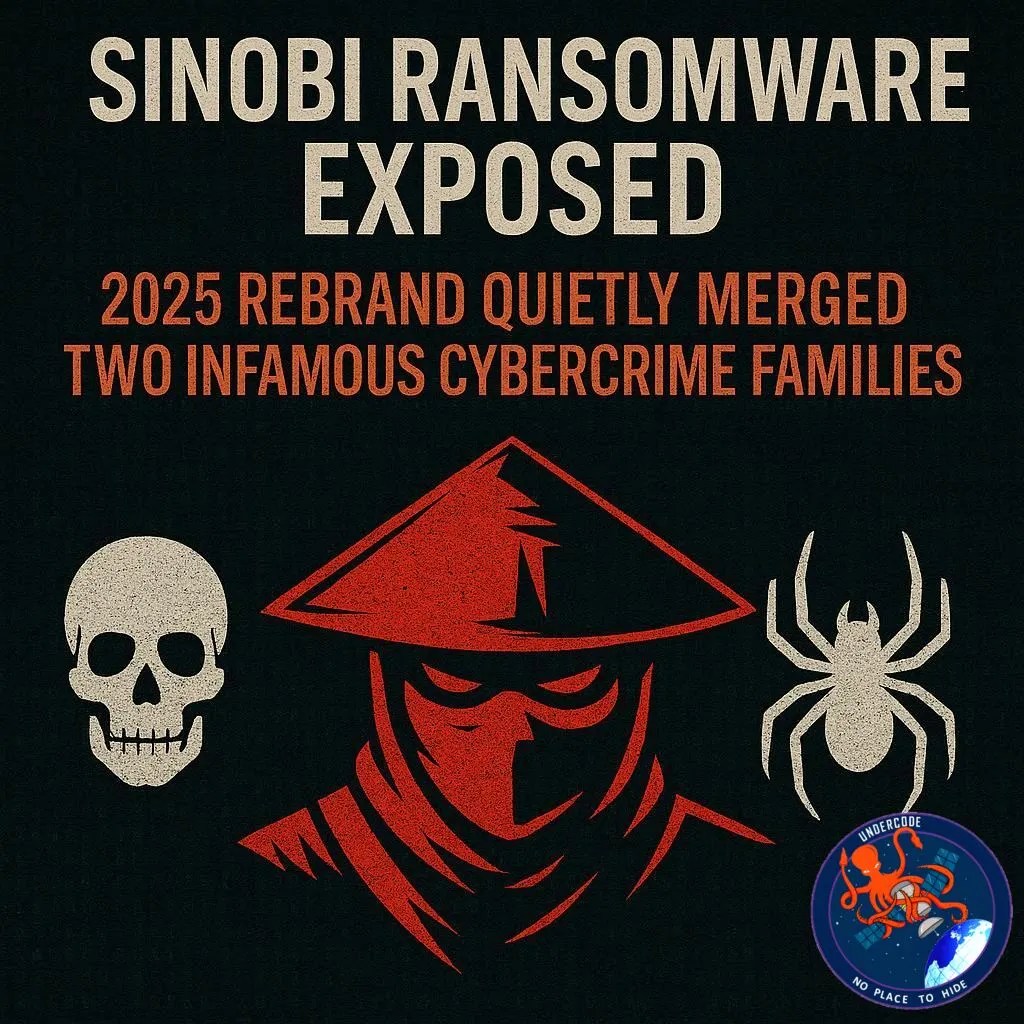
In early 2025, a new ransomware name began circulating in threat intelligence circles: Sinobi. At first glance, it appeared to be just another entrant in the ever-crowded ransomware ecosystem. But deeper technical analysis quickly revealed a more troubling reality. Sinobi was not built from scratch. Instead, it emerged as a calculated rebrand that quietly fused elements of two well-known ransomware families, Lynx and INC, inheriting their code, tactics, and criminal know-how. What looks new on the surface is, in reality, a refined continuation of proven cybercrime operations—designed to evade detection, attract high-value affiliates, and maximize extortion payouts.
the Original Report
The original report highlights Sinobi ransomware as an emerging threat observed in 2025, identified through technical overlap with the Lynx and INC ransomware families. Researchers noted that more than 60% of Sinobi’s codebase matches these earlier strains, strongly suggesting either shared developers or direct rebranding rather than simple imitation. This reuse allows Sinobi to rapidly mature without the trial-and-error phase typically seen in new ransomware operations.
Sinobi operates under a closed Ransomware-as-a-Service (RaaS) model, meaning affiliates are carefully selected rather than openly recruited on underground forums. This approach reduces operational risk, limits leaks, and increases trust among cybercriminal partners. Initial access is commonly achieved through compromised credentials, exploitation of known CVEs, and abuse of legitimate tools already present in enterprise environments.
Once inside a network, Sinobi actors rely on double-extortion tactics. Sensitive data is exfiltrated before encryption, ensuring victims face not only system outages but also the threat of public data leaks. Tools like Rclone are used to move stolen data to attacker-controlled infrastructure, blending malicious activity with legitimate cloud traffic to avoid detection.
From a cryptographic standpoint, Sinobi uses Curve-25519 for key exchange combined with AES-128-CTR for file encryption, a combination that is both efficient and practically unbreakable without the attacker’s private keys. This makes free decryption unrealistic and pushes victims toward ransom negotiations. The report concludes that Sinobi represents a strategic evolution rather than a novel innovation, reinforcing how ransomware groups recycle successful frameworks to stay ahead of defenders.
What Undercode Say:
Sinobi ransomware is a textbook example of where the modern ransomware economy is heading—not toward originality, but toward optimization and brand recycling. The 60%+ code overlap with Lynx and INC is not a weakness; it is a deliberate business decision. By reusing battle-tested code, threat actors cut development time, reduce bugs, and deploy a “stable product” into the criminal marketplace almost immediately.
The closed RaaS model is particularly revealing. Open affiliate programs often attract inexperienced actors who generate noise and draw law enforcement attention. Sinobi’s selective approach signals a desire for longevity, operational security, and higher-quality intrusions. This mirrors a broader trend where ransomware groups increasingly behave like private syndicates rather than chaotic online gangs.
The reliance on compromised credentials and known CVEs also underscores a persistent defensive failure across industries. Sinobi does not require zero-day exploits to succeed. It thrives on weak password hygiene, unpatched systems, and over-permissioned accounts. In that sense, the ransomware itself is only the final step in a long chain of preventable security lapses.
Double extortion remains effective because organizations still underestimate the value and exposure of their own data. Even companies with solid backups find themselves trapped when sensitive files are exfiltrated and weaponized for public shaming or regulatory pressure. Sinobi’s use of Rclone further complicates detection, as defenders must now distinguish between legitimate cloud usage and large-scale data theft in real time.
Cryptographically, the choice of Curve-25519 and AES-128-CTR signals maturity. These are not experimental algorithms but well-established standards, leaving victims with virtually no technical escape route once encryption is complete. This reinforces the harsh reality that prevention and early detection are the only viable defenses.
From a strategic perspective, Sinobi’s emergence also highlights how ransomware branding works. When a name becomes too well-known or associated with law enforcement scrutiny, operators simply rebrand, tweak infrastructure, and continue operations under a new identity. This cyclical pattern makes attribution harder and inflates the perceived number of “new” ransomware groups each year, when in fact many are reincarnations of the same core actors.
Fact Checker Results
Sinobi ransomware shows verified code overlap with Lynx and INC, supporting rebranding claims.
Its use of double extortion and closed RaaS aligns with current ransomware trends.
No evidence suggests Sinobi relies on zero-day exploits; known CVEs remain the primary entry vector.
📊 Prediction
Sinobi is likely to expand quietly rather than explosively, targeting mid-to-large organizations with weak credential management. As pressure mounts on older ransomware brands, more rebranded operations like Sinobi will surface, blurring attribution and prolonging the ransomware epidemic well into the coming years.
🕵️📝✔️Let’s dive deep and fact‑check.
References:
Reported By: x.com
Extra Source Hub (Possible Sources for article):
https://www.twitter.com
Wikipedia
OpenAi & Undercode AI
Image Source:
Unsplash
Undercode AI DI v2
Bing
🔐JOIN OUR CYBER WORLD [ CVE News • HackMonitor • UndercodeNews ]
📢 Follow UndercodeNews & Stay Tuned:
𝕏 formerly Twitter 🐦 | @ Threads | 🔗 Linkedin | 🦋BlueSky | 🐘Mastodon


