
Listen to this Post
Introduction
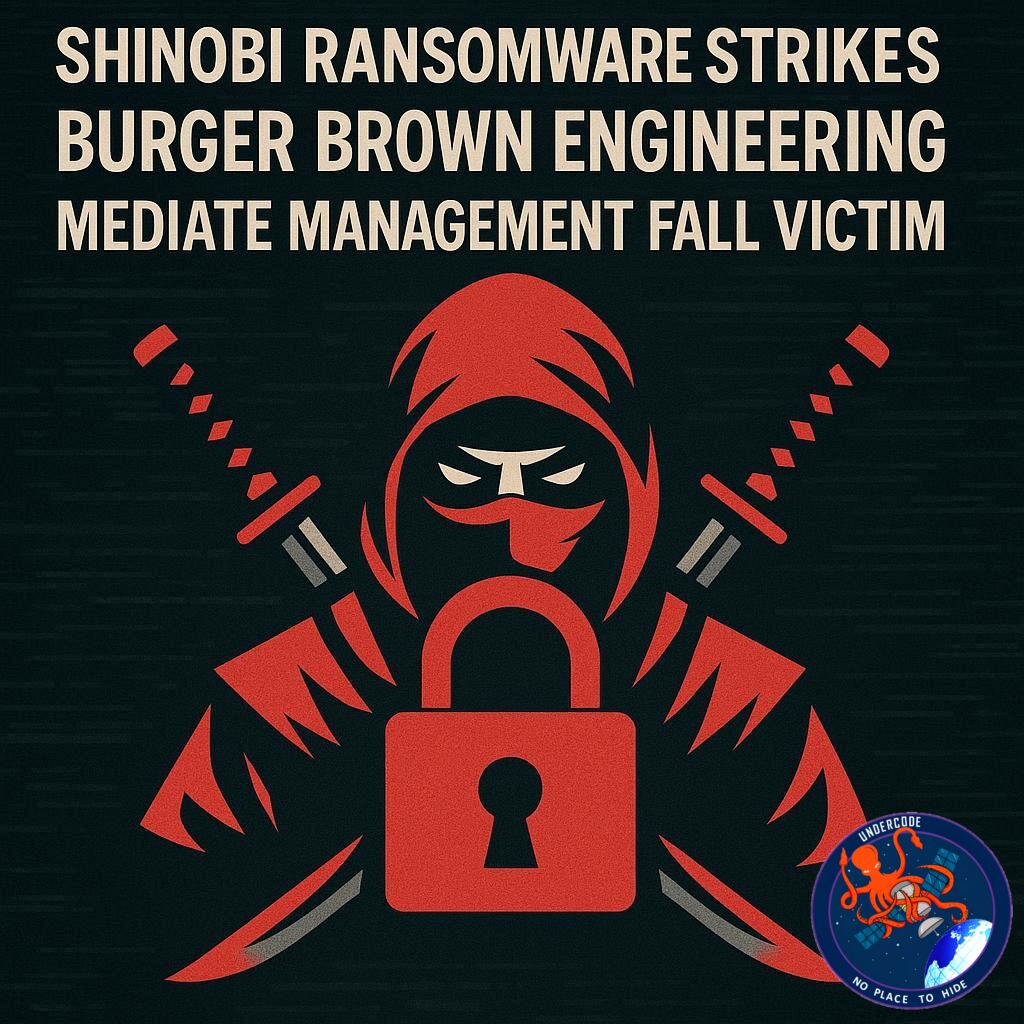
In the relentless cyber battlefield of 2025, ransomware remains one of the most destructive threats to global businesses. The latest report from ThreatMon Ransomware Monitoring reveals that the notorious Sinobi ransomware group has expanded its list of victims, targeting Burger & Brown Engineering and Mediate Management. These incidents highlight the growing sophistication of cybercriminals who exploit the dark web to coordinate attacks, extort money, and leak sensitive data. With ransomware cases surging, the digital world is once again reminded of how vulnerable even established organizations can be.
Events
The Sinobi ransomware group, a known cybercriminal collective, has recently been linked to two major ransomware incidents.
On August 20, 2025, at 00:18:30 UTC +3, the group claimed responsibility for an attack on Burger & Brown Engineering.
Shortly before that, at 00:16:29 UTC +3, another victim was identified: Mediate Management.
Both breaches were detected through dark web activity monitoring by ThreatMon Threat Intelligence Team, which tracks ransomware campaigns and their victims. The attackers publicly listed these companies on underground forums, signaling that negotiations for ransom payment had either failed or were ongoing.
The modus operandi of groups like Sinobi often includes:
Encrypting critical company data.
Demanding a ransom in cryptocurrency.
Threatening to leak or sell stolen data if payment is not made.
While details of the ransom demands remain undisclosed, the pattern aligns with typical ransomware strategies where attackers pressure victims by exposing them on dark web “victim blogs.”
The incident also coincides with an increase in global ransomware chatter, with terms like DataBreach trending online, reinforcing how frequent such events have become in 2025. As with many cases, industries ranging from engineering to management consulting are at risk, regardless of size or cybersecurity investment.
What Undercode Say:
The Sinobi ransomware group’s choice of targets offers several insights into the evolving cybercrime landscape:
1. Diversified Targeting Strategy
Unlike some ransomware gangs that focus solely on healthcare or government agencies, Sinobi’s victims span engineering firms and management companies. This indicates a broad targeting pattern designed to maximize potential profits.
2. Timing of Attacks
The near-simultaneous listing of two victims suggests either a coordinated campaign or automated exploitation of vulnerable systems. It highlights the efficiency with which ransomware gangs can deploy attacks across multiple sectors.
3. Psychological Pressure on Victims
By listing companies publicly on the dark web, Sinobi exerts additional pressure on victims to comply. The reputational damage often surpasses the financial ransom, forcing organizations into difficult negotiations.
4. The Dark Web as a Stage
Groups like Sinobi leverage the dark web not just as a tool but as a theatrical stage to showcase their power, intimidate future targets, and attract affiliates who want to join their ransomware-as-a-service operations.
5. Engineering Sector in Danger
The attack on Burger & Brown Engineering is significant because the engineering industry often manages intellectual property, blueprints, and sensitive client data, which are valuable to both competitors and state-backed actors.
6. Management Consulting Firms as Gatekeepers
Mediate Management likely holds confidential business strategies and sensitive client information, making them attractive to attackers who see such data as leverage in ransom negotiations.
7. Economic and Geopolitical Impact
When companies fall victim, it’s not just about money—it also affects supply chains, client trust, and even national security if sensitive engineering data is compromised.
8. Patterns of Sinobi
Sinobi has been linked to a series of smaller but frequent attacks, opting for volume rather than single massive payouts. This increases their overall success rate and keeps them under the radar compared to larger groups.
9. Possible Link to Ransomware-as-a-Service (RaaS)
The operational style suggests Sinobi could be operating on a franchise model, where affiliates rent ransomware tools and execute attacks, sharing profits with core developers.
10. Corporate Response Weakness
Too many organizations still underestimate employee training, multi-factor authentication, and real-time monitoring, leaving them vulnerable to basic phishing and exploitation methods.
In essence, the Sinobi ransomware case shows how cyber extortion has become industrialized, with tactics that combine psychology, technology, and financial leverage.
Fact Checker Results ✅❌
✅ Confirmed: ThreatMon Intelligence verified Sinobi’s attacks on both Burger & Brown Engineering and Mediate Management.
❌ Unverified: The exact ransom amount and negotiation status remain undisclosed.
✅ Accurate: Both victims were officially listed on dark web victim boards.
🔮 Prediction
Looking forward, ransomware groups like Sinobi are expected to escalate operations by:
Increasing automation of attacks to strike multiple organizations simultaneously.
Targeting industries with high-value intellectual property such as engineering, pharmaceuticals, and aerospace.
Leveraging AI-driven phishing campaigns to bypass traditional cybersecurity defenses.
If organizations fail to adopt zero-trust security models and proactive monitoring, 2025 could see an even more devastating wave of ransomware incidents worldwide.
🕵️📝✔️Let’s dive deep and fact‑check.
References:
Reported By: x.com
Extra Source Hub:
https://www.twitter.com
Wikipedia
OpenAi & Undercode AI
Image Source:
Unsplash
Undercode AI DI v2
🔐JOIN OUR CYBER WORLD [ CVE News • HackMonitor • UndercodeNews ]
📢 Follow UndercodeNews & Stay Tuned:
𝕏 formerly Twitter 🐦 | @ Threads | 🔗 Linkedin | 🦋BlueSky | 🐘Mastodon


