
Listen to this Post
Introduction
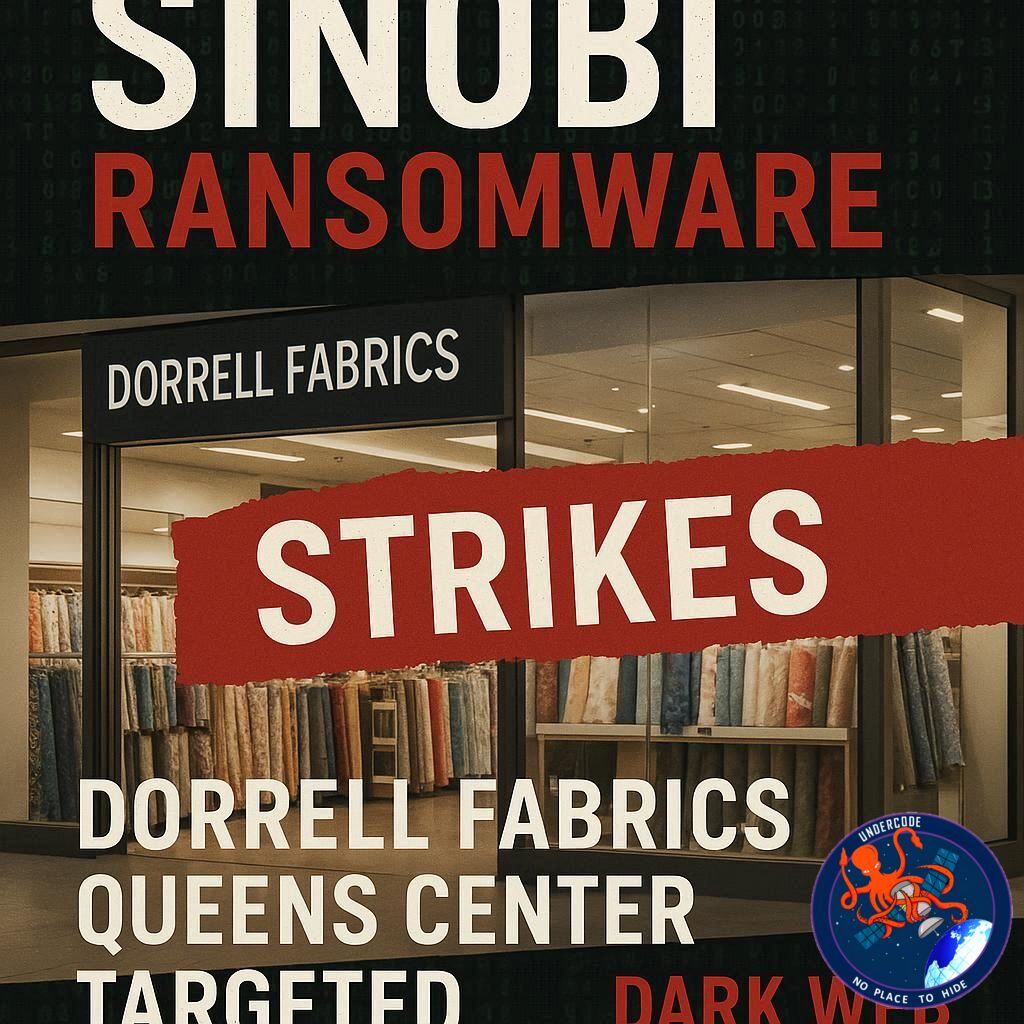
Cybercrime continues to evolve, and ransomware remains one of the most destructive threats for organizations worldwide. On September 28, 2025, fresh activity from the notorious Sinobi ransomware group was detected on the dark web. ThreatMon’s Threat Intelligence Team confirmed that two new victims — Dorrell Fabrics and Queens Center For Change — have been added to the group’s list of compromised entities. This revelation underscores the persistence of cybercriminals who exploit vulnerabilities in digital infrastructures, pushing businesses and nonprofits into crisis mode.
the Incident
The Sinobi ransomware gang has resurfaced with attacks against two distinct targets: Dorrell Fabrics, a textile company, and Queens Center For Change, a nonprofit organization. Both names were listed on underground ransomware forums, as reported by ThreatMon at approximately 21:48–21:49 UTC+3 on September 28, 2025.
The attack highlights the group’s strategy of targeting diverse sectors, proving that no organization — whether profit-driven or community-based — is immune from cyber threats.
Ransomware gangs like Sinobi typically infiltrate networks through phishing emails, weak security protocols, or compromised remote access systems. Once inside, they encrypt critical files and demand payment, usually in cryptocurrency, in exchange for decryption keys.
ThreatMon, a specialized threat intelligence platform, confirmed the activity by monitoring dark web chatter and ransomware portals. This type of visibility allows cybersecurity experts to flag potential victims early, but once a name appears on a gang’s victim list, it often means data exfiltration has already occurred.
The incident also raises concerns about the supply chain impact. For Dorrell Fabrics, disruption could ripple into the textile industry, affecting manufacturers and retail partners. For Queens Center For Change, the consequences could be even more severe, potentially halting services for vulnerable communities relying on its support programs.
The timing of the attacks — close together within the same minute — suggests a coordinated campaign or the deployment of automated attack tools by the ransomware operators.
These new listings serve as a grim reminder of the growing boldness of ransomware groups. Unlike traditional cybercriminals who hide in the shadows, ransomware gangs now openly publicize their victims on dark web portals as part of their extortion strategy.
Both victims face tough choices: pay the ransom and risk future attacks, or resist and face data leaks, operational disruption, and reputational damage. For many small and medium-sized organizations, the cost of recovery can be devastating, sometimes forcing permanent closure.
The Sinobi gang has been active in previous years, but its recent resurgence indicates it may be regaining momentum, possibly due to alliances with other cybercriminal groups or new exploit kits circulating in underground markets.
What Undercode Say:
The Sinobi ransomware group’s recent activity sheds light on the fragile state of cybersecurity in 2025. Despite increased awareness, many organizations continue to operate with outdated defenses, leaving them exposed to modern attack techniques.
From a technical perspective, the Sinobi gang is known for:
Using double extortion tactics, where they not only encrypt data but also steal sensitive information to threaten public leaks.
Leveraging ransomware-as-a-service (RaaS) models, which lower the barrier for entry into cybercrime.
Exploiting remote desktop protocol (RDP) vulnerabilities and phishing campaigns to breach networks.
These methods reveal a structured, almost corporate-like operation that continues to thrive because of low cyber hygiene practices in many organizations.
The choice of targets is also significant. Dorrell Fabrics represents traditional manufacturing, a sector with often less mature cybersecurity frameworks. On the other hand, Queens Center For Change represents the nonprofit and NGO sector, which typically lacks resources for robust defenses. Attacking such organizations demonstrates Sinobi’s willingness to exploit even those serving communities in need.
Economically, ransomware gangs rely on victims being desperate to restore operations quickly. For a fabric manufacturer, delays can disrupt production schedules and contracts. For a nonprofit, downtime can mean withholding critical services from those in crisis. This urgency increases the likelihood of ransom payments.
Another angle to consider is the public relations damage. When data leaks involve employee records, client details, or donor information, trust can collapse overnight. For smaller entities, this reputational blow can be harder to survive than the technical breach itself.
Cybersecurity analysts point out that ransomware groups like Sinobi thrive on global disunity in cyber policy. While some governments push for strict ransom payment bans, others leave decisions to private organizations, creating loopholes that attackers exploit.
The synchronized attack timestamps also suggest that Sinobi may be testing or demonstrating new automated attack frameworks. If confirmed, this would mean the group is scaling operations, potentially targeting hundreds of victims at once rather than conducting isolated campaigns.
Preventing future incidents requires a multi-layered approach: employee training to spot phishing attempts, zero-trust architectures to minimize access risks, and investments in endpoint detection and response (EDR) systems.
Organizations must also improve their incident response plans, ensuring that data backups are secure, offline, and regularly tested. Without this, even a small attack can spiral into a full-blown operational disaster.
Ultimately, what this incident reveals is a shifting battleground: cybercriminals are becoming bolder, faster, and more ruthless, while many organizations still treat cybersecurity as an afterthought rather than a core business requirement.
Fact Checker Results ✅❌
✅ Sinobi ransomware group has indeed added Dorrell Fabrics and Queens Center For Change to its victim list.
✅ ThreatMon confirmed these attacks via its dark web monitoring tools.
❌ There is no evidence yet of ransom amounts or successful negotiations.
Prediction 🔮
The Sinobi ransomware group is likely to expand its attack scope in the coming months, targeting small and mid-sized organizations across diverse industries. If its use of automation is confirmed, we could see a surge in simultaneous attacks, overwhelming victims who lack resources for defense. Organizations in manufacturing, healthcare, and nonprofit sectors may be the most vulnerable, making proactive cybersecurity investments more crucial than ever.
🕵️📝✔️Let’s dive deep and fact‑check.
References:
Reported By: x.com
Extra Source Hub:
https://www.discord.com
Wikipedia
OpenAi & Undercode AI
Image Source:
Unsplash
Undercode AI DI v2
🔐JOIN OUR CYBER WORLD [ CVE News • HackMonitor • UndercodeNews ]
📢 Follow UndercodeNews & Stay Tuned:
𝕏 formerly Twitter 🐦 | @ Threads | 🔗 Linkedin | 🦋BlueSky | 🐘Mastodon


