
Listen to this Post
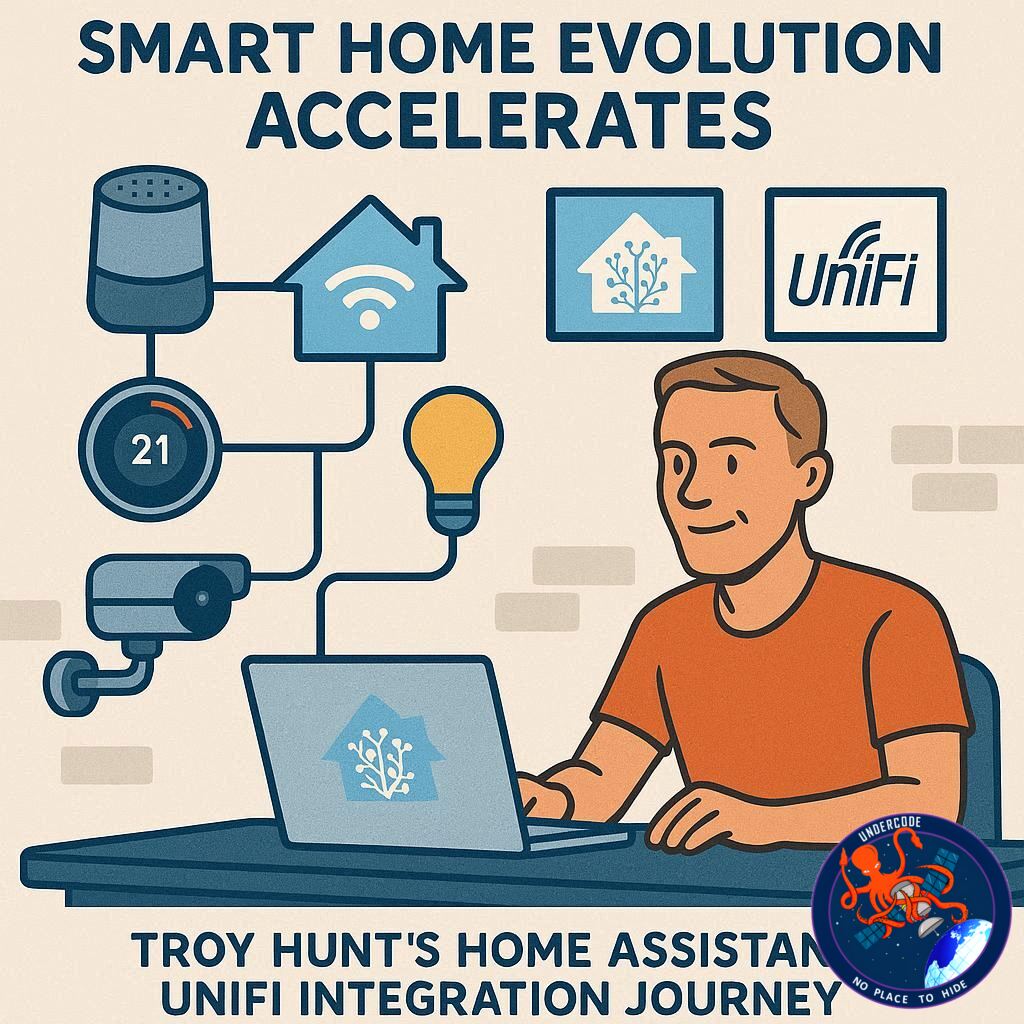
Introduction: A Practical Look at Modern Smart Home Convergence
The modern smart home is no longer just a collection of disconnected gadgets. It has evolved into a tightly integrated ecosystem where security cameras, sensors, automation platforms, and networking infrastructure communicate seamlessly. In a recent series of updates shared by security expert and technologist Troy Hunt, we see a real-world example of how platforms like Home Assistant and Ubiquiti are shaping this future. His hands-on experience highlights both the convenience and the growing complexity of building a fully connected home environment. From integration improvements to hardware testing and sensor deployment, this journey reflects how smart home systems are becoming more unified, responsive, and powerful than ever before.
the Original Updates: Integration, Hardware Testing, and Smart Home Expansion
Troy Hunt began by integrating his new setup into Home Assistant, a popular open-source home automation platform. Initially, the integration did not expose all expected entities such as doorbell events and speaker controls. However, after restarting Home Assistant, significantly more entities became available, allowing deeper control and visibility across devices. Once the entities were properly named and configured, the system functioned smoothly and reliably.
Following the integration improvements, he tested the night vision capability of his older camera before replacing it. The comparison between the old and new systems showed a dramatic difference in image quality. The updated system provided much clearer night vision, especially in zoomed-in frames, where detail and clarity were significantly enhanced. The improvement was described as extremely noticeable, almost like moving from low-resolution surveillance to a modern high-definition standard.
After evaluating the camera upgrade, attention shifted to a new device ecosystem called SuperLink. This marked a new exploration phase, as the system was unfamiliar territory. The goal was to understand whether SuperLink should be integrated into Home Assistant, kept within the Ubiquiti ecosystem, or used in a hybrid configuration combining both platforms. The hardware package included a central gateway and mounting brackets, suggesting a structured and scalable system design.
Additional components were then revealed, including sirens, motion detectors, entry sensors, and multi-purpose sensors. The motion detectors were compact, measuring under 10 centimeters, while the entry sensors used a reed-switch style mechanism but were larger than some competing devices. However, they appeared to offer stronger magnets and potentially better detection range. Some sensors were designed as all-in-one units, with at least one featuring a weather-resistant casing, indicating suitability for both indoor and outdoor environments.
Setup continued with a typical installation process involving adding devices, adopting them into the system, updating firmware, and waiting for synchronization. One criticism noted during this process was the small font size used in the product instructions, which made setup more difficult than necessary. It was suggested that QR-based instructions would be more user-friendly.
Once configured, the entry sensor immediately appeared in the Protect system after its battery tab was removed, automatically triggering detection and requesting a firmware update. This demonstrated a high level of automation in device onboarding. A range test was also performed, placing the gateway at the farthest possible point in the house. Despite being near the limit, the connection remained stable, although signal strength appeared reduced due to suboptimal placement of the gateway.
Finally, integration with Home Assistant through the UniFi ecosystem was confirmed. Devices were automatically detected and made available for automation workflows. Although some sensor data was visible but not yet fully exposed, the system overall demonstrated strong interoperability between UniFi Protect and Home Assistant, reinforcing the idea of a deeply connected smart home environment.
What Undercode Say:
The evolution of smart home ecosystems is no longer about single devices working independently.
It is about layered intelligence across platforms that communicate through shared protocols and integrations.
What Troy Hunt demonstrates here is not just a hobby setup, but a microcosm of where consumer security infrastructure is heading.
Home Assistant acts as the orchestration layer, while UniFi provides the hardware backbone.
This separation of concerns is increasingly important as devices multiply in modern homes.
The initial issue with missing entities highlights a common challenge in smart automation systems.
Discovery and entity exposure are often inconsistent until a system reboot or re-sync occurs.
This is a reminder that even mature platforms still rely on imperfect device negotiation processes.
Once stabilized, however, the system shows the power of abstraction layers in automation design.
Naming entities properly becomes a critical step, almost like structuring a database schema.
Without consistent naming, automation logic can quickly become unmanageable.
The night vision comparison is more than a hardware upgrade observation.
It reflects the rapid acceleration of imaging technology in surveillance systems.
Modern cameras are shifting from basic monitoring tools to high-precision analytical devices.
This improves not only visibility but also downstream automation accuracy.
For example, better image clarity can enhance motion detection validation and reduce false positives.
The introduction of SuperLink signals a move toward integrated security ecosystems.
Instead of standalone sensors, manufacturers are building closed-loop systems with centralized gateways.
This reduces latency and improves reliability in home security responses.
However, it also introduces ecosystem lock-in concerns.
Users must decide between open platforms like Home Assistant and proprietary ecosystems like UniFi Protect.
The hybrid approach seen here suggests a pragmatic middle ground.
Strong hardware ecosystems combined with open software layers may become the dominant model.
The physical design of sensors also indicates a shift toward industrial-grade consumer hardware.
Stronger magnets, weatherproof casings, and longer range detection point to enterprise influence in home devices.
Setup friction remains a weak point in many smart home systems.
Even simple onboarding steps still rely heavily on user interpretation rather than full automation.
The criticism of instruction readability highlights a surprisingly overlooked UX issue.
As systems become more complex, documentation quality becomes as important as hardware capability.
The successful automatic adoption of devices into Protect is a positive indicator of ecosystem maturity.
It reduces setup time and lowers the barrier to entry for non-technical users.
Range testing confirms that mesh or gateway-based systems can cover large residential spaces effectively.
However, placement and orientation still significantly impact performance.
Finally, full integration into Home Assistant reinforces the long-term vision of unified home automation.
A system where security, sensors, and automation logic operate across vendors is no longer theoretical.
It is already being built incrementally through integrations like UniFi and Home Assistant bridges.
Fact Checker Results
✔ The described integration behavior aligns with known Home Assistant and UniFi Protect functionality.
✔ Device auto-discovery after pairing is consistent with UniFi ecosystem design.
❌ Exact performance claims (such as range limits and night vision quality comparisons) are subjective and not independently verified.
Prediction
Smart home ecosystems will continue moving toward hybrid architectures combining closed hardware platforms with open automation layers. Home Assistant will likely remain a central orchestration hub, while companies like Ubiquiti expand tightly integrated sensor and security networks. Future iterations of systems like SuperLink may reduce setup friction further through fully automated provisioning, improved mesh connectivity, and deeper AI-driven monitoring capabilities. Over time, manual configuration steps such as entity naming and device adoption may become largely invisible to end users as ecosystems mature into fully self-organizing environments.
🕵️📝✔️Let’s dive deep and fact‑check.
References:
Reported By: x.com
Extra Source Hub (Possible Sources for article):
https://stackoverflow.com
Wikipedia
OpenAi & Undercode AI
Image Source:
Unsplash
Undercode AI DI v2
Bing
🔐JOIN OUR CYBER WORLD [ CVE News • HackMonitor • UndercodeNews ]
📢 Follow UndercodeNews & Stay Tuned:
𝕏 formerly Twitter 🐦 | @ Threads | 🔗 Linkedin | 🦋BlueSky | 🐘Mastodon


