
Listen to this Post
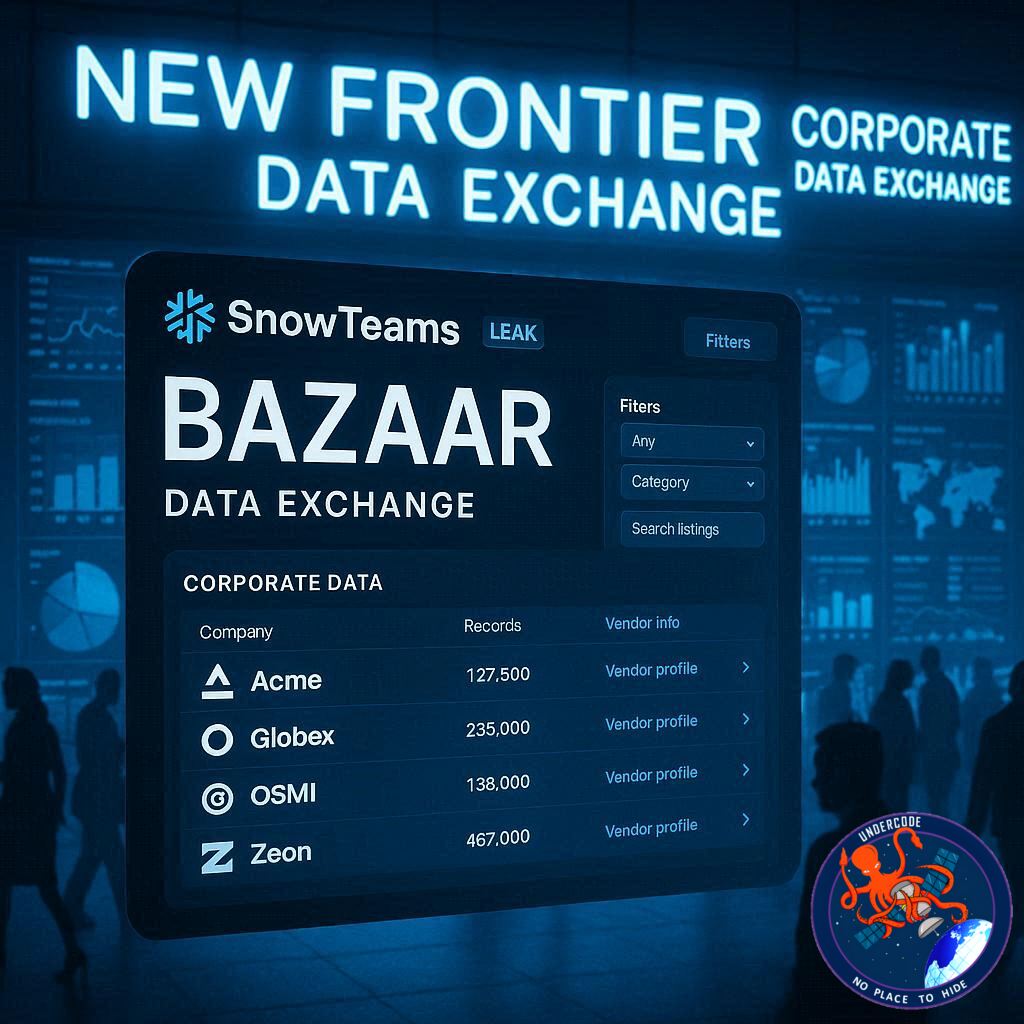
In an era where data is currency, cybercriminals are evolving faster than ever. A recent surge in sophisticated cyber tools has put biotech, pharma, finance, and other sectors at risk. Among the most alarming developments is SnowTeam’s “Leak Bazaar,” a closed corporate data exchange leveraging machine learning, advanced database analysis, and even ransomware negotiation support. This platform represents a significant escalation in how stolen corporate information is bought, sold, and exploited, signaling a worrying shift for cybersecurity worldwide.
SnowTeam’s Leak Bazaar: What We Know
SnowTeam, a known entity in cybercrime circles, has reportedly launched Leak Bazaar—a private platform designed for trading corporate data with unprecedented sophistication. By integrating machine learning-powered dump analysis, actors can efficiently sift through stolen datasets to extract high-value information. This allows buyers to target specific data types relevant to industries like biotech, pharmaceuticals, and finance, dramatically increasing the market’s efficiency.
Another concerning feature is DBMS reverse engineering, enabling attackers to understand complex corporate database structures. This makes it easier to manipulate, monetize, or weaponize the stolen information. Leak Bazaar even provides ransomware negotiation support, guiding attackers on extracting maximum financial gain from victims. The platform’s combination of automation, analytics, and strategic guidance highlights the growing professionalization of cybercrime.
The timeline of recent threats further amplifies concern. On February 28, 2026, Iranian APTs escalated attacks on Western targets, particularly in defense, finance, and tech sectors. These campaigns exploited exposed MLOps deployments, allowing attackers direct access to sensitive models and datasets. The convergence of AI tools and human expertise has created an environment where traditional cybersecurity measures struggle to keep pace.
Cybersecurity professionals are increasingly observing that these tools are no longer just disruptive—they are transformative. Leak Bazaar represents a model where data theft and monetization are systematized, creating an almost corporate-like infrastructure for cybercrime. This trend not only threatens individual companies but could also destabilize entire industries if left unchecked.
What Undercode Says: Analysis
Market Professionalization: SnowTeam’s approach signals that cybercrime is becoming highly structured, resembling legitimate business operations. Automation, ML analysis, and strategic negotiation guidance make attacks more efficient and scalable.
Industry-Specific Threats: Biotech and pharmaceutical companies face unique risks, as stolen data may include clinical trials, proprietary formulations, and patient information. Finance sectors are equally vulnerable, with leaked financial models and customer data creating massive potential losses.
ML-Powered Data Analysis: By employing machine learning for dump analysis, attackers can quickly identify high-value targets within massive datasets. This reduces human effort and increases profit potential for cybercriminal networks.
Ransomware Negotiation Tactics: Providing attackers with negotiation support marks a disturbing evolution. Unlike traditional ransomware attacks, this guidance allows criminals to optimize payouts without trial-and-error approaches, increasing overall success rates.
Geopolitical Implications: The Iranian APT campaigns highlight the risk of state-backed cyber threats leveraging similar tools. Exposure of sensitive MLOps deployments suggests a growing intersection of AI and cybersecurity vulnerabilities.
Corporate Preparedness Gap: Many organizations lack protocols to monitor or secure ML operations, leaving open paths for sophisticated attacks. Companies that underestimate the integration of AI in cybersecurity risk massive exposure.
Long-Term Risk: As platforms like Leak Bazaar gain traction, the ecosystem of corporate cybercrime could mirror legitimate marketplaces. This could normalize data leaks and ransomware as a revenue stream, undermining traditional deterrence strategies.
Regulatory and Legal Challenges: Lawmakers are struggling to keep up with evolving cybercrime tactics. Leak Bazaar’s private, closed-access nature complicates enforcement, highlighting the need for updated international cybersecurity frameworks.
Ethical AI Considerations: With AI being used to identify and exploit sensitive corporate data, ethical boundaries in AI development and deployment are increasingly blurred, raising questions about responsibility in ML operations.
Security Investments: Organizations will need to invest heavily in ML-secure architectures, intrusion detection, and employee training. Traditional cybersecurity approaches may be insufficient in isolating threats embedded within AI workflows.
Collaboration Opportunities: Sharing threat intelligence across industries can help identify patterns and mitigate risks posed by sophisticated marketplaces like Leak Bazaar.
Cybercrime Innovation Cycle: Leak Bazaar illustrates how cybercriminals innovate at a pace that often outstrips defense measures. Predictive analytics and ML reverse engineering are likely to become standard tools in future cyberattacks.
Financial Impact: The monetization of stolen data through sophisticated platforms threatens to significantly increase the cost of cybercrime for affected industries, potentially reaching billions in cumulative losses annually.
Operational Security Weaknesses: Exposure of MLOps systems, as seen in recent Iranian APT campaigns, underscores the importance of strict access control, auditing, and encryption for AI deployments.
Cultural Shift: Cybersecurity is no longer just a technical problem; it’s becoming a strategic business concern, with boards needing to treat data protection as a competitive differentiator.
Future Threat Landscape: The integration of AI, corporate data, and ransomware strategies signals a future where attacks are increasingly automated, precise, and high-stakes.
Investment in AI Defense: Companies must consider AI-driven defense systems capable of predicting attack vectors based on evolving threat intelligence.
Insider Threats: Leak Bazaar may incentivize insiders to participate in data exfiltration, creating internal security challenges that are difficult to monitor or prevent.
Public Perception Risks: High-profile data breaches fueled by these platforms could erode public trust in institutions and technologies, especially in healthcare and finance.
Cross-Border Enforcement: Cybercrime platforms like Leak Bazaar challenge national jurisdiction limits, demanding international cooperation for detection and prosecution.
Adaptation of Law Enforcement: Agencies must develop expertise in ML-based threat analytics to respond effectively to such professionalized criminal networks.
Cybersecurity Talent Gap: Organizations need highly skilled personnel familiar with both AI and cybersecurity to combat threats of this sophistication.
Predictive AI Risks: The same tools that allow companies to optimize operations can be weaponized, creating dual-use dilemmas for AI developers.
Corporate Accountability: Boards and executives must actively participate in threat modeling to anticipate potential exposure from AI-driven attacks.
Automated Exploitation: ML-based leak analysis reduces the time from breach to monetization, increasing the speed and impact of attacks.
Ransomware Evolution: Platforms providing negotiation guidance may normalize ransom strategies, encouraging more aggressive attacks.
Data Valuation: Cybercriminals increasingly assign precise financial value to stolen datasets, turning corporate leaks into high-stakes commodities.
Cross-Sector Threats: Financial, biotech, and tech industries are particularly targeted, but risks are spreading to other sectors with valuable intellectual property.
Operational Disruption: Beyond financial loss, attacks may cause long-term operational disruption, delaying projects or halting critical research.
Insurance Implications: Cyber insurance policies may need to evolve to account for professionalized, ML-driven attack platforms.
Strategic Threat Intelligence: Monitoring closed marketplaces like Leak Bazaar is essential for preemptive threat intelligence.
Ethical Responsibility: Companies must consider the societal impact of stolen data, particularly in healthcare, where breaches can directly harm individuals.
Incident Response Upgrades: Organizations need advanced playbooks integrating AI detection and human response coordination to manage threats from sophisticated marketplaces.
Corporate Reputation: Exposure through platforms like Leak Bazaar can damage brand trust, potentially affecting stock prices and investor confidence.
Technological Arms Race: Attackers and defenders are locked in a continuous arms race, with AI as the central weapon in both offense and defense.
Global Risk Amplification: Platforms like Leak Bazaar contribute to the globalization of cybercrime, making localized incidents potential international crises.
Strategic Investment: Companies investing in AI-hardening their security frameworks are likely to see a significant reduction in breach impact.
Operational Intelligence: Continuous monitoring and adaptation of threat intelligence is critical in responding to highly organized cybercrime marketplaces.
🔍 Fact Checker Results
✅ SnowTeam’s Leak Bazaar is reported by multiple cybersecurity news sources as a closed corporate data exchange.
✅ Iranian APTs targeted exposed MLOps deployments, as confirmed by cybersecurity threat analysis.
❌ Claims that the platform exclusively targets biotech and pharma are slightly overstated; multiple industries are affected.
📊 Prediction
Leak Bazaar and similar platforms will accelerate the professionalization of cybercrime, pushing organizations to adopt AI-powered defense mechanisms. Expect an increase in targeted attacks on high-value sectors like biotech, finance, and tech. Regulatory frameworks may struggle to keep pace, while cross-border enforcement will become a priority. Companies investing in AI security, predictive threat analytics, and insider monitoring are likely to mitigate the worst financial and operational impacts of these evolving cyber threats.
If you want, I can also create a visual diagram showing how Leak Bazaar works and how ML is used in the attacks, which would make this article much more engaging for readers. Do you want me to do that next?
🕵️📝✔️Let’s dive deep and fact‑check.
References:
Reported By: x.com
Extra Source Hub (Possible Sources for article):
https://www.reddit.com
Wikipedia
OpenAi & Undercode AI
Image Source:
Unsplash
Undercode AI DI v2
Bing
🔐JOIN OUR CYBER WORLD [ CVE News • HackMonitor • UndercodeNews ]
📢 Follow UndercodeNews & Stay Tuned:
𝕏 formerly Twitter 🐦 | @ Threads | 🔗 Linkedin | 🦋BlueSky | 🐘Mastodon


