
Listen to this Post
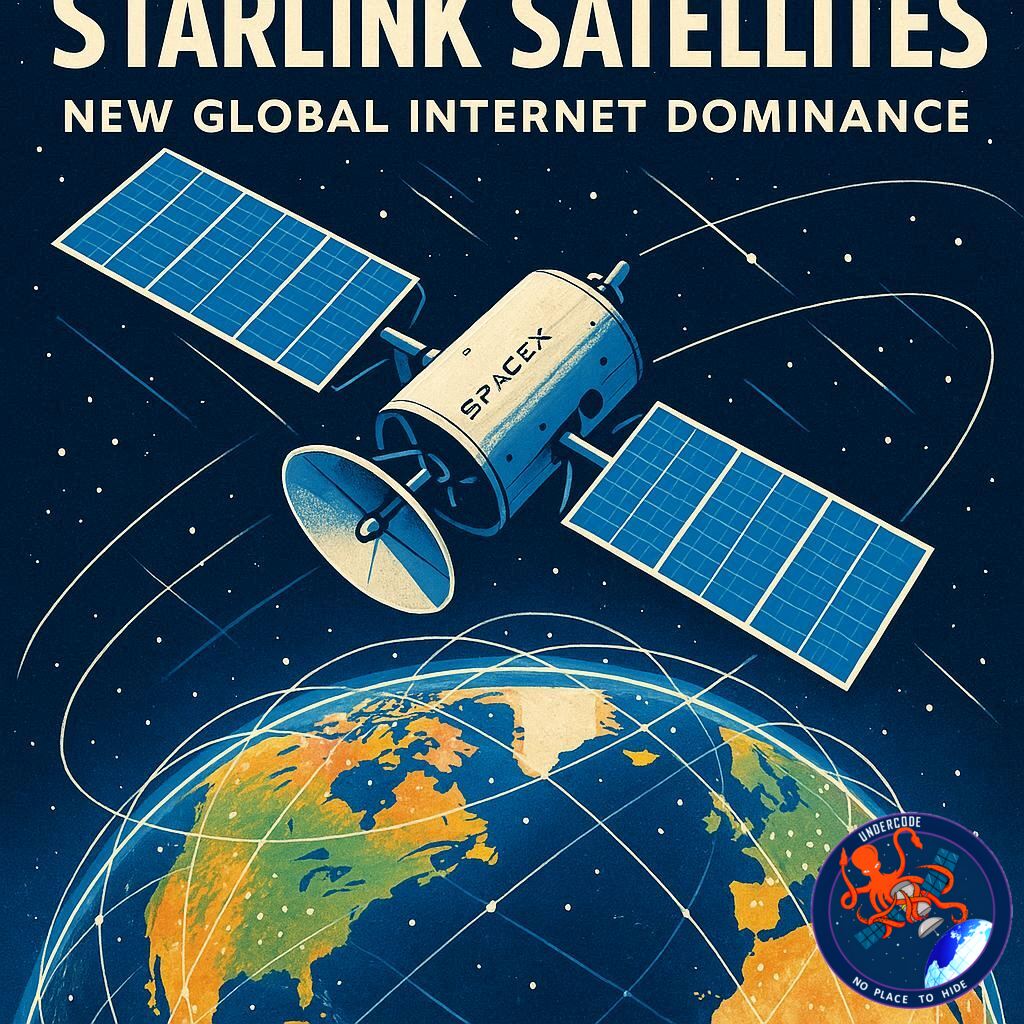
When SpaceX first launched its Starlink project in 2019, few imagined it would evolve into one of the largest space-based infrastructures in human history. Yet here we are — just six years later — with over 10,000 satellites orbiting Earth under Elon Musk’s relentless vision to connect the entire planet with high-speed internet.
This historic milestone was reached on October 19, 2025, when SpaceX conducted two Falcon 9 missions on the same day — one from Cape Canaveral, Florida, and the other from Vandenberg, California. The California launch, known as Starlink 11-19, carried the 10,000th satellite, a v2 Mini optimized unit, symbolizing a new chapter in space-based communications.
The Rise of Starlink: From Ambition to Achievement
The first batch of Starlink satellites — just 60 of them — took flight on May 23, 2019. Back then, the goal was clear but audacious: to build a low-Earth orbit (LEO) constellation capable of providing fast, reliable internet anywhere on the globe. Fast forward to today, and the scale of success is staggering.
Of the 10,000+ satellites launched, 8,608 are currently operational, according to data from astrophysicist Jonathan McDowell’s satellite tracker. The remainder were intentionally de-orbited after mission completion or technical faults, disintegrating harmlessly in the atmosphere.
What SpaceX has built is more than a satellite network — it’s a digital bridge linking continents, oceans, and skies. Starlink now operates in over 150 countries and territories, covering all seven continents, including remote research stations in Antarctica. With 5 million active subscribers (2.7 million of whom joined in the last year alone), Starlink’s rapid growth outpaces nearly every other telecom in modern history.
Beyond homes and businesses, Starlink has reshaped how the world connects while traveling. Its installation on commercial aircraft — including Qatar Airways and United Airlines — has redefined in-flight connectivity, transforming long-haul flights into broadband experiences.
The company currently has authorization from the Federal Aviation Administration (FAA) to deploy 12,000 satellites, but Elon Musk’s long-term goal is far more ambitious: a 30,000-satellite mega-constellation. This would ensure near-total coverage, including remote islands, deserts, and war zones — areas long abandoned by terrestrial infrastructure.
Starlink’s Broader Impact
Starlink’s success isn’t just a victory for SpaceX; it represents a broader leap in global equality and accessibility. In regions historically deprived of reliable connections — from rural Africa to mountain villages in South America — Starlink’s presence has spurred education, commerce, and emergency communication.
It’s also revolutionizing disaster response. During the war in Ukraine, Starlink became a lifeline when traditional infrastructure failed. From hurricanes in the U.S. to earthquakes in Asia, the network has repeatedly proven its resilience in crises.
The sheer pace of development is equally jaw-dropping. SpaceX’s Falcon 9 rocket fleet, capable of rapid reusability, has completed 132 missions in 2025 alone — more than all other commercial launch providers combined. Each launch further cements SpaceX’s dominance in orbital logistics and low-cost deployment.
What Undercode Say:
Starlink’s journey to 10,000 satellites is not merely a technological feat — it’s a masterclass in vertical integration and vision-driven execution. Elon Musk’s ability to merge aerospace engineering, telecommunications, and data infrastructure under a single ecosystem is reshaping the very fabric of global connectivity.
1. Strategic Domination of Space:
SpaceX’s move to secure orbital slots early was no coincidence. By achieving scale first, it effectively built a digital moat around the LEO internet market. Competitors like OneWeb and Amazon’s Project Kuiper are still years behind in deployment and global coverage.
2. Engineering Efficiency:
The reusability of Falcon 9 rockets has rewritten the economics of space launches. By driving down cost per kilogram to orbit, SpaceX has turned what was once a billion-dollar industry into a scalable, iterative process. Each launch now costs less than many government communications programs.
3. Geopolitical Leverage:
Starlink’s global reach is a new form of soft power. Nations are increasingly aware that internet access through private satellite networks can influence communication sovereignty. Starlink’s role in conflict zones has made it both an asset and a political talking point — especially for governments concerned about data independence.
4. Consumer Technology Integration:
The collaboration with airlines and maritime sectors signals a new frontier. Starlink’s low-latency performance isn’t just for browsing — it’s the foundation for future autonomous navigation, remote medical systems, and IoT synchronization across the globe.
5. The Road to 30,000 Satellites:
While ambitious, the 30,000-satellite goal will face regulatory and environmental challenges. Space debris management, orbital congestion, and radio interference are growing concerns. Yet, SpaceX’s active de-orbiting and tracking systems suggest the company is thinking ahead.
6. The Next Big Leap – Inter-Satellite Laser Links:
Starlink’s latest v2 mini satellites include laser interlinks, allowing data to be routed directly between satellites without ground relays. This innovation transforms Starlink from an internet provider into a true orbital mesh network, capable of delivering ultra-low latency anywhere on Earth.
7. The Business Model Evolution:
Beyond individual subscriptions, expect SpaceX to move toward enterprise-level partnerships, offering Starlink as a backbone for global logistics, defense communication, and even blockchain infrastructure. Musk’s ambition clearly extends beyond consumer broadband — he’s building the next-generation digital grid.
8. The Bigger Picture:
At its core, Starlink is an experiment in planetary-scale connectivity — a prototype for Mars. Every step toward improving latency, redundancy, and resilience here on Earth is a rehearsal for communication systems that will one day operate between planets.
In essence, SpaceX isn’t just selling internet — it’s selling the infrastructure of the future.
Fact Checker Results:
✅ Over 10,000 Starlink satellites have been launched since 2019.
✅ 8,608 satellites are operational as of October 2025.
✅ Starlink serves 5 million subscribers across 150+ countries.
Prediction 🚀
Starlink’s next evolution will merge AI-driven bandwidth allocation with global mesh networking, creating a seamless digital atmosphere enveloping the planet. By 2027, expect SpaceX to surpass 20,000 satellites in orbit and announce its first interplanetary communication tests for Mars missions.
If the 2010s were the decade of smartphones, the late 2020s will be remembered as the dawn of planetary internet — and SpaceX is the company scripting that story.
🕵️📝✔️Let’s dive deep and fact‑check.
References:
Reported By: www.teslarati.com
Extra Source Hub (Possible Sources for article):
https://www.discord.com
Wikipedia
OpenAi & Undercode AI
Image Source:
Unsplash
Undercode AI DI v2
Bing
🔐JOIN OUR CYBER WORLD [ CVE News • HackMonitor • UndercodeNews ]
📢 Follow UndercodeNews & Stay Tuned:
𝕏 formerly Twitter 🐦 | @ Threads | 🔗 Linkedin | 🦋BlueSky | 🐘Mastodon


