
Listen to this Post
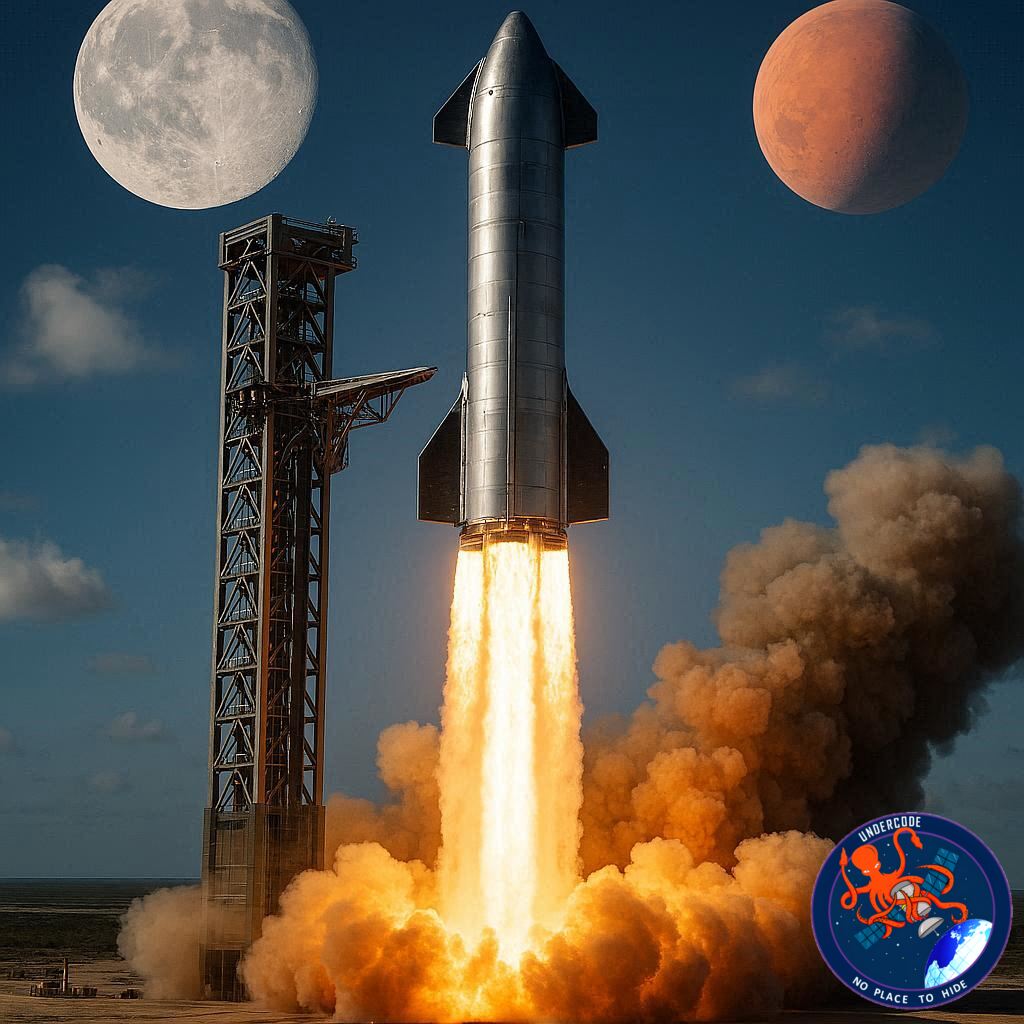
A New Era of Spaceflight Begins
The global space race entered another dramatic chapter after SpaceX successfully launched the newest and largest version of its Starship rocket during its latest test mission. The launch was not just another engineering experiment. It represented a major signal that commercial space travel is accelerating faster than governments and competitors expected.
The latest Starship test attracted worldwide attention because it combined massive engineering ambition, political importance, and financial timing. While the rocket itself is designed to eventually carry humans to the Moon and Mars, the launch also came at a critical moment for the company as it reportedly moves closer toward what could become one of the largest public offerings in modern history.
Elon Musk’s long-term dream of making humanity a multi-planetary species suddenly feels less like science fiction and more like an aggressive industrial roadmap. Even though the mission ended with a fiery explosion over the Indian Ocean, many aerospace analysts still considered the flight a major success.
Starship V3 Towers Above Previous Versions
The newest version of Starship, known as V3, launched from southern Texas shortly after 5:30 PM local time. At more than 407 feet tall when fully assembled, the rocket became the largest Starship configuration ever tested by the company.
The rocket thundered into the sky powered by enormous thrust generated from SpaceX’s advanced engines. During the livestream, engineers and employees celebrated as several mission objectives appeared to be completed successfully.
The test flight lasted roughly one hour before the spacecraft eventually reached the Indian Ocean. The mission ended with the rocket erupting into flames upon impact. Despite the fiery conclusion, the outcome still delivered valuable flight data that SpaceX engineers can use to improve future missions.
Elon Musk later posted on X that the launch represented a “goal for humanity,” reinforcing his long-standing belief that Starship will eventually become the transportation system that carries humans beyond Earth.
Why Starship Matters More Than Earlier Rockets
Unlike traditional rockets that are partially reusable, Starship is designed around full reusability. That concept could fundamentally change the economics of space travel.
Previous launch systems often cost hundreds of millions of dollars per mission because large parts of the rocket were destroyed after launch. SpaceX aims to dramatically reduce those costs by recovering and reusing nearly every component.
The V3 design also introduces major structural improvements compared to older Starship models. Engineers expanded its scale, enhanced fuel systems, and improved overall payload capability.
This matters because future Moon missions will require enormous cargo capacity. Sending astronauts, lunar habitats, supplies, and scientific equipment into deep space demands transportation systems much larger than current-generation rockets.
NASA’s Moon Plans Depend Heavily on Starship
During the pre-launch event, Jared Isaacman highlighted how important Starship has become for NASA’s future lunar ambitions.
NASA’s Artemis program aims to return humans to the Moon for the first time since the Apollo era over fifty years ago. The agency hopes these missions will establish a long-term human presence on the lunar surface before eventually pushing toward Mars exploration.
NASA selected both SpaceX and Blue Origin to develop lunar landing systems. The contracts are worth billions of dollars because the stakes are enormous.
At the same time, China continues advancing its own crewed Moon program with ambitions targeting around 2030. That geopolitical pressure is pushing the United States to accelerate development timelines.
Space exploration is no longer just about scientific prestige. It has become deeply connected to military influence, technological leadership, industrial manufacturing, and future economic dominance.
The Explosion Was Not Necessarily a Failure
One of the biggest misunderstandings surrounding modern rocket testing is the assumption that explosions automatically equal failure.
For SpaceX, controlled risk-taking is part of the engineering philosophy. The company frequently tests prototypes in real-world conditions, collects data from failures, then rapidly redesigns systems.
That strategy sharply contrasts with older aerospace companies that traditionally spent years testing components before attempting launches.
Starship’s fiery ending may actually help accelerate future development cycles. Every sensor reading, structural stress point, and flight anomaly gives engineers new information.
In aerospace development, especially for experimental spacecraft, failure can become one of the fastest pathways to success.
The Financial Timing Behind the Launch
The launch also carried massive financial importance.
Reports surrounding SpaceX’s potential public offering have intensified investor interest. If the company eventually enters public markets, analysts believe it could become one of the largest IPOs ever seen.
That possibility changes the meaning behind every Starship test. Investors are no longer only watching engineering progress. They are evaluating whether SpaceX can dominate future launch markets, satellite deployment, Moon logistics, and even interplanetary transportation.
The company already transformed global satellite internet infrastructure through Starlink. Now it is trying to become the backbone of humanity’s deep-space transportation system.
Deep Analysis
The Starship V3 mission reveals something larger than a single rocket launch. It shows how aerospace development is shifting from government-led exploration into aggressive private-sector competition.
Traditional aerospace programs often moved slowly because of political budgets, regulatory oversight, and risk aversion. SpaceX operates more like a Silicon Valley technology company. Rapid iteration, public testing, and visible failures are all part of its strategy.
This approach has advantages.
Faster testing cycles allow SpaceX to gather real-world data continuously instead of waiting years between milestones. The company can redesign hardware at extraordinary speed compared to legacy aerospace manufacturers.
The engineering challenge behind Starship is also far greater than most people realize.
To support lunar and Martian missions, the spacecraft must solve several major problems simultaneously:
Orbital Refueling Complexity
Starship will eventually require in-orbit refueling systems to travel efficiently beyond Earth orbit. That means multiple spacecraft may need synchronized docking operations in space.
Thermal Protection Risks
Re-entering Earth’s atmosphere creates extreme heat. The thermal shield must survive repeated missions without catastrophic damage.
Massive Payload Demands
Moon bases and Mars missions require enormous cargo transportation capabilities. Starship’s giant frame is specifically designed for that future.
Rapid Reusability
Airplanes transformed travel because they could fly repeatedly with minimal turnaround time. SpaceX hopes Starship eventually operates similarly.
Cost Compression
Lower launch costs could completely reshape the global space economy. Smaller nations and private companies may gain access to space missions that were previously impossible financially.
Relevant Engineering Concepts Behind Starship
One critical rocket equation central to spacecraft propulsion is:
This equation explains how velocity change depends on exhaust velocity and mass ratio. It is one of the core principles behind modern rocket engineering and directly affects how spacecraft like Starship are designed.
Another key concept for orbital missions involves escape velocity and kinetic energy:
For giant spacecraft, the energy demands become enormous, which is why reusable systems are considered economically essential for long-term deep-space exploration.
What Undercode Say:
SpaceX is no longer acting like a traditional rocket company. It behaves more like an industrial-scale operating system for space infrastructure.
That difference matters.
Most legacy aerospace firms still think in terms of missions. SpaceX thinks in terms of ecosystems. Starship is not simply a rocket. It is intended to become the transportation layer for an entirely new economic frontier.
The fascinating part is how aggressively the company accepts public failure. In older aerospace culture, explosions damaged reputations. SpaceX converted explosions into marketing momentum. Every failed landing or fiery impact becomes proof that development is actively moving forward.
This psychological shift changed public expectations.
People now watch rocket failures almost like software beta testing. That cultural normalization gives SpaceX an enormous strategic advantage because it can iterate faster without losing public attention.
There is also a geopolitical dimension hidden beneath the excitement.
The United States understands that whoever controls reliable heavy-lift launch systems could dominate future space infrastructure. Satellites, military systems, lunar mining, communications, and even future manufacturing may depend on launch frequency and affordability.
China’s lunar ambitions are accelerating pressure on NASA and American aerospace companies. Artemis is no longer just a science project. It is becoming part of a technological competition between superpowers.
Starship sits directly in the center of that competition.
Financially, the timing is equally important.
If SpaceX enters public markets while Starship development is advancing successfully, investors may treat the company less like an aerospace manufacturer and more like foundational infrastructure for future industries.
That could radically inflate valuation expectations.
There is also a hidden risk.
SpaceX’s strategy depends heavily on Elon Musk’s leadership style. His willingness to tolerate failure drives innovation speed, but it also creates volatility. Regulatory agencies, investors, and government partners may eventually demand slower and safer development cycles once astronauts are directly involved.
Another overlooked issue is sustainability.
Massive launch frequencies could eventually create environmental concerns, atmospheric effects, and orbital congestion. Governments may impose stricter regulations as commercial launches increase globally.
Yet despite those concerns, the direction seems unavoidable.
Human civilization is gradually transitioning from isolated planetary existence toward permanent space infrastructure. That transition will not happen through one historic Moon landing moment. It will happen through repeated industrial launches, cargo systems, orbital fuel networks, and reusable spacecraft.
Starship represents the first serious attempt to industrialize interplanetary transport at scale.
That is why even a mission ending in flames still matters enormously.
The rocket may have exploded, but the broader trajectory of commercial space expansion clearly did not.
Fact Checker Results
✅ SpaceX successfully launched the Starship V3 test flight from Texas.
✅ NASA is actively partnering with SpaceX for Artemis Moon missions.
❌ The final operational timeline for Mars missions remains uncertain and highly experimental.
Prediction
🚀 Starship test flights will become increasingly frequent over the next two years as SpaceX pushes toward full reusability.
🌕 NASA’s Artemis missions will likely depend heavily on Starship infrastructure if lunar timelines remain on schedule.
📈 If SpaceX proceeds with a public listing, Starship success could become one of the biggest drivers of investor excitement in aerospace history.
▶️ Related Video (82% Match):
🕵️📝Let’s dive deep and fact‑check.
References:
Reported By: www.dw.com
Extra Source Hub (Possible Sources for article):
https://www.pinterest.com
Wikipedia
OpenAi & Undercode AI
Image Source:
Unsplash
Undercode AI DI v2
Bing
🔐JOIN OUR CYBER WORLD [ CVE News • HackMonitor • UndercodeNews ]
📢 Follow UndercodeNews & Stay Tuned:
𝕏 formerly Twitter 🐦 | @ Threads | 🔗 Linkedin | 🦋BlueSky | 🐘Mastodon | 📺Youtube


