
Listen to this Post
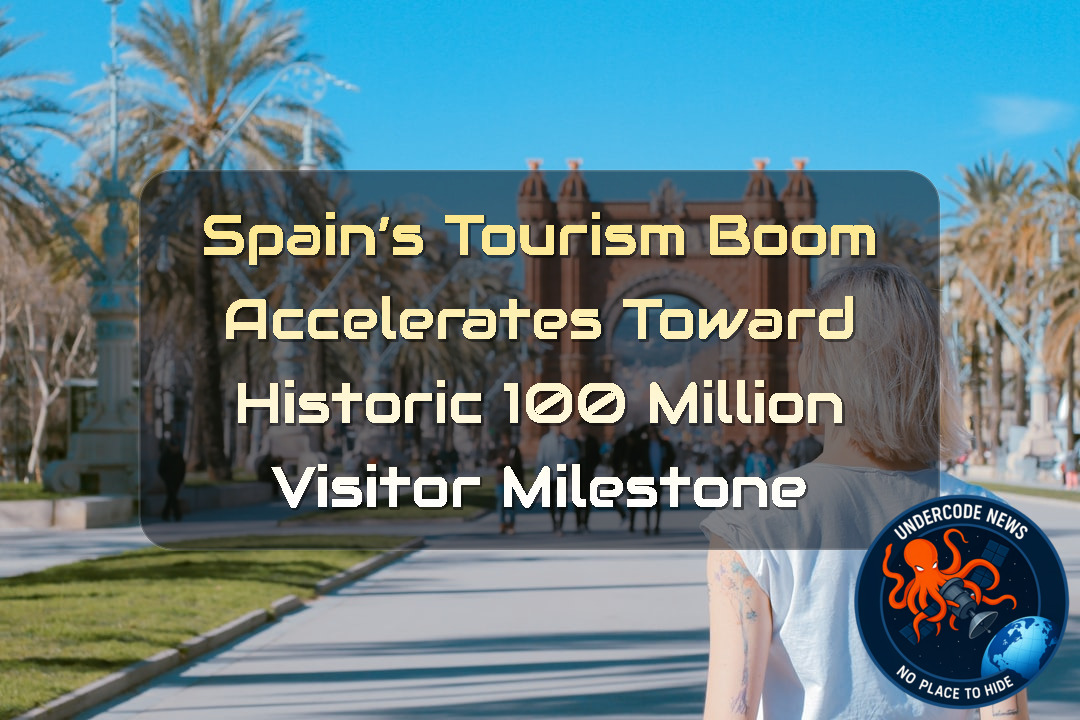 Introduction: A New Golden Era for Spanish Tourism
Spain’s tourism industry is showing remarkable strength in 2026, with international visitor numbers rising steadily and confidence growing across the sector. After a slower-than-expected start to the year, spring has brought renewed momentum, pushing the country closer to a historic milestone that once seemed out of reach.
The latest figures reveal not only the resilience of Spain’s tourism economy but also the country’s continued appeal as one of the world’s most attractive travel destinations. From Mediterranean beaches and cultural landmarks to thriving cities and business hubs, Spain continues to capture the attention of millions of travelers seeking both leisure and opportunity.
International Arrivals Continue to Climb
Spain welcomed 9.1 million international tourists during April, representing a 5.2% increase compared to the same month last year. This surge translated into approximately 450,000 additional visitors entering the country during the month.
The strong April performance helped lift total international arrivals during the first four months of 2026 to 26.5 million visitors. According to data released by the National Statistics Institute (INE), this represents a 3.4% increase compared with the same period in 2025.
These figures reinforce the growing belief that Spain could surpass the symbolic threshold of 100 million international visitors within a single year, a landmark achievement that would establish a new record for the country’s tourism industry.
The United Kingdom Remains Spain’s Largest Market
The United Kingdom once again maintained its position as Spain’s most important source market.
Nearly 1.7 million British tourists traveled to Spain during April, reflecting a 2.7% year-over-year increase. British travelers continue to demonstrate strong loyalty to Spanish destinations, particularly coastal regions that offer favorable weather, accessibility, and established tourism infrastructure.
France ranked as the second-largest source market, sending approximately 1.3 million visitors during the month. French arrivals increased by 5.1%, demonstrating healthy demand from neighboring European markets.
Germany, traditionally one of Spain’s strongest tourism partners, experienced a temporary decline. German arrivals fell by 9.1%, reaching approximately 1.2 million travelers. Despite this decrease, Germany remains a major contributor to Spain’s tourism economy and could recover during the peak summer season.
Catalonia Leads as the Most Popular Destination
Catalonia maintained its status as Spain’s leading destination for international tourists during April.
The region accounted for 20.8% of all foreign arrivals, benefiting from the continued popularity of Barcelona and its surrounding attractions. Visitors remain drawn to the region’s combination of architecture, gastronomy, coastal scenery, and cultural heritage.
Andalusia followed closely behind, attracting large numbers of visitors seeking historic cities, beaches, and authentic Spanish experiences.
The Valencian Community also recorded strong demand, continuing its rise as one of the country’s most dynamic tourism regions. Cities such as Valencia have benefited from increasing international recognition and improved connectivity.
April Becomes a Turning Point for the Industry
Tourism growth was relatively moderate during the early months of the year, leading some observers to question whether Spain could maintain the extraordinary momentum witnessed in previous years.
However, April changed that narrative dramatically.
The month recorded the strongest annual growth rate seen in the past twelve months, signaling a significant acceleration in international demand. Industry observers view April as a pivotal moment that restored confidence across airlines, hotels, tour operators, and regional tourism authorities.
The performance demonstrates that Spain remains highly competitive in an increasingly crowded global travel market.
Long-Haul Travel Returns as a Growth Engine
One of the most significant developments behind the recent surge has been the recovery of long-haul travel.
Travelers from the Americas and other distant markets are returning in greater numbers, helping diversify Spain’s visitor base beyond its traditional European clientele.
Long-haul tourists generally spend more on accommodation, dining, shopping, and experiences, making them especially valuable to the tourism economy.
This trend aligns with the broader industry objective of increasing tourism revenue rather than simply maximizing visitor numbers.
Business Travel Adds New Momentum
Another important factor supporting growth is the recovery of business travel.
Corporate events, conferences, trade exhibitions, and professional meetings are generating renewed demand across major Spanish cities. Business travelers often contribute significantly to local economies due to higher average spending and longer stays.
The resurgence of corporate travel provides additional stability to the sector and reduces dependence on purely seasonal leisure tourism.
Geopolitical Uncertainty Influences Travel Choices
Tourism experts also point to changing global travel patterns influenced by geopolitical developments.
As international tensions persist in various regions, many travelers are increasingly prioritizing destinations perceived as stable, secure, and well-developed. Spain has benefited from this perception, positioning itself as a reliable choice for both leisure and business travelers.
While the exact impact is difficult to quantify, analysts note that the acceleration in visitor growth during March and April coincides with broader shifts in traveler behavior and destination selection.
The result has been stronger demand not only for Spain but also for several Western European tourism markets.
Beyond Visitor Numbers: Focusing on Quality Tourism
Spanish tourism authorities and industry leaders increasingly emphasize that success should not be measured solely by arrival figures.
The
By focusing on quality tourism, Spain aims to improve profitability while managing the challenges associated with record visitor volumes.
This strategy is viewed as essential for maintaining sustainable growth and preserving the country’s tourism assets for future generations.
The Road to 100 Million Visitors
Crossing the 100 million visitor threshold would represent one of the most significant achievements in Spain’s tourism history.
Only a short time ago, reaching such a figure in 2026 appeared highly ambitious. Today, the goal looks increasingly realistic.
The upcoming summer season will likely determine whether the milestone becomes reality. Hotel occupancy rates, airline bookings, international economic conditions, and traveler confidence will all play crucial roles.
If current trends continue, Spain may soon enter a new chapter as one of the most visited countries on Earth, setting a benchmark that could redefine the global tourism landscape.
What Undercode Say:
Spain’s latest tourism numbers reveal more than simple visitor growth. They highlight a structural transformation taking place across the global travel industry.
Many destinations worldwide continue recovering from years of disruption, yet Spain appears to be moving into an expansion phase rather than merely a recovery phase.
The April data is particularly significant because it breaks the narrative of slowing demand that appeared earlier in the year.
A 5.2% monthly increase is not just statistical growth.
It signals renewed consumer confidence.
Travelers are spending despite inflation pressures.
Airlines are maintaining capacity.
Hotels continue reporting healthy booking levels.
The British market remains exceptionally resilient.
Even after economic uncertainties, UK travelers continue prioritizing Spain.
This loyalty provides Spain with a dependable tourism foundation.
The decline in German arrivals deserves attention.
While it may appear concerning, isolated monthly fluctuations often result from airline schedules, holidays, and booking patterns.
The broader trend remains positive.
The recovery of long-haul travel may be the most important factor in the entire report.
Long-haul visitors typically spend substantially more than regional travelers.
Higher spending supports restaurants.
Higher spending supports hotels.
Higher spending supports local businesses.
This creates stronger economic benefits without requiring identical growth in visitor volume.
Business
Corporate tourism often fills hotels outside traditional holiday periods.
This helps smooth seasonal demand fluctuations.
Spain’s diversified tourism offering is becoming a strategic advantage.
Beach tourism remains strong.
Urban tourism continues expanding.
Cultural tourism attracts premium travelers.
Business tourism provides stability.
Few destinations possess such a balanced portfolio.
The geopolitical dimension should not be ignored.
When travelers perceive instability elsewhere, safe destinations receive additional demand.
Spain appears to be benefiting from this phenomenon.
However, relying on external instability is not a sustainable strategy.
Long-term competitiveness must come from infrastructure, service quality, and innovation.
The discussion around profitability is particularly notable.
For years, tourism success was measured by volume.
Today, many governments focus on economic impact per visitor.
Spain appears to be embracing this evolution.
The challenge will be balancing growth with sustainability.
Record arrivals create pressure on housing.
Record arrivals increase infrastructure demand.
Record arrivals can affect local communities.
Managing these issues will determine whether tourism growth remains politically and socially sustainable.
If authorities successfully balance visitor growth with resident quality of life, Spain could become a model for modern tourism management.
The current trajectory suggests that Spain is not merely chasing records.
It is attempting to redefine what successful tourism growth looks like in the modern era.
Deep Analysis: Tourism Growth Through Infrastructure and Data Intelligence
The tourism sector increasingly depends on data-driven forecasting and infrastructure optimization.
Analysts monitoring tourism performance often rely on Linux and cloud-based environments to process visitor statistics and booking trends.
Useful commands frequently used in tourism data operations include:
grep "tourists" tourism_report.log
awk '{print $2}' arrivals.csv
sort monthly_arrivals.csv
uniq visitor_origins.txt
wc -l bookings.csv
tail -f tourism_live.log
df -h
top
htop
netstat -tulnp
curl api.tourismdata.org
wget tourism_statistics.csv
cat april_report.txt
less yearly_trends.txt
find /data -name ".csv"
tar -czvf tourism_backup.tar.gz reports/
rsync -av reports/ backup_server/
ssh analyst@server
systemctl status database
journalctl -xe
Modern tourism forecasting increasingly integrates machine learning models, airline booking databases, accommodation metrics, weather patterns, and consumer sentiment analysis. The destinations that leverage these technologies most effectively are likely to dominate future global tourism rankings.
✅ Spain recorded approximately 9.1 million international visitors during April, reflecting year-over-year growth according to official statistics.
✅ Total international arrivals reached approximately 26.5 million during the first four months of 2026, supporting expectations of another strong tourism year.
✅ Catalonia remained the leading destination for foreign visitors, while industry experts continue discussing the influence of long-haul travel recovery and geopolitical factors on tourism demand.
Prediction
(+1) Spain successfully approaches or surpasses the 100 million international visitor milestone before the end of 2026.
(+1) Long-haul travelers from North and South America contribute a larger share of tourism revenue during the second half of the year.
(+1) Premium and luxury tourism segments continue growing faster than mass-market tourism categories.
(-1) Infrastructure pressure in major tourism hotspots could intensify during peak summer months.
(-1) External economic uncertainty in key European markets may temporarily affect booking growth rates.
(-1) Regional competition from other Mediterranean destinations could challenge Spain’s pace of expansion in future seasons.
▶️ Related Video (88% Match):
🕵️📝Let’s dive deep and fact‑check.
🎓 Live Courses & Certifications:
Join Undercode Academy for Verified Certifications
🚀 Request a Custom Project:
Secure, high-velocity infrastructure and disruptive technological engineering. Contact our engineering team for high-tier development and proprietary systems:
[email protected]
💎 Smart Architecture | 🛡️ Secure by Design | ⭐ Trusted by Thousands
References:
Reported By: www.euronews.com
Extra Source Hub (Possible Sources for article):
https://www.twitter.com
Wikipedia
OpenAi & Undercode AI
Image Source:
Unsplash
Undercode AI DI v2
🔐JOIN OUR CYBER WORLD [ CVE News • HackMonitor • UndercodeNews ]
📢 Follow UndercodeNews & Stay Tuned:
𝕏 formerly Twitter 🐦 | @ Threads | 🔗 Linkedin | 🦋BlueSky | 🐘Mastodon | 📺Youtube


